Mr / Ms Levin
E-mail: levin.tjong@gmail.com
I'm using vaccines Medivac ND-IB for vaccination of pigeons. How to vaccinate correctly? What dose is given? Then the second and third Vaccine repetition time lag how long?
Answer:
Thank you Mr / Ms Levin for the question submitted. Vaccines Medivac ND-IB it is a vaccine used to prevent disease Newcastle Disease (ND) and Infectious Bronchitis ( IB) in poultry. The disease is a viral disease that can cause disease in poultry, pigeons are no exception.
ND disease is caused by Newcastle Disease Virus or Avian Paramyxovirus-1 from family Paramyxoviridae. ND disease can be transmitted by direct contact with sick pigeons, through farm equipment, air, breeders, and other poultry. Transmission can be through inhalation (inhaled/through the respiratory tract) and ingestion (inedible/through the digestive tract).
After infecting pigeons, the ND virus will cause clinical symptoms after 2-15 days. The speed of the incubation period and the appearance of clinical symptoms and anatomical changes in the organs are influenced by the type of ND virus, the dose or concentration of the infecting virus, the age of the pigeon, immunity status, and environmental conditions.
Based on the monitoring of our personnel in the field, nd disease in pigeons is still common and needs to be watched out for. Clinical symptoms and changes in anatomical pathology due to ND attacks will be found in the respiratory organs, digestive organs, nervous system and reproductive organs. Pigeons become coughing, difficulty breathing, snoring, and there is mucus coming out of the nose. These symptoms are respiratory disorders that often appear in cases of ND in pigeons.
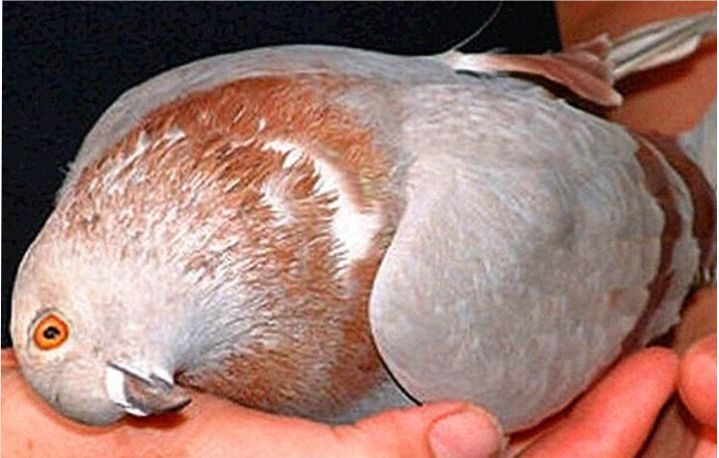
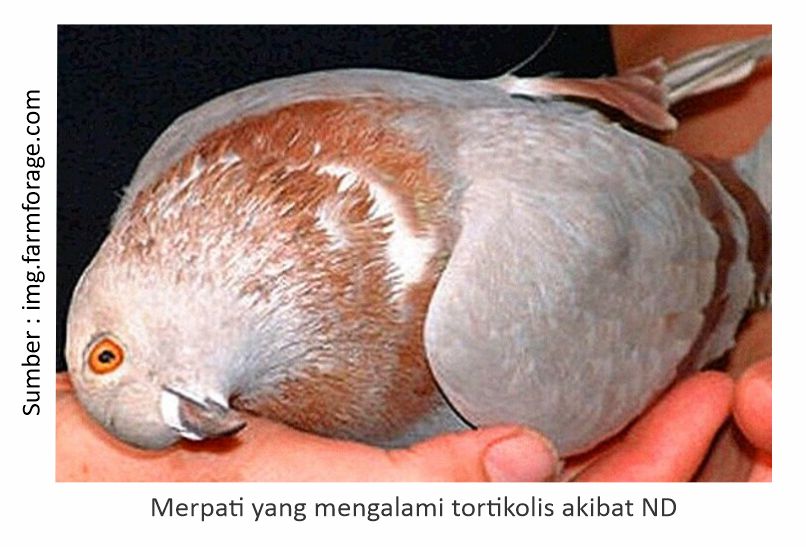
Other symptoms, loss of appetite, green stools and sometimes there are white clots, trembling, symptoms of nerve disorders (paralysis of the legs and or wings, twisted neck/torticollis). The morbidity rate due to ND is relatively high, which is 80-100%, and the mortality rate can reach 100%. This disease needs to be watched out so as not to suffer even greater losses.
While IB disease is caused by a virus from the group Coronavirus. According to research conducted by Dhivahar, et al. (2018) Coronavirus found to infect pigeons with molecular biology test using Polymerase Chain Reaction (PCR). However, IB in pigeons does not give characteristic clinical symptoms with a relatively low level of morbidity and mortality.
Pigeons can show symptoms such as discharge of mucus from the nose, difficulty breathing so that they try to breathe by extending their neck forward and opening their beak wide, snoring, sneezing, coughing, watery eyes and niktitan membranes (inner eye membranes) redness or inflammation. The pigeon looks limp, appetite and drinking go down.
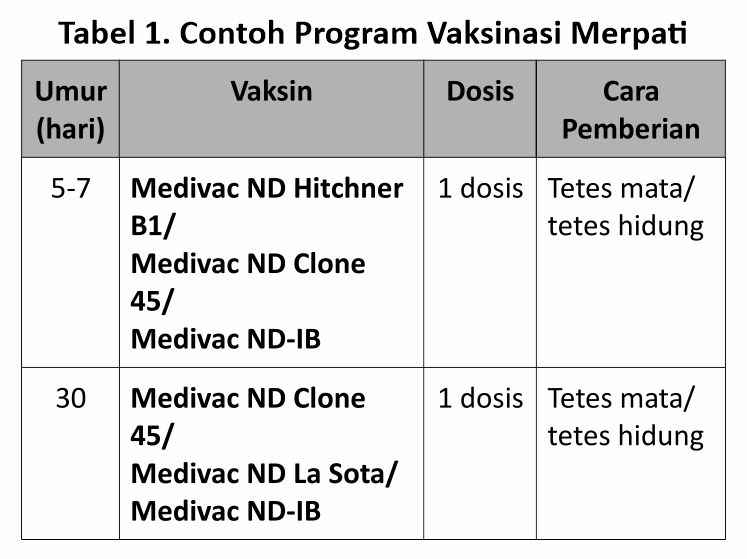
The harm that ND and IB diseases can cause is quite high. Therefore, prevention is necessary. One of them is by vaccinating using vaccines Medivac ND-IB. Vaccine administration can be done from 5-7 days old pigeons by means of eye drops or nasal drops as much as one dose (one drop). Vaccination can be repeated again at 30 days of age in the same way and dose. However, the implementation of the vaccination program can be adjusted to the conditions of each farm.
Further revaccination nd every 2-3 months with Medivac ND-IB. Vaccination is only given to pigeons in good health and to help with successful vaccination can be given Vita Stress-B on her drink water for 3 days before and after vaccination.
Disease prevention efforts not only by vaccination alone, need to be supported by the implementation of biosecurity that's good. For example, cleaning the cage regularly and disinfecting the cage using disinfectant (Antisep/Neo Antisep).