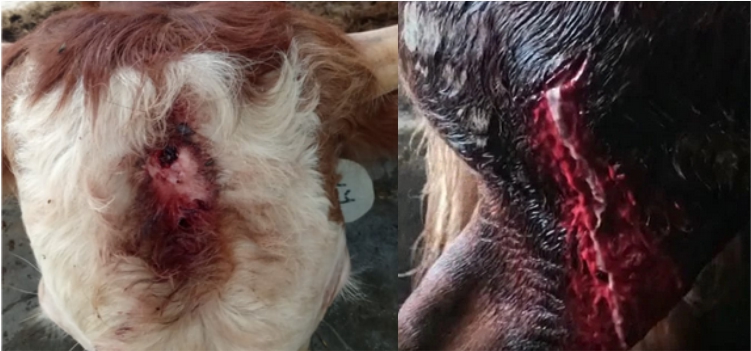
Injuries to livestock body parts can occur at any time, especially if maintenance management is not done properly. The condition of the hard floor of the cage, the sharp surface of the cage and the transportation process during rough transportation can cause damage to the livestock's body. The presence of the wound needs to be handled immediately so that the healing process can be faster and the wound does not get worse.
Of course, every wound healing requires a process that is not short, the more severe the condition of the wound, the longer it will take. The wound healing process occurs through 4 phases, namely :
- The hemostasis phase, which is the process that begins at the beginning of the wound with the aim of stopping bleeding. Blood cells will go to the wound site and form a blood clot to protect the wound and prevent more blood from coming out.
- The inflammatory phase (inflammation), which is the process when white blood cells go to the wound site to fight bacteria so as not to experience infection. This process is characterized by swelling and redness of the wound area.
- The proliferation phase, which is the process of forming new tissue that begins after the wound is clean of bacteria. This process consists in filling the wound with granulation tissue, sealing the wound edges and epithelizing (closing the wound).
- Phase remodeling/ maturation, which is the process of strengthening newly formed tissues. The result will be scar tissue that is as strong as the previous tissue.
Types of wounds and their treatment
Farm animals can have various kinds of injuries on their bodies. Here are some types of injuries that often occur in livestock:
1. Open wounds
An open wound is characterized by damage to the skin and the presence of exposed deep tissues. Livestock can experience open wounds from fighting with other animals, punctured/slashed Sharp Objects, insect bites/other animals and falls. The presence of open wounds on the body of cattle needs to be treated immediately. If not treated immediately and cleanliness is not maintained, infection can occur and an abscess can form.
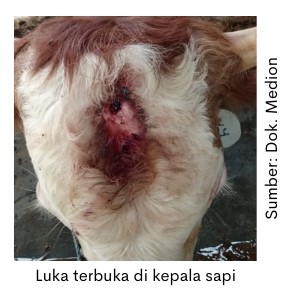
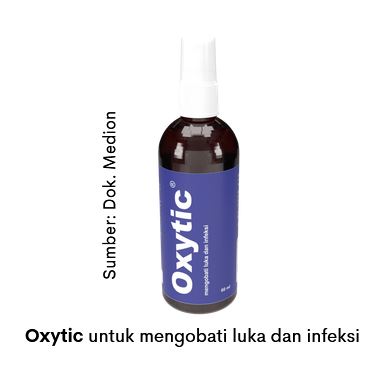
Treatment of open wounds begins with stopping the bleeding that occurs by pressing the wound. After the bleeding stops, clean the wound area with clean water and continue with antiseptic administration (Antisep). Last spray Oxytic to treat wounds. Oxytic effectively treat external infections on the skin caused by bacteria as well as accelerate wound healing in large animals.
2. Abscesses
Abscesses is a sac filled with pus accumulation that can occur in all parts of the body due to a bacterial infection. When an infection occurs there will be an immune system that works to fight it. White blood cells will head and accumulate at the site of infection to fight the causative agent of the infection. It is the build-up that causes inflammation and pus-filled pockets form. The pus that forms consists of white blood cells mixed with dead tissue, fluid and bacteria.
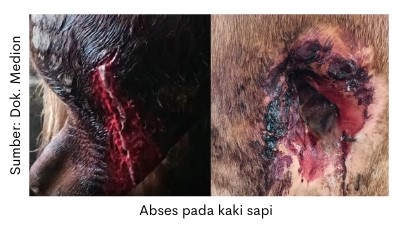
Handling of abscess cases is done by removing the accumulated pus until it is clean. First, clean the surface of the skin in the area of the abscess and then look for a wound that has closed or can make a small incision for the exit of pus. Press gently to remove the pus in the abscess sac. After all the pus comes out, clean/irrigate with clean water and antiseptic (Antisep). Then give a local antibiotic (Oxytic) to overcome bacterial infections. Repeat this step if pus is still found.
The patient may also have a fever and / or fever (Medipiron Injection). In addition, vitamins such as Injekvit B-Plex to help speed healing. If necessary, antibiotics may be prescribed (Neo Meditril-LA).
3. Myasis
Myasis or often called maggots is an infestation of fly larvae on living tissue that attacks warm-blooded animals. The disease begins with an open wound that is left untreated. The smell of fresh blood on the wound will attract the arrival of flies Chrysomia bezziana (green flies) and lay eggs in the wound. Within 12-24 hours, the eggs will hatch into larvae.
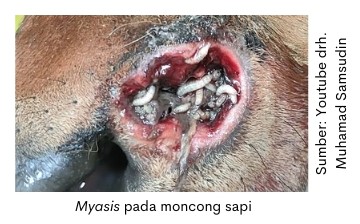
Severe myasis this is done by cleaning the wound area with clean water. Next spray Dicodine evenly and can be repeated until healed.
The presence of wounds on the body of livestock that are left and not kept clean can aggravate the condition of the wound so that it leads to an abscess or myasis. Therefore, when knowing there is a wound in the body of livestock, it is necessary to treat it as soon as possible so that the livestock recover quickly and do not get worse.