Question: What is the proper management of Drinking Water for Broiler chickens?
Bapak Anwar
Bogor-West Java
I am a chicken farmer broiler, my chickens this period often have diarrhea. Is there a possibility of drinking too much water? Drinking water is given adlibitum. How to manage drinking water broiler modern methods to prevent diarrhea chickens?
Answer
Dear. Mr. Anwar, thank you for your question. The availability of sufficient drinking water will optimize the genetic potential of chickens broiler. In addition, the quality and quantity of drinking water will also affect the performance of chickens. Giving chickens drinking water broiler modern is generally adlibitum. Giving adlibitum it will not cause diarrhea as long as the quality of the water provided is good. Chickens will adjust the consumption of drinking water on their own.
Diarrhea in chickens can be caused by various factors. The factors that can cause diarrhea in chickens include :
- Drinking water quality drinking water containing pathogenic microbes such as E.bra or Salmonella sp. In order to reduce the risk of bacterial infection, it is necessary to treat the infection with an antiseptic solution (Desinsep/ Antisep/ Neo Antisep/ Medisep). Chlorine content in drinking water that exceeds 5 ppm can also result in chicken diarrhea. The addition of chlorine / chlorine for disinfection should not be excessive with a chlorine dose of 3-5 ppm (equivalent to 12-20 grams of chlorine per 1,000 liters of water). In addition, treatment another thing that can be done is the method of water filtration (filtration) by giving activated carbon/activated charcoal manually or using an automatic filter.
- The content of nutrients in the ration too high levels of salt in the feed will disrupt the electrolyte balance in the body so that the chickens have diarrhea. In addition, high protein levels can also stimulate the occurrence of loose stools. This is because the uric acid in the kidneys is too concentrated so that it triggers chickens to consume more drinking water, as a result of which the feces become watery. Feeds high in cereals (wheat or grains) can also trigger wet and sticky stools. This is due to the high levels of non-starch polysaccharides in the cereal. Therefore, the feed given to chickens should be checked periodically in Medion Laboratories (MediLab) to minimize the discrepancy in the amount of nutrients consumed.
- Heat Stress Experienced chicken heat stress tend to increase drinking so that the feces are released dilute. To handle heat stress then the air vents in the cage need to be repaired. After the causative factor is overcome, the provision of vitamins and electrolytes is needed to maintain stamina and accelerate the recovery of chicken conditions.
- Administration of drugs not according to the rules of use Administration of hard drugs such as worms or drugs from the sulfa group that do not match the recommended dose can trigger chicken diarrhea. Therefore, it is important to pay attention to the dosage and duration of administration of the drug administered to chickens.
- Diseases of various diseases such as Newcastle Disease (ND), Gumboro, cholera, Colibacillosis, coccidiosis, Salmonellosis and intestinal worms can also result in chicken diarrhea. Handling cases of diarrhea caused by bacterial attack (cholera, Salmonellosis or Colibacillosis) can be done by administering drugs (antibiotics), coccidia (cocdiosis) given anticoxidia or worms given anthelmintics. As for ND and Gumboro, it cannot be overcome by administering drugs but controlled through vaccination. When chickens are attacked by ND (especially chickens layer), can be revaccinated using Medivac ND Clone 45. The success of emergency revaccination of the ND is influenced by the severity of the ND attack.
Good management of drinking water for chickens broiler include:
- Drinking water to be given to the DOC broiler at the moment it should be warmed up first so that it can balance with DOC's body temperature. Chickens will refuse to drink at temperatures below 19°C.
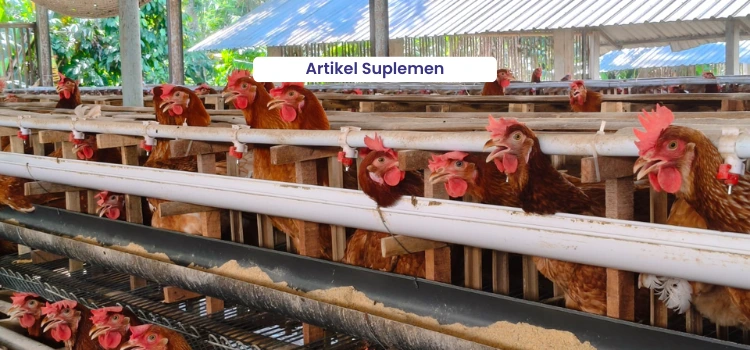
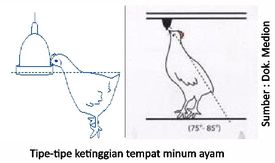
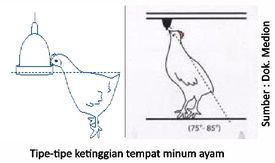
- Routine control of the number of chicken drinkers adjusted to the number of chickens in the cage. In addition, regulate the distribution and level of drinking water. The chicken drinker should be at the level of the chicken's back. As for the place to drink nipple, the height is adjusted to the height of the chicken.
- Clean drinker with disinfectants Medisep routinely 2 times a day to minimize the seeds of disease attached. For drinking places nipple drinker, preferably flushing routine immediately after administration of vitamins, vaccines and drugs whose application is through drinking water, using hydrogen peroxide (H2O2) at a dose of 15-20 mg/liter of water or 10-15 ml/100 liters of water or can use citric acid at a dose of 1.5-2 grams/liter.
- Perform routine drinking water quality checks to Medion Laboratories (MediLab) at least once every 3 months or when the weather changes.
- Make sure that the drinker does not leak.