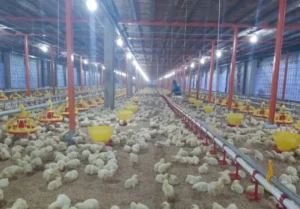
Management plays the most crucial role in achieving successful poultry farming. Proper management of brooding, housing, feeding, and health is essential to support optimal chicken performance. When chickens fall ill, farmers may experience various losses such as increased mortality, decreased egg production, higher feed conversion ratio (FCR), and elevated production costs.Disease prevention measures can be carried out through the implementation of a comprehensive health program, regular health monitoring, and strict biosecurity across all farm areas. In maintaining poultry health, a vaccination program is an inseparable component.Before developing a vaccination program, several factors should be carefully considered, including the following:
- The type of chicken (broiler/male/layer/breeder)
- The types of diseases that commonly affect the flock
- The age at which the disease commonly occurs
- Update of disease cases in the surrounding environment
The following is an example of a vaccination program for layer chickens before the production phase. This program serves as a general guideline and may be adjusted according to each farm’s specific conditions.
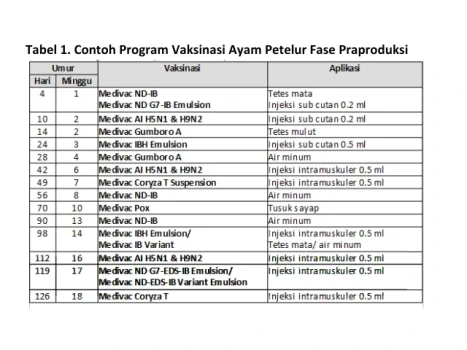
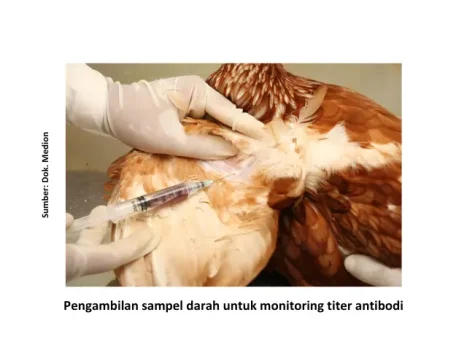
During the production period, booster vaccinations for AI, IB, and ND are required. These diseases—AI, ND, and IB—can infect the reproductive organs, thereby affecting both the quality and quantity of eggs. ND and IB vaccinations may be repeated every 1–3 months when using live vaccines, or every 3–6 months when using inactivated vaccines. For AI, booster vaccinations should be administered at least twice during the production phase, specifically at 32–34 weeks and 47–49 weeks of age. To determine the most accurate vaccination timing, it is recommended to conduct monthly antibody titer monitoring.
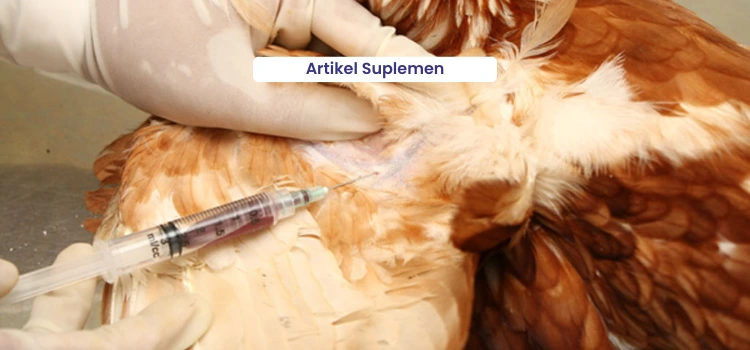
In addition to the vaccination program, the development of a comprehensive health program should also include the administration of supplements and supportive treatments, such as:
- Vitamin Supplementation
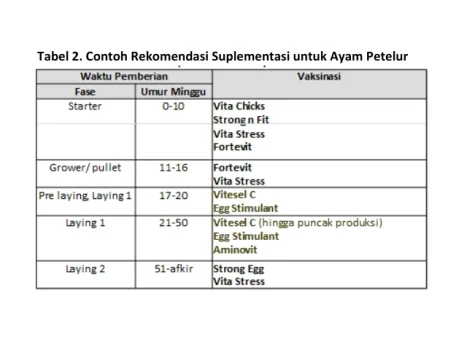
Vitamins should be administered during stressful conditions such as post-transportation, heat stress, before and after vaccination, relocation, and similar situations. These can be supported with Vita Chicks or Vita Stress.Vitamin supplementation may also be used to help increase egg production and extend the laying period with Egg Stimulant/Vitesel-C. Additionally, vitamins can be administered to stimulate appetite, for example using Injekvit B Plex.
Example of recommended vitamin usage:
- Herbal Supplementation
Herbal products can be administered for various purposes, such as stimulating appetite (Kumavit), supporting energy recovery (Gingertol), enhancing immune response (Imustim), helping relieve respiratory disorders (Respitoran), providing anti-inflammatory support (Inflagrin), and serving as an antibacterial and antiprotozoal agent without leaving harmful residues (Fithera). - Administration of Feed Additives
Feed additives are used for specific purposes, such as toxin binding and mold inhibition to control fungal contamination and mycotoxins in feed (Fungitox, Freetox). Enzymes can be added to improve feed digestibility (Betterzym), while phytobiotics can serve as natural alternatives to AGPs and coccidiostats (Optigrin). - Medication Administration
The administration of deworming agents (Levamid) is recommended to control worm infestations. In cases of bacterial infections, antibiotics may be administered as treatment. If chickens are affected by coccidiosis, anticoccidial medication should be given accordingly.
In addition to the health program, disease prevention should also be carried out through the implementation of proper operational biosecurity. This includes isolation practices, avoiding the presence of different poultry species within the same area, and managing flocks based on age groups and designated zones.Traffic control should be enforced by organizing green, yellow, and red zones. Regular sanitation and disinfection of poultry houses are also essential, including the restriction of vehicles, equipment, and personnel entering and leaving the farm, followed by consistent and disciplined disinfection routines.Examples of disinfection applications include personal disinfection using Medisep, transportation disinfection with Sporades, housing and equipment sanitation with Neo Antisep, and drinking water disinfection using Desinsep.
From the discussion above, it can be concluded that a comprehensive health program plays a crucial role in supporting the productivity of layer chickens. It is highly recommended to implement such a program consistently and with discipline to achieve optimal production results. Hopefully, this information will be beneficial.