The development of laying hens in Indonesia has wide-open prospects. This is because eggs are one of the products needed to meet the consumption of animal protein in Indonesia. Broadly speaking, the parameters of the success of this business are determined from 2 aspects, namely the aspect of achieving productivity and financial benefits. To achieve these two parameters of success, the egg production, which is seen from the quantity and quality, must be able to be achieved with the maximum.
So far, there are still some farmers who face various problems that have an impact on the decline in egg production, both a decrease in the number and quality. For this reason, regarding egg production and the problems that cause its decline, we will try to review it again in this edition.
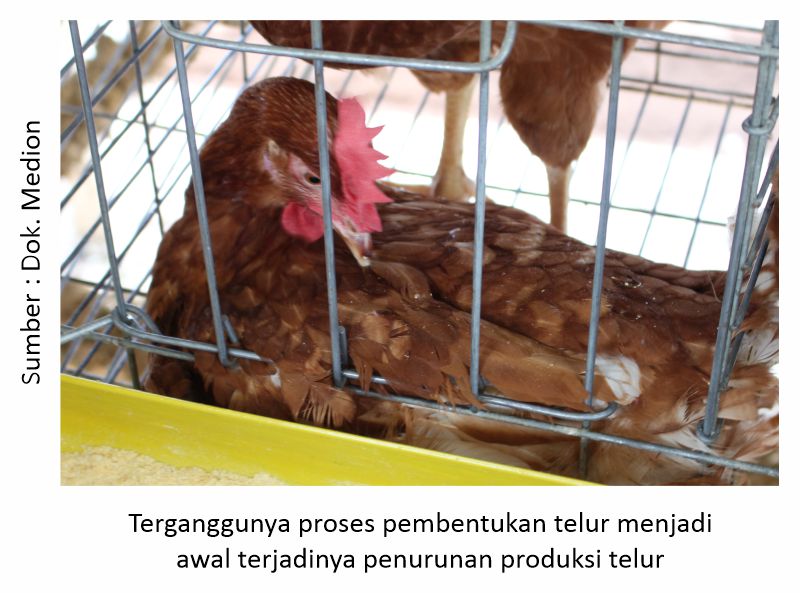
Modern laying hens and their production
The results of this study are based on the results of a 2 - step analysis of the results of a randomized controlled trial (Hen day) and value quality. If the percentage of total egg production is high but the quality is low, then farmers will face economic problems because eggs with low quality will not sell in the market. Vice versa, if the quality is good but the percentage of production is low, farmers will still experience economic losses. For this reason, it is necessary to diagnose quickly and precisely the cause of the decline in egg production so that farmers can immediately anticipate it. If this can be done well, then even greater losses can be avoided.
1. Percentage of total egg production
Laying hens begin to produce when they reach 18 weeks of age. At that age, the new egg production rate reaches about 4-5% and will continue to increase rapidly until reaching the peak of production which is about 96% in a period of 2 months (at the age of 26 weeks). In accordance with the pattern of the egg-laying cycle, after reaching the peak of production, little by little the amount of production begins to decrease constantly. By the time the chicken is 90-100 weeks old, the amount of production has been below 70% with the number of eggs per hen house 466 grains and in such a condition can be said chicken ready to reject (HyLine Brown Management Guide, 2019).
2. Egg quality
The quality of an egg is determined by the quality of the inside (the thickness of the White and yolk, the color of the yolk and the presence or absence of blood spots on the white or yolk) and the quality of the outside (the shape, size and color of the shellfish). Normal commercial chicken eggs are characterized by light brown, thick egg shells, weighing about 52-65 grams/grain, thick egg white and no yolk inside blood spot- blood spots.
From the first time the chicken lays eggs, that is, when it reaches the age of 18 weeks to reject, the size and weight of the eggs will not be the same every day. In this case, the breeder must determine whether the size/weight of the eggs produced is appropriate/close to the standard or far from the standard. Far from the standard, the meaning can be larger or smaller. This discrepancy in the size and weight of the eggs is caused by several factors.
Regarding issues related to egg color, there are generally few breeders who find eggs not brown. Brown color in chicken eggs is basically influenced by genetic factors, namely the presence of dyes phorpyrin in the reproductive tract of chickens. So each type of poultry, has determined the color of the eggs either white, blue or brown. But in the formation of the color of the eggshell is also influenced by the intake of certain nutrients. Environmental conditions and diseases can also affect the optimal coloration of eggshells. While the problem of thin and flabby egg shells can be sourced from nutrition or due to infection.
The Problem Of Egg Production
Broadly speaking, there are two main causes that lead to decreased egg production is caused by infectious and non-infectious factors. Often the two factors are related to each other and generate a greater impact. Here's the explanation :
1. Infectious factors (diseases)
Damage or disruption of the reproductive system due to infection of one of the egg production-lowering diseases will result in decreased egg production. Among them are nd disease, AI, IB and EDS. The decrease in egg production due to IB virus attacks can reach 70%, EDS decreases by about 20-40% and AI can reach 80%, while in the case of ND egg production varies from 7 to 60%.
AI attacks are currently dominated by LPAI attacks, namely H9N2 subtypes that tend to attack the reproductive system and in a single attack of AI H9N2 this does not cause a high mortality rate. In its development, the AI virus has 2 mechanisms in disrupting the reproductive organs of chickens, namely the damming of blood vessels in the ovaries and damage to the surface of the ovaries at the time budding exit or the exit of the virus from the cell. Both of these mechanisms will lead to a decrease and even stop egg production. AI infection also affects egg quality where the attack causes the egg to lose its pigment so that the color of the shellfish becomes paler.
Changes in the reproductive organs due to ND, namely the ovaries shrink, the ovaries are inflamed and the shape resembles cauliflower. In EDS virus infection, infected chickens will appear healthy and do not show symptoms of illness but there is a drastic decrease in production accompanied by a decrease in egg quality. In addition, EDS disease also causes the brown color of the egg shells to disappear, followed by thin, flabby and without shells. From the results of chicken surgery, anatomical pathological changes can be found in the form of oviducts that become loose and there oedema (accumulation of fluid) in its subserous tissues.
In the case of an IB attack, the ovaries are undeveloped, soft as Pulp, bloody, swollen and flabby. Also often found cases of rupture of the yolk in the abdominal cavity. In the case of IB caused by QX strain it is a liquid-filled liquid containing a liquid-filled oviduct (cystic oviduct). This can be clinically known if the incident has been going on for a long time (chronic) with symptoms of chicken stomachs appear enlarged and walk with a penguin-like look up.
In terms of egg quality, IB cases usually cause the resulting egg shells to be white or pale, thin, flabby, rough, to asymmetrical shapes. If the egg is opened, it can also be found a blood stain on the yolk (blood spot) and the border between thick and thin egg white is not clearly visible. To facilitate the comparison of changes in egg quality can also be seen in Table 1.

In addition to viral diseases, egg production can also decrease due to bacterial diseases such as Coryza. The disease can lead to disruption of production due to the impact of the decline feed intake drastic so that indirectly lead to a decrease in egg production.
2. Non-infectious factors
In non-infectious cases there are 3 causes, among others :
a) quality pullet
In cases caused by quality pullet less well characterized by the characteristics of having less weight than the standard and uniformity pullet the low. The production period becomes backward with low production numbers. Vice versa, BB growth that exceeds the standard will cause egg production to fall with a large egg size. It also often triggers the occurrence of cases prolapse. Occurrence prolapse of course, it will be very fatal because it has an impact on permanent damage to the oviduct so that the chicken stops producing. The presence of fat deposits will also inhibit the process of egg formation (low egg production).
Uniformity pullet low can result in non-uniformity of the beginning of production and non-uniformity of the size of the eggs produced. Another characteristic is the length of time it reaches genital maturity so that the start of production becomes late. Presence pullet which has a narrow pubic bone distance is also a distinctive feature that results in the chicken has a smaller egg size.
b) ration Nutrition and drinking water
The adequacy of drinking water should be observed. Laying hens that do not consume drinking water for only a few hours, will stop producing eggs for weeks.
Water that looks clear, could contain chemicals and harmful microorganisms. Not to mention the erratic seasonal changes in Indonesia, it is possible that water quality will change. The key, we as farmers must regularly check the quality of water in the farm. Water quality checks should be carried out periodically, especially when there is a change of season, or at least once every 1 year (World PoultryVol. 25 No.3, 2009).
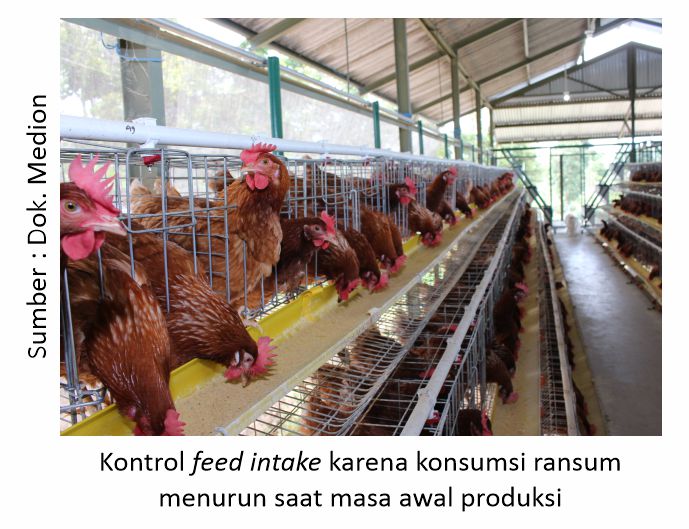
Often cases of nutritional imbalance have an impact on achieving chicken weight that does not match the standard. When entering the production period, chickens with sub-standard weight will not start egg production and if they produce, small eggs will be produced for a relatively long time.
Poor ration quality, poor or unbalanced nutrition and rations containing toxic/antinutritional substances can cause a decrease in egg production. The size and weight of eggs is also influenced by ration nutrients such as protein, certain amino acids such as methionine and lysine, energy, total fat and essential fatty acids such as linoleic acid. Non-fulfillment of the needs of one of these nutrients through the intake of rations, it will reduce the weight of the eggs, even if it occurs in laying production before the age of 40 weeks, can result in a decrease in the amount of egg production.
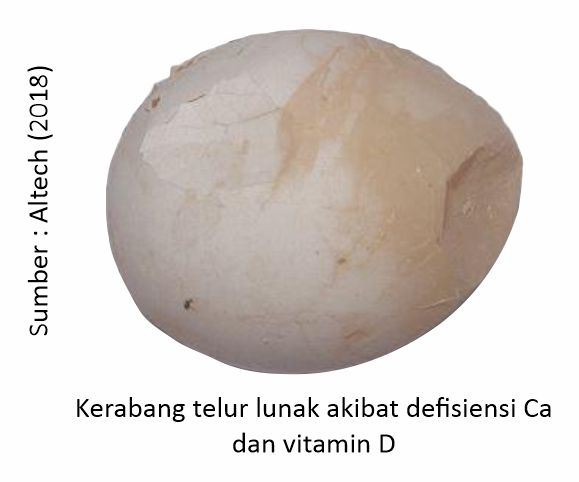
Laying hens require a fairly high intake of calcium (Ca) in the production period. If the Ca preparation in the chicken's body is not sufficient, the amount of production will decrease and the formation of egg shells can be disrupted. As a result, egg shells are mushy. Ca intake also affects the color of eggshells. If Ca levels are low or insufficient then the secretion phorpyrin swhen painting the egg shell will be reduced as a result of eggshell color becomes whiter.
In addition, it must also be considered the balance between Ca and P (phosphorus), where the comparison is for the phase layer up to 4 : 1. The roles of Ca and P are interrelated and have a supporting relationship with each other. In addition, the use of Ca and P will be more efficient if the ration contains enough vitamin D. Vitamin D is needed to absorb Ca and P elements in the chicken's body. In addition to vitamin D, other vitamins are also needed to prepare eggs and anticipate the effects of stress that may arise so as to interfere with egg production.
Another important nutrient to consider in the diet is mineral salt (NaCl). Giving salt levels that are too high or too low can reduce egg production. Chickens that consume less salt will show symptoms of feather loss (pecking at other chickens, pecking at their own feathers) or experience decreased appetite. On the contrary, chickens that consume too much salt will increase their drinking water consumption and decrease their ration consumption. As a result, the nutrients needed to form eggs are reduced and a decrease in production will occur.
c) Maintenance Management
The failure of the management of the rearing of laying hens inevitably also leads to a decrease in the amount of production and quality of eggs. These management actions include many things, including the following:
1. Stress factors
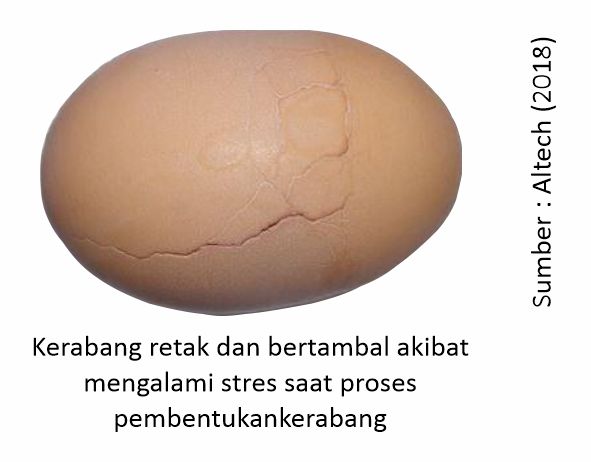
Stress can lead to decreased egg production. Common stressors include stress due to changes in weather/temperature (cold or panic), moving cages, parasite attacks and rough treatment. Stress caused by noise or rough treatment for example can cause the process of egg shell formation does not take place perfectly.
Stress due to hot weather, causing chickens to drink more and reduce feed intake so the nutritional needs for egg formation are not met. This condition can cause egg production to fall, in terms of quality and quantity. During hot weather, chickens will do panting (gasping) so that it emits a lot of carbon dioxide (CO2). On the formation of eggs, CO2 necessary to form calcium carbonate (CaCO3) which is useful for compiling eggshells. As a result, the shellfish will be thinner and easier to crack. Chickens will tend to reduce the consumption of rations to prevent additional heat from the results of metabolism and actually increase the consumption of drinking water.
2. Lack of lighting or insufficient light intensity
Current exposure factor pullet also closely related to its function is to stimulate appetite, growth, slow the mature sex and stimulate the secretion of FSH hormone (Folicle Stimulating Hormone) and LHLuteinizing Hormone) that play a role in the formation of the yolk and ovulation (release of the yolk). In general, chickens that experience sexual maturity too early (not old enough) will produce eggs with a small size. Likewise, when sexual maturity is late, the chicken will produce eggs with a large size (abnormal).
Solving The Problems Of Egg Production
Actions that can be taken to overcome problems related to egg production are :
1. Infectious factors
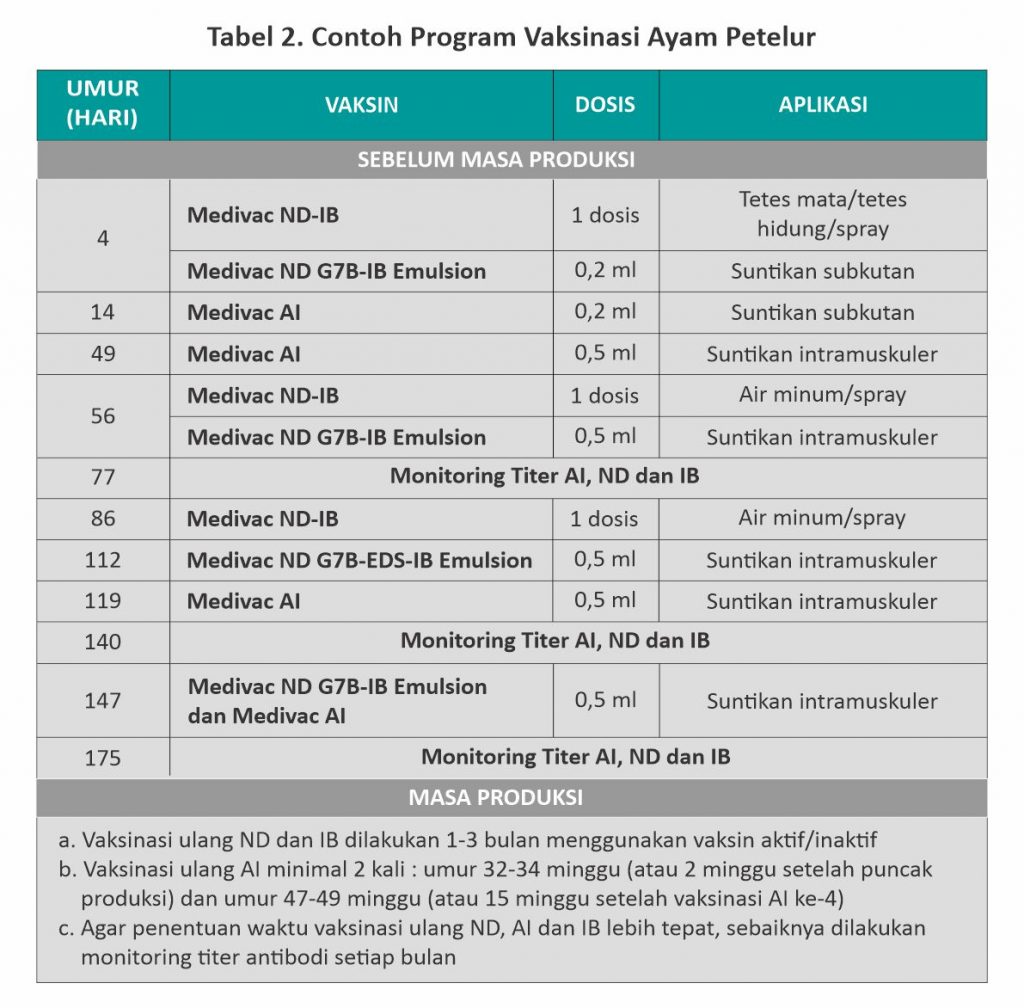
To overcome the problem of declining production related to infectious factors, in this case we hrus prevent disease infection through the implementation of vaccination programs and the application of biosecurity. To overcome cases due to infection with diseases such as ND, AI, EDS and IB, carry out vaccination programs according to local farm conditions. Ideally, vaccination programs such as ND, EDS, IB, AI and korisa have been carried out no later than 2 weeks before the start of production. So that when entering a critical period there is no vaccination schedule. Revaccination is given after the peak of production and should be done with caution.An example of a vaccination program can be seen in Table 2. For laying hens that have entered the production period, you should also monitor nd, AI, EDS and IB antibody titers regularly.
2. Non-infectious factors
a) improve maintenance management
Exercise weight control (BB) when the period starter and grower (pullet) until production. Target weight uniformity in one good FLOC is 80-85% for pullet, as for chickens, their production is already between 70-80%. Ideal uniformity occurs when 80-85% of the chicken population's body weight is in accordance with the standard, with a tolerance of ③ 10% of the target. In addition to weight monitoring, pullet are sexually mature and ready to lay eggs seen from the characteristics of a large comb and red, long leg bones (shank) at least 100 mm and the width of the pubic bone is the width of three fingers of an adult.
Set the lighting program. Laying hens that have entered the egg production period, need 16 hours of lighting to maintain the optimal amount of egg production.
Create comfortable conditions during the maintenance period. Provide drinking water and drinking places in sufficient quantities, open the curtains wide, install fans, replace wet husks, and spray the cage using disinfectants such as Neo Antisep/Medisep. It should also avoid and minimize stress factors in chickens such as hot weather or noise. If necessary, the chicken is fasted to eat 1-2 hours during hot weather during the day to reduce the heat released by its body.
b) meet the nutritional needs of the ration
Provide rations with nutrients that match the needs of chickens in each maintenance period, especially for protein, amino acids, energy, fatty acids, calcium, phosphorus and vitamin D (because it plays a role in the formation of eggs). To overcome the lack of Ca, it can be added grit (in the ration). Grit is used to reserve calcium when laying hens are about to enter the egg-laying phase. It is also worth remembering that the absorption of Ca by the chicken's body is affected by the adequacy of vitamin D. In addition to the gift grit, give supplements containing amino acids, vitamin B complex, A, D, E and some minerals that are important to help improve egg productivity performance. Awarding Aminovit or Strong Egg can help improve the quality and production of eggs. While Mineral Feed Supplement A, Mix Plus or Top Mix it can also be given to help improve ration quality and egg production. Do not reduce the amount of feed when laying, especially during the beginning to the peak of production.
c) do it treatment air
Do treatment water if there is a problem. If it is complex, for example, there are problems with physical, chemical and bacterial quality. Then it can be considered to create a system treatment modern water as in treatment refill drinking water for human consumption, for example the use of filter machines to purify water, the installation of Reverse osmosis (RO) systems to minimize the content of metals / minerals and the use of UV lamps to kill bacteria E. Bra. Treatment another that can be given is by giving Netrabil and Medimilk which can neutralize heavy metals and neutralize pH.
d) give Optigrin to maintain the digestive tract of chickens
Give Optigrin as an alternative to AGP, which is able to maintain the health of the digestive tract of chickens by damaging the cells/walls of pathogenic bacteria and forming a protective layer on the intestinal villi. The intestine is healthier and the absorption of feed nutrients is more optimal so that maximum productivity is achieved.
If it is known that a decrease in egg production has begun, immediately take an Anamnesis accompanied by readings recording production as an initial step of diagnosis. The initial step is important to detect early the cause of the decline in production so that further handling can be done through the appropriate anticipation program. Greetings.