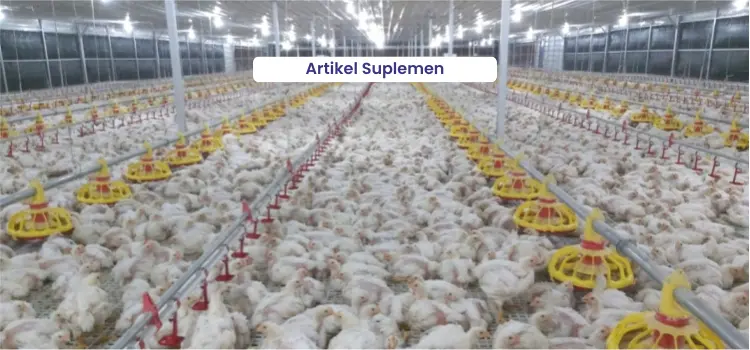
Chicken is a widely consumed animal food in all countries. Per capita consumption of broiler chicken is predicted to increase by 5.19% in 2026 compared to 2025 (Food Consumption Bulletin, 2025). This increase in consumption is in line with the continued growth of chicken production, with Java as the center of chicken production in Indonesia.
Environmental Quality Indicators in the Cage
The strong odor of chicken farms has been a perennial problem. The pungent odor of ammonia produced by chicken farms can disrupt the well-being of chickens, farmers, and the surrounding environment. High ammonia levels in chicken coops can be triggered by overcrowding, poor litter and feces management, or poor air circulation. Therefore, the strong ammonia odor from chicken farms is considered an indicator of poor coop quality.
More comprehensively, factors that influence ammonia levels in the cage include the cage system, litter (material, Rh and pH), feed, manure management, ventilation system, chicken age, density, daily activity, cage temperature and humidity (Bist et al., 2022).
The Process of Ammonia Formation in Cages
Broiler chicken farming, as a producer of chicken meat, is currently dominated by closed or semi-closed housing systems. Generally, broiler feces are mixed with the litter and removed at harvest. The amount of feces mixed with the litter increases with the age of the chickens. Feces mixed with the litter produce ammonia gas (NH3) (Oliveira et al., 2021), so the increase in the amount of feces in the litter is directly proportional to the level of ammonia gas produced. A study by Anggreini et al. (2022) showed that ammonia concentrations in closed houses were higher than in open houses. However, in open houses, the ammonia odor was more pungent than in closed houses.
The largest ammonia gas emissions result from agricultural activities, including chicken farming (Bist et al., 2022). Ammonia contributes to the formation of nitrogen oxides, a greenhouse gas. These nitrogen oxides cause rainwater to become acidic and lead to excessive nitrogen content in the water (eutrophication). Ammonia (NH3) is an air pollutant derived from the microbial degradation of nitrogen compounds found in chicken feces.
In broiler chicken farming, ammonia is produced from two sources: the hydrolysis of urea in urine and the degradation of nitrogen excreted as uric acid (Oliveira et al., 2021). Nitrogen in the form of uric acid excreted by poultry accounts for approximately 50% of undigested protein. The decomposition of uric acid into ammonia is shown in the following reaction equation.
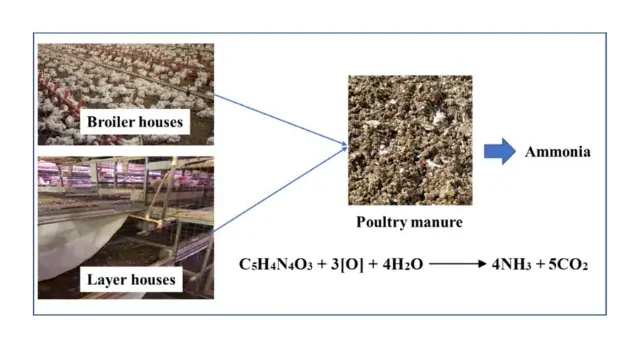
The process of decomposition of uric acid into ammonia in chicken farms
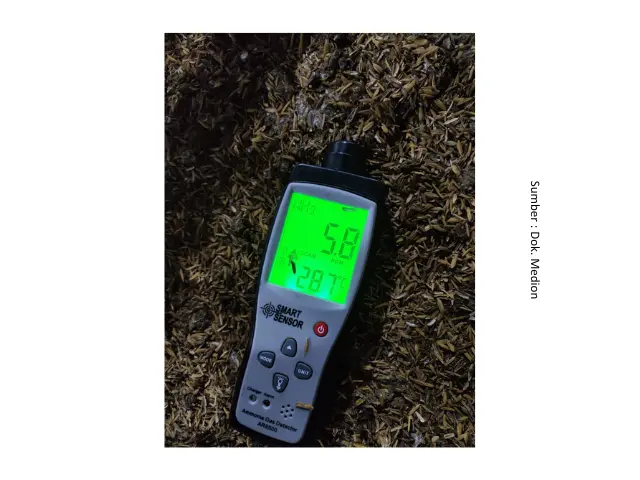
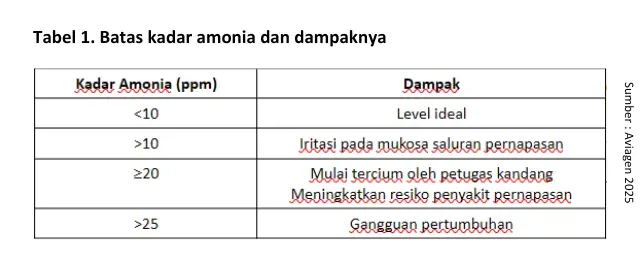
Kadar amonia yang terlalu tinggi dapat mengganggu kenyamanan ayam dan peternak. Kadar amonia dapat diukur dengan ammonia gas detector / amonia meter. Pengukuran kadar amonia dilakukan dengan meletakkan amonia meter dengan ketinggian yang sama dengan tinggi kepala ayam. Deteksi kadar amonia berlebih di kandang juga dapat dilakukan dengan cara paling mudah yakni dengan indra penciuman kita ketika berdiri. Ketika masuk kandang ayam dan didapati bau feses menyengat maka kadar amonia sudah terlalu tinggi untuk ayam. Kadar amonia mulai tercium pada kadar 20 ppm atau lebih sedangkan idealnya kadar amonia di kandang adalah <10 ppm.
The Impact of Ammonia on Chicken Respiratory Health and Performance
Ammonia levels exceeding the ideal limit of >10 ppm can impact chicken performance. High ammonia levels can reduce appetite and lead to decreased feed intake, stunted growth, decreased egg production, respiratory tract irritation and damage, susceptibility to disease, air sacculitis, and even a trigger for CRD caused by Mycoplasma gallisepticum (Bist et al., 2022).
Specifically, ammonia levels above 20 ppm cause the cilia, or vibrating hairs found in the respiratory mucosa, to stop moving normally (Zuprizal, 2009). Cilia are part of the immune system, capable of preventing disease from entering the respiratory tract. When ammonia levels exceed 100 ppm, these cilia experience desiliosis (cilia damage), becoming a gateway for various respiratory diseases.
When ammonia levels reach >25 ppm, it converts to ammonium hydroxide (NH4OH), which irritates the eyes and causes conjunctivitis. Ammonia exposure can damage the eyes within 7 days.
Exposure to ammonia at levels >25 ppm can increase the incidence of ND infection. The response is more severe after active ND IB vaccination, as ammonia acts as an immunosuppressant (Bist et al., 2022). The E. coli infection response also increases at ammonia levels >10 ppm.
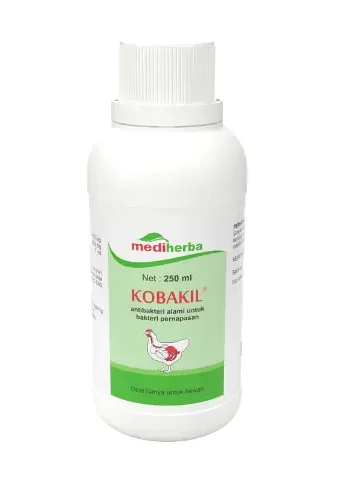
Ammonia acts as an immunosuppressant and causes desiliosis, or cilia damage. This damage to the cilia in the respiratory mucosa creates a gateway for infectious agents through aerosol transmission. The causative agents of CRD, coryza, colibacillosis, and all respiratory diseases can easily enter and infect chickens. When bacteria enter and cause infection, antibiotics are necessary to suppress and kill the infectious agents. Kobakil is a natural antibacterial that can accelerate the healing of respiratory diseases such as CRD, CRD complex, Coryza, and Colibasillosis. Kobakil works by inhibiting enzyme activity and suppressing bacterial virulence factors, preventing bacterial replication and disrupting cell walls so that intracellular components break down and prevent the formation of energy in the mitochondria so that the bacteria die. Kobakil given at a dose of 0.2ml/kg BW for 5-7 days.
Ammonia Control
Ammonia control in the cage is grouped into two, pre-excretion (reducing the source of ammonia before manure is produced, namely by adjusting the ration) and pre-release (separating ammonia from air circulation before it spreads into the cage environment by providing treatment to the litter, improving management, and improving cage design).
a. Pre-excretion
Ration management: Avoid high-protein rations, which can increase ammonia production, and high-fiber rations, which can cause chickens to drink more frequently and produce wet feces. Add feed additives to improve the digestibility of chicken rations.
b. Pre-release
Litter yang basah dan lembab dapat meningkatkan kadar amonia ketika bercampur dengan feses. Jaga kelembaban sekitar 15-25% dan pH <7. Ketika pH alkalis atau >7 produksi amonia akan meningkat. Selain itu litter dapat diberikan treatment untuk mengurangi amonia dengan Ammotrol. Ammotrol can reduce ammonia concentrations in the cage. Spray the feces by dissolving 30 grams of Ammotrol in 1.5 liters of water for 1m3 or 1000 liters of feces.
Pay attention to cage density. The ideal cage density for broiler chickens is 15 kg/m2. If it's too crowded, the temperature in the cage will rise and water consumption will increase. This can lead to wet feces.
Ventilation management is also crucial for ammonia control. A good enclosure should be able to remove ammonia quickly. When ammonia levels in the enclosure rise, it's necessary to increase the air speed. However, it's important to note that lower temperatures require further adjustments.