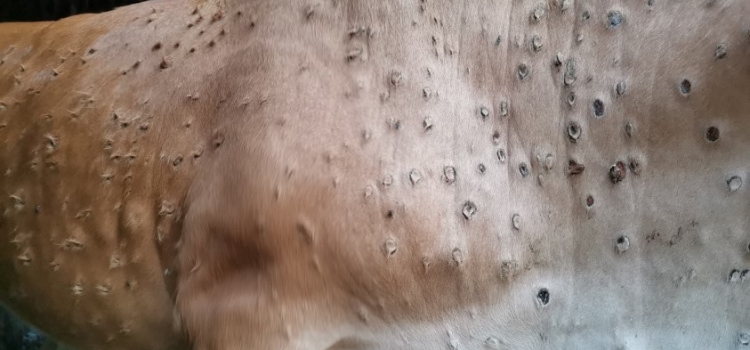
Lumpy Skin Disease (LSD) is an infectious disease of the skin caused by a virus. Cases of LSD disease attacking cows first appeared in Indonesia, precisely in Riau Province in February 2022. This disease needs to be watched out for by cattle and Buffalo farmers because it is easily spread and contagious. Until now, several cases have been found in the Central Java region.
Causes and transmission of LSD disease
LSD is caused by Lumpy Skin Disease Virus (LSDV) of the genus Capripoxvirus and family Poxviridae. LSDV termasuk virus beramplop yang peka terhadap desinfektan golongan amonium kuartener, iodine maupun glutaraldehyde. The Virus can survive several months in dirty cages but can be inactivated at 65°C for 30 minutes.
LSD attacks cattle, buffalo and some wild ruminants. Although it is not transmitted to humans or is not zoonotic, LSD causes considerable harm. Losses caused in the form of damage to the skin, weight loss, decreased milk production, reproductive disorders and miscarriage.
Transmission of the disease can occur in several ways, namely:
- Through the bites of blood-sucking insects, such as mosquitoes (genus Aedes, culex), ticks (Riphicephalus appendiculatus, Ambyomma heberaeum) and flies (Stomoxys sp, Haematopota spp, Hematobia irritans).
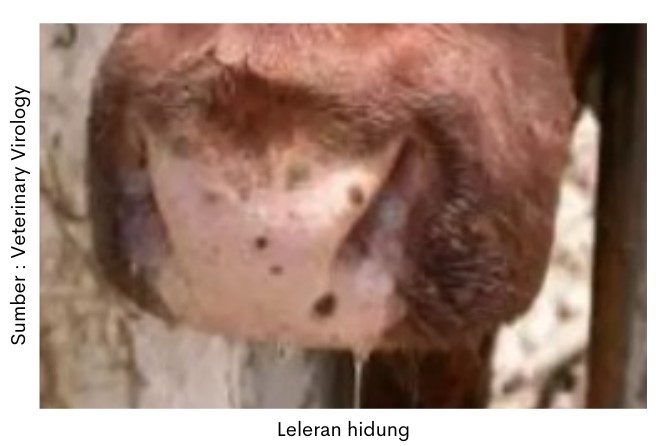
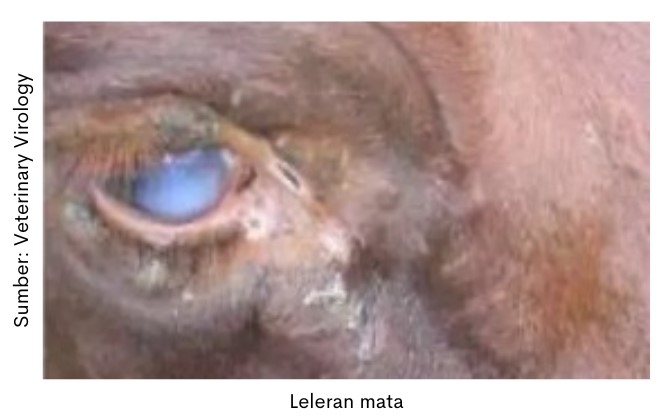
- Direct transmission from sick cattle to healthy cattle. The source of transmission can be through skin lesions, blood, nasal discharge, eye discharge, saliva, semen and milk.
- Indirect transmission can also occur through feed, drinking water, equipment, syringes, personnel, transport contaminated with LSD virus.
Traffic or movement of livestock to other areas greatly affects the spread of LSD disease to a wider area.
Symptoms of LSD-infected cattle
The incubation period of LSD ranges from 2-5 weeks. The mortality rate of LSD disease is below 10% and the morbidity rate is around 10-20% but there are also reports of LSD incidence of up to 45%. Clinical signs seen in infected cattle include:
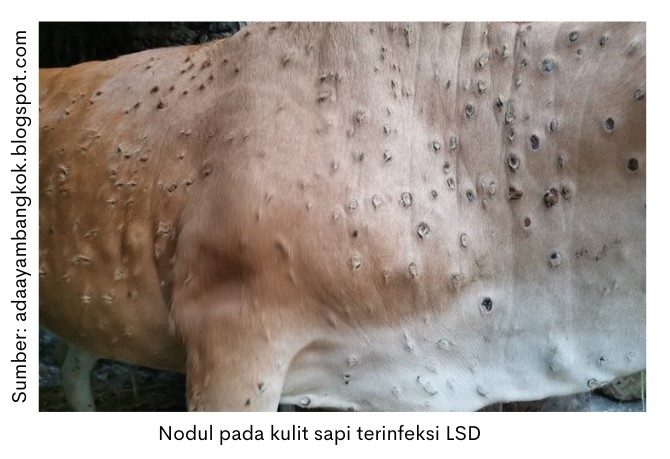
- Skin lesions in the form of clearly delimited nodules or lumps measuring 1-7 cm in the area of the neck, head, legs, tail and udder. In severe cases nodules can be found almost all parts of the body. Nodules on the skin if left unchecked will become wounds with tissue damage.
- Fever up to 40-41°C
- Weakness, decreased appetite
- Melting nose, eyes
- Swollen lymph nodes
- Decreased milk production and body weight
- Miscarriage, testicular inflammation
On examination of the internal organs in slaughtered cattle, lumps can be found in the muscles, mucosa of the mouth, nose, gastrointestinal tract, as well as in the lungs. Sometimes it can also be found in the testicles and bladder.
Determination of the diagnosis of LSD disease begins with the observation of clinical symptoms. Confirmation of the diagnosis can be confirmed by laboratory tests Polymerase Chain Reaction (PCR).
Handling and Prevention
Tenak infected with LSD, until now there is no specific treatment. Treatment is done to overcome the clinical symptoms that appear and supportive to improve the condition of the body of livestock. Handling that can be done include:
- Separate symptomatic cattle from other livestock
- Treat skin wounds with antiseptics Antisep
- Disinfection of cages, vehicles and equipment with Medisep, Zaldes or Sporades
- Report to the local animal husbandry and health office
- Handling by animal health workers with the provision of anti-inflammatory, anti-pain, and fever-lowering with Medipiron Injection. Administration of vitamins Injekvit B-Plex or ADE-Plex Inj. As well as to cope with secondary infections with the administration of antibiotics Lincomed LA, Neo Meditril 10 LA or G-Mox 15% LA Inj
LSD is caused by a virus, so prevention efforts that need to be done is the application of biosecurity and vaccination. And no less important is to increase the endurance of livestock. Prevention efforts include:
- Avoid entering livestock from plague areas
- Limit the traffic of goods and unauthorized persons
- Clean the cage every day
- Control vector by eliminating habitat and insect elimination (Delatrin)
- Equipment and equipment (Medisep, Antisep, Sporades)
- Using special clothes in the cage
- Increase the body's ability to absorb nutrients (Vita B Pleks Bolus Extra Flavor)
- Vaccination of vulnerable animals