So far, Ducks are known as livestock that are resistant to disease than chickens, so that in duck farming the problem of disease is usually not too prominent. Even so, as breeders we must be able to anticipate disease attacks on ducks so that there are no economic losses in the future. One of the diseases of ducks that we will study this time is cholera.
Overview Of Duck Cholera
Discussing the threat of disease on a farm will indeed be endless, including duck farms. Diseases that affect Ducks consist of infectious diseases (AI/bird flu, botulism, hepatitis, cholera, salmonellosis, aspergillosis, etc.) and non-infectious diseases (stress, vitamin deficiency, etc.).
From the observation of poultry practitioners, so far cholera is considered a disease that often attacks Ducks with a prevalence (incidence rate in a certain period of time) of about 30-50% and causes a fairly high mortality rate. Not infrequently duck breeders mistakenly suspect between cholera and AI because both sometimes both cause sudden death in fairly large numbers. However, between cholera and AI attacks actually have differences, both clinical symptoms and changes in anatomical pathology. In AI attacks, a typical symptom that often appears is duck eyes turning blue or white. In the case of cholera, this is not the case. Then how exactly does duck cholera attack form in the field and how is it handled?
Duck cholera disease is an infectious disease caused by bacteria Pasteurella multocida or also known by the name Pasteurella avicida. This bacterium is classified as a Gram-negative ( - ) bacterium capable of producing endotoxins (toxins) and forming a polysaccharide capsule that surrounds its body.
Cholera in Indonesia first occurred in 1972 which was marked by an outbreak of cholera in chickens and ducks with a mortality rate (death) between 23-60% (Mariana and Hirst, 2000). Economically, this disease is very detrimental to farmers because it results in high mortality, decreased egg production and body weight, as well as increased costs of treatment and maintenance operations.
Currently in the field, cholera often affects young ducks (1-4 weeks) and old age (adult ducks, above 4 weeks). If cholera affects adult ducks, the mortality rate is less than 50%. However, if cholera attacks ducklings 4 weeks old, then the mortality that occurs can be higher to 50-100%. For example, in one of the intensive duck farms in West Java, cholera cases have been reported in young ducks with a mortality rate of 62% of the total population of 1400 (Ariyanti and Supar, 2008). The incubation period (the time from the introduction of seedlings to the onset of clinical symptoms) of the disease varies from several hours to several days.
To avoid more losses due to cholera, a quick and precise diagnosis is necessary. According to Roadher and Limler (1990), there are three forms of cholera symptoms in Ducks, namely:
- The perakutitic form infected with perakut cholera will cause Ducks to die suddenly without previous symptoms/disorders. This condition can occur in the first cholera infection of ducks, where ducks can die within 24-48 hours after infection (Prantner et al., 1990).
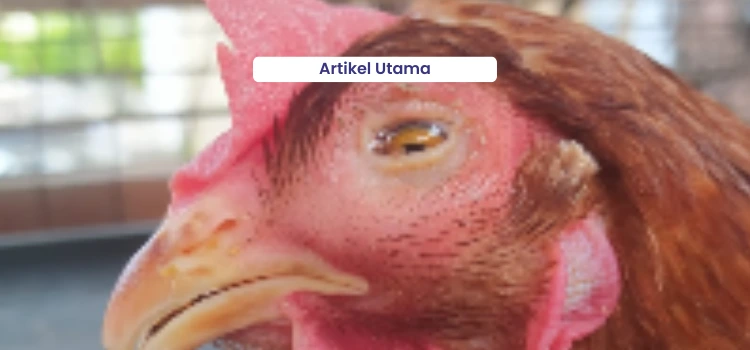
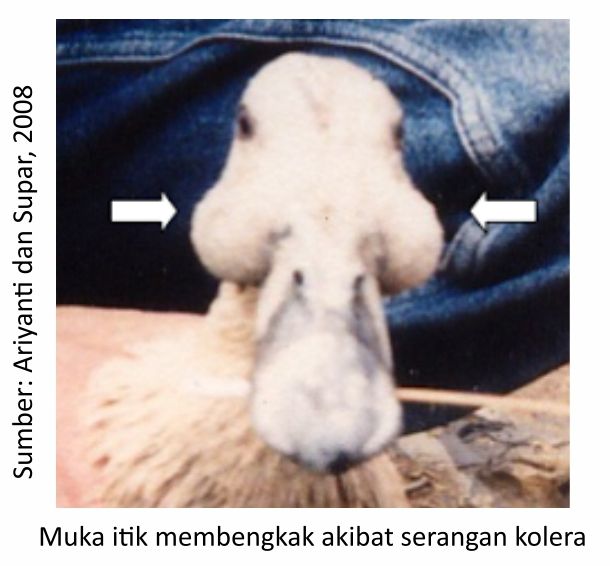
- In the acute form of cholera, symptoms are often found a few hours or days before death. Symptoms that appear include decreased appetite, diarrhea that is initially watery yellowish and greenish over time accompanied mucus (mucus), increased respiratory rate, facial area as well as wattle swells, and sometimes Ducks are seen staggering or paralyzed. Ducks also usually make loud noises or some kind of snoring sound, and choose to separate themselves from the group.
- In the chronic form of cholera, where the disease lasts a long time (weeks to months), symptoms that appear in the form of shortness of breath, dull fur, cloudy green diarrhea, swelling of the head and Wattle filled with liquid or mass perkejuan, mucus out of the nose and mouth, and sometimes appear swelling of the legs and paralysis.
Related changes in the anatomical pathology of duck organs caused by cholera generally vary according to the degree of severity. Lesions that appear are usually related to damage to blood vessels so that bleeding occurs. This is because bacteria P. multocida can multiply in the blood and then produce endotoxins that can eventually break down blood vessels capillaries. The death of the duck is also suspected as a result of “shock syndrome” caused by the activity of this endotoxin.
The course of cholera infection begins when bacteria P. multocida entry through the respiratory tract (nose, red), digestive (mouth, red), or an open wound, then it enters the blood vessels and spreads to all organs. Visible organ changes in the form of bleeding ptechiae (in the form of small spots) on various internal organs, especially on the heart, liver, lungs, heart fat and abdominal fat. The liver is enlarged and white-spotted or striped in color. In addition, bleeding is often found in the form of ptechiae and echimosa (in the form of patches) on the intestinal mucosa.
In young Ducks up to 4 weeks old, in addition to the same anatomical pathological changes as above, there is more severe bleeding in the intestine with the presence of thick blood exudate. In acute cases in adult laying ducks, it is not uncommon to find Broken Yolk follicles or bleeding ovaries. If this is the case, there will be a decrease in egg production.
Prevention and control of cholera
The saying goes “better to prevent than to cure". This was also true in the case of cholera before it caused even greater material losses. Prevention of cholera is primarily aimed at eliminating the agent of the disease P. multocida along with the vector to prevent further transmission.
Ducks suffering from cholera are chronically a source of infection P. multocida the most important. Transmission of the disease can occur through the secretions of the nose, mouth, or droppings of sick Ducks. The main medium is drinking water or feed, while the air medium is less. Transmission also occurs through wounds on the skin or injection wounds. Mites, flies, rodents and wild birds can act as mechanical vectors that can transmit P. multocida from one duck to another.
Therefore, some of the cholera prevention principles that need to be carried out include:
- The cholera vaccinationCholera vaccination can be done using an active or inactivated vaccine. Regarding the age of the vaccine can be adjusted with the information listed on the package label of each type of vaccine. Keep in mind that vaccination measures to prevent cholera must always be supported by good maintenance management practices and strict biosecurity.
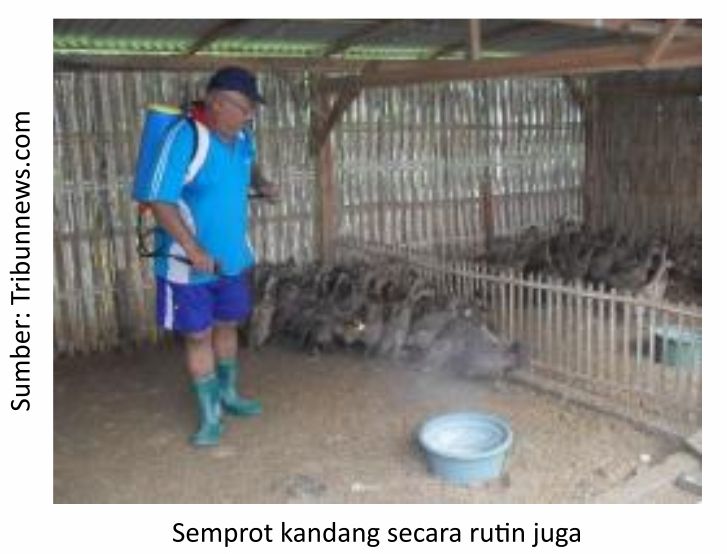
- Reducing the bacterial population P. multocida in the cageThe trick is to eradicate mice, insects (flies and mites) and wild birds that are around the cage. Do also spraying the cage, drinking water sanitation, and washing the feed and drinking place every day. In addition, prevent the feed from being contaminated with duck droppings and keep the duck cage dry by trying to get the inside of the cage to be exposed to direct sunlight regularly. To reduce the population of flies, we can use products Larvatox, Flytox, and Delatrin. While parasitic mites can be eradicated with Delatrin. For disinfection of duck cages, breeders can use disinfectants Antisep or Neo Antisep it's safe to hit a duck. As for Drinking Water Sanitation, you should use Desinsep.
- Increase the endurance of ducksDo monitor feed consumption to ensure the amount of duck consumption is reached. The other side of the coin is a multi-dimensional array (Fortevit or Vita Stressand immunocompromised )Imustim) through drinking water.
Then how is it handled if the duck is sick with cholera? Cholera is a bacterial disease that can be overcome by administering antibiotics, both through drinking water and injections. But the selection of treatment should be based on the severity of the disease. For mild cases it can be treated with antibiotics applied through drinking water such as Neo Meditril, Proxan-S, or Choleridine. Meanwhile, if the case of the disease is severe, then choose antibiotics that are given by injection such as Gentamin, Medoxy LA, or Vet Strep.
The administration of the drug should be carried out according to the dosage and rules of Use indicated on the product packaging label. The drug should also be given completely even though the duckling has shown signs of recovery. For example, in the rules of use Neo Meditril the dosage is 0.1 ml per kg of body weight given for 3-5 days, but on 2 days of Drug Administration Ducks have shown healing. Although apparently healed, giving Neo Meditril it should still be completed until the 3rd or 5th day. The goal is for the cholera bacteria to be completely eradicated. If the treatment period is shortened, then it can trigger drug resistance. Resistance can also be triggered by insufficient doses of Drug Administration. Therefore, when administering the drug, it is necessary to ensure that the dosage and duration of administration are appropriate.
Treatment of the disease will not be optimal without support biosecurity and good maintenance management. Therefore, in addition to the proper administration of antibiotics, to deal with cholera also provide vitamins (Vita Stress, Fortevit, or Solvitto speed up the healing process (recovery). Spraying the cage and drinking water sanitation also needs to be done. Ducks that die from this disease should also be burned or buried to avoid transmission to other ducks, as well as the recurrence of cases on the same farm. The reason is, these bacteria can last for months in duck carcasses and moist soil.
Thus the discussion about cholera in Ducks. Hopefully it can add insight to duck breeders. Greetings success.