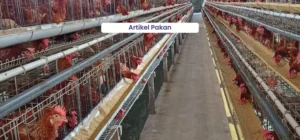
Parasitic diseases such as coccidiosis are one of the threats that farmers often face. From the disease ranking data compiled by the team Technical Education and Consultation Medion, in 2019 coccidiosis or often called berak darah is in 4th and 7th place that attacks broilers and layers. Many cases of coccidiosis occur in chickens kept in postal cages using litter. While chickens kept in battery cages are less likely to become infected with coccidiosis. But still, coccidiosis should not be taken lightly because this disease can cause quite high economic losses.
Causes Of Coccidiosis
Coccidiosis is a disease that causes damage to the gastrointestinal tract, especially in the small intestine and cecum (appendix). This has an impact on the process of digestion and absorption of nutrients that are not optimal. Coccidiosis is caused by protozoan parasites belonging to the genus Eimeria. There are currently 9 known species Eimeria which usually affects chickens, of which 6 species are pathogenic such as E. tenella, E. necratix, E. maxima, E. acervulina, E. brunetti and E. mythic.
Coccidiosis infection itself starts from the ingestion of oocysts (a kind of egg cell) Eimeria which has undergone sporulation (producing spores). These oocysts can be transmitted mechanically through cub cages, cage equipment, rations, drinking water or litter contaminated.
Life cycle Eimeria consists of 2 stages, namely stage exogenous (outside the body of the chicken) and level endogenous (inside the chicken). Stage exogenous it begins when chickens previously infected with coccidiosis secrete oocysts into the external environment along with feces. Oocysts that come out, then produce sporulation sporozoites and change the form to infective (stage capable of infecting). Next go to the stage endogenous where the sporulated oocysts are accidentally swallowed and enter the chicken's body. Oocysts that enter the chicken's body will develop and cause intestinal damage accompanied by bleeding.
Humidity level litter high because of the pile litter too much and coupled with the spill of rations, drinking water and rainwater will greatly support the breeding Eimeria sp. The impacts that occur in chickens when attacked by coccidiosis include stunted growth, decreased efficiency in the use of rations, and deaths that can reach 80-90%. Coccidiosis attacks will also cause immunosuppressive effects (decreased immunity) which makes chickens vulnerable to infection with other diseases. Immunosuppressive mechanisms due to coccidiosis are:
- Damage to the tissues of the intestinal mucosa causes the process of digestion and absorption of nutrients is not optimal. As a result, there is a nutritional deficiency so that the formation of antibodies is disturbed.
- Payer’s patches and caeca tonsil in the intestinal mucosa is a local immune organ in the digestive tract so that damage to these two organs results in chickens being more susceptible to infection with other diseases.
- Along the intestinal mucosal tissue there is antibody-producing lymphoid tissue (IgA), where the IgA will accumulate in the blood. Damage to the intestinal mucosa will result in the release of plasma and red blood cells so that the level of IgA as a defense in the surface layer of the intestine decreases.
Clinical symptoms and Organ changes
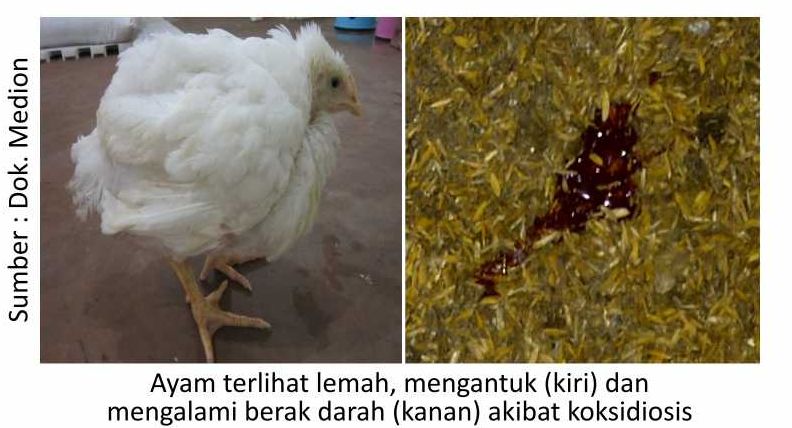
In addition, the patient will experience symptoms such as nausea, vomiting, nausea, vomiting, and vomiting (anorexia). Indications for infection E. tenella it usually occurs acutely, occurs bloody discharge and can lead to death. Infection E. maxima causes feces to contain thick reddish exudate and mixed with blood spots.
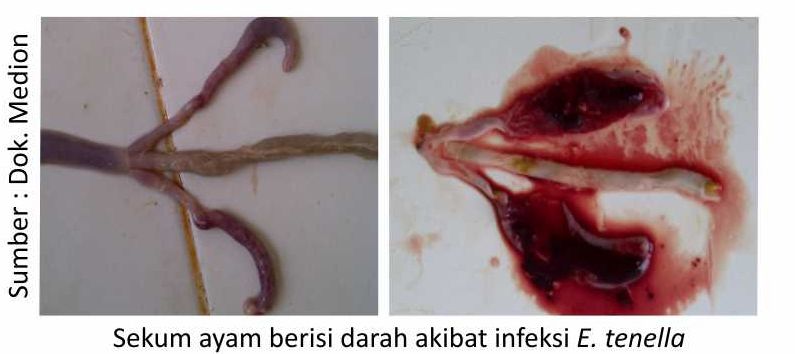
From the results of chicken surgery indicated coccidiosis, organ changes that will be found if the cause E. tenella it is an enlarged cecum filled with blood. While species Eimeria others cause abnormalities in the form of thickening of the intestinal wall accompanied by inflammation of the cataract (purulent) to hemorrhagic (bleeding).
Prevention Of Coccidiosis
Efforts that can be done in the control of coccidiosis is to maintain litter keep it dry, maintain the density of the cage and keep the cage ventilated. In addition, efforts to eradicate coccidia also need to be carried out as follows:
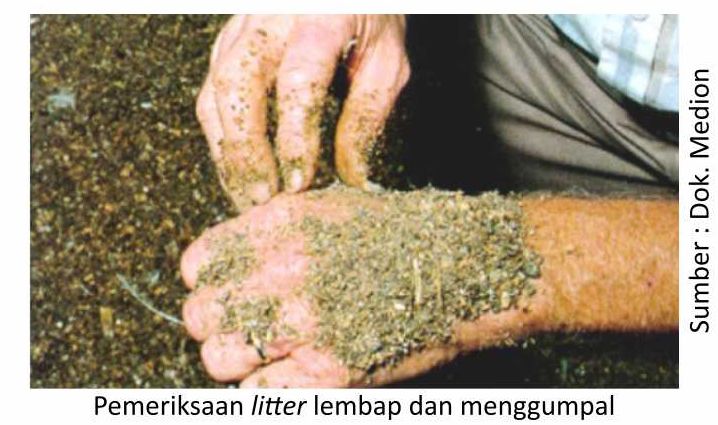
1. Litter Management Is The Key To Controlling Coccidiosis
Condition litter it should still be kept in dry conditions. Litter damp is a comfortable condition for Eimeria sp. grow and multiply. It is necessary to do the handling strategy litter in order not to cause problems, it is primarily a source of disease transmission.
- Use litter with an initial thickness of about 8-12 cm for postal cages and 5-8 cm for stage cages.
- Need to do back and forth management litter to prevent litter wet. If the amount litter a small lump, then it can be sorted and removed from the cage. However, if the number litter the lumpy or wet already a lot, better stacked with litter the new to the lumpy does not appear.
- Provide rations with protein and salt content that suits the needs of chickens because it can cause chickens to drink more so that the feces are diluted and litter get wet quickly.
2. Standard cage density
The ideal chicken density is 15 kg/m2, equivalent to 6-8 broilers and 12-14 layers grower (pullet) per m2 of it. If the density of the cage exceeds the capacity of the cage then the amount of chicken manure is also more and more and this is certainly not proportional to the amount litter who is in the cage as a result litter not able to fully absorb the dirt. Dirt will accumulate and cause ammonia levels in the cage to be high so that the chicken becomes stressed and chickens are susceptible to disease.
3. Maintain cage ventilation
A good air ventilation system will keep the air quality optimal for chickens. In addition, good ventilation will reduce the level of humidity in the cage and indirectly affect the quality litter.
4. Eradicating coccidia in the environment
In addition to observing the conditions litter, density and ventilation of the cage, it should be noted also how to eradicate oocysts Eimeria sp. So that oocysts do not further sporulate and infect chickens, the farmer must carry out strict sanitation and disinfection. But unfortunately, oocysts are relatively resistant to disinfectants that are widely sold on the market. Even so, there is still a way we can use to eradicate oocysts, namely by giving lime or caustic soda when preparing cages, especially for postal cages.
Treatment Of Coccidiosis
1. Give anticoxidia drugs
Currently, a wide variety of antikoksidia products have been produced, both chemical and herbal. Examples of chemical anticoxidia drugs are Coxy, Anticancer, Therapy, Koksidex and Toltradex. In addition to chemical anti-oxidants can also be given anti-oxidants that are herbal such as Fithera. Fithera it is a Medion herbal product that acts as an antibacterial and antiprotozoan so that it can be used in cases of coccidiosis. The procedures for the treatment of coccidiosis that must be considered include:
- Administration of B vitamins during the treatment period is not recommended. Vitamin B can only be given after treatment is complete / finished.
- In conditions of renal impairment, for example, when the occurrence of coccidiosis is in conjunction with Gumboro disease, Infectious Bronchitis diseases that cause damage to the kidneys, then it can be administered kidney-safe anticoxidants such as Therapy, Toltradex and Fithera.
2. If possible, remove feces mixed with blood that is on litter to avoid being pecked by other chickens.
3. Isolation of sick chickens and culling chickens are in bad shape.
4. Especially for broilers, if cases of disease occur at the age of >25 days and the price of chicken on the market is good, it is recommended that the chicken is harvested only.
By implementing some of the steps above, it is expected that farmers can always be aware of parasitic attacks that cause coccidiosis so as to prevent high losses. Greetings.