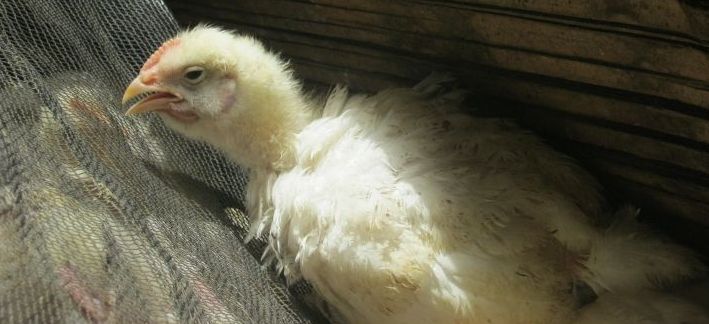
Disease of Chronic Respiratory Diseases (CRD) is still a threat of respiratory diseases in poultry, especially in chickens. The disease is found in all parts of the body (breeder), laying and broiler. The nature of the disease that is easily transmitted and becomes a chronic disease is what makes CRD difficult to eradicate.
In principle, a disease must not be waited for and then only treated. We still have to instill the understanding that prevention is more important than treatment.
Respiratory System Of Chickens
Chickens have a slightly different respiratory system than the respiratory system in lactating animals (mammals, red), because it is equipped with air sacs that have a unique structure and function, as well as a relatively simple lung organ. The ratio of a chicken's lung volume to its body volume is generally much smaller than that of mammals.
In addition, in chickens, respiratory gas/air exchange occurs along the air capillaries of the lungs that are shaped like a mesh, not in the alveoli (air cavities in the lungs). That is why chickens or poultry in general are very easy to experience poisoning through the respiratory system.
As for the air sacs, this one chicken respiratory organ plays a very important role in the process of chicken breathing, especially during activity, because it serves to store oxygen reserves in the body. The air sac is an organ of expansion / extension of the lungs that spreads to the neck, chest and abdomen.
The air sac itself becomes a weak point of the respiratory system because it consists of only a few layers of cells and few blood vessels. In this section there are very few phagocytic cells, while the infectious agents in the environment are numerous. This will make it easier for infectious agents to colonize and damage epithelial cells. So do not be surprised if there are changes in the air sacs, such as inflammation or become cloudy, it can be one indication of an attack of respiratory disease.
Causes of CRD
The respiratory tract of chickens is naturally equipped with mechanical defenses. The surface is lined with mucosa and there are Cilia (vibrating hairs) and mucus that serves to filter incoming air. M. gallisepticum often present in the respiratory tract of these chickens, it enters together with the air flow that has previously been contaminated. When it enters the respiratory tract of chickens, the agent of this disease settles on the mucosa of the respiratory tract and damages its cells. The presence of these bacteria will trigger inflammation and blood flow in the area becomes increased. Bacteria will join the bloodstream and go to the air sac, where the air sac is a suitable place for M. gallisepticum live and multiply.
M. gallisepticum Gram (-) bacteria are polymorphic coccoid and do not have a cell wall so that these bacteria are easily broken/die by disinfectants, heat, sunlight and other factors. The attack pattern caused by CRD is relatively slow. When chickens get infected M. gallisepticum, the infection will run for a fairly long period of time. For several weeks the bacteria will remain settled in the respiratory tract and only work to infect acutely when the chicken is stressed.
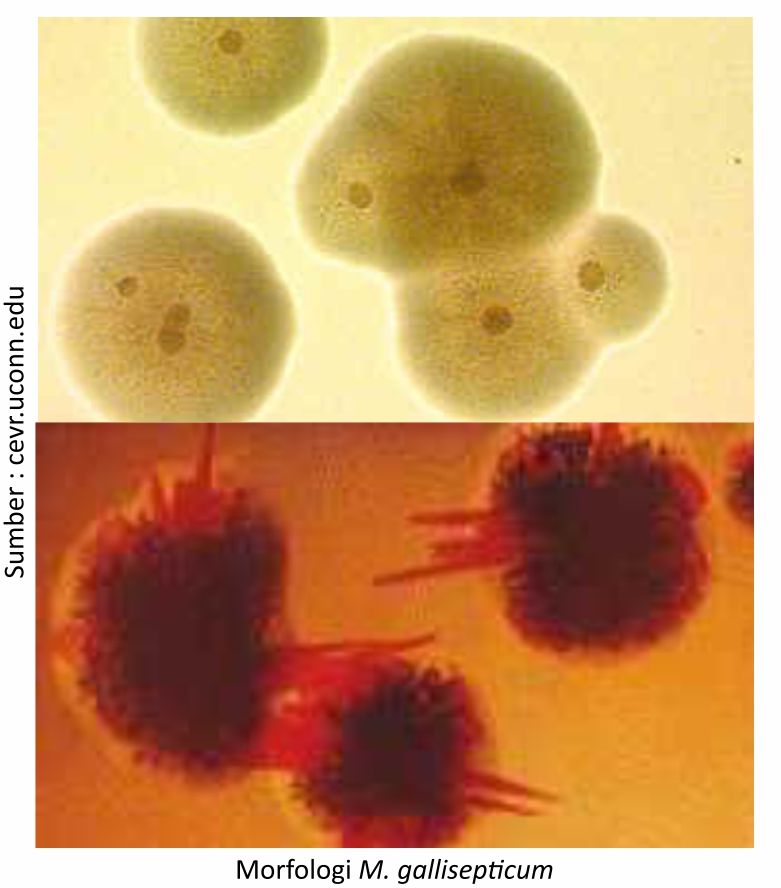
M. gallisepticum cause serious problems in broilers where the bacteria often work synergistically with other infectious agents such as E.Col. E. Coli infection bacteria are found almost everywhere, especially in dirty places. Colibacillosis is indeed a disease synonymous with hygiene. The dirtier the environment of the farm then colibacillosis will be the higher the incidence rate. Therefore, colibasillosis is highly dependent on the implementation of livestock management. The mortality rate from colibacillosis can reach 10%. The onset of CRD that attacks the respiratory tract, will further open up opportunities for other bacteria such as E.bra to participate in infecting chickens so that a complex CRD occurs. Complex CRD is a combination / complication of disease between CRD and colibacillosis.
Clinical symptoms and anatomical changes
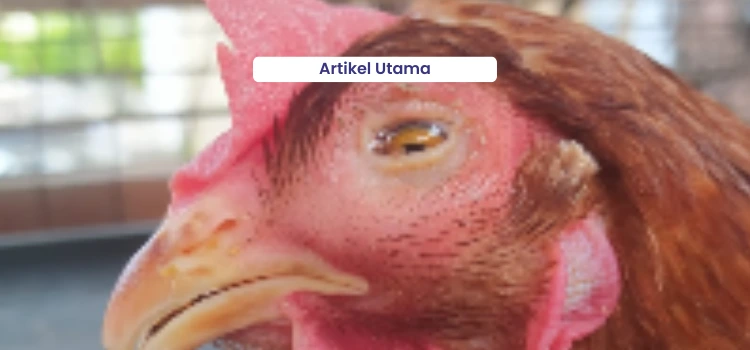
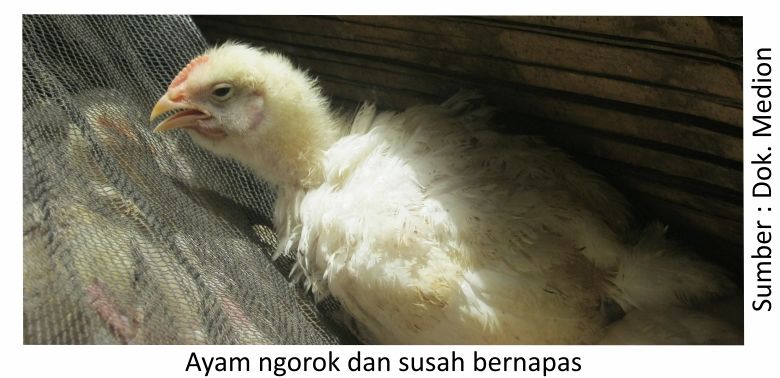
Clinical symptoms that appear can vary, from subclinical to difficulty breathing, depending on the severity of the disease. The incubation period ranges from 6-21 days. Visible clinical symptoms include mucus discharge from the nose and snoring. Other symptoms that appear are inflammation of the conjunctiva of the eye so that it is swollen and watery. A decrease in ration consumption also occurs followed by the development of body weight that is below the standard. Chickens suffering from impaired growth or decreased egg production. However, if it is complicated by colibacillosis, the clinical symptoms that appear in young chickens include chicken chills, loss of appetite, weight loss, and increased conversion ratio of rations. Chicks are more often seen in flocks near heaters.
Visible anatomical pathological changes include cavities and sinuses of the slimy nose. If these changes occur for a long time, the mucus will be yellow with a cheesy consistency. The air sacs become cloudy or contain mucus. In the later stages, the mucus becomes yellow and of a cheesy consistency. Such exudate can also be found in the heart and pericardium.
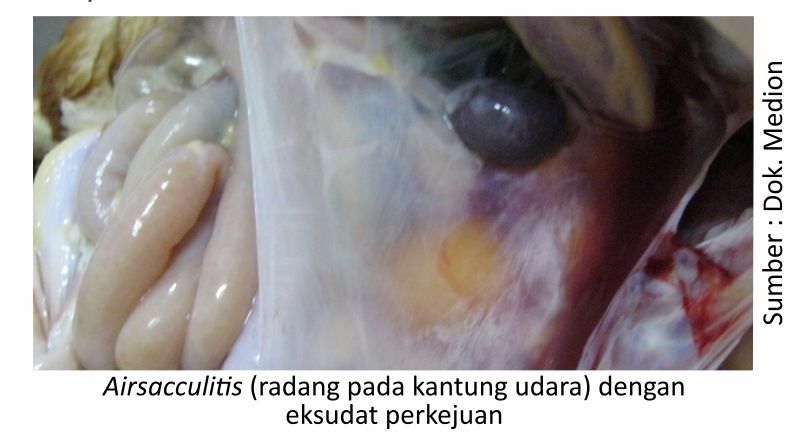
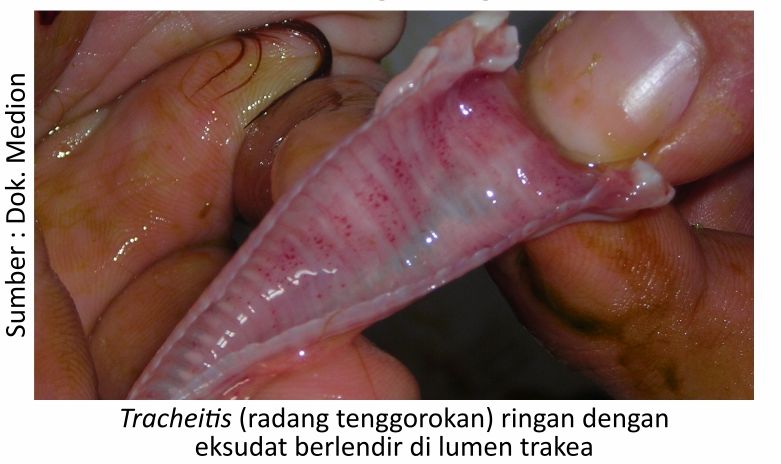
In chickens suffering from complications can be found inflammation of pericardium, the liver capsule and on the air sacs. Inflammation of the oviduct is also often found. Other changes that can be found include the mucous membrane of the trachea covered with mucous fluid, swollen and yellowish-red in color.
In the nurseryhatchery) when going to hatch, chicks from eggs infected with CRD do not have the energy to peck eggshells, so they can not hatch. It is also often found that chickens have diarrhea of green, whitish-yellow color. Chickens that show these clinical symptoms will die in a short time. CRD if it attacks young chickens, symptoms that appear in the form of a weak body, drooping wings and feces colored like soil.
The spread of CRD cases in Indonesia and the impact of the attacks
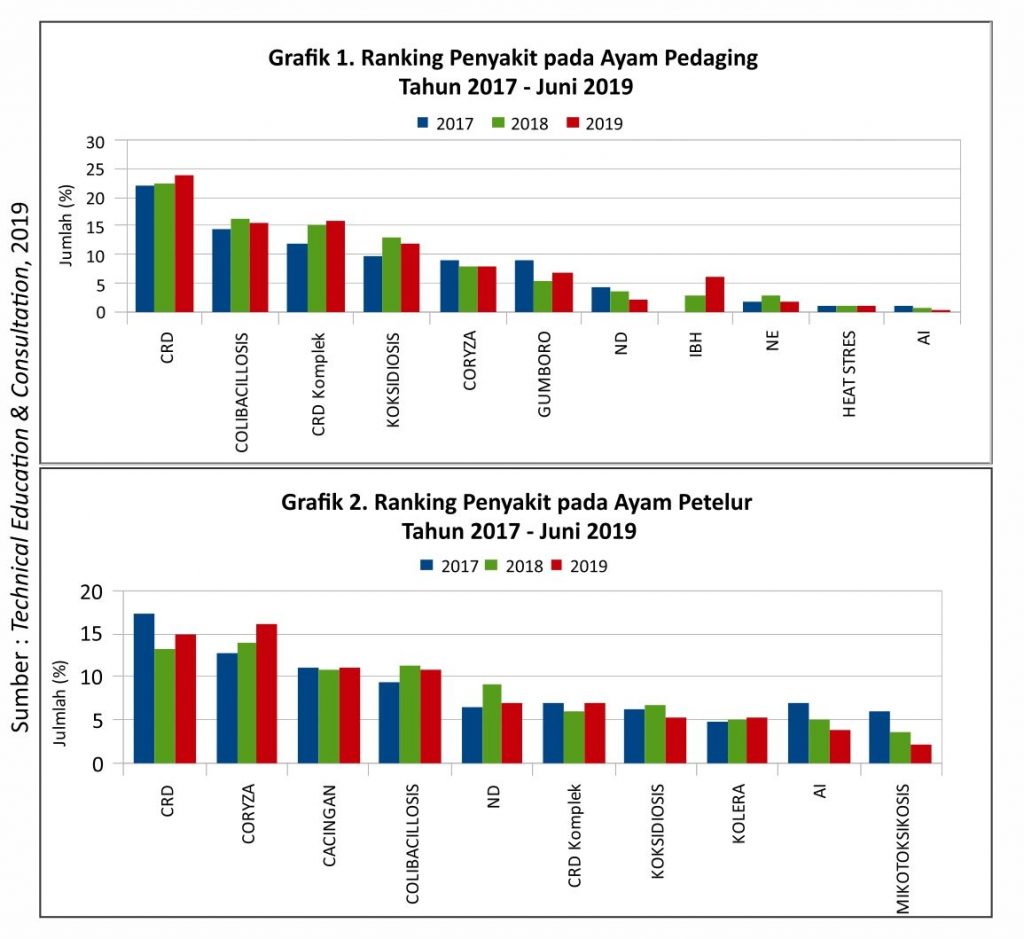
From Team data Technical Education and Consultation (TEC) Medion reported that in 2019 snoring diseases took the first and second place out of 10 diseases that often affect broilers (broilerthe chicken (layer) (Graphs 1 and 2). We already know that CRD is immunosuppressive or able to suppress the immune system of chickens. In the field, the incidence of pure CRD is widely encountered and even accompanied by many complications with other diseases, especially E. Bra, so called complex CRD. Based on field data, pure CRD ranks 1st in broilers and layers. Complex CRD ranks 2nd in broilers and 6th in laying hens.
Long drought, heat stress, dusty environment, smoke pollution, plus declining water quality due to drought, all that triggers the incidence of CRD disease in chickens, both broilers (broilerthe chicken (layer). The climate picture is very relevant to the current situation in almost all regions of the country.
One of the biggest threats of CRD during this time is a trigger for increased mortality through complications. Not only that, CRD complications can also cause embryo death, Chick death, lower the quality of chicken carcass/meat and lower egg production, depending on secondary diseases that attack.
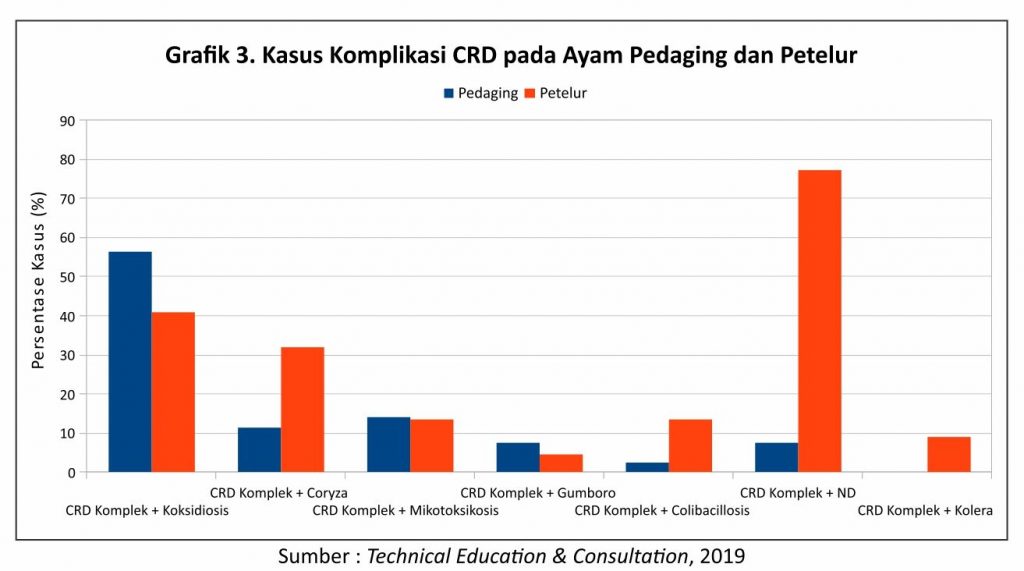
CRD cases that have collaborated with E. Coli infection it can trigger mortality up to 10-15%, or even up to 20%. While for pure CRD, the death caused is very low, around 5% or none. In addition to a close relationship with E. Coli infection, CRD in some cases can also increase sensitivity to infection with korisa, cholera, coccidiosis, Gumboro and ND, so the damage to the tissues and organs of chickens that appear will be more severe. And automatically, the production figure is good broiler or layer it will also come down.
Predisposing Factors
CRD is difficult to treat because it attacks the respiratory organs that are few blood vessels so it is recommended the selection of broad-spectrum antibiotics and the concentration in the respiratory tissue is very high and long lasting.
Predisposing factors (provoking factors for the appearance of the disease, red) Complex CRD include maintenance systems with too hot or cold temperatures, high humidity, lack of ventilation, litter too humid, high ammonia levels, too high density of livestock and maintenance methods with different ages in one farm location. These factors will partially affect the air quality in the cage. The large number of dust particles in the air will disrupt the work of the respiratory tract. Coupled with an increased concentration of ammonia and eventually inhalation will irritate the respiratory tract of chickens and damage the cilia of the mucous tissue. The cells on the surface of the respiratory tract become damaged, so that the body's initial defense mechanisms become disrupted and disease agents such as M. gallisepticum those carried by the air will easily stick and eventually cause infection and more severe damage.
Stress is also one of the predisposing factors of complex CRD. Chickens that have previously been attacked by CRD, when their immune system decreases when stressed, other infections such as colibacillosis will easily attack so that the disease status increases to complex CRD. Things that can cause stress in chickens include the implementation of beak cutting, vaccination, cold, heat stress, poor transport and ventilation.
Ammonia, The Main Cause Of Respiratory Cases
CRD cases can appear in any maintenance period. But so far the efforts of farmers in applying the principles of safe breeding with CRD, then the case can be minimized, such as paying attention to all matters related to maintenance management, ranging from the selection of quality DOC to the harvesting process. Another thing that can be applied in addition to related to the quality of DOC is improve the heating system/brooding period, because after all, success indicators start from the phase. Then, pressing the rate of ammonia levels in the cage, by improving the cage curtain opening and closing system used, including reducing the pile of feces under the floor of the cage (if the cage is a stage). In his book, Prof. Charles Rangga Tabu (chicken disease and its prevention, Volume I), States that the accumulation of feces can worsen the air condition in the cage due to increased ammonia levels. The safe ammonia level limit is around 15-20 ppm. More information can be seen in Table 1.
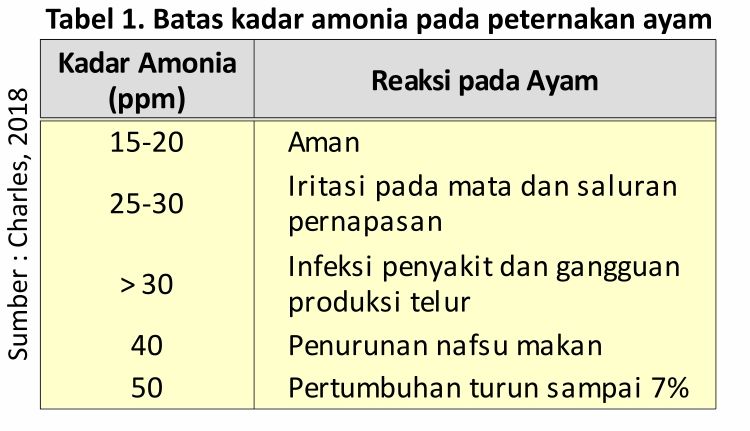
Di Amerika Serikat, level maksimum amonia yang ditetapkan oleh National Institute of Occupational Safety and Health (NIOSH) dalam kandang unggas adalah 25 ppm, sedangkan oleh Occupational Safety and Health Administration (OSHA) adalah 50 ppm. OSHA states the ammonia level of 50 ppm as the maximum level that causes irritation to the eyes, nose, and throat of humans. In general, humans are still able to hold ammonia at concentrations between 20 and 30 ppm.
We can also measure the level of ammonia itself in several ways including by using an ammonia indicator tool, namely amoniameter. The most important point when using such a device is to place it at the right height, for example, 10 cm from the floor or equivalent to the height of the chicken's head. If it is too close to the floor, the measured ammonia will be too concentrated, while if it is too high it will be less effective because ammonia tends to be carried by the wind/ambient air.
Proper treatment
Because CRD is caused by bacterial agents also Mycoplasma sp., then step treatment with antibiotics is very important to do and note. Well, what is now a problem is that many farmers complain that snoring is difficult to cure. They stated that even though they had given medicine (antibiotics), the snoring still did not heal. What's wrong?
Related to this, there are 3 treatment principles that must be considered in treating CRD, namely:
- Proper use of antibiotics
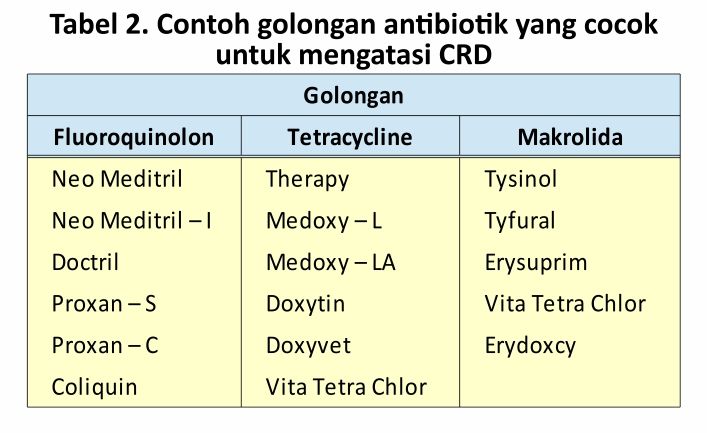
To treat CRD, it is necessary to know that also Mycoplasma can not be killed with antibiotics that work to damage or inhibit the formation of cell walls, because also Mycoplasma it has no cell walls on its surface. Therefore, for also Mycoplasma we can provide antibiotics that act on the membrane and nucleus of cells, especially those that actively inhibit the formation of folic acid and bacterial proteins Mycoplasma, and have a high concentration in the place where the bacteria are located (respiratory tract), not a high concentration in the blood. Antibiotics suitable for CRD are those belonging to the class of fluoroquinolones, macrolides and tetracyclines. Examples of Medion products that can be used such as Neo Meditril, Proxan-S, Erysuprim, Vita Tetra Chlor, Therapy, Doxytin, etc. (Table 2.).
- Proper application
In order for CRD treatment to be effective, the timing of antibiotic administration must be appropriate. The exact time of treatment is related to the length of time the drug levels work in the chicken's body.
Ideally, antibiotics must continue to exist in the chicken's body for 24 hours in order to eradicate bacteria properly. But because at night we can not be sure of antibiotics consumed by chickens, then the minimum antibiotics continue to exist in the body for 12 hours. Therefore, the administration of antibiotics is carried out at least 2 times a day, so the dose for one day should be divided by 2. Twice the administration in question is done in the morning (06.00 – 12.00) and afternoon (12.00-18.00) or the drug that has been dissolved consumed for 4-6 hours.
Optimize Prevention from the environment and supportive therapy
In order to prevent CRD and its followers, we need to improve our comprehensive maintenance management system by doing the following:
- Management litter
Condition litter should still be kept in dry conditions, especially during the rainy season. Litter wet and dirty will trigger the onset of respiratory and digestive tract disorders, because in litter many develop bacteria, viruses and parasites. It is necessary to do the handling strategy litter in order not to cause problems, it is primarily a source of disease transmission. Use litter with an initial thickness of about 8-12 cm for postal cages and 5-8 cm for stage cages.
Need to do back and forth management litter to prevent litter wet. Flip-flops litter performed regularly every 3-4 days from the age of 4 days to the age of 17 days. During the rainy season litter it will be easy to get wet and clump. If the amount litter a small lump, then it can be sorted and removed from the cage. However, if the number litter that clumps or wet already a lot, better stack with litter the new to the lumpy does not appear. Litter previously used substitutes should first be sprayed using disinfectants such as Medisep or Zaldes.
During the rainy season, it is necessary to repair the damaged structure of the cage. For example, repairs to a leaking roof, roof repairs so as to prevent rainwater tampias. Examination of the condition of the curtain, whether there is a hole or not and how to open the curtain from below that causes the chicken to be exposed to rainwater tampias. Save litter in a place that is protected from rainwater tampias.
- Cage density
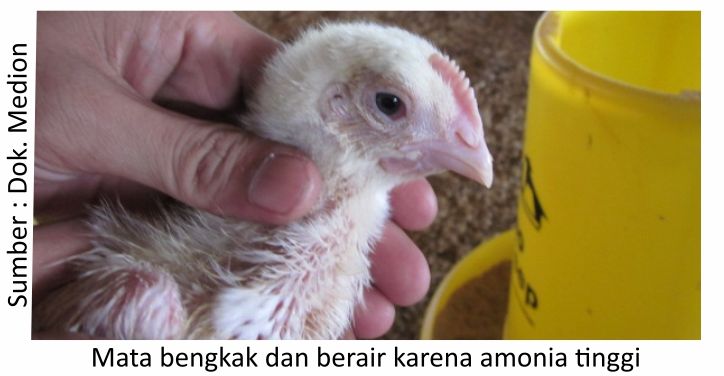
The ideal chicken density standard is 15 kg / m2 or equivalent to 6-8 adult broilers and 12-14 grower laying hens (pullets) per m2. If the density of the cage exceeds the capacity of the cage, the amount of chicken manure is also more and more and this is certainly not proportional to the amount of litter in the cage as a result of the litter is not able to fully absorb the feces. Feces will accumulate and cause ammonia levels in the cage to be high so that the chicken's respiratory tract will be irritated and trigger respiratory disease infections.
- Maintain cage ventilation
A good air ventilation system will keep the air quality optimal for chickens. Dirty air mixed with ammonia and CO2 will be wasted out of the cage replaced with oxygen. Setting open and close the curtain, the height of the stage floor and the width and distance between the cages is very influential on the air ventilation system. During the rainy season, the curtain opening and closing system must be considered so that the chicken is not cold and not exposed to rainwater or airflow tampias that are too strong. A good ventilation system will produce good air quality. In addition, good ventilation will reduce the humidity level in the cage and indirectly affect the quality of the litter.
- Keeping chickens healthy
The main thing that is tried to keep chickens healthy is to avoid stress factors. Stress factors include disease agents, uncomfortable environments and poor maintenance practices. Berikan multivitamin (Strong n Fit, Vita Strong, Vita Stress atau Fortevit) dan Imustim untuk meningkatkan stamina serta daya tahan tubuh ayam. Also do a cleaning program by giving antibiotics such as Therapy, or Neo Meditril in accordance with the dosage and rules of use to eradicate the seeds of the disease during the incubation period or before the symptoms of the disease appear.
- Perform biosecurity strictly
Generally farmers who run the program biosecurity well has the ability and sensitivity to detect early the emergence of CRD infection in the cage. So that the rapid pace of anticipation can suppress the spread of the disease.
The application of biosecurity these include by improving the management of the cage, sanitation and disinfection in the area of the cage environment using Formades or Sporades, carry out cleaning and disinfection of cage equipment (ration places, drinkers, etc.) using Medisep routinely, perform drinking water sanitation using Desinsep to kill E.bra contained in drinking water with the 3-2-3 program, empty cages must be applied at least 14 days after the cage is cleaned and traffic control by controlling vehicles and guests in and out of the farm location.
Basically snoring disease / CRD is a disease of mismanagement (maintenance management). Its attack on the respiratory system of chickens makes this disease identical as an opening disease to other diseases, so its appearance is often accompanied by complications. To handle it, farmers assisted by veterinarians must be able to diagnose correctly and give the right type of antibiotic. Of course, it is still supported by the implementation of good maintenance governance and program application biosecurity strictly. Greetings success always.