Father Basofiandra
Instagram: @basofiandra
Is there a difference in the quality of eggs in chickens that have laid eggs for the first time with chickens that have laid eggs many times?
Answer:
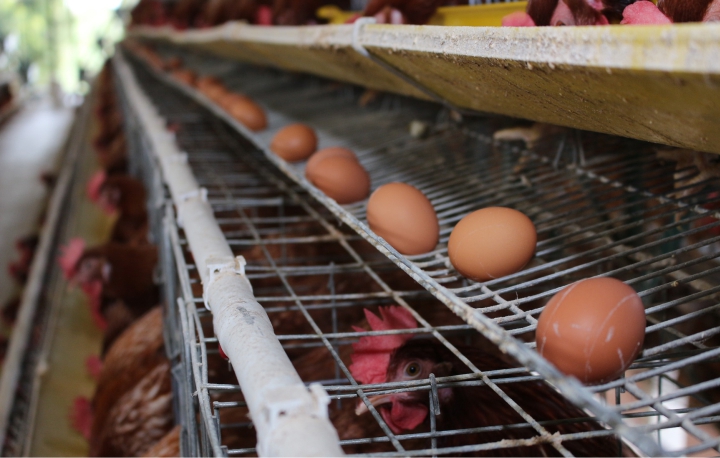
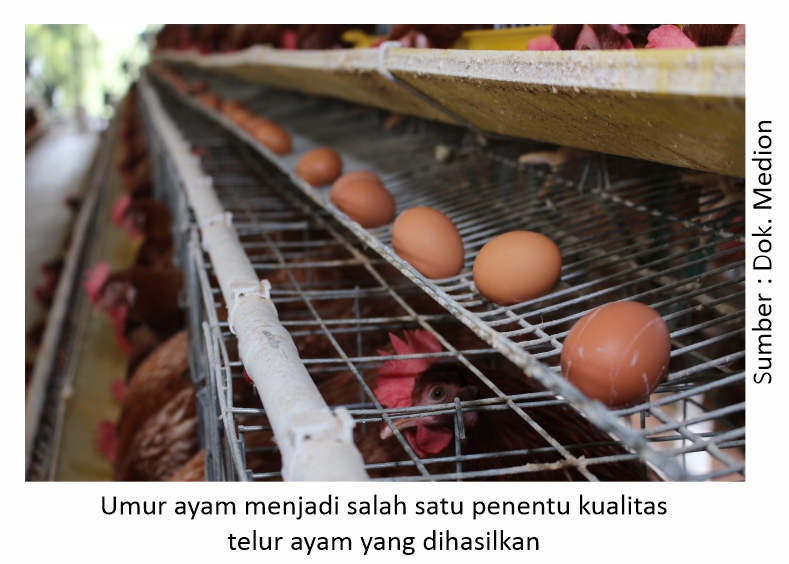
Thank you Mr. Basofiandra for the question. Of course there are differences. Chickens that lay their first eggs will have better shell quality than chickens that are old (many times laying). The quality of chicken eggs can decrease as the age of the chicken increases. This is mainly seen from the color and thickness of the shells that decrease in quality.
In the transitional period of the phase grower to layer when chickens are still learning to lay eggs (hen day <2%), kecenderungannya ayam memproduksi telur dengan kerabang berwarna pucat. Hal ini disebabkan pigmen protoporphyrin there are still limited numbers so that the coloring process on the eggs has not been perfect. But in a relatively short period of production protoporphyrin number of epithelial cells of the uterus will increase with increasing age of chickens. Then when the chicken has laid many eggs and entered old age (>80 weeks), uterine epithelial cells will degenerate (aging) so that pigment production begins to decline. As a result, the ability of chickens in eggshell pigmentation will decrease and the color of the shellfish becomes paler. In addition, the size and weight of the eggs will increase as the chicken ages.
In some conditions, the thickness of the shellfish will decrease as the age of the chicken increases. The source of calcium in the formation of shellfish comes from feed and the skeleton of the chicken's body. The older the chicken, the quality of its body skeleton will be reduced which causes the supply of calcium for the formation of shells is reduced as well. If the supply of calcium from the feed is insufficient, then the availability of calcium for the formation of shells will be reduced so that the shells become thinner and brittle. On the other hand, according to Jung et al. In the chicken (2016) layer chocolate aged more than 60 weeks appears to decrease in quality in terms of egg white thickness, haugh unit as well as the color and viscosity of the yolk.
When entering the production period, provide supplements containing amino acids, vitamin B complex, A, D, E and some minerals that are important to help improve egg productivity performance. Awarding Aminovit, Strong Egg or Mineral Feed Supplement A it can help increase egg production, extend the laying period and strengthen egg shells.