Quality feed is an important factor that determines the performance of chickens. This quality feed needs to be maintained from the formulation process, mixing, storage to consumption by chickens.
Good feed storage will maintain the quality or nutritional content contained in it. This feed storage starts from the feed mill warehouse, transit warehouse and warehouse at the breeder. If the farmer uses feed self mixing (mixing their own feed), then the storage shed in the cage must be made in such a way that it is able to maintain the quality of the feed.
Good storage
Storage is one form of security measures that are always related to time that aims to maintain and maintain the commodity stored by avoiding and eliminating various factors that can reduce the quality and quantity of the commodity. Good feed storage must be able to maintain the nutrient content in it.
Some things to consider related to feed storage are :
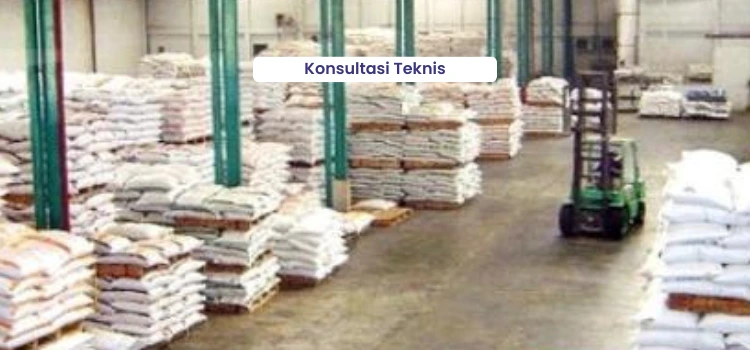
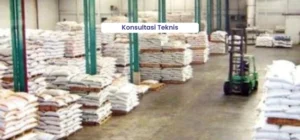
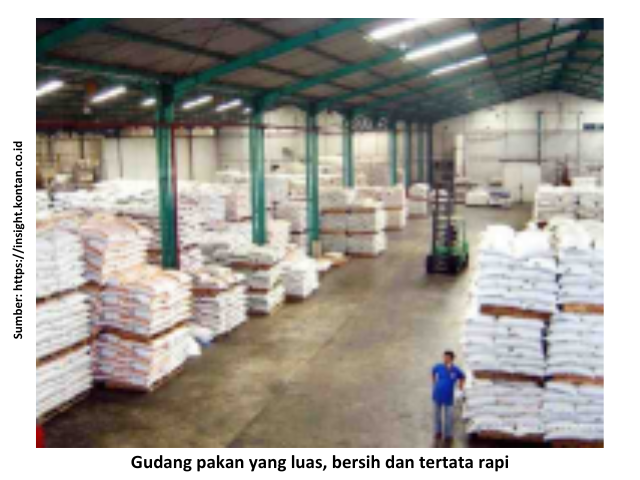
- The warehouse has a storage capacity in accordance with the feed needs of the chickens that we keep. A good Warehouse should not leak, avoid direct sun, temperatures ranging from 25-32°C with humidity of not more than 70%, free from mice and fleas. In addition, the warehouse must have a good design and layout, so that it can apply the system first in first out (FIFO). It is very important that the stored feed is of good quality.
- The cleanliness of the warehouse must be maintained. A dirty warehouse will cause mice and insects to breed comfortably in the warehouse. And if this happens, then fatal problems will arise, such as a decrease in the quality of stored feed.
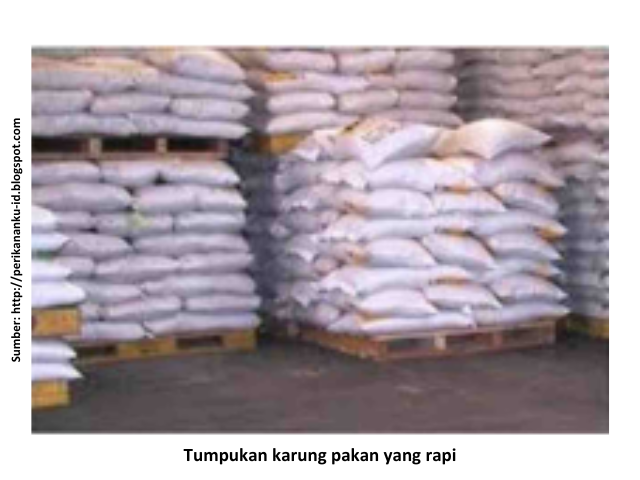
- The feed pile must be neat and there is sufficient distance between the wall and the feed pile. It is intended that the feed is not easy to clot and minimize the presence of mice.
- Feed should not be stored for too long. The average farmer has a stock of feed for 1 month. If the feed is stored for too long, then its nutritional content will decrease.
- Avoid using damaged packaging, such as perforated or moldy. Damaged packaging will cause the feed to be scattered, and this will reduce the feed ration given to the chickens. In addition, the falling splashes of feed will be a good medium for the growth of insects and rodents. In laying hen farms, repeated packaging is often used. It would be nice if this packaging was coded according to the cage. This is to minimize cases of disease transmission through packaging. And there should be a service life of this packaging.
- Pay attention to the moisture content of the feed. A good feed should have a moisture content of no more than 14%. High moisture content in the feed will lead to increased fungal contamination in the feed. If you get raw materials with water content > 14%, immediately dry with a special dryer or with the help of sunlight (for 2 days). If both are not possible, make stock settings and use them as soon as possible. Add mold inhibitor like Fungitox, contains organic acids that make the atmosphere around the fungal cells become acidic so that the growth of fungi in the feed is inhibited. In addition, the presence of an aluminum silicate complex will bind mycotoxins and prevent their negative effects.
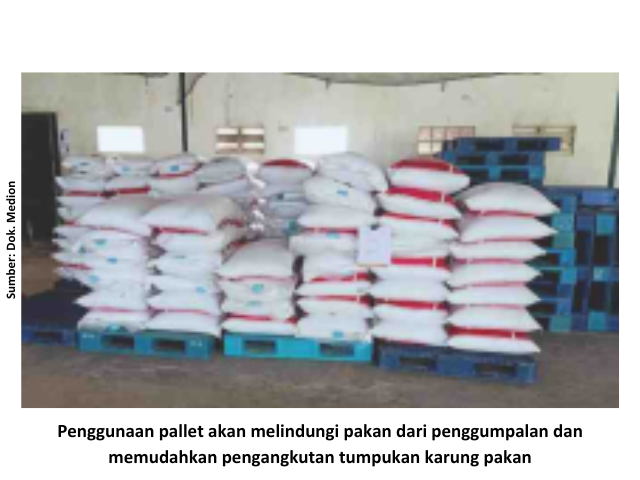
- Feed should be placed on the pallet. This is so that the feed does not come into direct contact with the floor of the cage. Feed that contacts are stored directly above the floor without using pallet, it will be easy to experience clumping.The feed will absorb the water that is on the floor. And this condition will cause the feed to be easily overgrown with mold.
Damage During Storage
Deterioration of feed during storage is determined by a complex interaction between the condition of feed raw materials, environmental conditions and organisms (microorganisms, insects and rodent) that destroy the quality of feed. Losses incurred during storage due to such interactions include weight loss, deterioration in quality, increased risk to health and economic losses.
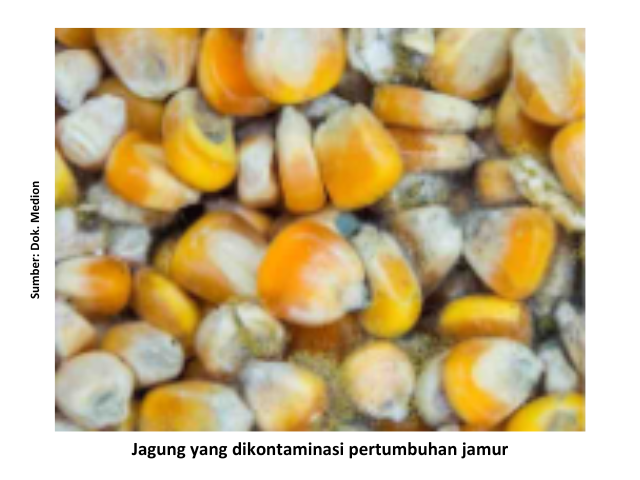
Fungal contamination
The interaction between the temperature and the water content of the feed also affects the growth rate of the fungus. The change in the moisture content of the feed to the vapor phase is driven by an increase in temperature. As a result, the water content and mold growth will increase with increasing storage temperature.
Rancidity
Storage of high-fat feed raw materials, such as fish meal, Bran and coconut cake are often subjected to oxidation which causes rancidity. This oxidation process occurs more quickly in harmony with the increase in temperature and humidity in the warehouse.
Insect and flea infestation
Insects and ticksarthropoda) has a large contribution to the destruction of feed raw materials both physical damage and loss of food substance content due to its activities. Feed raw materials in general will not be attacked by insects at temperatures below 17°C, while flea attacks can occur at temperatures 3-30°C and moisture content above 12%. The metabolic activity of insects and ticks leads to an increase in the moisture content and temperature of the spoiled feedstuff.
Temperature, relative humidity and moisture content of feed raw materials affect the development of insects. Low temperatures will suppress the breeding and activity of insects so that their growth decreases.
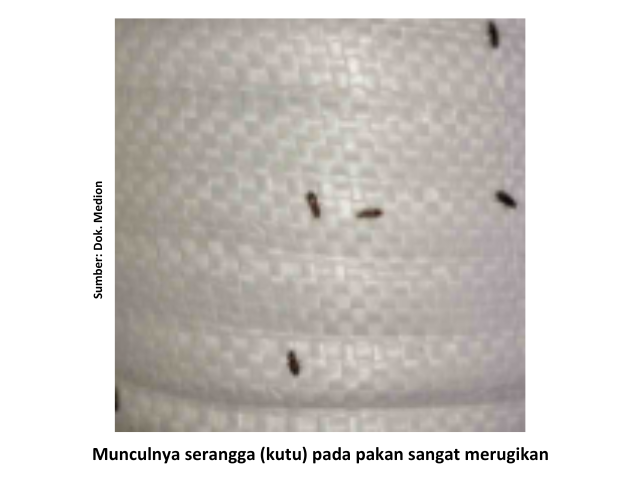
Damage to feed raw materials due to insect attacks is the most frequent case. Insects take and eat food substances from grain or other raw materials that lead to the destruction of the protective layer of the material. In addition to causing physical damage, due to their migratory nature, insects can transfer fungal spores that destroy feed raw materials and pave the way for contamination with fungi or molds that produce mycotoxins. The damage caused by insect attacks is in the form of physical and chemical damage. Physical damage occurs due to contamination of feed raw materials by droppings, nets, body parts and the smell of excrement from insects. In addition, insects also eat and damage the physical structure of the feed. This condition will lead to weight loss in the feed. Chemical damage leads to a deterioration in the quality of the material. Stored feed raw materials can undergo some chemical changes that can change the taste and nutritional value. Insect pests are able to accelerate harmful chemical changes. The secretion of the enzyme lipase by insects is able to chemically enhance the process of destruction.
Rodentia (rodent)
Rats are one of the rodentia that become pests in feed storage. Rats not only eat feed but also like to make holes in feed bags that cause leaks. And this leak will provoke the development of other feed-destroying agents, primarily insects. Rats can also play a role in spreading disease seeds and fungi in warehouses, because of the behavior of rats that like to move. These rodents generally like feed raw materials that have a high carbohydrate and water content. Rats eat and spoil the feed. Rats consume feed equivalent to 7% of body weight per day. Rats with a body weight of 300-350 grams are able to consume 20-25 grams of feed per day or about 7-9 kg per year. Damage to feed caused not only by the amount of feed consumed but also due to contamination by feces, urine and feathers. Such contamination will degrade the quality of the feed. Rodent pest control can be physical and chemical. Physical treatment can be done by improving hygiene, building antitic storage and natural prevention. Rats need food and shelter. Sanitation and hygiene of the environment is an indispensable condition for the Prevention of attacks by rodents. Hygiene is not limited to buildings where Feed is stored, but also to buildings and plants that are in the immediate vicinity of the storage. Chemical control of rodent pests can be done by administering acute or chronic rodenticides and fumigation. Acute Rodentia can very effectively kill rodents in a short time. Anticoagulant rodenticides will inhibit the blood clotting process, so the mice will die from bleeding. The anticoagulant will work after the rat has eaten the poison several times.
Bacterial contamination
Bacteria that can become contaminants in feed storage are Salmonella, Escherichia coli, Bacillus cereus and Listeria monocytogenesis. The presence of bacteria in the stored feed indicates that there has been an earlier attack by birds and rodents that can occur during the harvesting, transport and storage and production processes. Salmonella bacteria are one of the most common bacteria found in raw materials. Bacteria Salmonella it can be found at every stage in the process of production, packing, transportation and storage. Feed ingredients such as fish meal, blood meal, bone meal are at high risk of being contaminated by Salmonella. Salmonella it usually does not affect the appearance, smell or taste of the feed so it is difficult to detect simply.
Storage of feed should be done properly. Errors in storage will cause the quality of feed to decrease, both physically and nutritional content. Maintain cleanliness, good temperature and humidity, not exposed to sunlight and application First In First Out (FIFO) will help maintain feed quality.
Thus, this edition of the article, discusses the damage to feed during storage. Hopefully useful and add to our insight. Success always.