Have you ever noticed small, dark insects commonly found in poultry farms? Although they may seem harmless, these beetles are actually vectors that carry various poultry diseases.
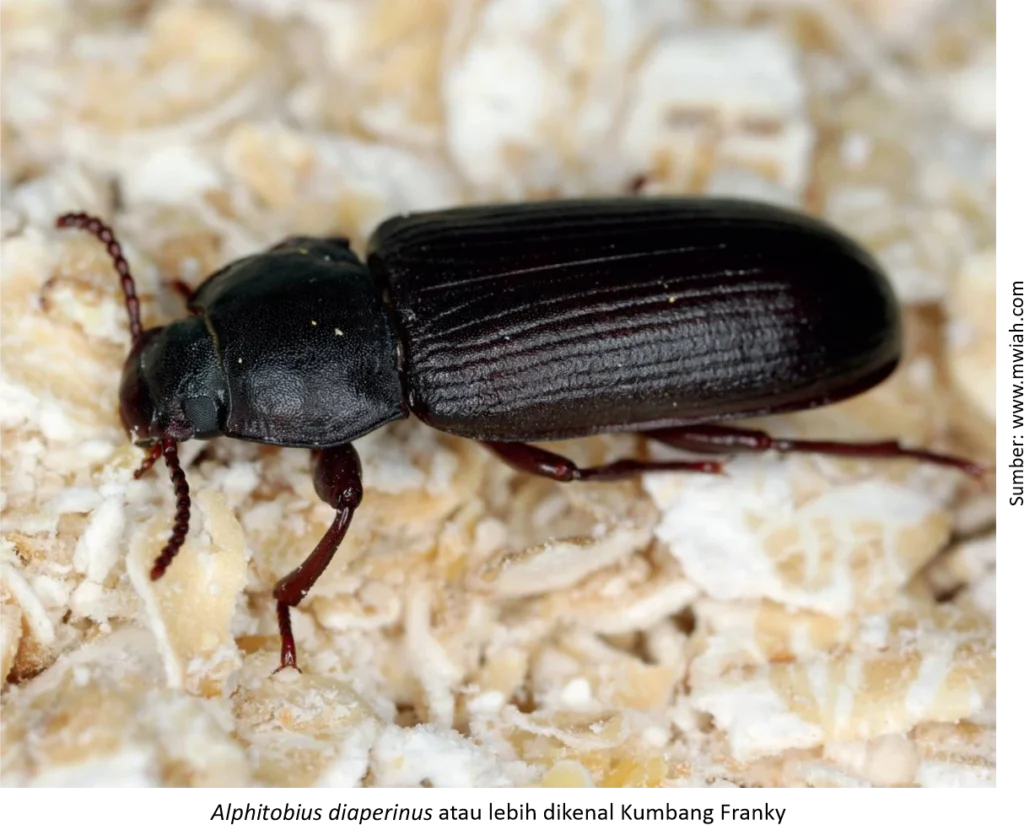
Franky Beetle as a Disease Vector in Chickens
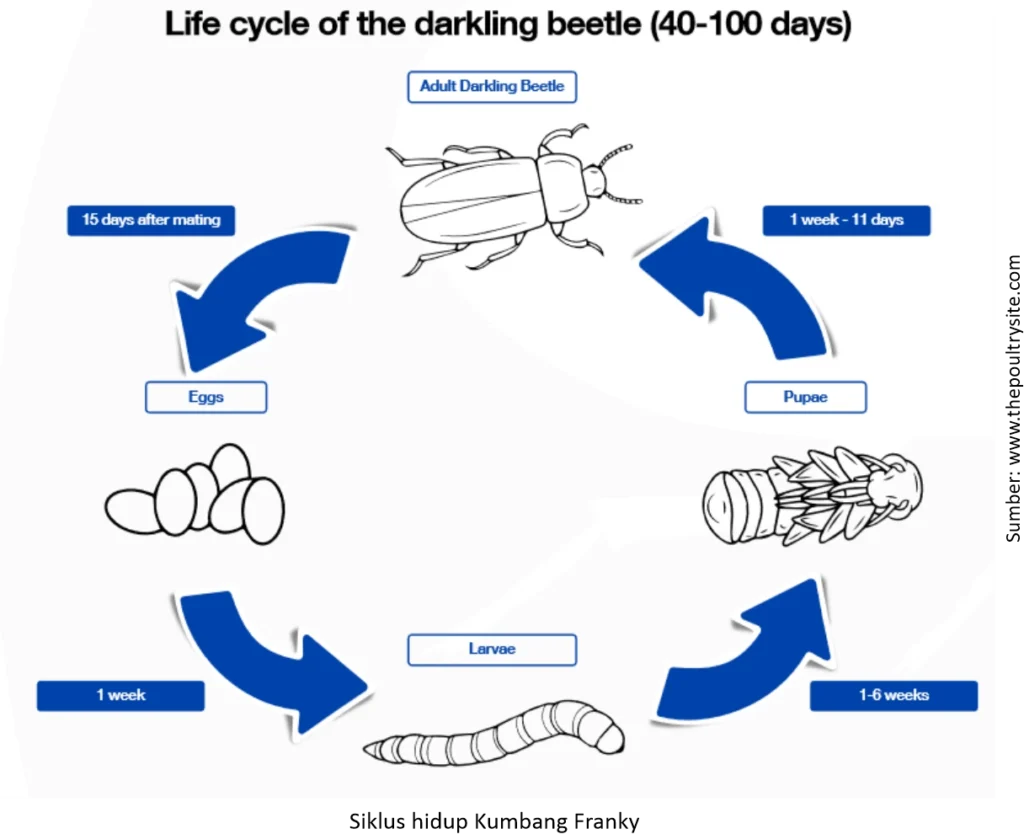
The Franky Beetle (Alphitobius diaperinus) often called the “lesser mealworm” or “Franky bug,” is a small black beetle that frequently becomes a pest in poultry farms. Its life cycle lasts between 40 to 100 days, depending on environmental factors — beginning from egg, larva, and pupa, then finally reaching adulthood. After about 15 days post-mating, a female beetle can lay 200–400 eggs every 1–5 days, and the eggs hatch into larvae in less than a week. Therefore, if effective and proper control measures are not taken, the population can increase significantly within a short time.
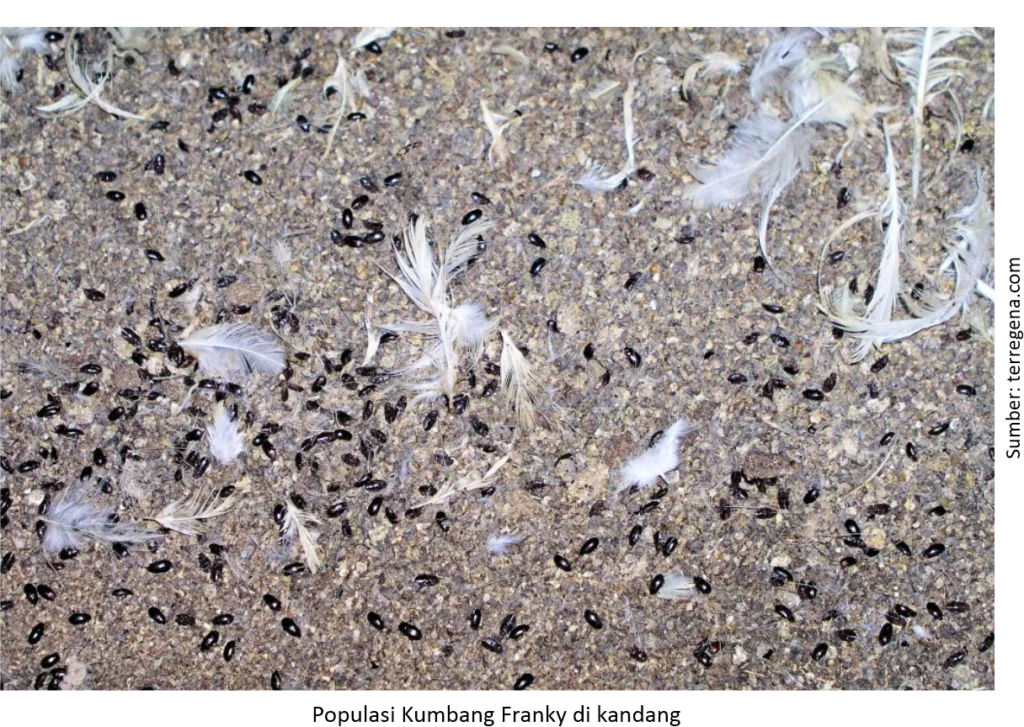
This beetle is typically active at night and can be found among litter (rice husks), cracks in the floor or wooden posts, or feed storage areas. The following are the potential losses caused by a high population of Franky beetles in poultry houses:
- Mechanical Vector
Franky beetles can carry disease agents mechanically, meaning that pathogenic microorganisms stick to their bodies or are ingested and later transmitted when they come into contact with chickens or feed.These beetles prefer moist environments, breeding in damp litter or wet leftover feed. Such conditions make them effective mechanical vectors, spreading pathogens to chickens or nearby coops.The spread of Franky beetles allows direct contact with contaminated litter and chicken feces, which may contain viruses and bacteria such as Gumboro virus, E. coli, or Salmonella.
- Structural Damage to the Poultry House
Franky beetles can also cause significant damage to poultry house structures. Both larvae and adult beetles bore into cracks or wooden joints, creating tunnels that weaken the building’s foundation and overall integrity.
- In addition, Franky beetles act as organic waste decomposers, feeding on feces, leftover feed, dead chickens, and eggshell membranes. However, they can also contaminate stored feed or grains in feed warehouses.
- The presence of pests like this causes stress in chickens and reduces production efficiency, leading to higher disease rates and poor feed conversion.
How to Prevent and Eradicate Them?
After understanding the characteristics and life cycle of Franky beetles, proper control measures must be implemented once they start spreading in the coop. Here are several ways to reduce or control their population:
A. Sanitation of Coop and Surroundings
Conduct regular sanitation (cleaning), especially of litter, feces, coop surfaces (walls, floors, ceilings), nesting boxes, and equipment. Remove feces at least once a week. During the rainy season, increase cleaning frequency to prevent moisture buildup in the litter. Disinfect using Antisep or FormadesClean feed and water containers and other tools using (Medisep) followed by disinfectant spraying to prevent beetle infestation.
Replace contaminated/litter that has been contaminated. If litter already very damp, when it is about to be added litter It is best to sprinkle lime on it first so that it dries quickly, then stack it with litter New. Also apply lime under the stage cage and throughout the cage to reduce moisture and kill any remaining disease-causing microorganisms. Clean the ditches/gutters in the cage area to ensure smooth drainage of wastewater. Clean the gaps or cracks in the cage that could serve as hiding places for franky beetles.
B. Improve Coop Management
Create a comfortable environment for the chickens, do not overcrowd the coop, ensure adequate ventilation, and implement a maintenance system as much as possible all in all out. The use of fans in chicken coops can also help control insect populations. Regularly cut the grass and shrubs growing around the coop. Repair any cracks or damage to the coop floor, as these conditions provide a comfortable place for fleas franky breed. Wood that has begun to rot should be replaced immediately, while wood with holes or cracks can be covered with varnish or wood paint so that it does not become a breeding ground for lice franky. Cut the weeds, bury old items/cans, and clean the gutters.
C. Use of Insecticides
Apply insecticide spraying (fogging) around the coop area. However, insecticides should only be used during empty periods (downtime) — spraying while chickens are present could risk poisoning.Repeat the spraying or treatment every 7–10 days to break the beetle’s life cycle.
Choosing the right insecticide for the target insect is a safe and effective way to control insects on farms. For example Delatrin which is an effective product for eliminating ectoparasites such as fleas, flies, ticks, and others, and has excellent residual activity, a broad spectrum of activity, and is safe for the environment. Delatrin can be used in coops that still contain chickens by spraying a dose of 10-20 ml per 200 m². Delatrin can be applied , in a closed empty cage and left for 3 hours. Please note the method spray, If spraying is done carelessly, not all beetles or lice will die and over time they will become resistant to the insecticide. Therefore, it is recommended that , This should be done in the evening (around sunset or 6 p.m.) because that is when the Franky beetles begin to appear and concentrate in certain areas. Do not spray when the wind is strong because much of the insecticide will not reach its target. Also, do not spray against the wind, because the spray can hit the person spraying. Larvatox It can also be given to improve water absorption in feces so that feces are drier and do not attract franky beetles.
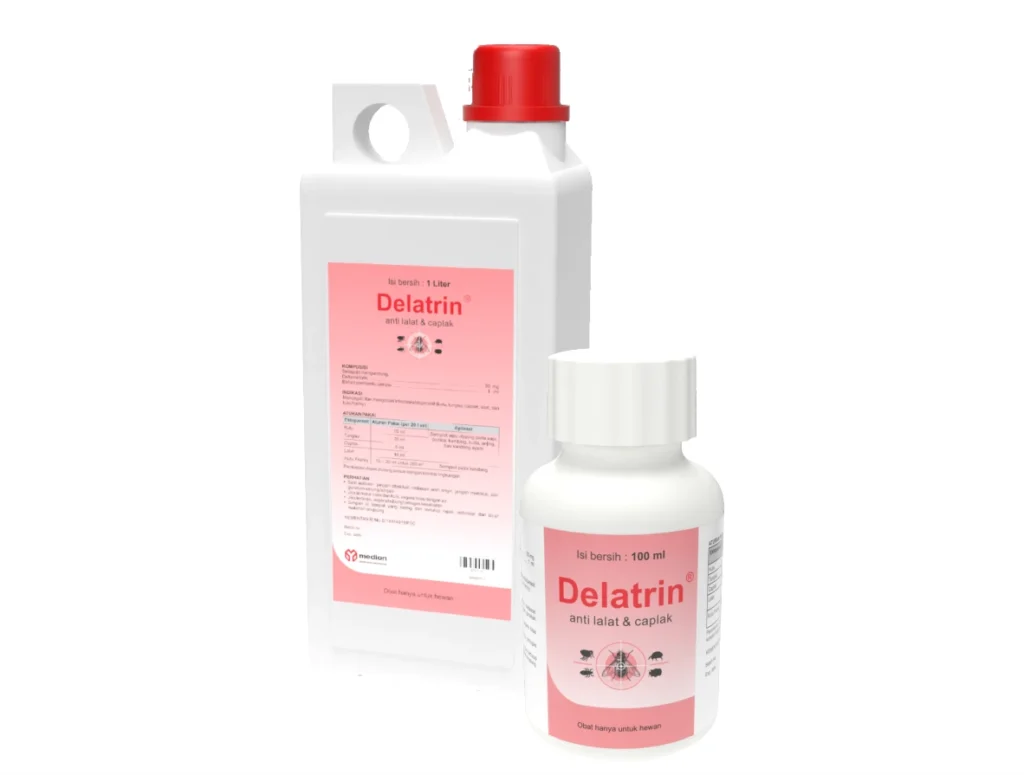
(lice, mites, fleas, flies, and bed bugs)
In addition, we also need to implement other controls to minimize the occurrence of diseases carried by the Franky Beetle, including:
- Conducting appropriate vaccinations, especially for viral diseases, both in terms of the program and its implementation.
- Give multivitamins such as Fortevit or Vita Stress to increase stamina and improve the chicken's resistance to disease
- Implementing strict biosecurity and good maintenance management
- Pay attention to the condition of the cage environment, especially if the floor is damp, considering that this is the preferred habitat of franky beetles
- Preventing things that can accelerate stool becoming wet
So, based on the insect control measures above, the most appropriate control method is to maintain environmental cleanliness and health so that it cannot be used as a breeding ground, feeding ground, or shelter and hiding place for disease-carrying insects. Hope this helps.