The health of the gastrointestinal tract depends on the balance between the condition of the chicken, its microflora and the digestive environment and the components of the feed given. When the balance is maintained, the digestion of feed and absorption of nutrients will be maximum.
However, if there is an imbalance that disrupts the health of the digestive tract, then no matter how well the nutrients provided will not be absorbed to the fullest. The impact is the health and performance of livestock will be disrupted. Therefore, it is important to maintain a healthy digestive tract so that chickens can achieve optimal performance.
The Importance Of The Microflora Of The Gastrointestinal Tract
Throughout the digestive tract of chickens inhabited by microflora consisting of a wide variety of bacteria, fungi, protozoa and viruses. The presence and diversity of microflora will vary depending on the location of the organs in the digestive tract. The greatest amount of such microflora is found in the rear digestive organs.
The microflora of the gastrointestinal tract has a function to assist in digesting and absorbing nutrients from feed. This happens through the fermentation process of undigested carbohydrates to produce energy and a source of carbon that can be used by chickens. In addition, microflora also plays a role in the development of immunity and protects the gastrointestinal tract from pathogenic microorganisms.
Microflora can prevent pathogenic microorganisms from colonizing and causing diseases in the gastrointestinal tract (colonization resistance). It is carried out microflora by taking up space and forming a barrier that protects the intestinal wall from the attachment of pathogenic microorganisms (competitive exclusion).
In addition, there will be competition in the absorption of nutrients in the digestive tract and microflora can produce antimicrobial compounds such as bacteriocins that can inhibit the growth of microorganisms.
Based on the importance of these functions, the balance of microflora needs to be maintained because it will provide benefits to the host/host.
However, if there is an imbalance, it will affect the morphology of the digestive tract, the emergence of digestive bacterial infections to damage the immune system of chickens.
The balance of microflora in the digestive tract is basically dynamic depending on the condition of the gastrointestinal tract. When there is a disorder, there will be malabsorption and imbalance of the digestive tract condition.
Malabsorption that occurs can cause overgrowth of the microflora population, disrupting the balance in the digestive tract.
Changes in the number and diversity of microflora that occur in the gastrointestinal tract are commonly called dysbacteriosis. The impact of dysbacteriosis is a decrease in nutrient absorption, weight loss and increased FCR. If the incidence of dysbacteriosis is severe enough to result in wet litter.
The occurrence of dysbacteriosis can be caused by stress factors, feed changes, poor biosecurity, mycotoxins, infectious diseases and unfavorable environmental conditions (too hot, overcrowding).
This can increase the growth of opportunistic pathogenic bacteria such as Clostridium sp. and E. Coli infection. The first symptom that can be seen is the occurrence of diarrhea. In more severe cases, the mucosal cell layer of the intestinal wall can be penetrated by bacteria and their toxins can cause enteritis.
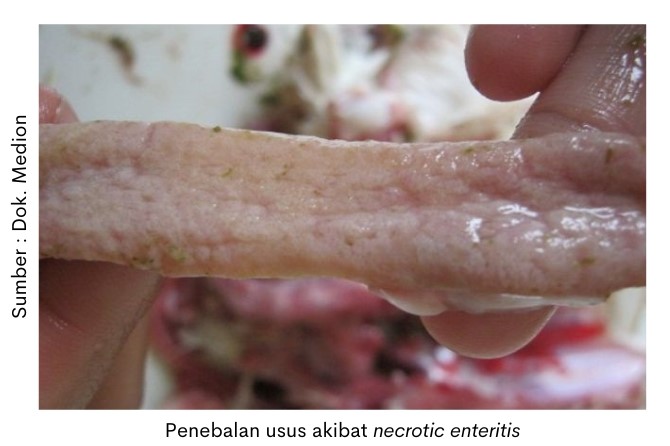
Generally, chickens that have dysbacteriosis will contain bacteria Clostridium in large quantities it produces more toxins. The toxin produced will damage the intestinal villi, causing perlukaan in the mucosa and tissue necroses.
This can lead to necrotic enteritis. In addition, infection with coccidiosis and other gastrointestinal diseases can aggravate the incidence of dysbacteriosis. Of course, this can interfere with the performance of livestock and cause losses.
Maintain The Health Of The Digestive Tract
Good digestive tract health will have a significant impact on the utilization of rations in the chicken's body so that performance can be optimal. In maintaining the health of the digestive tract and microflora balance, the things we need to consider include:
1. Tata laksana ration
The ration given to chickens should correspond to the required nutritional value. The quality of the ration must meet the standards and avoid giving rations that have clumped or moldy. Fungi in feed can produce mycotoxins that trigger dysbacteriosis. Ration replacement also needs to be done gradually to minimize stress in chickens.
2. Drinking water quality
The quality of drinking water greatly affects the intestinal health of chickens because it can be a source of disease. To determine the quality of water, physical, chemical and biological examinations can be carried out. If found contamination or bacterial contamination coliform, E. Coli infection or other pathogenic bacteria, it is necessary to sanitize drinking water using Medisep or Desinsep. The cleanliness of drinking places also needs to be maintained to prevent contamination from bacteria.
3. Stress-causing factors
Stress on livestock can be caused due to several conditions such as during transportation, weather influences, vaccination treatments or when changing feed. Pay attention to the temperature, humidity, ventilation and density of the cage so that the cattle feel comfortable and avoid stress. To increase endurance and overcome stress, multivitamins can be given in the form of Vita Stress.
4. Seeds of disease in the environment
Livestock health is often threatened by the presence of disease seeds in the environment. To reduce the seeds of the disease can be done with biosecurity management initiated cage rest for at least 14 days. This is followed by other biosecurity practices such as isolation, traffic control and sanitation. During the maintenance period, it is necessary to spray the cage and equipment using disinfectants such as Medisep.
5. Disease prevention
In addition, the use of the drug can lead to an increase in the risk of heart disease (Antibiotic Growth Promoter). Alternative products are used as a result of the use of AGP which has been banned. The purpose of alternative administration of AGP is to reduce the incidence of infection, reduce the number of pathogenic bacteria, maintain the balance of intestinal microflora and improve the absorption of nutrients.
Alternative to AGP for Digestive Health
The ban on the use of AGP is done to prevent the occurrence of antibiotic resistance and avoid the presence of residues of antibiotics in the body of chickens that will also be consumed by humans.
Instead there are several alternatives to AGP that can be provided with almost the same purpose. Here are some alternatives to AGP:
1. Organic acids
Organic acidsacidifier) is a compound that can maintain the pH in the digestive tract so as to maintain the balance of microflora in the digestive tract. Acidifier can lower the pH of the digestive tract below 6 so that it can indirectly suppress the colonization of disease agents such as Escherichia coli, Salmonella sp and Clostridium sp.
Examples of organic acids that can be given are Asortin, serves to maintain the pH of the digestive tract and kill pathogenic bacteria so that the balance of microflora is maintained and the absorption of nutrients is optimal.
2. Probiotics
Probiotics are preparations containing live microorganisms that, when administered in sufficient quantities, have a beneficial effect on the health of the host. Probiotics can help maintain microflora balance and prevent the growth of pathogenic bacteria that cause digestive tract disorders.
3. Phytobiotics (herbs)
Phytobiotics are materials derived from plants either mixed or single that can be given to improve livestock performance. The function of phytobiotics can be as antibacterial, antiprotozoal, immunostimulant, supplement or support.
Optigrin as feed additive herbs can be used as an alternative to AGP which is able to kill pathogenic microbes and coat the intestinal villi to block Eimeria sp. infects intestinal cells. In addition Optigrin also has immunomodulatory activity capable of increasing the body's resistance.
4. Enzymes
Enzymes are catalysts that can accelerate the breakdown of complex compounds into simple reactions. There are several enzymes that can be used as feed additives, for example phytase and lysozyme.
Additions Betterzym containing phytase enzymes are able to break down the complex bonds between phytic acid antinutrients with phosphorus minerals, so that phosphorus absorption can be increased. While Entrozyme the presence of lysozyme as growth promoter by working through bacteriolytic activity to break down bad bacteria.
The health of the gastrointestinal tract and the balance of microflora maintained are the key to maximum utilization of nutrients. Thus the performance of the livestock will be optimal. Hope this article was useful. Greetings.