Ibu Ymageti – by email
Because in the daytime the air temperature is high and the humidity is low. Is it okay to spray the chicken body during the day in anticipation of the occurrence heat stress? Or can it actually increase the potential for stress in chickens? Thank you.
Answer:
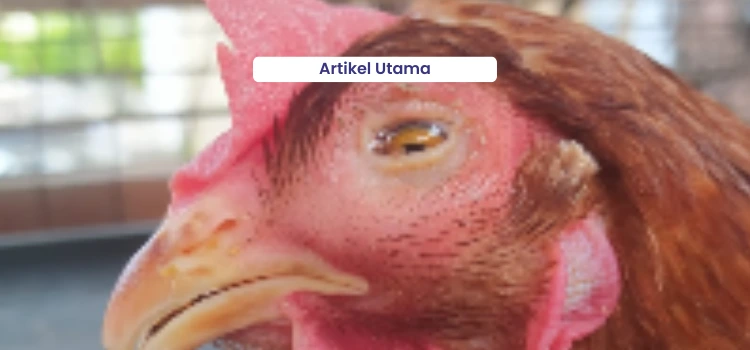
Thank you for the submitted question. High air temperatures are prone to make chickens experience heat stress. This condition causes the chicken to be unable to balance between the production and disposal of body heat. Please note that the comfort zone (comfort zone) chickens are in the temperature range of 25-28°C with a humidity of 60-70%. At a temperature of 33°C for several hours can cause death in poultry.
Severe heat stress can be started from overcoming high temperatures in the environment then supporting the condition of chickens that decline due to heat stress. This is certainly supported by improved environmental management and feeding as needed to keep chickens from producing excess heat from their bodies.
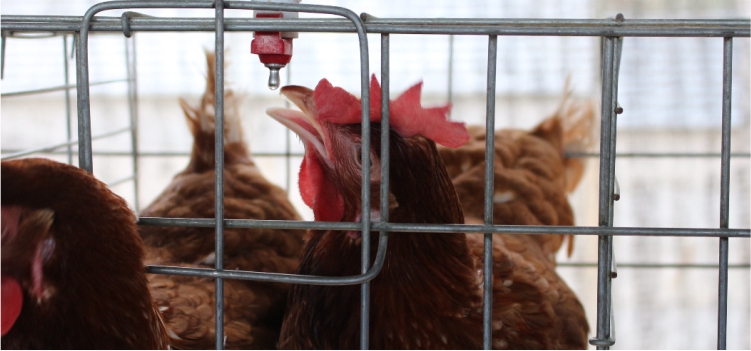
Measures to overcome high air temperatures by spraying directly on the chicken's body are not recommended because it can cause the chicken to get stressed. In addition, water that has been sprayed on the chicken's body will fall and wet the floor of the cage so that it can be a risk of increased humidity and ammonia levels in the cage. Here are some other ways that can be done as an effort to overcome heat stress :
Provide cold drinking water with a temperature of 20-24°C
Cold water can be used to help chickens stabilize their body temperature when the ambient air is high. When the temperature is high, the appetite of chickens increases dramatically, even if the temperature reaches 32°C, the consumption of drinking water can increase by 50%. The drinking water supply (TMA Medion) and control the availability of water at regular intervals (especially if using TMA Medion manual). If you need to increase the amount TMA Medion so it's not difficult for the chicken to reach it.
Do chicken thinning
Thinning in one cage aims to reduce the density so that the chickens feel more comfortable, not too hot and dense. In addition, chickens can also freely radiate heat from their bodies to the environment. An example of heat emission with radiation is a chicken stretching or spreading its wings. In chickens aged heat stress the density of the cage can be reduced by 10%.
Adapt treatment to environmental conditions
When the ambient air is high do not vaccinate, cut the beak (debeaking) or other treatment as this may further aggravate the condition heat stress. Activities like the above can be done when the weather is cool or starting in the afternoon.
Adjust the ration
It is better not to give rations during the day when the temperature conditions are high. Feeding management that can be done is to give 1/3 ration in the morning, then 2/3 ration in the afternoon.
If feed intake from feeding is still less, then farmers can apply midnight feeding or a midnight feeding. Midnight feeding performed by the technique of giving light (turning on the lights) for 1-2 hours in the middle of the night, ie at 12: 00-02: 00 pm. With this technique, it is possible to increase the consumption of chicken rations by 2-5 grams per head
Provide vitamins and electrolytes
Provide supportive therapy by giving vitamins such as Vita Chicks, Vita Stress or Fortevit to increase the stamina of the chicken body and herbal supplements Imustim to increase the immunity of chickens.