Bapak Reza
Sukabumi-West Java
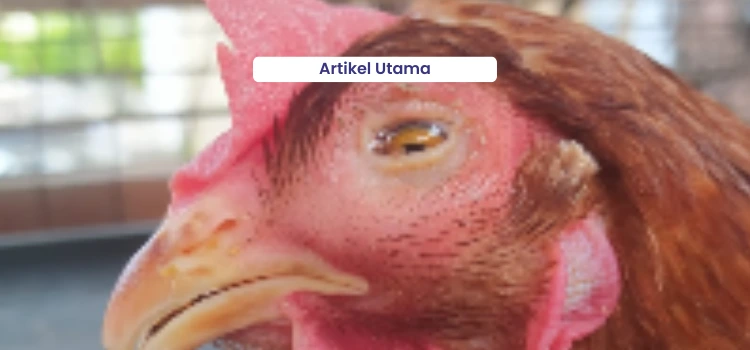
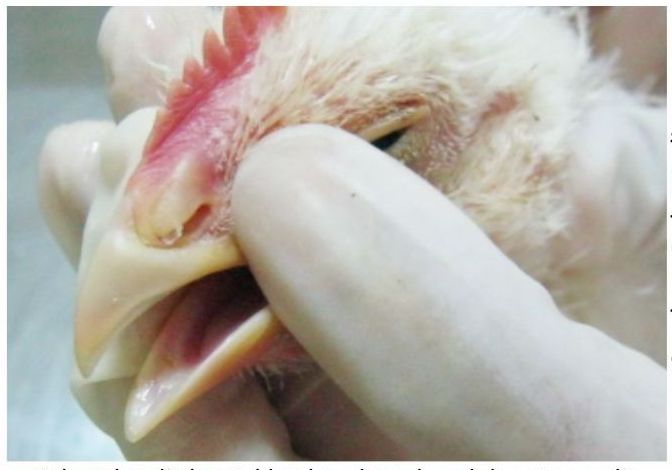
I raise broilers, when they were 1-2 weeks old they were not vaccinated and now at 3 weeks old they are infected with korisa's disease. Is it possible to get vaccinated Medivac Coryza B and Medivac Coryza T? How does the effect occur?
Answer:
Dear. Mr. Reza, thank you for the question. One of the conditions for vaccination is that the birds to be vaccinated must be in good health. Vaccination given to chickens with sick or stressful conditions will cause less than optimal antibody formation. In addition, the korisa vaccine is an inactivated vaccine that takes 3-4 weeks to form protective immunity. If vaccination is carried out at the age of 3 weeks, then protective immunity will be formed when the chickens are 6-7 weeks old. While the age of harvesting broilers is generally 4-5 weeks, so vaccinations carried out at the age of 3 weeks become ineffective.
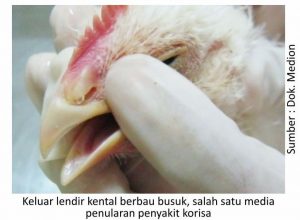
If an outbreak has occurred, treatment should be carried out. Here are some things you can do to treat chorisa disease :
- Immediately separate chickens that have been seen seriously ill from healthy chickens to minimize transmission.
- Broilers infected with korisa are light at the age before harvest and their body weight has reached ③ 1.2 kg, it is better to harvest earlier.
- Bury dead chicken carcasses immediately and as far away from the cage environment as possible.
- Perform treatment with antibiotics that have a higher absorption into tissues such as Neo Meditril, Proxan-S or Amoxitin.
- In chickens that experience severe swelling of the face and difficult to drink, need to be treated with antibiotics by injection for example Vet Strep, Gentamin or Medoxy-LA.
- Take vitamins, such as Fortevit or Vitamin B Complex Injection to help improve the condition of the body of chickens.
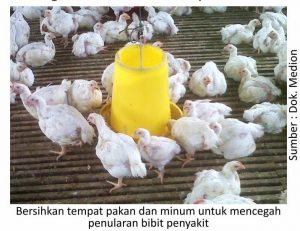
- Spray the cage every day, wash and sanitize the feed and drinking place every 3-4 days, and disinfect drinking water to prevent bacterial transmission through drinking water.
In order not to repeat the occurrence of korisa in the next maintenance period, prevention needs to be done including vaccinating appropriately, improving maintenance management and implementing strict biosecurity. Details as follows:
- Vaccinate korisa in the later maintenance period. Vaccination can be done at the age of 4 days at a dose of 0.2 ml per head injected under the skin (subcutaneous) on the back of the neck. The vaccination can be carried out in conjunction with the ND vaccination using Medivac ND-Coryza Emulsion.
- It is recommended to run the maintenance system all in all out to avoid transmission from old chickens to young chickens and break the cycle of korisa bacteria at the farm site.
- Perform cage rest (empty cage) for at least 2 weeks after cleaning and disinfection of the cage. Use class disinfection ammonium quartener (Such as) Medisep or Zaldes.
- Optimize time management brooding period, and hygiene litter. Create clean air circulation in the cage by adjusting the curtains and adjusting the density of the chicken.
- Give multivitamins regularly, for example Fortevit, Vita Stress, or Kumavit to maintain the stamina of the chicken remains optimal.
- Spray the cage 2 times a week. Regularly sanitize and disinfect the cage (place of ration, drinking place), the cage and the surrounding environment at least once a week. Water treatment plant (Desinsep) and spray the cage continuously is useful to reduce the infection rate and duration of infection of seedlings.