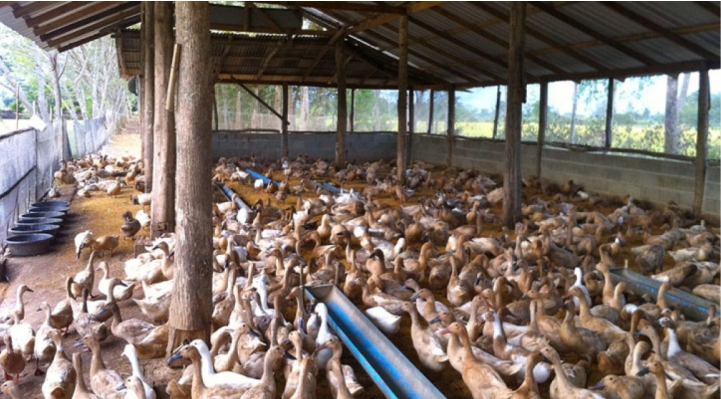
Feed is one of the important components in the poultry industry including the cultivation of laying Ducks. Why does feeding ducks need to be discussed? This is because the largest expenditure of maintenance effort comes from the cost of purchasing feed, which is about 70-85%.
So, if the number of feedings, quality, and feeding techniques are not considered by the farmer, the performance target will not be achieved until the farmer can suffer economic losses.
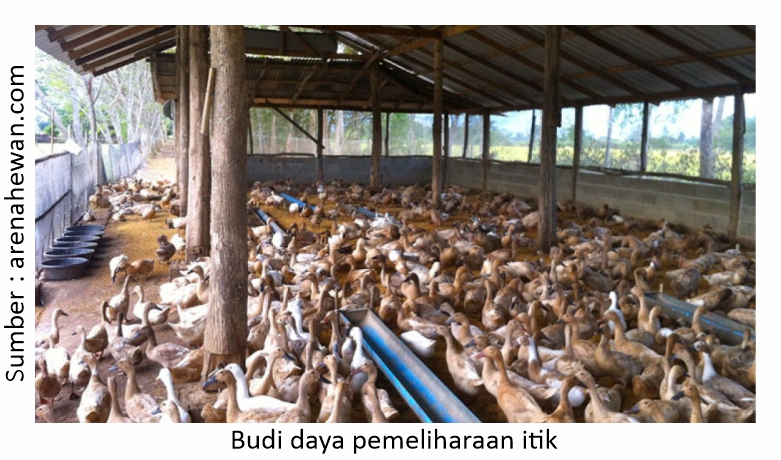
Feeding ducks in principle should not be arbitrary. For example, if we want to feed corn, then we should not give corn that has been moldy because it contains mycotoxins and is harmful to the health of ducks.
Well, so that the feeding of laying Ducks is appropriate and efficient, we should arrange and adjust the feeding to the needs of the Ducks in each phase.
Nutritional Needs Of Laying Ducks
Duck rearing period starter it is the most decisive period because the success of the phase will affect the subsequent growth rate (production phase). Feeding in phases starter to meet the basic needs of growth and development of all important organs in the body of ducks.
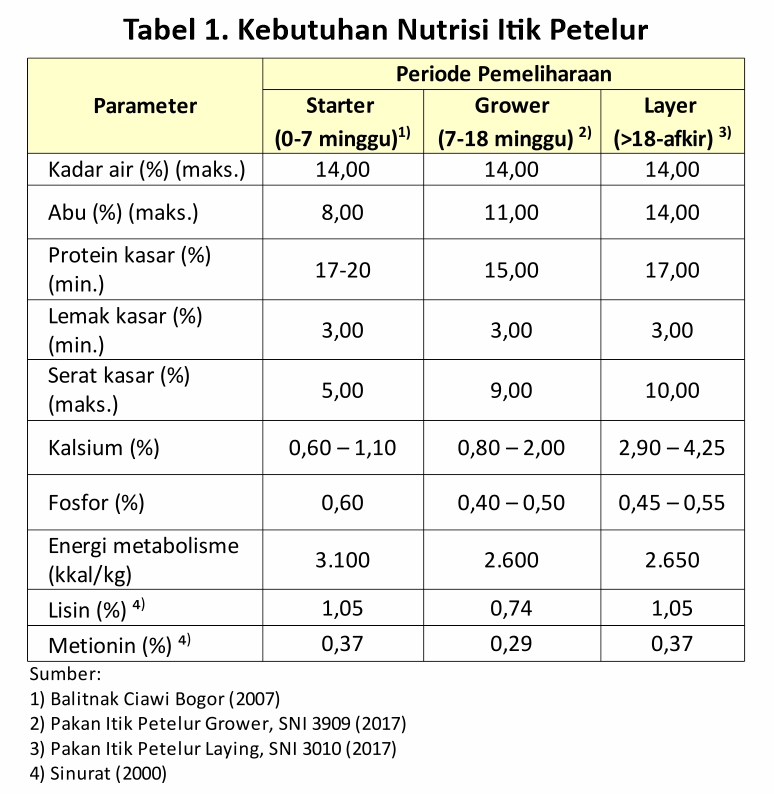
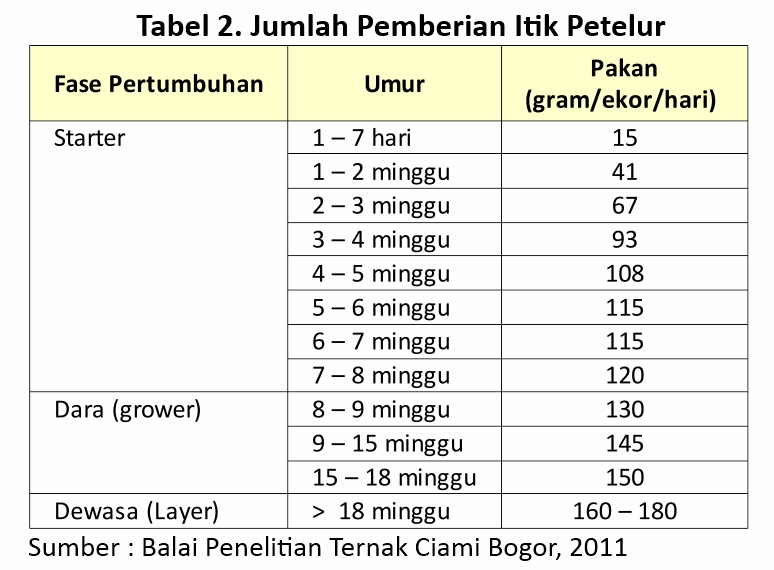
In addition, it is also to maintain the body's resilience in adjusting to new environmental conditions or farm climate conditions. The nutritional content of feed for laying Ducks is more focused on the parameters of crude protein, crude fiber, calcium, phosphorus and metabolic energy that is adjusted for each phase. Regarding the need for nutrients and the amount of daily consumption for laying Ducks are listed in Tables 1 and 2.
In the field today the feed formula used by farmers varies greatly, depending on the knowledge of farmers about the nutritional needs of ducks and the level of availability of feed raw materials in each region. Examples of energy source feed raw materials that can be given to ducks include corn, Bran, Bran, onggok, cassava, nasi aking (dried rice), and groats.
While feed ingredients such as protein sources such as soybean meal, coconut cake, fish waste, shellfish, shrimp skin and head waste, as well as snail meat and rice snail. Mineral source feedstuffs can be limestone grit or seashells. If the raw material for mixing the feed itself is quite difficult to obtain, then it is recommended to use duck concentrate mixed with other ingredients as a source of energy and additional animal protein.
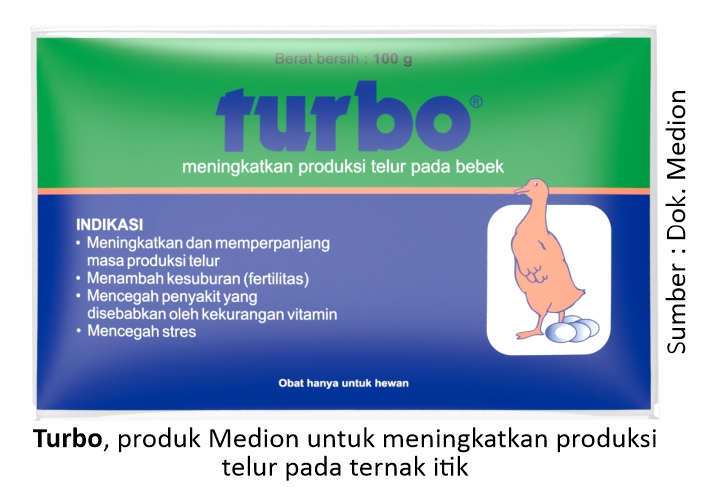
In addition to the above-mentioned benefits, there is also the need to add additional ingredients (Mix Plus, Top Mix, or Mineral Feed Supplement-A) and multivitamins (Egg Stimulant, Strong Egg or Turbo). In addition, add Betterzym in a concentrated feed mixture which is a phytase enzyme preparation to help improve feed quality by binding anti-nutrient substances in the feed so that nutritional needs can be achieved.
Duck Feeding Management
It should be noted that the local duck livestock has the nature of easy stress to sudden changes in feed. Therefore, before planning the maintenance of ducks, farmers must first study the conditions for the availability of feed ingredients to be used, whether they can be continuously available or not. When not, to replace with a new feed formulation should be gradually, namely:
- The first week the ratio of old and New Feed is 75% : 25%
- 2nd week the ratio is 50% : 50%
- 3rd week the ratio is 25% : 75%
- 4th week can be given 100 new feed%
Dry feed is usually given in the form of granules, especially for ducks > 1 week old. But not a few ducks are less able to adapt to dry food, so wet feed is an option that suits the shape of the beak. The duck's beak is flattened and wide, making it easier for ducks to take food in wet places.
While chickens prefer granular feed because of their habit of pecking. In the duck's beak there is also a sieve plate that serves to filter food from water and mud. While the feed pellet can also be given to Ducks > 1 week old. One of the advantages is that it can improve feed efficiency because of the possibility of at least scattered feed when compared to granular or wet feed.
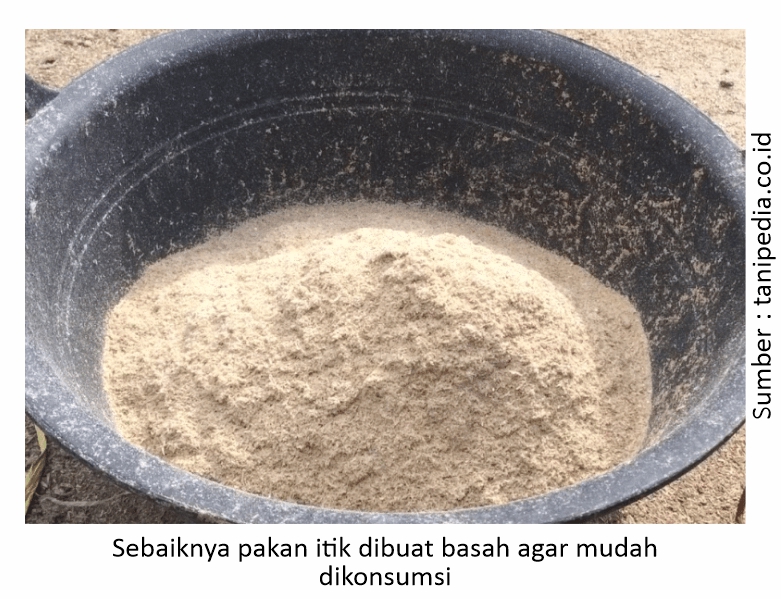
Wet feed is dry feed plus water in a ratio of 1: 2. The state or form of feed after being mixed with water is that the feed does not release water if we squeeze it (mamel=Java).
There is a little note that if we use wet feed, the frequency of feeding must be increased. Because the wet form of feed is easy to invite disease seeds, especially fungi. In addition, wet feed is also easy to smell rancid. Therefore, the gift can be little by little but immediately run out.
An example of the application of feeding laying ducks in the field reported by Mahmudi (2001), where in Phase starter, Ducks aged 1-7 days are given full food is a factory. Then the Ducks aged 1-3 weeks were fed with 75% mixture of fine Bran, Bran, Groats, aking rice and plus 25% concentrated feed. After the Ducks enter the age of 4 weeks, the mixture ratio of the above ingredients can be changed according to the nutritional needs of the Ducks.
Reduction of feed will cause stress in ducks and can result in decreased appetite and weakness. Lack of nutrients, especially vitamins and minerals such as vitamin A and D due to lack of feed intake can also cause growth disorders and decreased endurance. Here are other rules regarding the management of feeding ducks :
- Feed raw materials used are not moldy, not rotten / musty smell, and palatable (preferably duck).
- Feed should not be overheated, so it is recommended that feed be given in the break room.
- Feeding can be 2 times (at 07.00 and 16.00) or 3 times (at 07.00, 12.00 and 16.00) in one day. Between feed hours twice, usually interspersed with animal protein snacks (snail mash, mussels or shrimp waste).
- Provide drinking water for ducks in unlimited quantities (adlibitum) because if the Ducks lack of drinking, the consumption of feed will also decrease and there will be metabolic disorders in the body.
- Ducks are very sensitive to aflatoxin poisoning which can decrease growth, egg production and even lead to death. Give additions toxin (mycotoxins binder) such as Freetox to bind mycotoxins strongly while in the digestive tract, so that mycotoxins are inactive and eventually come out together with feces.
Thus a brief explanation of the feed for cattle laying Ducks, may be useful. It is also worth remembering that optimal management and health programs are also some other important supporting factors in the success of duck breeding efforts. Greetings.