Domestic chickens are included in free-range chickens (not purebred). It is called ayam kampung because this chicken has been cultivated in the countryside / village. Chicken village has its own characteristics, namely the nature genotype and phenotype which is not uniform. Indonesian people still love chicken (meat and eggs) because of its nutritional value and distinctive taste. In addition, the price of free-range chicken products (meat and eggs) is higher than that of purebred chicken products. This makes it a great opportunity for farmers to run a chicken breeding business. Therefore, to obtain quality free-range chickens, continuous and systematic measures are needed. These steps will be discussed in this article.
Preparation For Raising Broiler Chickens
Here's the preparation before starting to raise chickens.
- Goal Setting. Goal setting is useful as an evaluation of the activities carried out during breeding. Farmers need to establish the purpose of raising such as just filling free time or as a source of family income.
- Modal. The amount of capital that needs to be prepared depends on the number or population of chickens kept. Sources of capital can be personal capital, finding investors or bank loans. Farmers need to consider the risks that may occur.
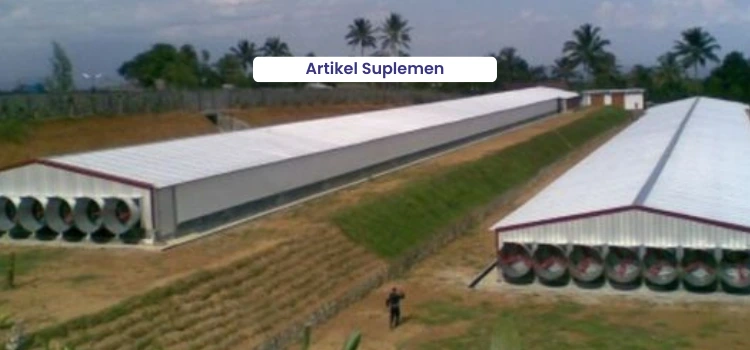
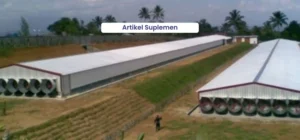
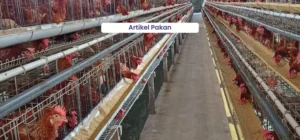
- Barn Planning. The birds in the phase starter usually used cages box (with heating). In the phase finisher used postal cage like chicken rearing model broiler. In building a cage need to pay attention to the rules biosecurity which is good conceptually (location); biosecurity structural (cage structure); biosecurity operational (chicken restriction system in contact with foreign guests).
- Workforce Planning. There are 2 main things in the design of Labor, namely the number of domesticated chickens and yourself as a breeder. When the number of chickens ranges from 1500 head down, productive adult chickens are held by one person only for both production and cage activities. Meanwhile, for sales tasks, General Administration, and preparation of cage raw materials is done by yourself.
- Maintenance System. Maintenance of free-range chicken is divided into two phases, namely phase starter (age 1-4 weeks) and phase finisher (5-8 weeks old). Chickens are generally kept in a stable extensive, namely a system that relies on the environment and nature to meet the needs of chickens. The advantages of this system are that chickens have high immunity while reducing feed costs. However, along with the high demand for chicken poduk village, the pemeliharaanya much changed into a system intensive. This system relies entirely on human intervention in the maintenance of chickens. The advantages of this maintenance system are higher production quantities. But the amount of costs incurred will be greater.
Good maintenance measures
- Management Brooding. Village chickens reared with intensive care system can not be separated from the use of brooding period,. That's because at this time there is a rapid development of various organs of the chicken, including :
- Chicken immunity
- Digestive system
- Body frame
- Thermoregulation (body temperature)
Standard brooding period, be in the range of 10-14 days for chicks kept in open-air cages (open house). Off period brooding period,, broiler chickens in the first week are already focused on weight gain. Technically, a few things to note, namely:
- Temperature and humidity
Perform temperature and humidity control brooding period, periodically and as often as possible. Related to the method can use a thermometer placed in the cage brooding period, with a height of 20-30 cm from litter. During the day, if the ambient temperature is too hot, then the heater IGM it can be turned off and the curtain opened slightly.
- Ration and drinking water
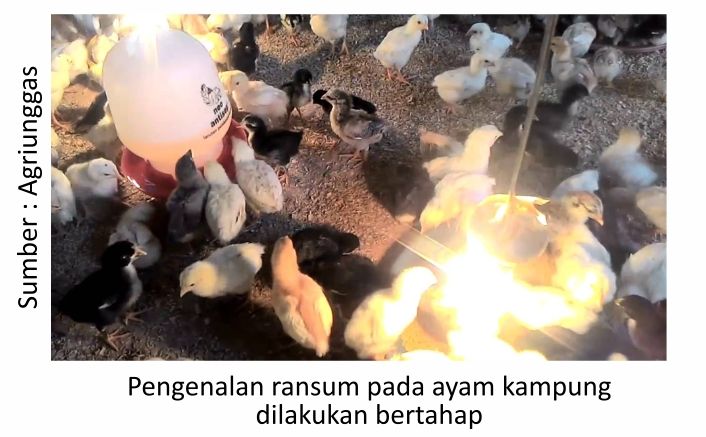
Give rations little by little but the frequency is often. From the age of 2 days the drinking place must be hung and every day the height is adjusted to the height of the chicken's back. At the age of 7 days, a hanging ration place begins to be introduced. It is expected that at the age of 10 days the chicken will already know where the hanging ration is, and at the latest at the age of 14 days all the ration places must have been hung.
- Light
If during the day it is dark, the light should be turned on so that the consumption of the ration is not disturbed. Starting at the age of 4 days, at night it is necessary to create a dark atmosphere for 1-2 hours for the production of growth hormone (melatonin).
- Litter
Perform flip-flops litter regularly every 3-4 days from the age of 4 days to the age of 14 days. If there is litter a little lumpy, then it can be sorted out and removed from the cage. But if there is litter those that clump a lot, it is better to stack with a new litter until the clumps do not appear.
- Disease of
Diseases that often appear on time brooding period, among other things pullorum, colibacillosis and CRD. Awarding Neo Meditril at the age of 1-3 days can serve as a preventive measure (cleaning program) to eradicate disease microorganisms that have infected into the body of chickens. In addition, it can also be given Vita Chicks to improve the condition of the body of chickens. Neo Meditril and Vita Chicks can be mixed to give together.
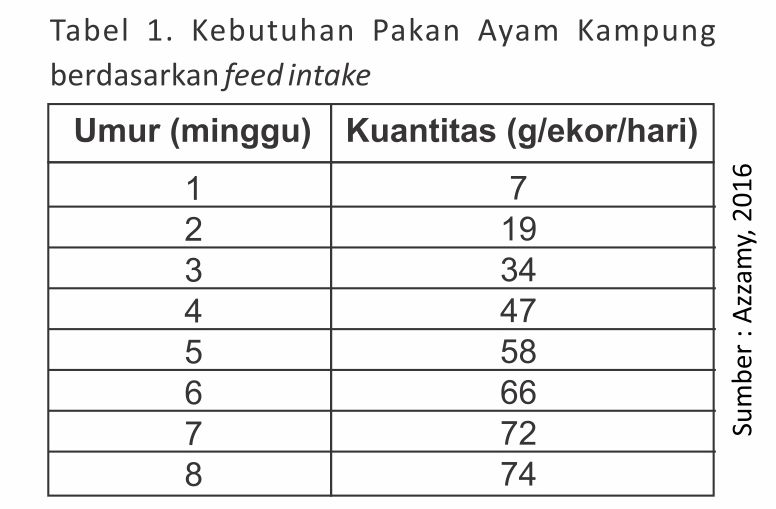
- Feed. Compared to time finisher, future cock needs starter (including time ) brooding period,) to higher amino acids, especially those essential. Free-range chickens already know 2 types of rations, namely starter and finisher rations. These two types of rations have different nutritional content and form. Ration starter shaped fine crumble, and ration finisher shaped pellet (long grain).
 Things to consider when giving the ration is the transition between the types of ration (ration starter to finisher) should be done gradually. To suppress the stress of changing rations, you should before, during and after changing the type of ration, give multivitamins such as Vita Stress to prevent stress chickens. Additions feed supplement can also be done to optimize the quality of the ration. Examples feed supplement what can be mixed in the ration include Top Mix (3-5 g / kg ration) and Mix Plus Bro (2.5-5 kg/ton ration). And in the rainy season or ration moist and contaminated with mycotoxins, Freetox it can be added to bind fungal toxins (mycotoxins) in the ration.
 - Health Management
 Things to consider when giving the ration is the transition between the types of ration (ration starter to finisher) should be done gradually. To suppress the stress of changing rations, you should before, during and after changing the type of ration, give multivitamins such as Vita Stress to prevent stress chickens. Additions feed supplement can also be done to optimize the quality of the ration. Examples feed supplement what can be mixed in the ration include Top Mix (3-5 g / kg ration) and Mix Plus Bro (2.5-5 kg/ton ration). And in the rainy season or ration moist and contaminated with mycotoxins, Freetox it can be added to bind fungal toxins (mycotoxins) in the ration.
To keep free-range chickens in good health, do:
- Vaccination Program.
The purpose of vaccination is to bully the formation of immunity/antibodies from the body to prevent infection. Vaccines commonly given are nd, Gumboro, and AI vaccines. During the maintenance period, the ND vaccine can be given 2-3 times, namely the first vaccination at 4 days of age using the vaccine Medivac ND Hitchner and repeated at the age of 18-21 days using the vaccine Medivac ND Clone 45. The next vaccine is done at the age of 36 days. The vaccine can be given 2 times at the age of 4 days using a combination vaccine inactivated ND (Medivac ND-AI10 years of age (Medivac AI). Meanwhile, Gumboro vaccine can be given 2 times with the first vaccine at the age of 7 days using Medivac Gumboro A or Medivac Gumboro B which can be given at the age of > 10 days.
- Medical Program
In addition to vaccination, farmers can also do cleaning program (Prevention), which provides broad-spectrum antibiotics to prevent disease infection before disease seeds enter the chicken's body. Cleaning program it is usually carried out if there was an attack of the disease in an earlier period. Examples of antibiotics given are Proxan-S, Doctril, Collimezyn (can be adjusted to the type of disease that previously attacked). In addition, give supportive therapy to maintain stamina or help the growth of chicks by giving vitamins such as Vita Stress (before and after vaccination or in hot weather), Neobro/Solvit/Strong N Fit (to help accelerate the growth of chickens).
- Biosecurity strictly
Activities biosecurity includes control of foreign guests / wild animals into the enclosure environment. In addition, activities biosecurity the important thing is sanitation and disinfection by ensuring that ration and drinking places are regularly washed and disinfected using disinfectants such as Zaldes, Medisep or Neo Antisep.
- Recording
Chicken pox by doing it recording aims to determine the results of work, history of disease and mortality of chickens during maintenance to help analyze if problems occur.
Broiler chicken business can be carried out optimally if farmers pay attention to maintenance management, starting from preparation, to appropriate maintenance. Good luck.