Actually program molting it's nothing new. There are many considerations as to whether molting should be done or not. During this process molting it is rarely practiced by chicken farmers. Usually laying hens that have entered the age of 90 weeks will be directly diafkir and sold in the market. Even so, it turns out that there are also a small number of farmers who do not directly deny, but still choose to do molting on chicken layer- his. What kind of reasons do breeders have in doing molting? Here's the language.
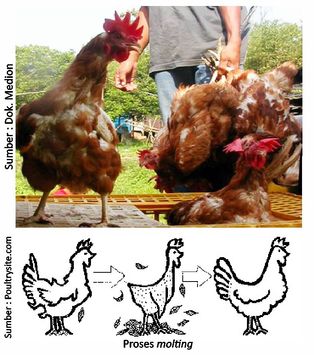
Cycle Of Chicken Feather Loss
Some farmers would have understood that molting it is a natural process of feather loss that is common in laying hens that have been producing for quite a long time (± 90 weeks) and lasts for ± 4 months and can even be shorter. The phenomenon of hair loss or molting common in older chickens with daily egg production is already below 60%. It can also occur in young chickens, especially when the chicken is under severe stress. Cases of rapid hair loss in the entire population or at any age are usually a symptom that something serious has happened (for example: lack of drinking water or extreme cold).
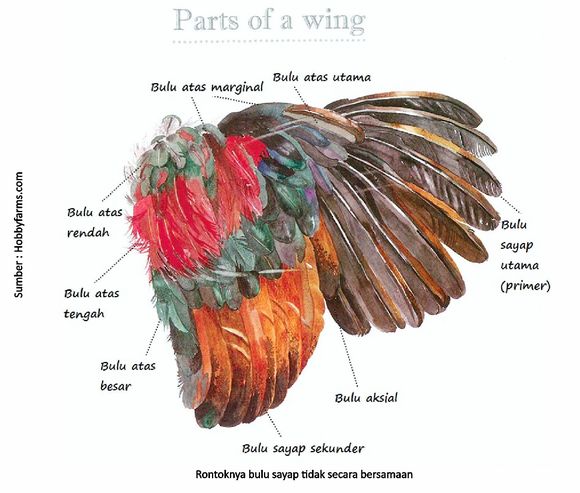
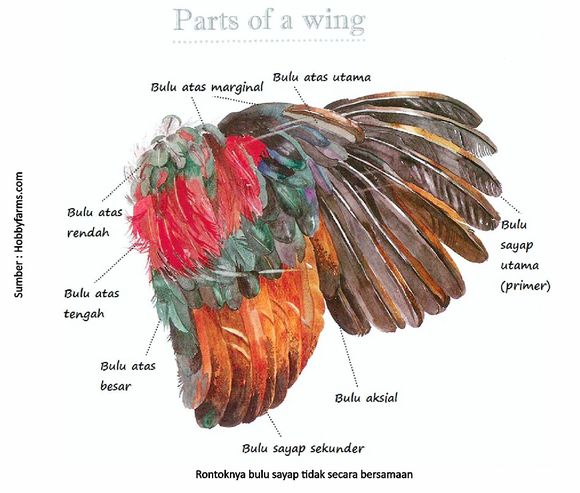
Molting is a physiological process in poultry that is influenced by changes in hormone levels prolactin, gonadotropin, Thyroxine, and ovarian steroid hormones (Berry, 2003). Natural shedding occurs at the end of the egg-laying period due to the high hormone prolactin in the chicken's body. The process of shedding in chickens occurs with a certain pattern. The sequence of shedding starts from the feathers of the head, neck, chest, back, wings and tail. Wing shedding does not occur simultaneously. The first feathers to fall out are primary feathers adjacent to the axial ones. Furthermore, feathers fall out in accordance with the sequence (Suprijatna et al., 2005).
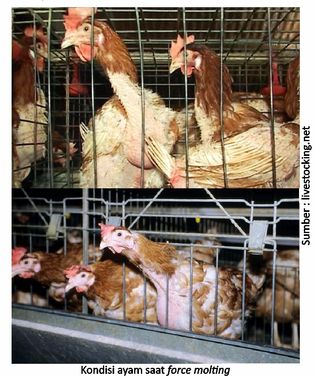
Main principles molting is to provide a rest period for laying eggs for adult chickens. In order for the chicken to rest, then we need to give “stress” to the chicken, then the egg production stops and the means of reproduction will experience “improvement”. The stress or pressure in question include reducing the amount of ration gradually, satisfying the chicken without being given ration at all for some time, or changing the composition of the ration formulation. However, of the several methods, the most commonly performed in the field is the second method, which is to quench the chicken. This is what breeders usually do and are called by the term force molting.
Because it is fasted, the chicken will unload its food reserves for a week, degrading the abdominal fat that is used for energy sources. The most important thing in the process molting it is a stimulating hormone prolactin role in temporarily inhibiting hormone Follicle Stimulating Hormone (FSH) and Luteinizing Hormone (LH) so that the process of forming an egg is temporarily stopped. After 30 days or 60 days of treatment molting this is then given a ration of feed and drinking water and light stimuli as usual, and the two hormones will return to activity as if they were young laying hens.
After molting there will be an increase in egg production, due to the improvement of ovarian function by new cells or tissues (Barua et al., 2001). Razak (2010) reported that there was a significant increase in eggs in rejected laying hens after the program molting using the method of gratification or restriction of feed.
Get to know Force Molting
Rasyaf (1994) States force molting it is the act of shedding feathers by stopping egg production, the time of which is regulated by humans. . Harimurti et al. (1979) states that in terms of economic force molting it is enough to prolong egg production, so that it is able to use laying hens that have entered the period of abandonment. Handayani (1980) states that force molting can raise egg production, affect feed consumption, and in economic calculations more profitable. Force molting also able to improve the quality of eggs (Hurwitz, 1974). When it comes to treatment force molting chickens completely stop laying eggs, can be expected later in the next production period, the chicken will lay many eggs and larger size (Rasyaf, 1994). If the process is triggered molting can last approximately 5-9 weeks (Berry, 2003).
Nutrient deficiency conditions in chickens that get treatment force molting with total Feed fasting and feed restriction will cause the laying process to stop for 4 weeks. This occurs due to lack of energy consumption and other nutrients so that the process of egg formation is disrupted (Yunanto et al., 1998). At the time of production breaks occur refreshing and repair of reproductive organs (Rasyaf, 1994) so as to raise the post-egg production force molting.
Chicken egg production will decrease up to 0% at the time of treatment force molting. At Week 7, when the feed is given back to normal, egg production begins to increase. Starting from Week 8 there was a very rapid increase in production until the peak production was reached at Week 10. In the following weeks the egg production gradually decreased until at Week 16 the production was at the level of 69%. In the case of untreated chicken force molting, daily egg production tends to be constant in the range of 48-68% with an average of 59.4% (Mulyono, 2008).
It has been previously explained that the process molting on the body of chickens occurs sequentially. But the process molting the number of eggs in a chicken coop is different from the number of eggs in a chicken coop in a chicken coop in a chicken coop in a chicken coop (hen day) becomes non-uniform. To make chicken molting simultaneously it is done force molting. Chickens will lay eggs again and because the process begins to lay eggs at the same time, it is expected that the 2nd peak in production with a percentage hen day quite optimal and profitable for breeders.
Based on the results of research conducted by Rajak (2010), force molting by using the method of fasting meal for 10 days (chicken still given a drink), then continued the 11th to 30th day of the chicken given a complete ration of 25% or corn alone 50% of normal consumption, the results are quite satisfactory. In this study, peak production reached 86% with average egg production reached 68.20%.
For the conditions of Indonesia with a tropical climate, it may need to be modified in the provision of drinking water even though the chickens are fasting. On the method california molting program, the dead chicken will be more because the chicken is fasted within 10 days. However, the next egg production will be better because the chicken does not lay eggs for longer.
When To Do Force Molting?
Poultry layer having a typical production cycle usually starts laying eggs at the age of 18-20 weeks and experiences peak production until approximately reaching the age of 80-90 weeks (ISA Layer Commercial Manual Guide, 2017) . At that age the farmer can decide whether the chicken layer maintained will diafkir or done program force molting.
It's actually usually force molting or molting accelerated is no longer recommended to be done, because with the advancement of genetic layer modern chicken is now able to produce with good production performance. With genetic progress, for the stabilization of egg weight in the average maximum figure of 64-65 grams makes the quality of egg shells maintained, although maintained until 90 even 100 weeks. Trends in the world is getting down to do force molting in some countries, animal welfare is prohibited (animal welfare). Meaning force molting done when really in an emergency situation or forced and in accordance with the rules in force in a country related rules animal welfare. Indeed, this treatment must be done in a disciplined manner. The slightest negligence will result in losses to even cause death. Similarly, the condition of the chicken must be completely healthy before it is done molting and the quality of the feed provided is maintained as usual.
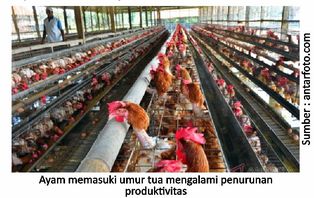
Programs molting also done if the price of eggs is high. The role of farmers in calculating the cost of production is very important in the implementation force molting here. For example, the next two months the price of eggs on the market will reach the highest level and it is estimated that these prices will last long enough, on the other hand, if the chicken is allowed to continue producing, the next two months the production period will end, the implementation force molting is the right choice.
Some farmers also have a reason do force molting because the price DOC layer which is too high or difficult to obtain. In addition, due to the price of chicken reject layer which is not good so had to postpone selling chicken layer afkirnya to then find pullet as replacement stock. If the economic calculation is still profitable, then to extend and maintain egg production, one way out is to conduct a program force molting. Sometimes breeders also do force molting due to conditions farmhe was attacked by a disease that was enough to interfere with productivity so that he was forced to extend the chicken production period.
Advantages and disadvantages Force Molting
Process force molting treatment carried out on old laying hens does have some positive effects, among which:
- After force molting, that is, when new feathers have grown, the chicken will return to laying even if the amount of production is not as high as during the normal laying period. The increase in egg production usually varies around 10-30% compared to when it is not done force molting, depending on the health status and the degree of stress stress experienced by chickens. Just to give you an idea, before force molting during one period, from 20-80 weeks of age, one chicken can produce an average of 20 kg of eggs. While after force molting, chickens are capable of producing only 11-12 kg of eggs. In addition, chickens that have experienced force molting the production period is shorter. Normally production starts from the age of 20 weeks to reject it means it can produce for 60-70 weeks, but after the process force molting usually chickens will be able to produce about 25-30 weeks, then just diafkir. Process force molting this is done only once.
- The quality of the eggs is better the quality of the eggs produced will be better, where the size of the eggs can be larger/heavier than normal and the color of the shells is better. According to research Widodo (2008), reported that the program force molting provide satisfactory results on the quality of eggs. The egg shell becomes brown again and the quality of the shell is thicker.
- Feed Intake Although it has a positive effect but if not implemented properly and optimally will cause negative effects of the process force molting these include the following: - this Program is a condition where chickens will be deliberately made to experience stress. So it does not guarantee all chickens can do force molting. – During force molting there will be a drastic decrease in egg production or the chicken stops laying altogether, as well as a decrease in body weight. - Program force molting this can trigger abnormal chicken behavior such as pecking and even cannibalism.If the condition of the chicken is not ready to be given treatment force molting, can experience death due to a weakened state of the body. - This Program takes a long time so it must be calculated according to the needs and market conditions. - The presence of such additional costs from the cost of feed, disinfectants, as well as the preparation of additional medicines. - Risk of infection with the disease to death
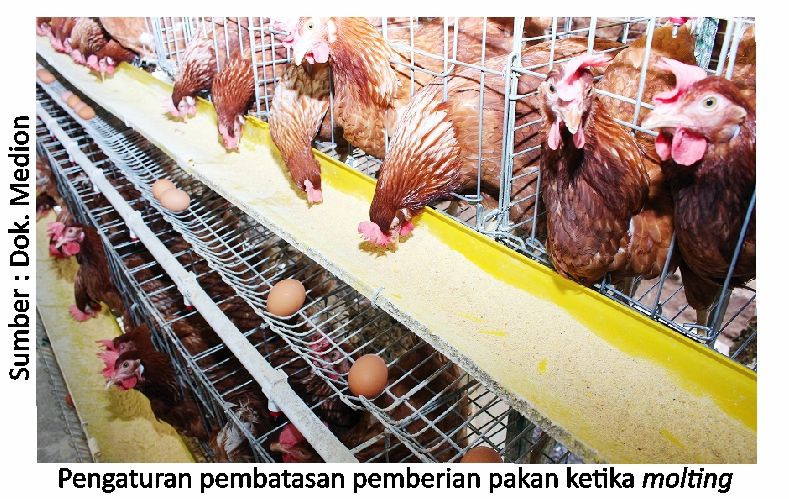
Thorough preparation and handling
In doing this program there are several things that must be considered so that the negative effects can be minimized, including:
1. Before force molting
- Chicken should be healthy. If there is an unhealthy chicken, it must be diafkir (sold) because the chicken can die when force molting carried out. Check the health status of chickens by conducting an antibody titer test in the laboratory. It is even better if the chickens have previously received a vaccination program according to the rules.
- Before doing force molting, the breeder should conduct the selection of the ideal weight of chickens. Standard body weight of chickens that will be in-force molting should range from 1.9 to 2 kg with an age range of 90 weeks or more.
- What to remember is 2-3 days before molting and during egg production is still given the addition of calcium such as Oyster shells or other sources of 4-6 grams per head so as not to lack calcium in the bones
- Create a comfortable and clean cage environment, programmed cage temperature settings, and light irradiation settings.
- Increase biosecurity. Seconds molting usually chickens become very weak and the level of stress is high, making them susceptible to disease. Therefore, the cleaning and disinfection schedule should be increased as well. So is the disinfection of the cage. When there are chickens choose safe disinfectants, such as Antisep, Neo Antisep or Medisep.
2. During force molting
- Well-programmed vaccination will not provide optimal disease prevention results if it is not supported by the implementation of strict biosecurity during the program. Therefore, improve biosecurity especially in people, equipment, and vehicles that move around such as vaccinator teams, chicken reject cars, egg boxes etc.

- Make sure drinking water is always available
- Cage conditions should be comfortable (pay attention to temperature control, humidity, ammonia levels and cage cleanliness)
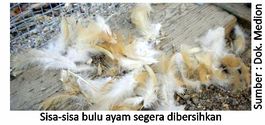
- Remove and clean the remaining dirt (feces and remaining chicken feathers). The rest of the chicken manure, either in the form of feces, residual litter, feathers and dust should be removed from the cage by sweeping.
3. Post force molting (current recovery)
- Provide multivitamins and amino acids to keep chickens healthy in top condition to prevent mortality or mortality rates in chickens that are too high. Give Vita Stress and Imustim during the process molting to help increase the stamina of the chicken's body and reduce the effects of stress caused. Generally during force molting death will occur due to the process of satisfaction applied at the beginning of the program, especially in chickens whose initial condition is less fit. Therefore, the main thing in doing force molting should really minimize stress layer from the process of reducing feed intake include stress interventions from the outside.
4. After the program force molting
- After the program force molting ends (it's been more than 30 days), then the chicken can be given a complete ration with normal portions gradually and the weight will increase again.
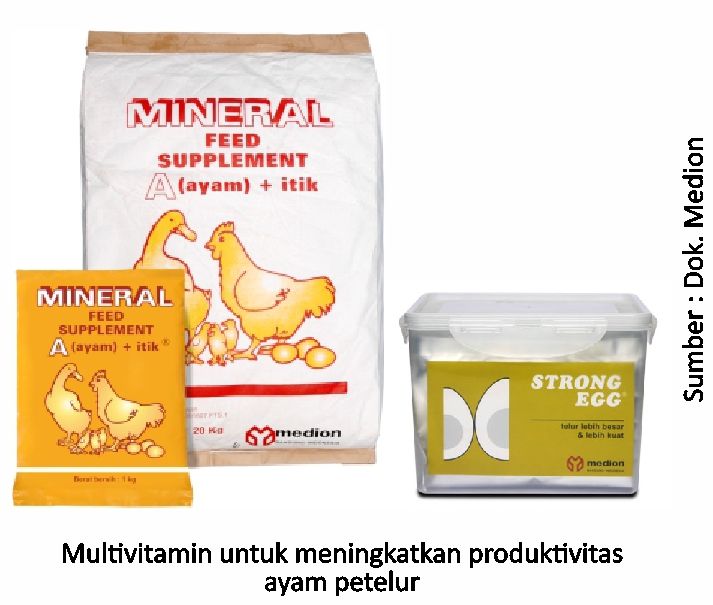
- As for accelerating the formation of feathers after the process force moltingaddition, can be given supplements containing amino acids, vitamin B complex, A, D, E and some essential minerals. Awarding Aminovit, Strong Egg or Mineral Feed Supplement A from the 31st day until the chicken enters the 2nd reject period, it is known to accelerate feather formation, suppress the effects of stress experienced by chickens and accelerate egg production with better quality.
- Sanitation of drinking places and feed is done by washing the drinking place and feed and disinfected (Medisep) every 2 times a day.
- Do weight control when after the program is complete, and try to keep the chicken is not too thin or not too fat because too much to eat.
Force molting only as an alternative choice of farmers to optimize chicken productivity. However, it is necessary to have a thorough preparation so as not to cause negative impacts and the results obtained are satisfactory. Greetings.