Formulation of rations with the appropriate amino acid content is needed to support the achievement of the genetic potential of modern chickens today. Amino acids play an important role for the health, production, quality of livestock products, and even affect the quality of the environment. Nutritionist this is a low-protein diet (low crude protein diet) by setting the value of essential amino acids according to the needs of poultry so that protein excretion into the environment can be minimized.
Essential amino acids are amino acids that are not synthesized by the body or are not produced quickly by the body for metabolic needs. One of the essential amino acids that poultry needs is arginine. Arginine plays an important role for poultry growth, especially during the phase starter. Various studies have shown that arginine supplementation is able to promote weight loss and efficient FCR broiler as well as optimizing weight layer phase starter.
Getting To Know Arginine
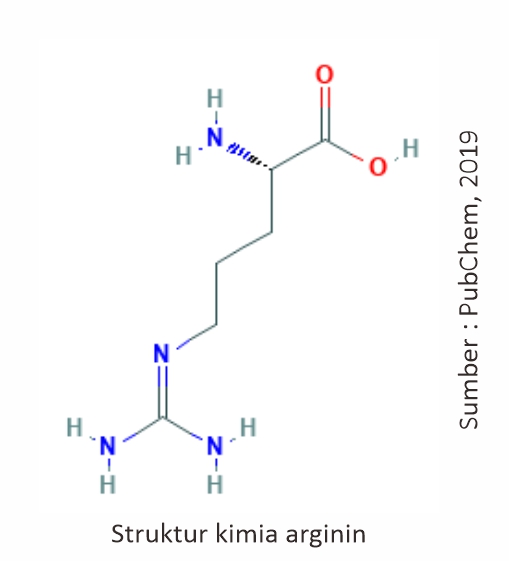
Arginine (C₆H₁ ⑵N₄O₂) is an essential amino acid clustered alongside amines that are often found on the active side of proteins and enzymes (PubChem, 2019). The biological availability of arginine can be obtained from three sources, namely :
- Repeated recycling of amino acids from protein synthesis and degradation processes;
- Ration consumption;
- Synthesis de novo (formation of complex molecules from simple molecules) derived from the precursor component arginine (Albaugh and Barbul, 2017).
In mammals, arginine is synthesized from non-essential amino acids namely glutamine, glutamate and Proline. In contrast to mammals, arginine cannot be synthesized by poultry. This is due to the malfunctioning of the urea cycle, the absence of enzymes carbamoyl phosphate synthase I and low activity hepatic arginase inside the body of poultry (Basoo et al., 2012). Therefore, poultry is highly dependent on arginine sourced from rations.
The percentage of arginine in the ration
Poultry's need for arginine varies under different conditions. The amount of these needs is influenced by the age, genotype of livestock, protein ration sources and environmental temperature (Yu et al., 2018). In addition, the concept of balance between amino acids (especially essential amino acids) also needs to be considered. According to Samadi (2012), improper formulation of essential amino acids, either excess or deficiency, can cause an imbalance of amino acids in the body which ultimately has an antagonistic (opposite) effect and becomes toxic to poultry.
In determining the ration with the ideal protein concept, the amino acid lysine becomes a comparison for other essential amino acids. This is because lysine is directly used by the body to maintenance (treatment) and is not used as a precursor to other compounds. In addition, lysine requirement data in various types of rations, environmental conditions and body composition of livestock have been provided complete so it is easy to use as a basis for calculating the needs of other essential amino acids (Samadi, 2012). Berikut adalah rasio optimal arginin : lisin berdasarkanrekomendasi National Research Council (NRC) (1994) dan standar dari breeder commercial chicken (Tables 1 and 2).
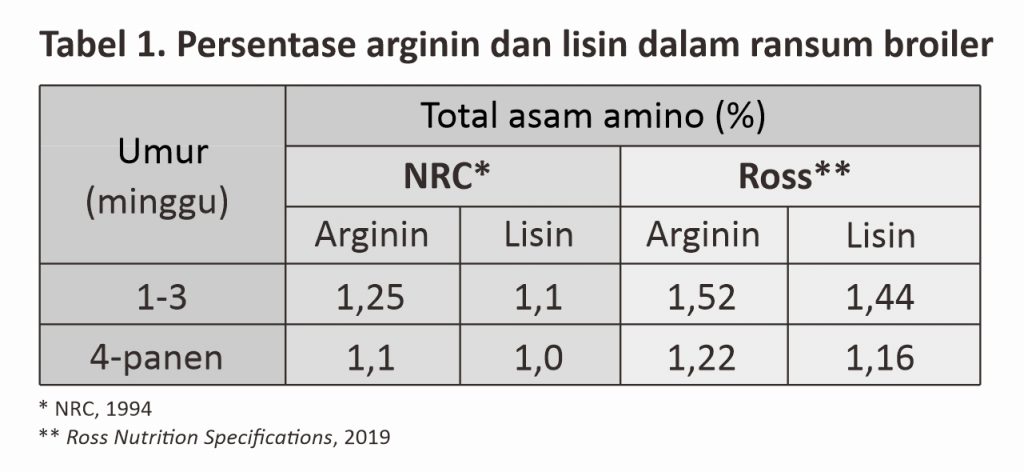
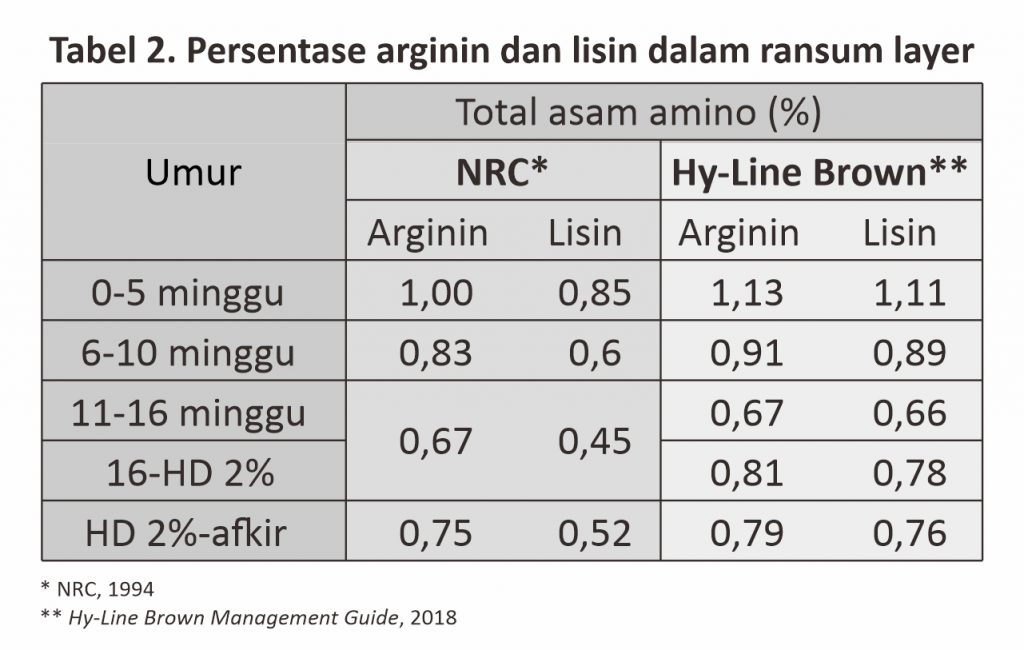
In fact, in commercial poultry rations today, the arginine : lysine ratio is usually higher than the NRC recommendation to support the high genetic potential in modern chickens both broiler and layer. The ratio can also be different in different environmental conditions. According to khajali, the arginine needs of chickens will increase at high ambient temperatures, so arginine supplementation is recommended when the condition of chickens heat stress.
Arginine supplementation in poultry ration also needs to pay attention to the interaction between amino acids. Arginine is antagonistic (opposite) to lysine. However, the antagonistic effect was more pronounced in conditions of excess lysine (low Arg : Lis ratio) than in excess arginine (high Arg : Lis ratio). This is because excess lysine has an impact on increased excretion of arginine through urine and increased activity of the arginase enzyme in the kidneys to degrade arginine.
Excess arginine supplementation in the ration (up to 4 g / 10g of ration) was still tolerated in young chickens although the effect on weight gain was reduced by 9% (Ball et al., 2007). Arginine supplementation for optimal immune response in chickens broiler is 7% higher than the NRC recommendation (1994) , for optimal production is between 1.10 – 1.25 g/100g ration and for efficiency optimization ration is between 0.96 – 1.28 g/100 g ration (Khajali et al., 2010).
Effects of arginine on chicken performance
Arginine supplementation in poultry rations plays a major role in optimizing performance. Appropriate supplementation can support protein synthesis, weight gain, hair growth and other optimal biological functions. Some effects of arginine supplementation on chicken performance include :
- Weight and FCR
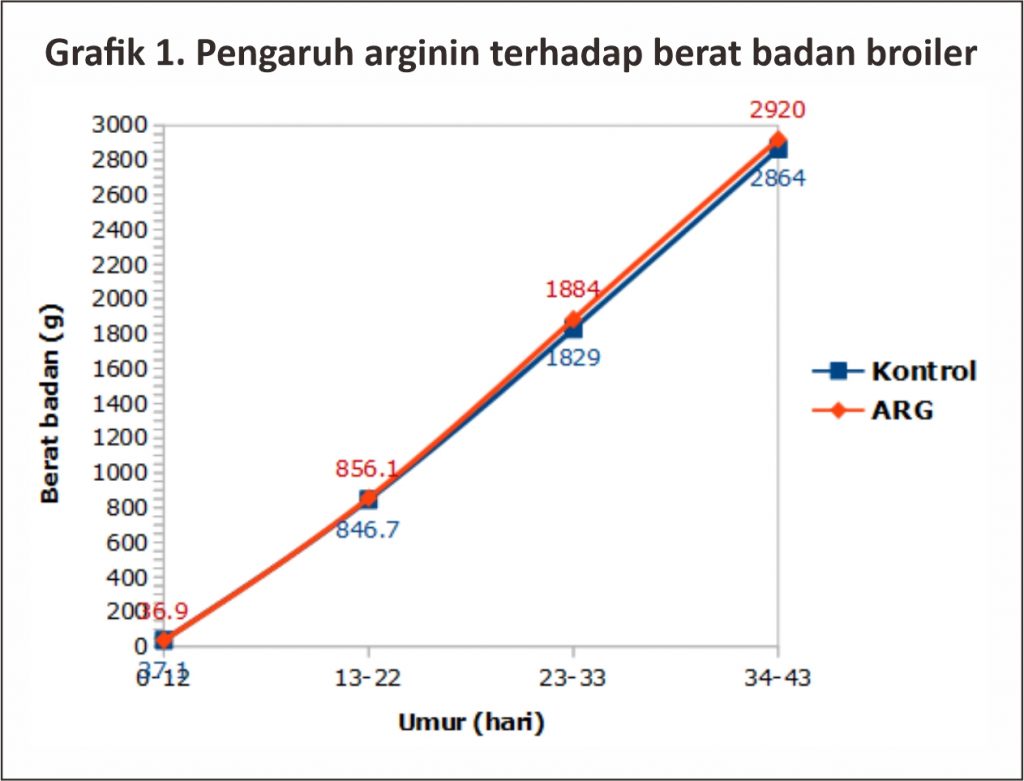
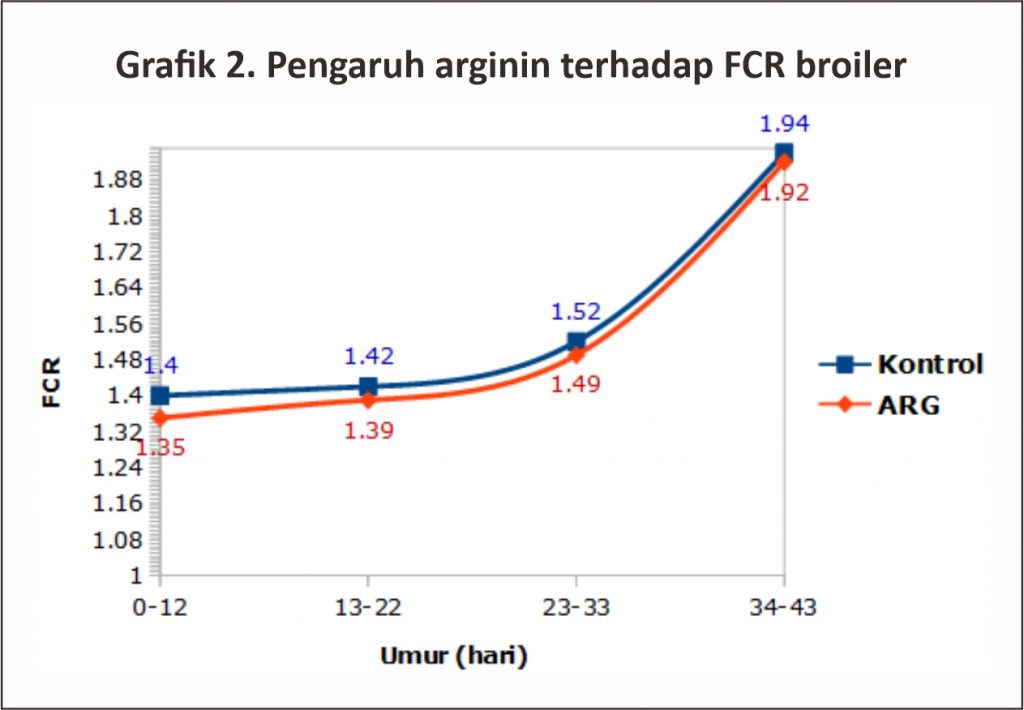
Zampiga et al. (2018) in his research proved that arginine supplementation into the ration broiler with arginine : lysine ratio of 1.15; 1.15; 1.16 and 1.17 respectively for Phase starter (0-12 days), grower I (13-22 days), grower II (23-33 days) and finisher (34-42 days) was able to increase body weight and streamline FCR (graphs 1 and 2).
Arginine supplementation in the ration broiler provide a positive effect on growth, especially in the phase starter, by maintaining the microbial balance of the digestive tract, helps the development of the body's immune system (Zampiga et al., 2018), as the main component of the formation of body proteins, precursors of the body's connective tissue and increasing the expenditure of insulin and growth hormone into the bloodstream (Yu et al., 2018).
2. Digestive tract
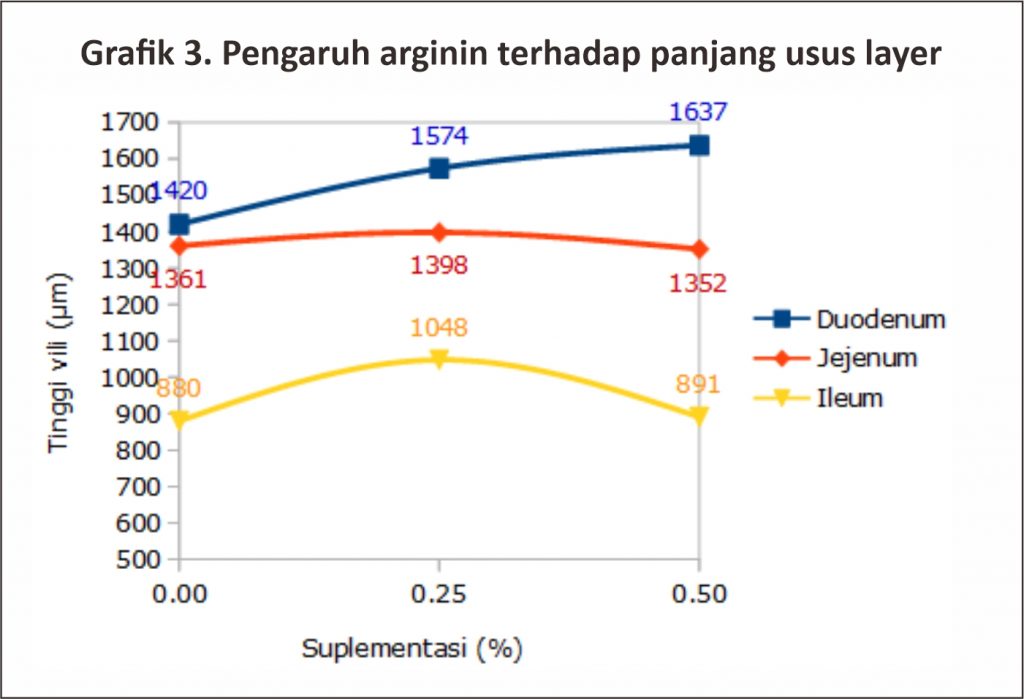
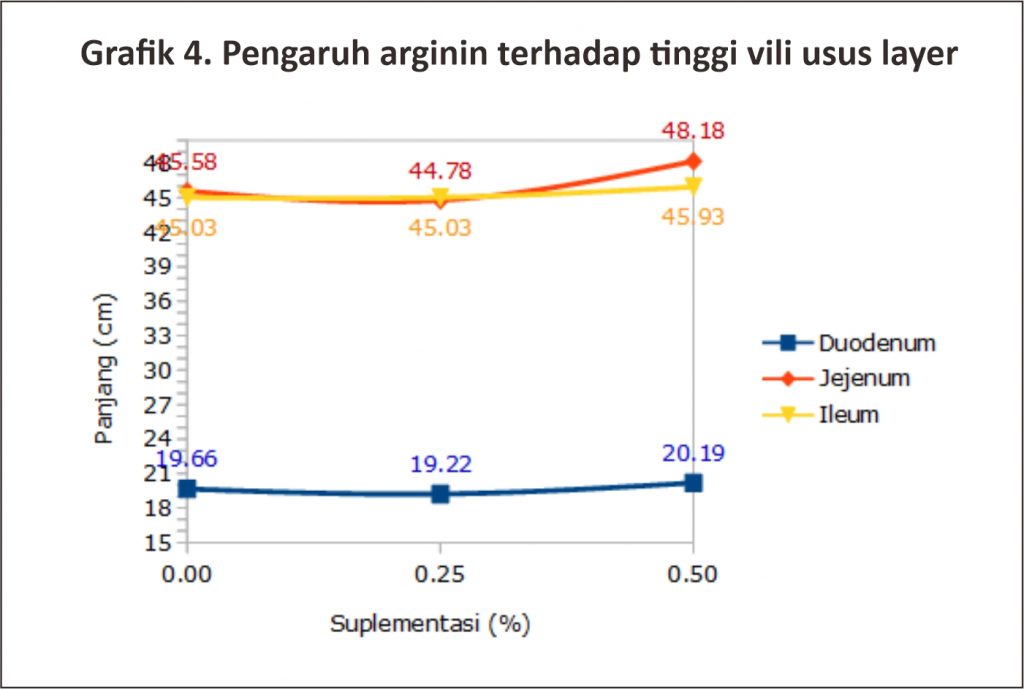
The growth and development of the digestive tract has a direct effect on the ability to digest and absorb ration nutrients. In Yu's research et al. (2018), arginine supplementation of 0.25% and 0.50% in layer chicken rations was shown to affect the length (graph 3) and height of duodenal villi, jejenum and ileum (graph 4). The increase in the length of the intestine and the height of the villi of the duodenum, jejenum and ileum is caused because arginine acts as a precursor to the formation of polyamines. It is the polyamine that plays an important role in the growth and development of the small intestine mucosa of chickens. The lower intestinal villi height at the highest arginine treatment (0.50%) can be caused by decreased use of lysine by the body because the ratio of arginine and lysine that is not appropriate to cause both competing in the small intestine.
3. Egg production
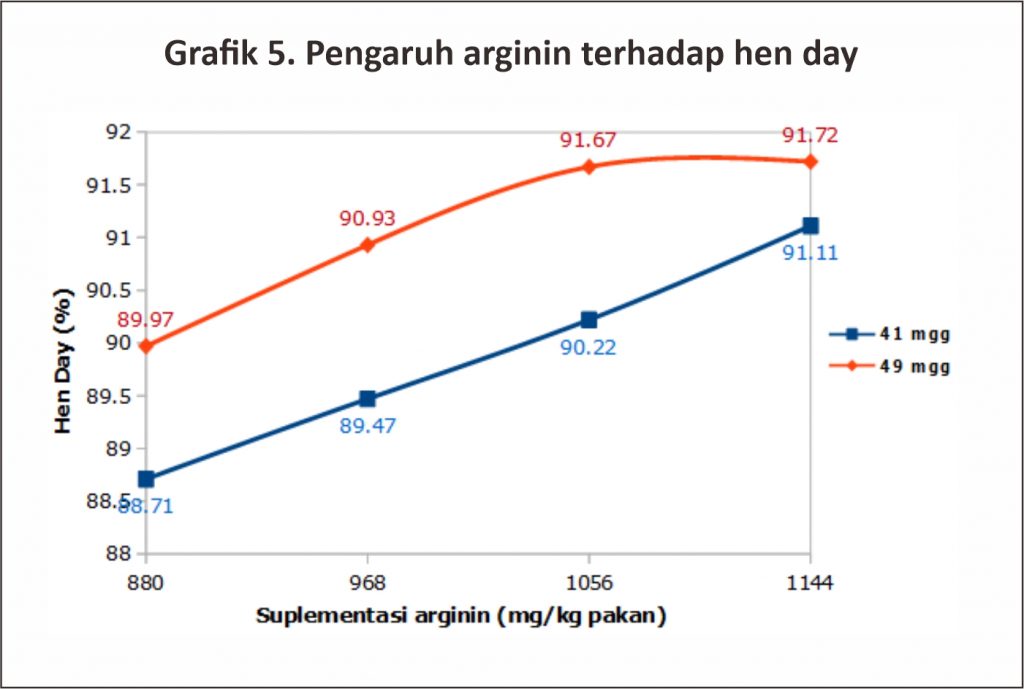
Fascina et al. (2017) proved that arginine supplementation was able to optimize hen day layer at the age of 41 and 49 weeks (graph 5). Arginine can work directly in the ovaries and egg follicles to stimulate hormone production luteinizing (LH). LH plays a role in ovulating mature eggs, so arginine supplementation can ultimately optimize egg production (Duan et al., 2015).
Thus at a glance information about arginine, an essential amino acid for broilers and layers. Arginine supplementation in the right amount and ratio in the ration can support optimal growth and production of chickens. Hopefully useful and add to our insight. Be healthy and successful Always.