Question: How to deal with heat stress in laying hens?
Ayah Aan
Email: aan.bmkg@gmail.com
I want to consult about my chickens with a population of 1000 heads. My chickens have a cold and I have treated with Trimezyn for 5 days, but has not healed and now develops into a swollen face and watery eyes. I have treated with Doctril for 6 days but has not healed well. Good air circulation conditions and dry husks. What diseases affect my chickens? How is proper handling?
Answer
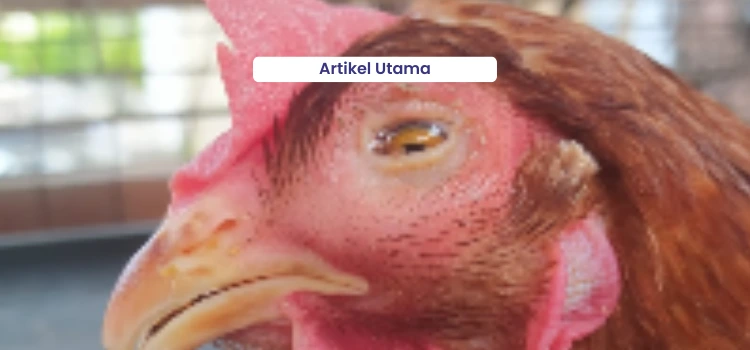
Dear Mr. Aan, thank you for the question. Clinical symptoms in the form of a runny nose, swollen face and watery eyes are symptoms that lead to coryza disease. However, we encourage you to explore as much information as possible about the symptoms of other diseases that appear as well as the patterns of spread and changes during carcass surgery.
Symptoms of infectious coryza (snot) that often appears among them is the discharge of exudate from the nose, which at first is watery yellow and then gradually turns into a thick, purulent and characteristic odor (foul/fishy smell). The presence of this exudate causes the chicken to sneeze, difficulty breathing, loss of appetite and snoring. Snot disease can occur singly or in combination with other diseases such as E.bra which infects the eye and makes the chicken's eyes become swollen and close. In the case of a severe case, the patient will have to undergo a blood test (panopthalmitis).
Administration of antibiotics such as Trimezyn and Doctril it is appropriate in the treatment of coryza disease but it is necessary to re-evaluate why after treatment, the chicken is still not cured. In the case of colds accompanied by swelling of the face, drinking water consumption usually decreases dramatically so that the administration of antibiotics through drinking water is less efficient. If the condition of the chicken is so treatment is done by giving antibiotics by injection such as Tinolin injection, Vet Strep, Gentamin or Kanamin.
Here are other important things that need to be considered in the administration of antibiotics:
- Administration of antibiotics should be adjusted to the dose of body weight and given 2x a day. Here is an example of calculating the dose of the drug and how it is administered:
Doctril dosage : 0.1 gram/kg body weight
Weight : 1 kg
Population: 1000 head
Dose of Administration = dose x BB x population
= 0.1 x 1 x 1000
= 100 grams
The drug is given 2x in the morning (06.00-12.00) and afternoon (12.00-18.00) with a dose of 50 grams each Doctril dissolved into drinking water need for 6 hours to ensure the effectiveness of the drug - Rolling antibiotic, which is the replacement of antibiotics every 3-4 treatment intervals to prevent the occurrence of antibiotic resistance by replacing antibiotics based on the class of antibiotics (not just based on the trademark).
In addition to treatment techniques, it is also necessary to pay attention to the following points:
- Isolation of sick chickens to minimize disease transmission
- Bury dead chicken carcasses immediately and as far away from the enclosure environment as possible
- Revaccination (if not already severe) of laying hens. This aims to make the formation of antibody titers more optimal
- Vitamins such as Fortevit, or Vit B complex injection to help improve the condition of the body of chickens.
- Increase biosecurity with the help of a vacuum cleaner (Antisep, Neo Antisep, Medisep, Zaldes).
- Adjust the density of chickens in the cage, ventilate according to the conditions of the cage, and apply the system all in all out.
- Disinfection of livestock equipment (rations, drinking places etc.) using Medisep.
- Disinfection of drinking water using Desinsep, Antisep, Neo Antisep or Medisep.
- Prevent litter become very dry and dusty by not installing litter too thick (thickness litter enough 7-12 cm only)