Chili is an important vegetable commodity that is widely cultivated because it has wide adaptability and has high economic value. Most chili peppers are used for domestic purposes consumed in fresh, dried, or processed form. Chili plants come from genus Capsicum. There are many species of genus capsicum, but which is widely cultivated in Indonesia is Capsicum annuum (large red pepper, curly red pepper, and paprika)and Capsicum frutescens (cayenne pepper).
- Large red pepper
Large peppers can grow at various heights, both on land, paddy fields and beaches.
- Curly red pepper
Curly red pepper is more resistant to storage. Curly peppers can grow at various heights, both on land, and rice fields.
- Paprika
Fruits are harvested when they are young, that is, when they are still green or yellow. Peppers are suitable for growing in the Highlands.
- Cayenne pepper
The age of the harvest ranges from 90-100 hst (days after planting). Cayenne pepper plants are annual and can grow at various heights and various types of soil such as land, paddy land, and beaches.
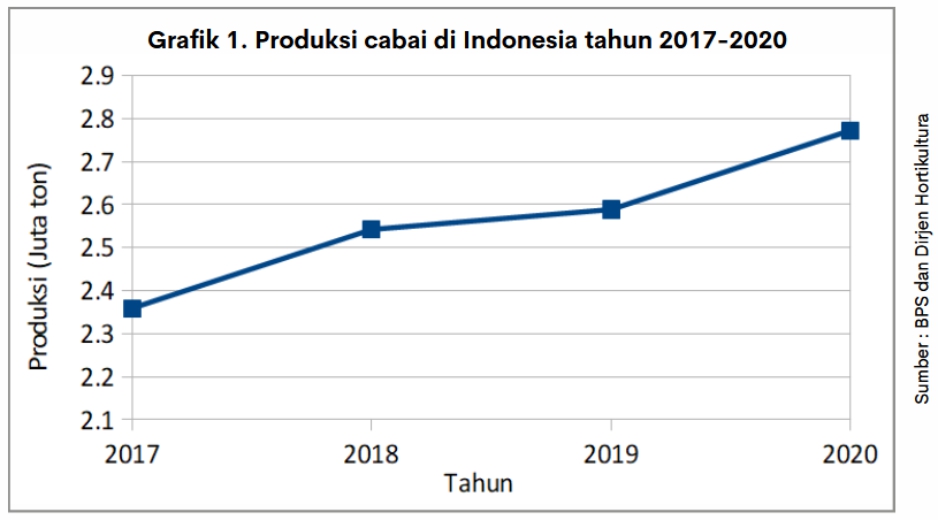
Chili production in Indonesia in 2020 amounted to 2.77 million tons consisting of red chili and cayenne pepper (BPS, 2020). Chili production in Indonesia in 2017-2020 has always increased every year as shown in Graph 1. In 2020, the highest chili production occurred in August which reached 280.78 thousand tons with a harvest area of 73.77 thousand ha (Chart 2).
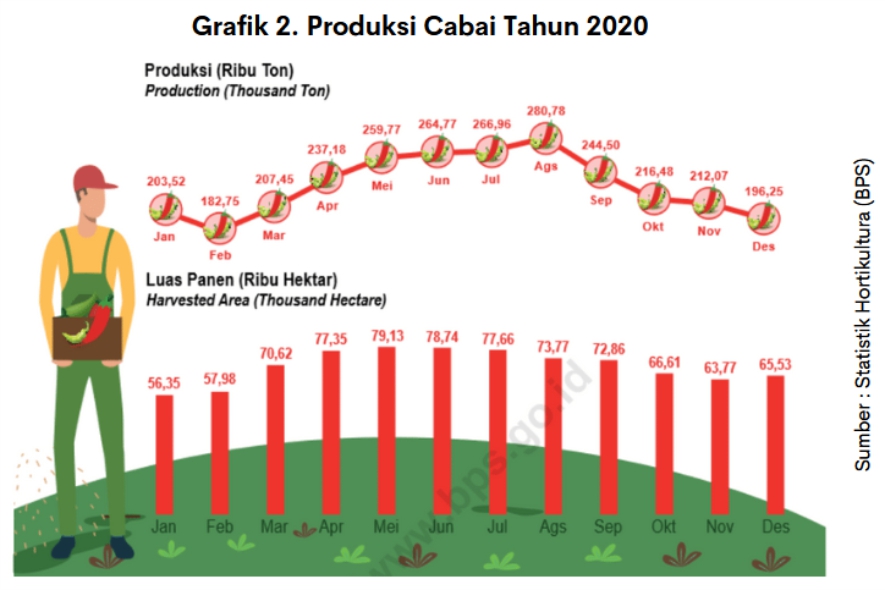
High production due to the increased harvest area that occurs in the dry season. Planting peppers in the dry season can reduce the risk of chili plants from diseases caused by fungi or bacteria. However, chili planting is done in the dry season has constraints due to pest attacks that will be more in the dry season.
Red pepper plants can be cultivated in the lowlands to the Highlands to an altitude of 1,400 meters above sea level. But growth in the Highlands will be slower than in the lowlands. Sunlight is needed during the growth and development of chili plants. The average good temperature for chili plant growth is 21-28°C. Chili plants can grow in various types of soil with drainage and the availability of sufficient water during the growth and development of plants.
Productivity achieved by farmers in general is still at a level below the potential yield. One of the causes of still not achieved the potential results are pests and plant diseases that can not be controlled. Pest and disease attacks can cause severe damage to crops and result in crop failure.
Control of Plant Pest organisms (OPT) is very important to keep chili plants can produce optimally. Pests that attack chili plants are very diverse from the group of pests and diseases. Pests that generally attack chili plants are grayak caterpillars, thrips, whitefly, and aphids. While the diseases that attack chili plants are anthracnose, leaf spot, fusarium wilt, bacterial wilt, and yellow virus.
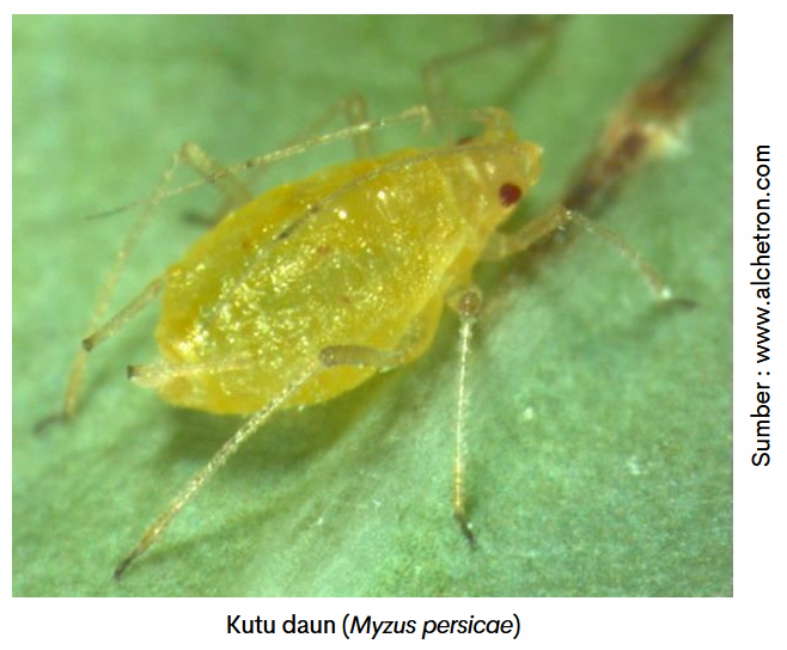
One of the most common pests that infest Peppers is aphids (Myzus persicae). Aphids have a small body size (1-2 mm) and their life cycle ranges from 10-20 days. The population of this pest can increase in the dry season, but on the contrary will decrease in the rainy season. Aphid host plants are more than 400 types, including peppers, potatoes, cabbage, carrots, celery, cucumbers, eggplant, spinach, tobacco, tomatoes, and petsai.
Aphids attack a lot in the dry season. This pest usually settles on the underside of leaves, shoots of plants, flowers, stems, and in the folds of curly leaves. The parts of the plant that are heavily attacked are plant shoots and young leaves.
Aphids damage plants by sucking the cell fluid on the leaves, especially on young leaves or shoots. Aphid attacks cause the leaves to wrinkle, curl, and cause stunted (stunted) plant growth. High infestation can cause leaves to fall, small fruits, plants to wither, and die.
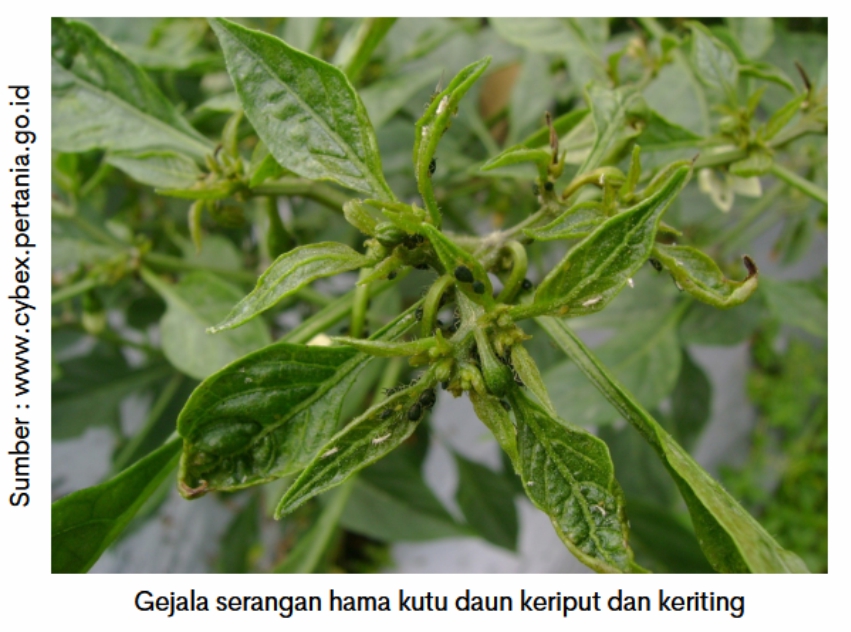
In addition, aphids also cause indirect harm. Aphids become vectors (carriers or intermediaries) of viruses, including potato leaf rolling virus (PLRV), potato y virus (PVY), Cucumber Mosaik Virus (CMV) and others. Aphids produce a sweet, honey-like liquid. The liquid can be a place for the growth of sooty dew fungus that is blackish on the surface of the leaves so that it can inhibit the process of photosynthesis.
Pest control on chili plants and other plants can be done in an integrated manner. Pest control is done by combining various ways to reduce the intensity of pest attacks so that it is not economically harmful and safe for the environment. Control is carried out by technical, mechanical, biological, and chemical culture.
1. Technical Culture
Conducting plant cultivation with certain techniques so that the planting conditions are not or less suitable for the place of life or the development of pests.
- Land treatment and sanitation by cleaning all weeds and plant residues in the chili planting area.
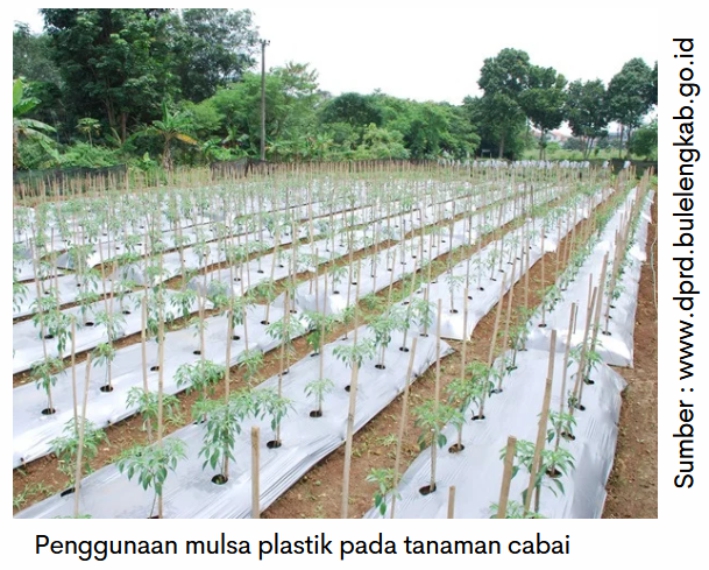
- The use of black-silver plastic mulch can reduce attacks from aphids and thrips pests. Plastic mulch on chili peppers can also suppress weed growth around chili plants.
- Planting pattern intercropping peppers with onions, can suppress the intensity of pest attacks because onions have properties as midges.
2. Mechanical
The control is done by means of direct mamatikan, blocking (barier), or collecting pests.
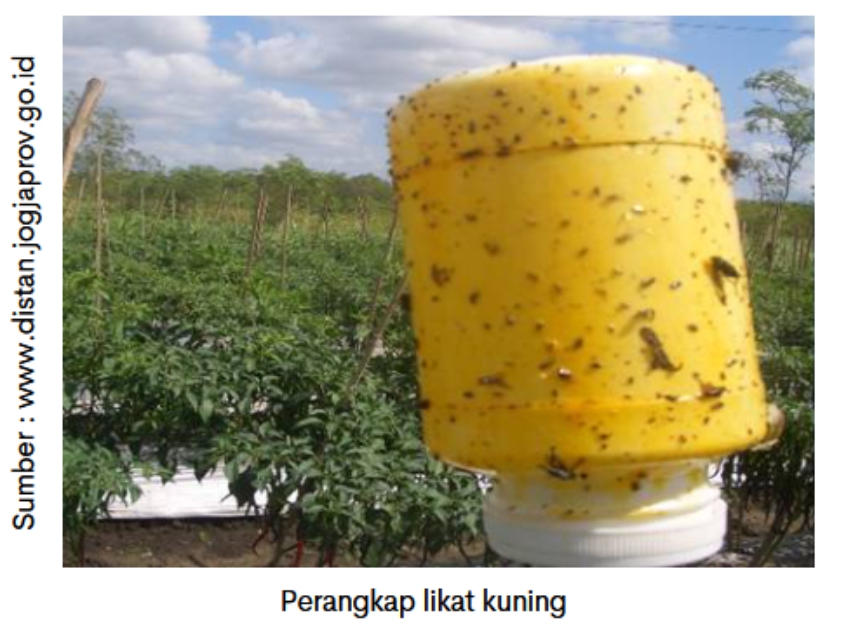
- Using yellow viscous traps of 40 pieces per ha. The trap is set after the plant is 2 weeks old.
- Using shade (netting hous) to suppress the entry of pests into the planting of peppers.
3. Hayati
Pest control uses its natural enemies by protecting and encouraging the life of its natural enemies. Maintaining the balance of the ecosystem of natural enemies of pests is important to suppress pest populations in the field. There are several natural enemies that act as predators, parasitoids, and pathogens for aphids.
Predator
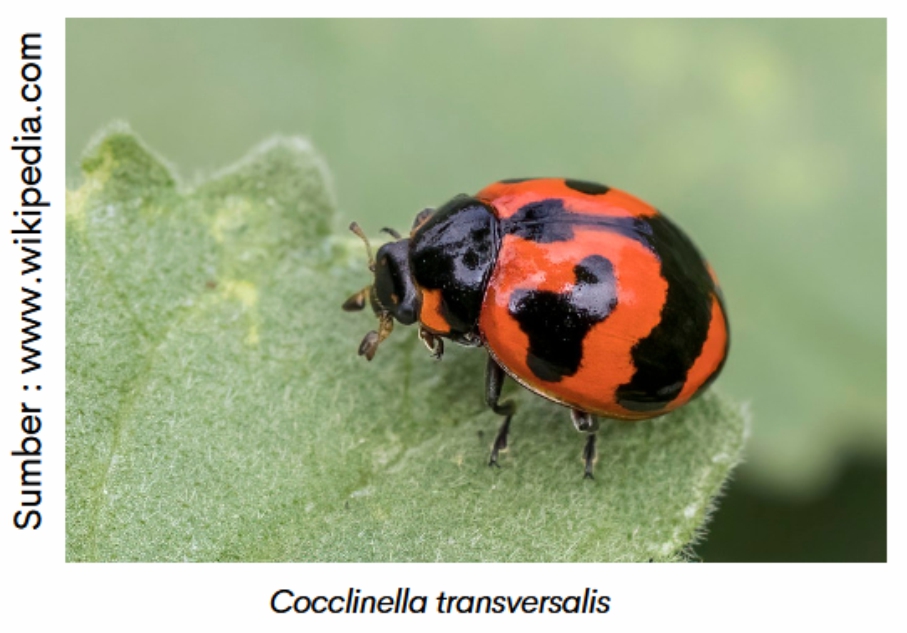
Ladybug Cocclinella transversalis, ladybug Harmonia octomaculata, Beetle Menochillus sexmaculatus, insects Chrysopa sp, flower fly larvae syrphida.
Parasitoid
Wasp parasitoid Diaeretiella rapae, Aphidius sp.
Pathogens
Entomophthora sp, Verticillium sp as entomopathogenic mushrooms (heterotrophic organisms that live as parasites on insects).
4. Chemical
Pest control uses toxic chemicals or other ingredients (pesticides) that can protect plants from pests. The selected pesticides must be effective and have obtained a license or registration. Insecticides used for example with Abamax are effective for eradicating pests including ticks that attack chili plants. If you see any symptoms or found ticks on the plant immediately use Abamax.
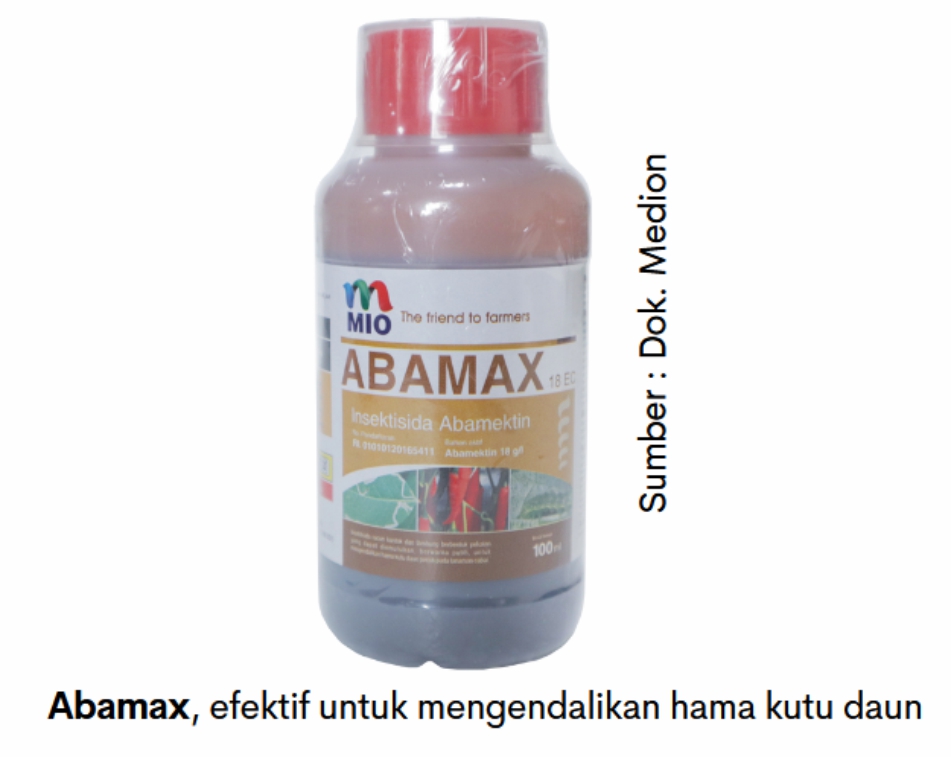
Abamax is an insecticide that has the active ingredient abamectin. Abamax administration can use a concentration of 0.5-1 ml/l. Spraying should be done in the afternoon. In the use of insecticides still need to pay attention to 6T, namely right on target, right type, right quality, right time, right dose, and right way of application.