High mortality rate Day Old Chick (DOC) one of them is due to the lack of optimal preparation before and handling when DOC arrives at the cage. One thing that should be noted by farmers is the lack of optimal management is supported by DOC conditions that have lost energy and fluid due to the transportation process. Therefore, the optimal DOC acceptance process is an important thing that must be considered before starting the maintenance of chickens.
The importance of preparing for the arrival of DOC
As good as any quality DOC sometimes can not guarantee until it arrives at farm the entire DOC is in optimal condition. Because in this case, the effects of the delivery process often have a considerable influence on the condition of the DOC.
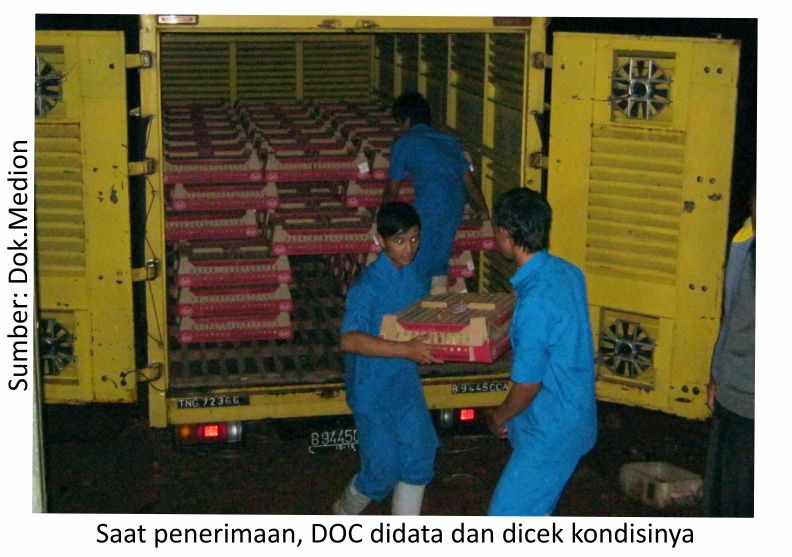
Ideally delivery DOC from hatchery to the maintenance cage no more than 12 hours. If possible transport DOC at most 3 to 4 hours, the sooner arrive at the cage the better. During the process of sending DOC to the cage, the occurrence of stress and dehydration or lack of energy due to the loss of some body fluids is likely to be quite large. In fact, the Chick's body's need for energy is one of the important things. If the body's energy needs are not met and there are not enough fat reserves stored in the body, then protein as a building substance will replace the function of carbohydrates as energy producers. If this situation continues, then the lack of energy and protein can not be avoided anymore (McLaren, 1981). Adverse effects caused by lack of energy, namely:
- Chickens look limp and have a reduced appetite so a lack of nutrients for productivity is inevitable
- The metabolism of important substances in the body is inhibited
- Weight growth and slow egg production that can affect total productivity
Preparation before the DOC arrives
Because time brooding period, also called the critical period, then when brooding period, the needs of the chicks must be met. Otherwise, then the chicks will be stressed. Chicks are stressed when put to chick guard will be more silent, not actively eat and drink. The impact, the early days of optimal growth can be lost. To avoid this, farmers need to make some preparations including:
1.Preparation before chick inBefore the start of the period brooding period,, of course, it is necessary to prepare a comfortable and clean cage before the implementation chick in. Faeces and litter dirty must have been quartered and removed from the environment farm. Piles of feces or feces that are still in the environment farm it is feared to be a source of disease transmission.Thorough cleaning of the cage is carried out from washing and disinfecting the cage and equipment, repairing leaks or slats with holes, fogging until the forgiveness. The liming process is carried out by flushing the lime solution over the entire surface of the cage (floor, walls and ceiling). The composition of the lime solution for a cage of 100 m2 is 20 kg of quicklime, 100 liters of water and 1 liter of 40% formalin.After that, the rest period of the cage cannot be shortened and must be applied for at least 14 days after the cage is clean. After cleaning and resting the cage, the next step is preparation, which is carried out about 3 days before chick in. The things that must be done in this stage are as follows:
- Enter litter or already sprayed husks Sporades according to the needs. For postal cages, thickness litter the beginning is about 8-12 cm. While on the stage Cage, the thickness ranges from 6-8 cm. At the time of brooding period,, litter can absorb heat from brooder this helps to keep the chicken warm.
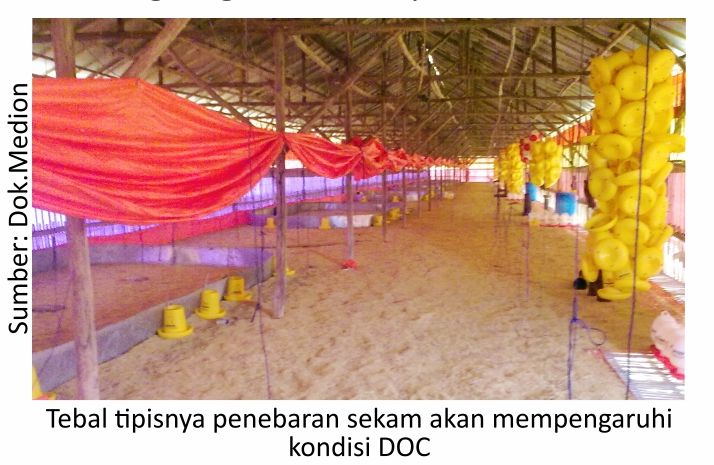
- Setting area brooding period, (installation chick guardwith a heating pad (IGM), lamps, rations, and drinking places. Once the heater is installed, test the heater to see if everything is working properly and there are no gas leaks or fire triggers.
- In addition to being installed outside curtains, in certain areas where the air conditions are cold or during the rainy season we can add the installation of curtains in the first 5-6 days. There is also the installation of ceiling curtains/top for cages that are not multilevel. Do not forget to provide a ventilation gap (20-30 cm) and open the additional curtain during the day so that the DOC gets fresh air.
- Prepare a foot bath and hand sprayer contains a disinfectant solution for Cage attendants and guests who enter and exit the cage location. This is done as a step in the implementation of biosecurity.
- After all the preparations are complete, re-spray all parts of the cage including the equipment with disinfectant to minimize disease seedlings.
- Also perform insecticide spraying (do fogging, red) so that insects do not roam a lot in the cage. This is because insects can act as disease vectors. This activity is carried out only when the cage is empty.
- Prepare vaccines, medications, vitamins, disinfectants needed during the maintenance period. Regarding how much amount should be deposited, it can be based on the history of previous vaccination and treatment programs, or for new farmers can consult first with field workers.
2. Doc arrival preparationafter the cage and equipment are ready, then wait for DOC to come. Things to do in between:
- Farmers must communicate with the DOC delivery department to find out what time the DOC starts to be sent and the estimated time of DOC's arrival at the location farm.
- All children's cages should be ready on site farm on the day of arrival.
- Prepare form recording and the necessary tools (stationery and scales).
- Turn on IGM at least 1-2 hours before DOC arrives (pre-heating) and adjust the heat well so that litter it was already warm and the temperature of the brooding area was already quite stable when DOC entered. Under normal conditions, when the temperature brooding period, already stable and in accordance with the needs of DOC which is about 31-33°C, DOC will soon do eating and drinking activities.
- Prepare rations and drinking water in the cage brooder before the DOC arrived. The recommended drinking water is water with a warm temperature the effect of the heater is turned on so that it will make drinking water match the temperature of the intestine and body DOC. It will be even better if additional supplements are added.
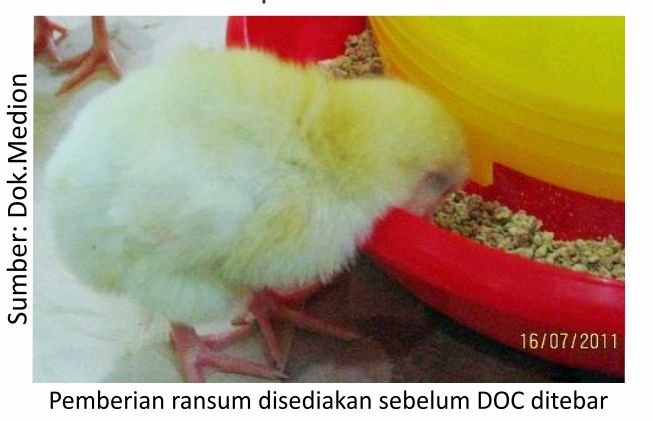
Additional supplements as an energy replacement
DOC or chicks who just arrived at the cage need replacement energy after losing energy due to the process of travel from hatchery to the cage. Giving additional supplements is highly recommended so that DOC can get energy or body fluid replacement quickly.
Supplementation is the addition of the necessary substances into the body either through rations or drinking water. Examples of Medion products that can play a role in adding energy to the DOC are Gingertol. Gingertol is a liquid supplement containing herbal extracts to restore energy in chickens. Gingertol it is safe to use without causing side effects and can be mixed with medications or vitamins.
Compared to sugar water, giving Gingertol besides being able to recover energy can also help increase body weight, optimize FCR, and reduce mortality. The herbal ingredients contained in Gingertol works synergistically in helping the performance of chicken by increasing the production of enzymes and accelerate the digestive process so that the consumption of rations increases. In addition, Gingertol works to stimulate the formation of intestinal villi so that the absorption of nutrients will be more optimal ration and maximum performance. From trial Laboratory Animal Testing Medion obtained the results of body weight chicks aged 3 days that have been given Gingertol higher than that of chicks fed only sugar water and not given anything (Graph 1).
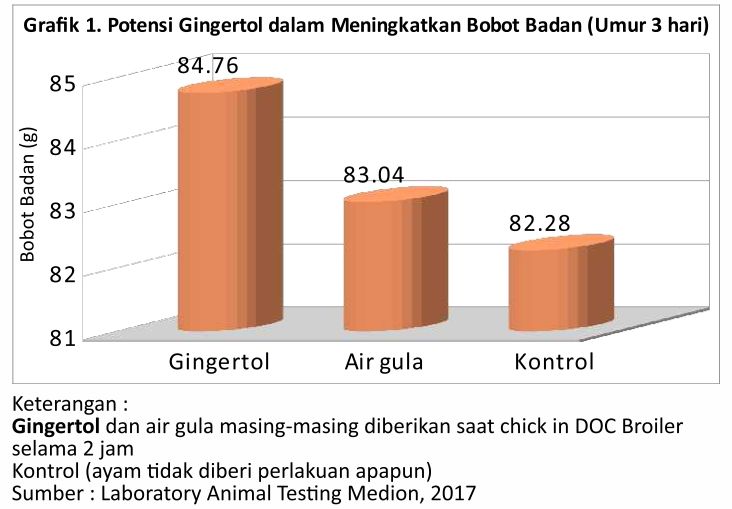
For maximum results, the newly arrived DOC is given Gingertol 2 ml / liter of water to drink in advance for the first 2-3 hours after chick in. After Gingertol you can also take a multivitamin (Vita Chicks) or immunostimulants (Imustim). So that the energy needs coupled with vitamins needed by chicks can be fulfilled and can maintain the body's resistance to disease.
May be useful. Greetings.