Budi Sujarwo
Sukorejo-Central Java
I am a breeder of laying hens. What is the product Levamid can it kill tapeworms, how to give it and can there be resistance to helminthic drugs if given every 3 months?
Answer :
Dear. Mr. Budi Sujarwo, thank you for the question. Levamid as seen in the picture below is an effective anthelmintic to kill gilic worms larval and adult forms in the digestive tract, respiratory tract and eyes as well as tapeworms in the digestive tract of poultry.
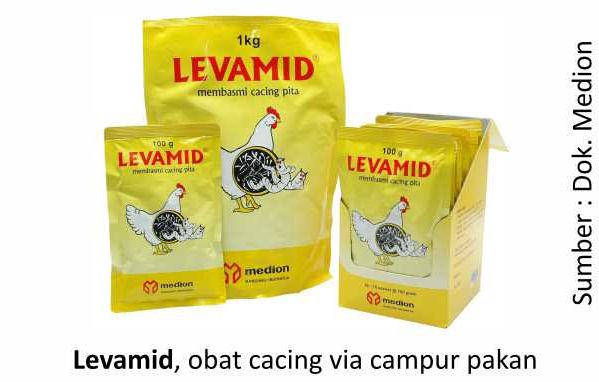
Levamid works inhibit uptake (uptake) of glucose and disrupt the cycle process Krebs (cycle to produce energy) in tapeworms. Cycle break Krebs resulting in the accumulation of lactic acid which is toxic/toxic and can kill worms.
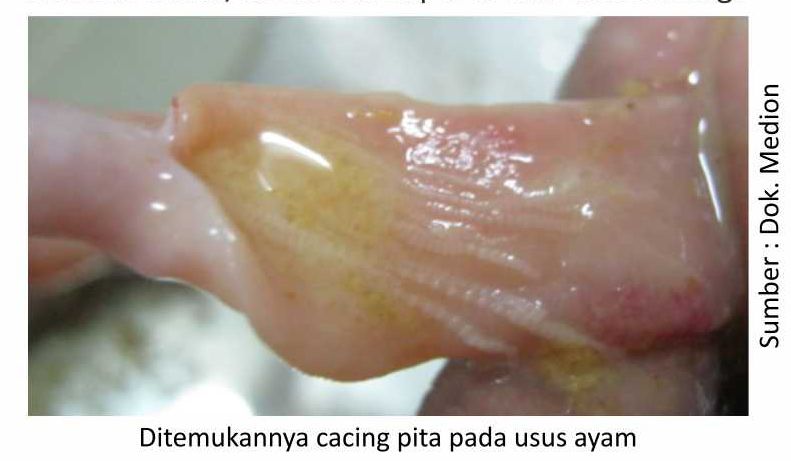
Levamid also affects the nervous system, blocking fumarate reduction and succinate oxidation in the process of carbohydrate metabolism of gilik worms. The result is that paralysis of the worms occurs and the worms are removed through intestinal peristalsis in a live state from the chicken's body.
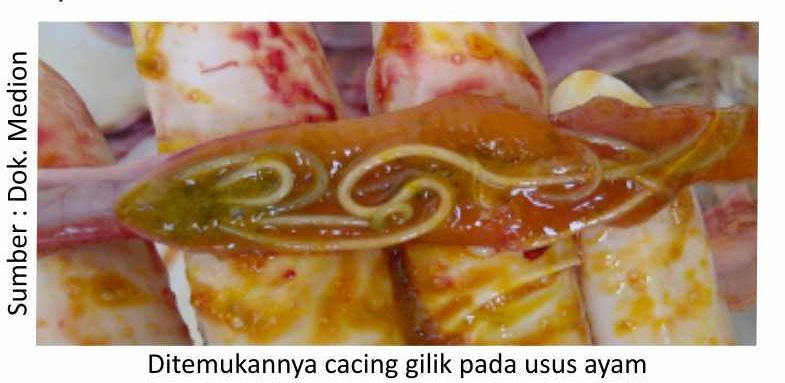
Levamid cannot be dissolved in water so that the administration of Levamid deworming is done by mixing into feed and generally deworming is given in a single dose (just one administration). The way of mixing is by adding Levamid to the feed little by little then just mixed into the feed with a larger volume. Then it is given to the chicken and should run out for 2-4 hours. Because generally worm medicine is bitter when eaten and can cause stress in chickens.
Before deworming, chickens can be fasted for about 2 hours. In a state of hunger so that the feed that has been mixed with anthelmintic can be used up immediately. Before the worm medicine runs out, do not give additional feed first.
The repetition of deworming is adjusted to the life cycle of the worms to be eradicated. For example, in gilic worms, it can be repeated every 1-2 months, while in tapeworms, it can be repeated every 1 month. Then for prevention in non-stage postal cages can be given deworming from the age of 1 month and repeated once a month. While the battery cage can be given at the time of riding the battery can then be repeated every three months. Repetition of deworming in chickens kept in postal cages is faster than in battery cages, this is because in postal cages chickens will contact feces directly so that transmission will be faster.
In general, resistance not only occurs in antibacterial, but also can occur in anthelmintic. But based on research, anthelmintic resistance is not as fast as resistance caused by antibacterials. Based on research conducted by Lili (2006), resistance to anthelmintic drugs can be influenced by the use of anthelmintic doses without considering the weight of the chicken/ anthelmintic doses are not appropriate.
So, for the use of anthelmintic every 3 months, it is still safe to use during the period of keeping laying hens (+ 1.5 years). For the effectiveness of the drug it is also necessary to carry out tests to determine what worms it infects so that the drug targets are appropriate. MediLab is a Medion laboratory spread across several regions in Indonesia. At MediLab serves testing including stool tests to identify the types of worms that attack poultry, cattle, goats, sheep and pigs.