Mr Mohammad Syamsuddin
Makassar-South Sulawesi
How to reduce the humidity in the cage open house for breeding broiler?
Answer :
Thank you Mr. Syamsuddin for the question. The humidity in the cage will affect the temperature the chickens feel. The higher the humidity, the temperature the chicken feels is also higher. Conversely, chickens will feel cooler temperatures than ambient temperatures when humidity is low. The modifications that can be done to make the chicken comfortable, namely :
- Make database temperature and humidity in the barn
Easy language, recording of temperature and humidity in the cage in the morning, afternoon, evening, night and early morning. Including the response of chickens when recording, whether there is panting. From here it will be seen a summary of the ideal temperature and humidity range where it does not occur panting. So when the temperature or humidity exceeds the ideal range, you can act immediately.
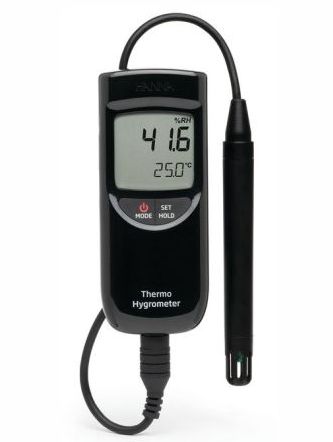
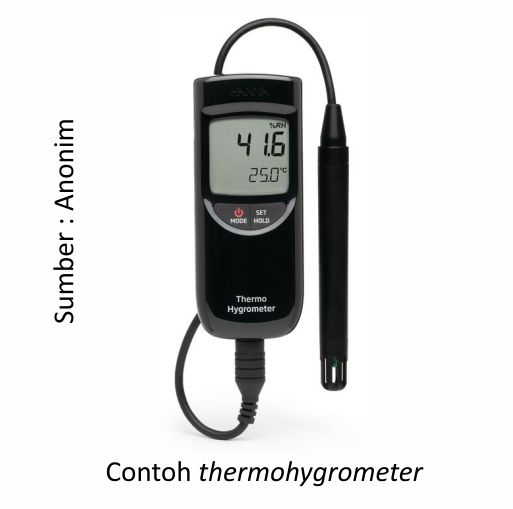
In one cage, there are at least 3-5 points to measure temperature and humidity, namely the front, middle, back, top (near the tiles) and the floor of the cage. To make it easier and faster in the observation place thermohygrometer in every cage. For the cage brooder, hang a thermohygrometer at chick guard while uto the post office without brooder, thermohygrometer placed in the center of the cage at a height of 40-60 cm.
2. Density setting
A cage that is too dense will increase the temperature of the cage. Adjust the density and expand the cage.
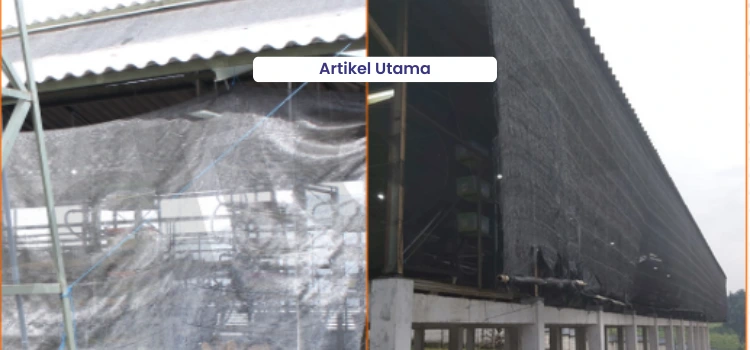
3. Management open close curtains good ventilation system, very effective to lower the temperature in the cage. Open the cage curtain when the temperature rises. When the wind blows strongly or the temperature drops, the cage curtain can be lowered, provided that the top of the curtain remains open 20-30 cm wide so that air circulation is maintained.
4. Fan additions
Cages that are too wide and dense or livestock areas that have less wind speed, it is recommended to add a fan. Fans can be installed in the middle, end or side of the enclosure. The speed at which the fan expels air also needs to be adjusted. For adult chickens, it is recommended that no more than 2.5 m/sec. while for brooding period,, not more than 0.3-0.6 m/sec. It should also be noted that the wind should not directly hit the body of the chicken (at least it is installed 20-30 cm from the floor).
5. Artificial rain or fog system
The artificial rain system is carried out outside the cage while the artificial fog is carried out inside the cage. Its function is to lower the temperature when the weather starts to feel hot, around 10.00-14.00. If it is turned on when it is hot (11.30-12.30) it will cause a high temperature change so that the chicken can get more stressed.
6. Modified cage construction
If you have more funds, we recommend to reconstruct the cage. Ideally the height of the cage is 1.5-2 meters with a distance between the cages is 1 x the width of the cage. The roof of the tile is recommended because it can retain heat so that the cage is cooler.
7. Administration of vitamins and electrolytes
Vitamins C and E will help suppress the effect heat stress or cold stress. Electrolytes will maintain electrolyte balance in the chicken's body. Vita Stress can be a solution that provides both.