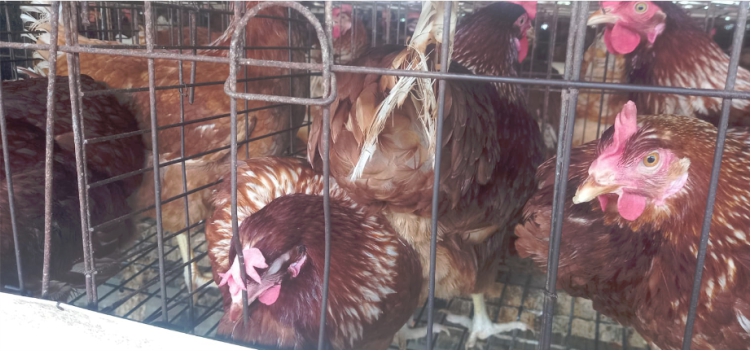
One of the challenges often faced by the poultry world is the threat of disease. Diseases can come from anywhere and are ready to infect at any time. Especially if supported by the implementation of management and biosecurity which is bad. One of them is the disease of worms or helminthiasis which unsettles the farmers, especially chickens layer.
This disease harms many chicken farmers, as it can lead to weight loss up to death in chickens. Not only that, this disease can also affect egg production in chickens layer and make the health of chickens continue to fall until the productivity is decreasing. In addition, this disease is also easy to attack and spread, especially in the rainy season.
Worm disease is one of the diseases caused by parasites in the form of worms. This discussion will discuss thoroughly related to worms that attack the digestive organs. Deworming disease can cause dysfunction of the digestive organs, where this organ functions in the process of absorption of nutrients in the body of chickens.
Various kinds of nutrients derived from the ration will be processed in the digestive organs to be absorbed and metabolized by the body to be used in the process of growth and development and productivity of chickens layer. The Organ that is often the target of worm infestation is the small intestine where its main function is in the process of absorption of nutrients, which later these nutrients will be taken by worms as a source of food.
If this digestive organ problems occur, of course, this can lead to disruption supply nutrients that chickens need in the process of egg production.
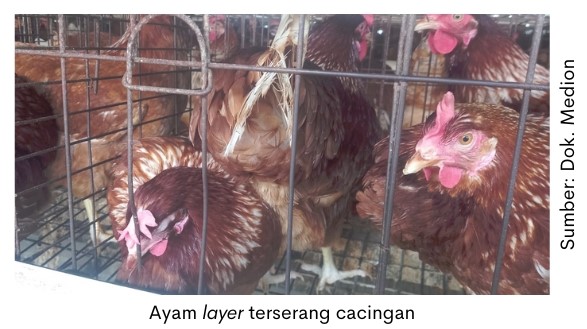
In addition, coupled with the influence of weather changes, the presence of disease vectors and environmental problems, this disease disorder becomes difficult to minimize. So this will be a challenge for farmers, especially chickens layer.
Application of management and biosecurity must be improved and the evaluation of health programs to be mandatory so that we as farmers can increase awareness of the risk of worms that could threaten the farm layer.
The problem of worms in chickens Layer
The number of cases of worms in chickens layer still high on the field. Trends in intestinal worms that affect chickens layer both before the production period and during the production period throughout 2022 tend to be the same from previous years.
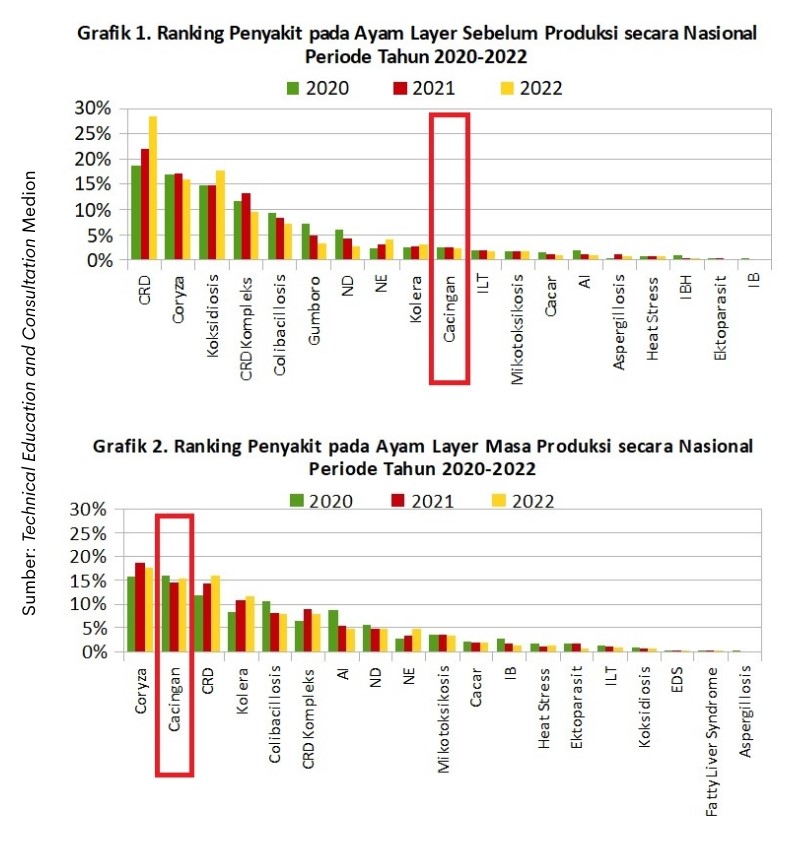
Based on data collected by the team Technical Education and Consultation Medion over the past 3 years, helminth diseases have entered the top 10 ranking diseases in chickens layer before the production period (Chart 1).
While the chicken layer production period, worm disease ranks 2nd after Coryza disease (Chart 2). This is certainly a common concern will be the incidence of worms is still high in the farm layer Indonesia.
Worm disease usually often occurs in the rainy season, this is related to the physiological condition of chickens that are prone to stress during the rainy season plus the presence of other predisposing factors such as environmental conditions that support the development of vectors of worm diseases that are increasingly difficult to control.
In addition, also supported by the condition of the farm layer most of the time, it's a simple, open-ended, open-ended, open-ended, open-ended, open-ended (open house) with the application of biosecurity which is still low and limited.
It should be underlined that this worm disease will continue to threaten livestock layer during the implementation of management and biosecurity which is still low and the presence of intermediate hosts or disease vectors such as flies are increasing.
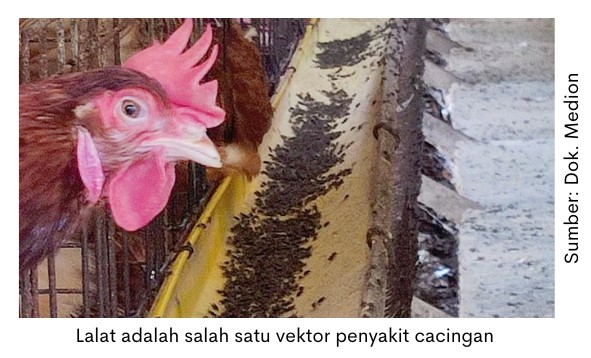
Management litter good should always be considered by breeders, because litter a moist one will provide an ideal opportunity against the fertile development of worm eggs and their vectors. Worm eggs can persist for a long time in the environment.
Therefore, if a flock is already infected with worms, then the entire environment farm it will be easily contaminated by infective worm eggs. Especially if the awareness of farmers who are still lacking will be the importance of regular deworming and need periodic repetition. Then the worm disease will be more difficult to control.
Types of worms that often attack chickens Layer
Worms are internal parasites or those in the chicken's body, especially the digestive tract, which will always take advantage by stealing nutrients in the chicken's body.
Worms that often attack chickens layer and found in the digestive tract of chickens are gilig worms (nematodes) and tapeworms (Cestodes), in addition there are also other types of worms, namely acanthocephala. Here's an explanation of the types of worms:
a. Convex worms (nematodes)
The gilig worm has a bracelet-like shape, namely its body is round, not segmented and has a suction device. Types of gilig worms that are often found in chickens layer that of the species Ascaridia galli. Worm Ascaridia galli is the largest nematode worm in chickens.
Adult worms look semi-Transparent, are large in size, and yellowish-white in color. While the eggs Ascaridia galli oval-shaped and thick-walled consisting of 3 layers and resistant to external influences.
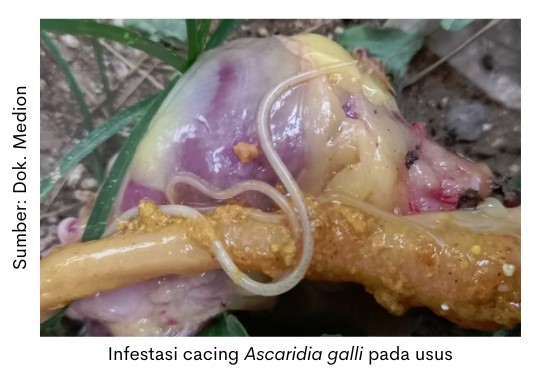
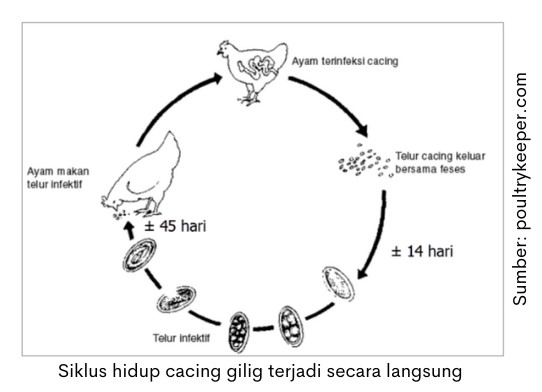
The life cycle of gilig worms occurs directly, that is, when a chicken infected with worms excretes worm eggs with feces, then the worm eggs will develop for ±14 days into infective eggs in the environment, then the eggs will be eaten by other chickens and develop into adult worms in the chicken intestine for ±45 days.
b. Cacing pita (cestoda)
The Shape of the skull is similar to that of the skull, and the shape of the skull is similar to that of the skull (proglottida) as well as having a suction device and hooks. The presence of such hooks allows the tapeworm to damage the walls and intestinal mucosa more severely. Types of tapeworms that are often found in chickens layer that of the species Raillietina cesticellus and Raillietina tetragona.
Body shape Raillietina sp. it is a long, flat, ribbon-like structure consisting of 3 parts of the body, namely the head (scolexbody and neck )strobila). Tapeworm eggs do not come out but are attached inside proglottida. When the eggs are in the proglottida it is full and ripe, only then breaks and leaves the body with feces.
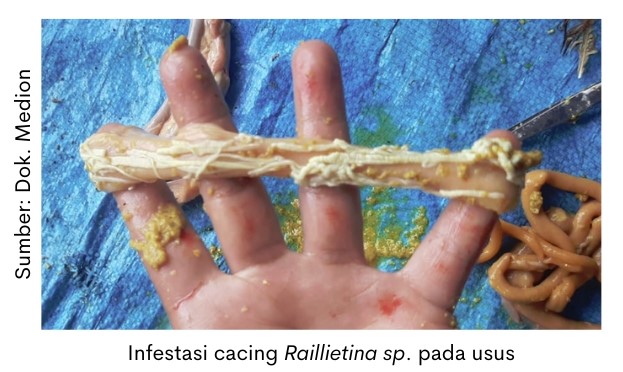
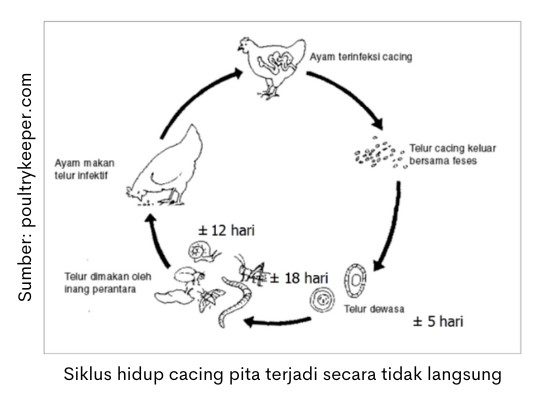
The life cycle of tapeworms occurs indirectly or requires an intermediate host such as flies, beetles or other insects. Transmission occurs when a chicken infected with worms excretes worm eggs with feces, then the worm eggs will develop into adult eggs for ±5 days, then the eggs are inedible by the intermediate host and develop into infective eggs for 12-18 days, after which they will be inedible by other chickens and develop into adult worms in the intestines of chickens for ±20 day.
c. Acanthocephala
Recently, poultry has experienced cases of helminthiasis that look different. Differences in body shape (morphology) of worms that attack chickens in general is the discovery of cases acanthocephala. Worm acanthocephala is one of the groups aschelminthes and it does not belong to the group of convex worms or tapeworms (Panchani, 2021).
On acanthocephala adult body is divided into three parts, namely probosishead, neck and body. The body of this worm is bilaterally symmetrical like a caterpillar.
Acanthocephala have characteristics with the presence of probosis in the section anterior as a hook to attach itself to a section of the intestinal mucosal wall of the host, since this worm does not have a digestive tract. Acanthocephala absorb all nutrients through their body walls directly.
Study of the morphology and size of worms acanthocephala in poultry has been widely done in several countries in the world but not so much done in Indonesia. According to Astuti and Sahara from FKH UGM (2015), species acanthocephala identified in Indonesia, namely Mediorhynchus gallinarum.
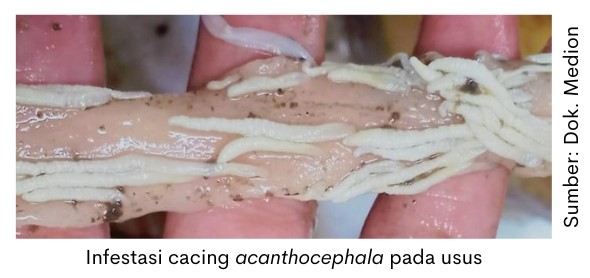
In general, worms acanthocephala it lives as an endoparasite requiring two hosts in its life cycle. Infected chickens will secrete helminth eggs in the environment. Then accidentally the animal, acting as an intermediate host, will eat the eggs of the worms.
The young stage of the worm lives as a parasite on crustaceans and insects. While the adult stage lives in the digestive tract of animals vertebrates like poultry. The life cycle of this worm is almost the same as tapeworms where it requires an intermediate host or occurs indirectly in the process of spreading.
Clinical symptoms in chickens Layer the disease of worms
Worms often attack chickens layer because it is related to the life cycle of the worm parasite itself which takes a relatively long time. The attack of this disease generally does not show typical clinical symptoms and does not cause death, so it is often considered trivial. However, when viewed from the economic side of the case of worms turned out to cause quite tangible losses because slowly but surely this disease can cause weight loss or growth retardation, decreased egg production of 5-20%, deterioration of the condition of the body and ends with death if not treated immediately (severe cases).
Generally clinical symptoms in chickens layer those affected by worms can be divided into 2 based on their severity, namely :
a. Mild severity
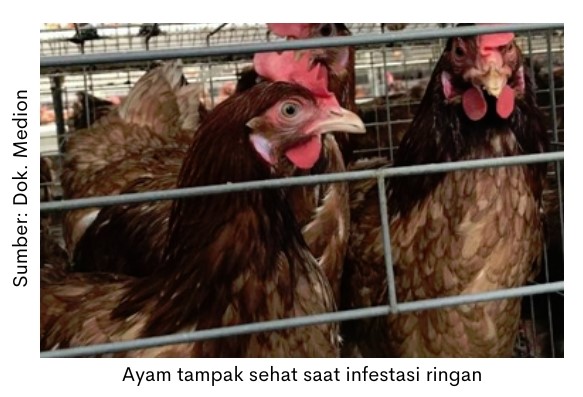
This happens when helminthic infestation in the body is precisely in the small intestine of chickens layer still in small quantities. Visible clinical symptoms are :
- Chickens seem relatively healthy
- A decline in production
b. Severe severity
While at the time of worm infestation in the small intestine of chickens layer in large quantities, the clinical symptoms seen are :
- Decreased appetite
- Stunted growth
- Coarse, pale and thin fur
- Significant decline in production
- Diarrhea
- Sometimes worms are found in the feces
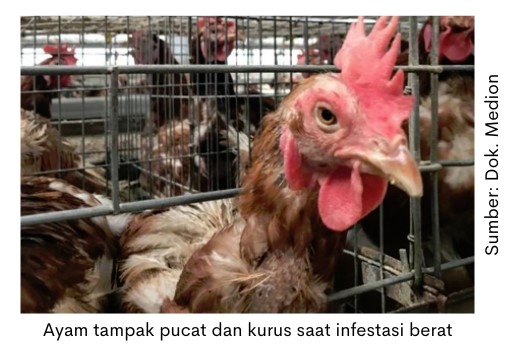
It is worth highlighting that not all cases of worms show pronounced clinical symptoms. Only dewormed chickens with a heavy infestation will show symptoms of worms.
Anatomical pathological changes in chickens Layer the disease of worms
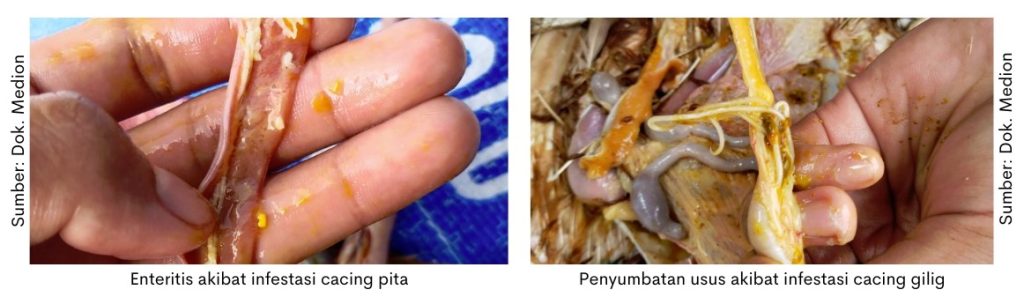
At the time of necropsy or surgical carcass will be found worms in the intestine. Severe worm infestation (especially caused by tapeworms and acanthocephala) usually causes enteritis (inflammation of the intestine) which is characterized by thickening of the intestinal wall, the presence of nodules on the intestinal wall and intestinal haemorhagi (bleeding). In addition, intestinal obstruction can also occur, especially in the case of worms caused by gilig worms.
Monitoring Cases of worms with laboratory tests
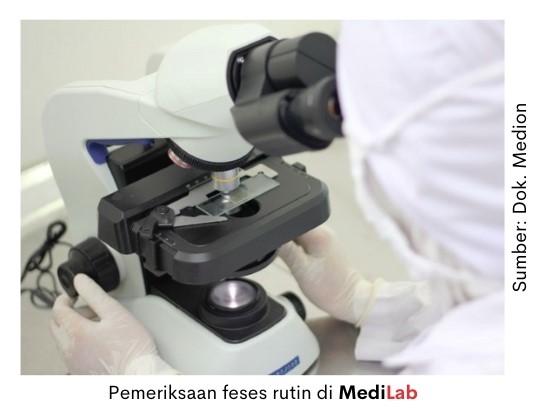
Monitoring the beginning of the case of worms is very important, especially to determine the infestation of the causative agent in the body of chickens. One of them can be tested for parasites in MediLab (Medion laboratory) periodically to identify worm eggs. This identification is done by microscopic examination.
The method is done by examining the feces of chickens suspected of having worms. Stool samples should be taken directly from the chicken's cloaca or freshly removed fresh feces and if not directly examined need to be preserved in advance in 10% formalin. This method aims to find worm eggs both qualitatively (types of worm eggs) and quantitatively (number of eggs per 1 gram of feces).
Worm Disease Control Strategies
Efforts to control cases of worms must be carried out comprehensively in preventive measures and handling. Here are things that can be done to prevent cases of worms:
- The livestock business is well managed to create a comfortable atmosphere for chickens. The number of chickens in the cage is not too dense and ensure the conditions litter don't get too damp. Ventilation enclosure is sufficient and wherever possible implemented system all in all out.
- Periodic deworming. Severe deworming can mean that the intestines of chickens are full of worms. Worm medicine is given even though there are no signs of worm infestation. For chicken layer which are kept in the current postal enclosure pullet, deworming is given at the age of 1 month and repeated administration 1-2 months later. Chicken pullet those kept in battery cages are dewormed at the time of moving to production cages and repeated every 3-4 months.
- Minimize the population of flies around the cage by using Larvatox to kill the larvae and Flytox to kill adult flies.
- Routine stool examination aims to determine the presence or absence of worm eggs qualitatively (the type of worm eggs) and quantitatively (the number of worm eggs per gram of feces). Stool examination is carried out regularly, that is, once a month to detect early-stage worm infestations that often do not show clinical symptoms.
- Carry out sanitation of cages and farm equipment, restrict guests, prevent wild animals and other pets from entering the cage environment.
- Perform liming and optimize the resting period of the cage to break the life cycle of disease seedlings.
While the handling of cases of worms can be done by administering anthelmintic drugs such as Vermixon/Triworm/Vermizyn which can be used to destroy Ascaridia galli in the chicken's body. Awarding Levamid it is possible to get rid of worms (Raillietina sp.) and convex worm (Ascaridia sp.) larval and adult forms.
Meanwhile, to eradicate the disease caused by worms acanthocephala can be given Levamid at a dose of 0.2 grams / kg bw or Wormzol-K with a dose of 0.1 grams / kg bw through rations for 3 consecutive days and can be repeated 2 weeks later until complete or 1-2 months depending on the severity of the disease.
Wormzol-K is a product with caplet preparation, so in its use in chickens, it must be crushed first and after the powder can then be mixed with rations and given to chickens.
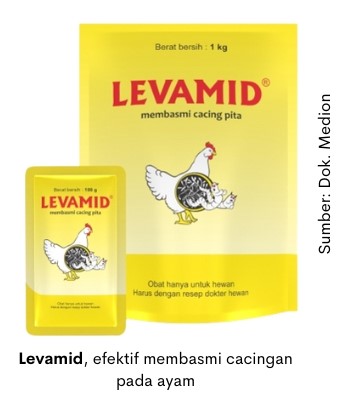
Deworming in chickens can be done through 3 ways, namely through drinking water, rations and directly inserted into the chicken's mouth (cekok). From some of the descriptions above, examples of products that can be provided through drinking water are Vermixon, through the ration that is Levamid and Wormzol-K, through drinking water or ration that is Vermizyn and cekok directly into the mouth of the chicken Triworm.
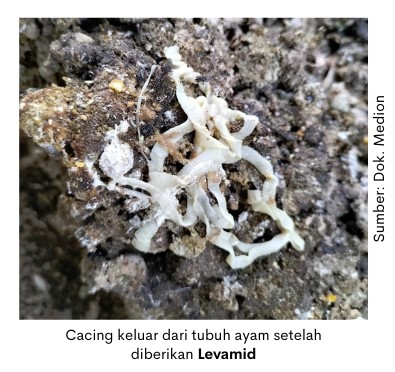
Worms are a parasitic disease that slowly but surely leads to economic losses for chicken farms. So that a comprehensive strategy is needed in controlling the case of worms.
Control with the implementation of good management, sanitation and biosecurity strict control, eradication of flies or disease vectors and deworming when cases occur and periodically according to the history of disease occurrence.