Unlike broilers and laying, fighting chickens are a type of poultry that has the privilege of strength and dexterity in fighting. Like an athlete, fighting cocks are shaped to perform tough in matches. Of course, this can be achieved through a process that is not instant and requires considerable care and practice. So what needs to be considered and done to be able to get a tough fighting chicken? Here this article will review the characteristics and factors that affect tough fighting chickens, exercises that can be applied to tips so that fighting chickens are more resilient and powerful during the game.
Selecting The Winner's Chicken
Chicken fight great potential to win if it has superior characteristics. It can be seen from his body and temperament. So that hobbyists can choose superior fighting chickens certainly need to know what the characteristics of fighting chickens that have good quality. Here are some things to consider as tips for choosing a superior fighting chicken:
1. Physical appearance
Fight chicken with proportional posture, strapping, large and solid bones are the characteristics of a superior chicken. The Shape of the head is firm and strong with a size proportional to the body, equipped with a strong and thick beak, and the neck is full and sturdy. The eyes are bright with shining or non-withered highlights. Pertulangan and leg muscles are quite large and strong. The comb and skin are fresh red and have complete, neatly arranged and shiny feathers.
2. Age
Fighting chickens are ready to compete when they are 7 months old. Younger chickens are still focused on growth and are not ready to compete. Hobbyists need to pay attention when they want to start caring for fighting chickens, don't force them to compete with chickens that are not old enough because it can damage their mentality and avoid injury.
3. Temperament
Fighting chickens that have an aggressive and brave temperament will be more able to dominate the match. However, avoid chickens that are too aggressive (fierce) because there is a possibility that they will be difficult to control. Mental confidence of the chicken also needs to be considered to be more courageous when facing opponents.
4. Performance
The performance of a good fighting chicken can be known from its stamina by holding the fight for 15-20 minutes and not looking breathless. The power of the punch also has a fairly hard and precise power on target. In addition, it is necessary to have a good enough hit resistance so that it is not too overwhelmed by the opponent's attacks.
5. Health
It is important to pay attention to the health of fighting chickens, healthy chickens will actively move, good appetite, smooth breathing (not panting/stuffy), bright and clear eyes, and do not experience digestive disorders such as diarrhea. Also check for physical defects such as broken bones, excessive hair loss, or other signs of illness.
Factors affecting champion fighting chickens
Each hobbyist chicken fight has its own way to form a champion chicken fight in the game. These results do not come from Chance alone, but there is preparation, experience and knowledge behind it. There are also many factors that are interrelated and can affect the performance of fighting chickens. The following factors can determine the toughness of the fighting chicken during the match:
1. Genetics
Natural talent as a formidable champion can be obtained from the genetic chicken fight inherited from their parents. Chickens that come from champion lineages tend to have greater potential to become champions. There is a superior gene that is inherited so as to produce fighting chickens with the same characteristics as their parents. In addition, various types of fighting chickens that exist have their own characteristics/fighting styles. Here are some types of fighting chickens with their characteristics:
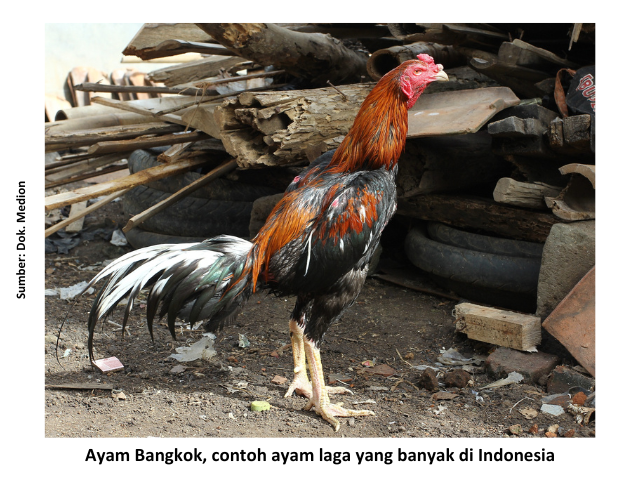
- Bangkok Chicken, originally from Thailand, is known as a reliable, brave and aggressive fighter against. This type of fighting chicken also has intelligence and technique/fighting style that is good and beautiful.
- Burmese Chicken, originally from Myanmar with his posture that tends to be small has a fast and wild fighting style.
- Chicken Pakhoy, originating from the vicinity of Southern Bangkok with a characteristically aggressive chase with fast and hard punches. This fighting chicken is known to have a fighting style with the technique of “brakot” or pecking at any area of the body of the opponent's chicken.
- Saigon Chicken, originally from Vietnam, is known to be strong and resistant to receiving blows and has a thick bone structure.
- Ayam Pama, a cross between Burmese and Bangkok chickens, has an agile fighting style with good attack accuracy.
2. Training
Chickens that already have superior genetics need to be supported by sufficient exercise. Although it already has a superior genetic but if not followed by training, then the initial capital that is already good will not be used optimally. Exercise will hone the ability of fighting chickens so that they have stamina, strength and better mentality.
3. Nutrition
The growth of fighting chickens will depend on the feed they consume, especially at the beginning of the growth period around the age of 1-5 months. The Target body weight during this growth period must be achieved so that the fighting chicken has an ideal posture. In addition, the formation of the bone skeleton will occur at the beginning of the growth period and will reach a maximum at the age of 12 weeks. If the chicken is more than 12 weeks old and bone formation is not maximal, then the skeleton can no longer develop. Therefore, it is important to meet the nutritional needs of fighting chickens through the feed given.
Generally hobbyists already have their own choices for the type of feed given. But still, it should be noted that the feed contains sufficient nutrients such as energy sources, proteins, vitamins, minerals and fatty acids. Hobbyists can also add supplements to the feed such as Mineral Feed Supplement A with the content of a complete combination of minerals that are beneficial to help bone growth. The frequency of feeding can be done twice a day for chickens that have entered the crushing phase (more than 7 months) with a proportion of feed approximately 5% of their body weight. In addition to feed, drinking water needs of fighting chickens also need to be always available with a fresh and clean state. Drinking water is needed by fighting chickens to help the digestive process of feed. In addition, in certain conditions such as hot weather, fighting chickens will need more drinking water to restore lost body fluids and regulate their body temperature.
4. Environment
The environment is an important factor for the comfort and health of fighting chickens. The cage needs to have enough space for chickens to move with circulation, air quality and good lighting. Also pay attention to the temperature and humidity so that the chicken still feels comfortable. Another important thing is the cleanliness of the environment that needs to be maintained so that the number of disease seeds does not increase and the health of chickens is also maintained. Disinfection of the environment using Medisep/Antisep can be done regularly to minimize the seeds of disease in the environment and prevent disease outbreaks.
5. Preservation
Daily maintenance and when ahead of the match becomes important so that the fighting chicken can remain optimal to show its performance. There are some things that are commonly done related to the maintenance of fighting chickens such as routinely bathing chickens that have entered the destruction phase. Furthermore, drying can be done by placing the chicken on a base such as wood in sufficient sunlight. Fighting chickens also need to be spread for about 5-6 hours in a spread or on a large enough area so that they can move freely. It is also important to maintain the health and performance of fighting chickens by routinely providing supplements such as Super Stamina during routine exercise.
The Different Types Of Chicken Training
There are many kinds of exercises that can be applied to fighting chickens in accordance with the goals to be achieved. Some exercises commonly performed on fighting cocks such as :
- Exercise the wings by lifting one wing alternately right and left every morning. This exercise aims to build wing muscles and shape the chicken's body to be athletic.
- Exercise the neck by turning the chicken neck to the left and right slowly 30 times. This exercise aims to make the neck muscles become flexible which supports the movement of the head when aiming at opponents or avoiding attacks.
- Exercises with swings, performed from 5 months old chickens with the aim to produce accurate blows and train balance.
- Swimming exercises in the pool / tub of water to train the strength of the leg muscles and wings. This exercise is done for 4-5 minutes for chickens aged 6 months and can be increased as the age of the chicken increases.
- Jumping exercises are repeated with sufficient portions that serve to form the thigh and wing muscles and increase the thrust of the blow.
- Running exercises can be performed using owner-held strands, running with weights on both legs or with an artificial treadmill. Running training when first done sufficiently and then improved according to ability.
- Training run brackets (kliter), done by placing the chicken lure (female) in the cage. Then between the large bracket and the small bracket is given a distance of 15 cm. This exercise is tailored to the ability of chickens and is done to improve the mental chicken.
- Mental training (abar) or combat trials conducted once per week for 30 days before a match. This exercise is performed in the morning with a duration of 15-20 minutes in one round. If there is an abar exercise, then other exercises are not needed on the same day.
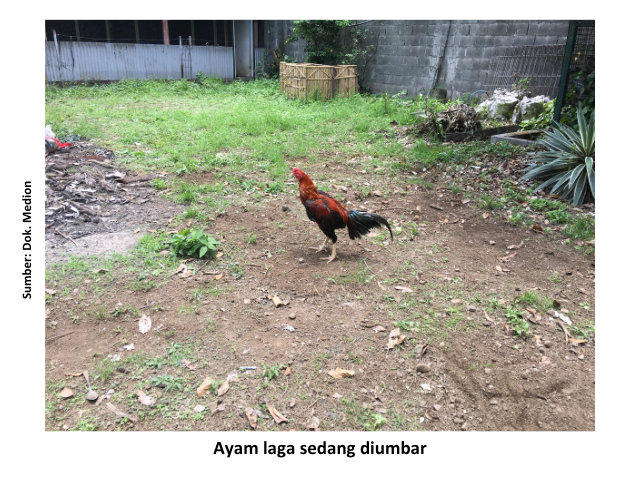
- Adequate supply every day (5-6 hours) is very important to maintain the physical and Breath of the chicken.
Supplements Before The Match
Fighting chickens that will compete need to be prepared starting from 21 days before competition time. Here are some preparations that can be done :
- Physical care by still doing the exercises and after give time to rest.
- Improve mentally with abar exercises to increase the courage of fight cocks. The frequency of training can be adjusted to the condition of the chicken, for example, 1-2 times a week. To improve mental chicken fight can also be given exercise with a weaker chicken / untulan. If untulan to lose the fight chicken trained will increase mentally.
- Take daily supplements such as Super Stamina with a routine every day during the preparation time. Daily supplements can maintain stamina and health of fighting chickens.
- Rest the chicken one day before the fight. Do not do physical exercise (umbar) or endurance training the day before a match. Rest is needed so that the next day the fighting chicken remains in excellent condition and does not get tired.
- Provide comfort during transportation to the venue of the match. Avoid factors that can cause chickens to experience stress.
- Improve the performance of fighting chickens by providing supplements booster (Supertop New2 hours before the match. Supertop New it is a supplement that can prolong breath and make fighting chickens stronger, aggressive and powerful. Giving supplements before competing can be likened to a multiplier of factors that play a role in the toughness of fighting chickens (genetic, training, etc.) so that when competing will look better results.
Thus, at a glance, information about the factors that can affect the toughness of fighting chickens when competing. Hopefully it can add insight and useful.