Bapak Ahmad Fadilla – by email
Our sheep are often affected by seizures, stiff legs can not walk and the average attack young cattle. After 1 Week the cattle died, what kind of handling?
Answer:
The occurrence of sheep such as trembling or convulsions appear due to several things including :
1. Clostridium tetani infection
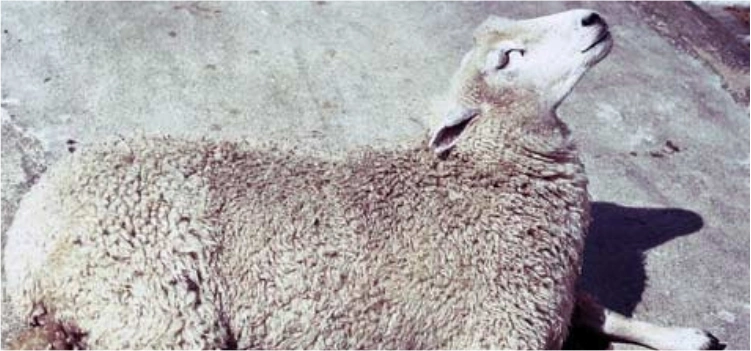
Tetanus is caused by the toxin of the bacterium Clostridium tetani. The bacteria can infect livestock by entering the body through an open wound such as an umbilical cord wound. The incubation period of the disease can be from several days to several months, but it usually occurs 10-20 days. Early visible symptoms are a stiff gait and mild bloating. Then other symptoms are the inability to open the mouth (lockjaw), stiffness in the body of cattle, difficulty moving, increased pulse frequency, and seizures. Handling that can be done is :
- When you're done with the baking, give it Bloatex to cope with such bloating and Digesfit to improve digestibility.
- Give antibiotics such as G-Mox 15% La Inj or Medoxy-LA
- Anti-inflammatory and anti-inflammatory drugs (Medipiron Injection)
- Infusion administration of physiological NaCl solution can be done to reduce the concentration of toxin in the body.
The treatment needs to be done by a medical team/veterinarian. For breeders, it is important to carry out Prevention from this disease. Prevention that can be done is to keep the cage clean because these bacteria are found in soil or feces and dirty environments. Disinfect regularly using Sporades / forms. In addition, the administration of antiseptics (Antisep) on open wounds needs to be done because the wound is the entrance gate of the bacteria that cause tetanus. Then it can be sprayed Oxytic to treat external infections and accelerate wound healing.
2. Kejang rumput/grass tetany
Seizure disease in sheep (seizure grass) is a disease caused by lack of mineral levels of magnesium (Mg) and calcium (Ca) in feed ingredients. Lack of mineral consumption will lead to nervous disorders. Some clinical signs that can be seen physically are sheep cramps in the legs that result in difficulty walking, easily aroused and agitated by loud noise disorders, frequent urination or urination, seizures continue in the next few days, and if left untreated can lead to death.
The treatment step that can be done is by injecting fluids containing magnesium and calcium minerals intravenously, which is injected into a vein. This injection should not be done all at once, but little by little. The injection is carried out by a team of trained medical personnel such as veterinarians or veterinary orderlies. Do not give too much feed in the form of young grass, because the mineral content of magnesium and calcium is still low. Mixing concentrates with feed ingredients containing magnesium and calcium minerals can also overcome mineral deficiencies.
3. Spasms in lambs due to cholic
Seizure disease in sheep (seizure grass) is a disease caused by lack of mineral levels of magnesium (Mg) and calcium (Ca) in feed ingredients. Lack of mineral consumption will lead to nervous disorders. Some clinical signs that can be seen physically are sheep cramps in the legs that result in difficulty to walk, easily aroused and agitated by loud noises, frequent urination or urination, convulsions continue in the next few days, and if left untreated can lead to death. The treatment step that can be done is by injecting fluids containing magnesium and calcium minerals intravenously, which is injected into a vein. This injection should not be done all at once, but little by little. The injection is done by a team of trained medical personnel such as veterinarians.
4. Possible presence of polyenchepalomalacia
Cases of convulsive and stiff/paralyzed goat children the possibility of polienchepalomalacia. Treatment that is done is the injection of vit B1 (Injekvit B1) and for recovery can be given Injekvit B Plex for 3 days. For the next program give Vita B Plex Bolus Extra Flavor at least every 2 months on a regular basis.