Mr Satrio
Cilacap-Central Java
That mycotoxicosis can be cured or not? How's it going?
Answer :
Dear. Mr. Satrio, thank you for the question. Mycotoxins that still accumulate in the body can be removed again with the help of administration toxin which binds mycotoxins while in the digestive tract of chickens. Another way that can be done when chickens have been detected affected by mycotoxicosis is to try so that there are no additional mycotoxins from the feed.
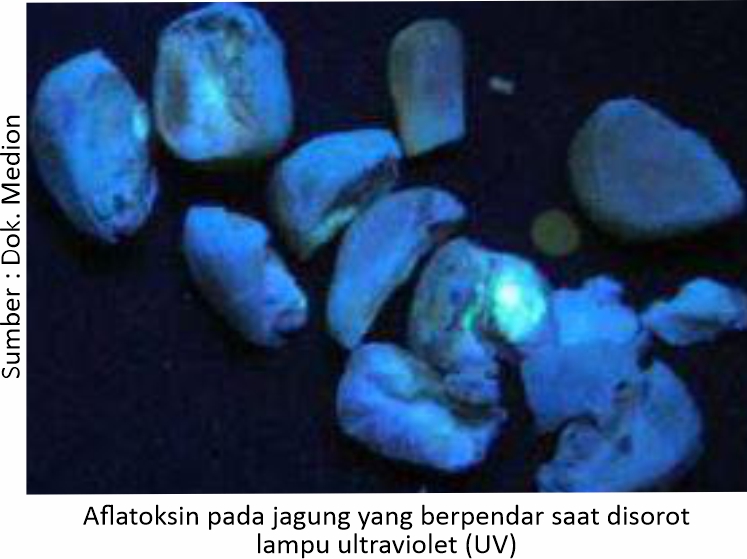
Mycotoxins are a hidden danger that always lurks in the performance of chickens. Moreover, we know that fungi are easy to grow and spread contaminating raw materials and feed. When fungi and mycotoxins have been found to contaminate feed, some things we can do to suppress the effects of these mycotoxins include:
- Discard feed that has seen a lot of fungal contamination (high concentration), considering that this mycotoxin is very stable in nature.
- If the amount of feed contaminated with fungi is small, it can be mixed with raw materials or feed that has not been contaminated. The goal is none other than to lower the concentration of mycotoxins. But what needs to be considered is that this raw material should be immediately given to chickens so that the concentration of mycotoxins does not increase.
- Additions toxin being an effective solution to bind mycotoxins strongly so that they are not absorbed when in the digestive tract of chickens and eventually come out together with feces. Examples toxin which are widely used in the field because of their easy application and effective binding to mycotoxins are Freetox. Active ingredient in Freetox reported to be able to bind aflatoxins with the highest binding power (Ramos and Hernandez et al., 1997). Freetox it is also able to bind 80% of the total aflatoxin contained in the feed, and bind it with more complex bonds. When in the digestive tract of chickens, Freetox juga tidak mengikat nutrien lain (vitamin, mineral, asam amino) maupun obat dalam pakan, sehingga aman digunakan. Untuk pakan dengan kadar air <14% dan kadar mikotoksinnya rendah, cukup campurkan 1-2 kg Freetox per 1 ton of feed. However, if the feed moisture content >14% and the mycotoxin content is medium/ medium to high, then mix 3-5 kg Freetox with 1 ton of feed.
- Vitamin supplementation, especially fat-soluble vitamins (A, D, E, K), amino acids (methionine and penilalanin) and increase the levels of protein and fat in the feed is also able to reduce losses due to mycotoxins. Fortevit and Kumavit can be an alternative option.
- Administration of herbal hepatoprotectors Heprofit can also be done, considering that there are usually organ changes in chicken liver when attacked by mycotoxicosis. The giving Heprofit this is done so that the liver is not damaged and the performance of the chicken remains optimal.
This huge loss due to mycotoxin contamination deservedly forces us to make efforts to prevent it. For the case of mycotoxins, preventing the growth of fungi is the most important first step we must take. Why? When the fungus has grown on feed raw materials, it can be ascertained that mycotoxins are also formed.
Check the quality of feed raw materials regularly, especially when the arrival of raw materials. Try to keep the moisture content of feed raw materials or finished feed =14%. If you are forced to get raw materials with a moisture content of >14%, then immediately dry them in the sun or use a special dryer, so that the moisture content drops. If the weather conditions do not allow also for drying, then carry out the arrangement of stocks and use such feed raw materials as soon as possible. If you need to add mold inhibitor, seperti asam propionat untuk menghambat pertumbuhan jamur. Jagung seharusnya disimpan pada kondisi tetap kering (kadar air <14%) untuk menghambat tumbuhnya jamur selama penyimpanan.
Apply the feed use system first in first out (FIFO: stored by date of arrival of feedstuffs) or first expired first out (FEFO: stored by expiration date). But if there is less good quality raw materials and does not allow it to be stored longer, it can be used first even if it has just arrived.
In addition, the application of biosecurity and good management of feed storage. Make sure the warehouse or feed storage area is not exposed to rainwater tampias, the air circulation system is smooth, and not damp. Avoid the activity of leaking feed with water to stimulate the appetite of chickens excessively because it can increase the risk of mold growth and mycotoxin production. In addition, periodically it is also necessary to test the quality of feed, one of which is mycotoxin levels in The Medion LaboratoryMediLab), especially aflatoxins.