Mr. Prasetyo – By email
How to prevent cases of inflamed navels in DOC Broilers?
Answer :
Time brooding period, This is an important early stage in chicken rearing because it significantly impacts their performance in the subsequent period. However, during this period, chicks are still very vulnerable, and health problems that can affect their performance are common. One important consideration is that chicks are not yet able to adjust to the ambient temperature (poikilothermic) thus requiring assistance from a heater. Furthermore, the remaining yolk, which serves as a temporary source of nutrition and immunity (maternal antibodies) from the mother hen, will be absorbed. Sometimes, DOCs have their navels still open and have remaining yolk due to incomplete absorption. This condition can trigger disease infections. omphalitis or inflammation of the navel.
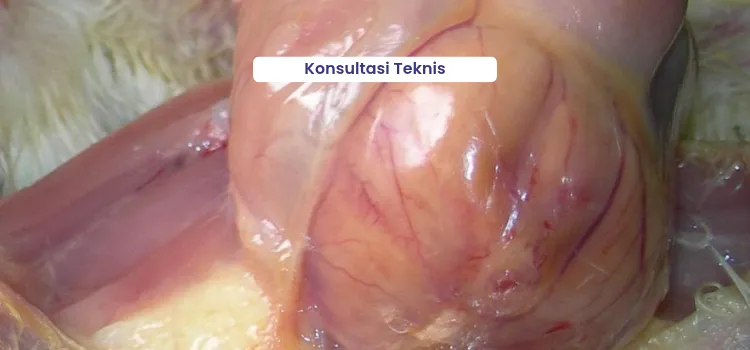
Omphalitis pada DOC
Omphalitis Navel inflammation is an inflammation of the navel and is a common cause of death in chicks during the first week. This disease can occur due to the navel not closing properly, allowing bacteria to easily enter and cause infection. Normally, the navel closes a few hours after hatching, followed by the absorption of the remaining yolk, which occurs until the chick is 10-14 days old. A predisposing factor for delayed navel closure is an improper hatching process.
Bacteria that can cause omphalitis very diverse and the one known to cause the most frequent infection is bacteria E. Coli infection. The source of this bacterial contamination can come from contaminated hatching eggs. E. Coli infection, cage conditions or litter contaminated during the period brooding period,.
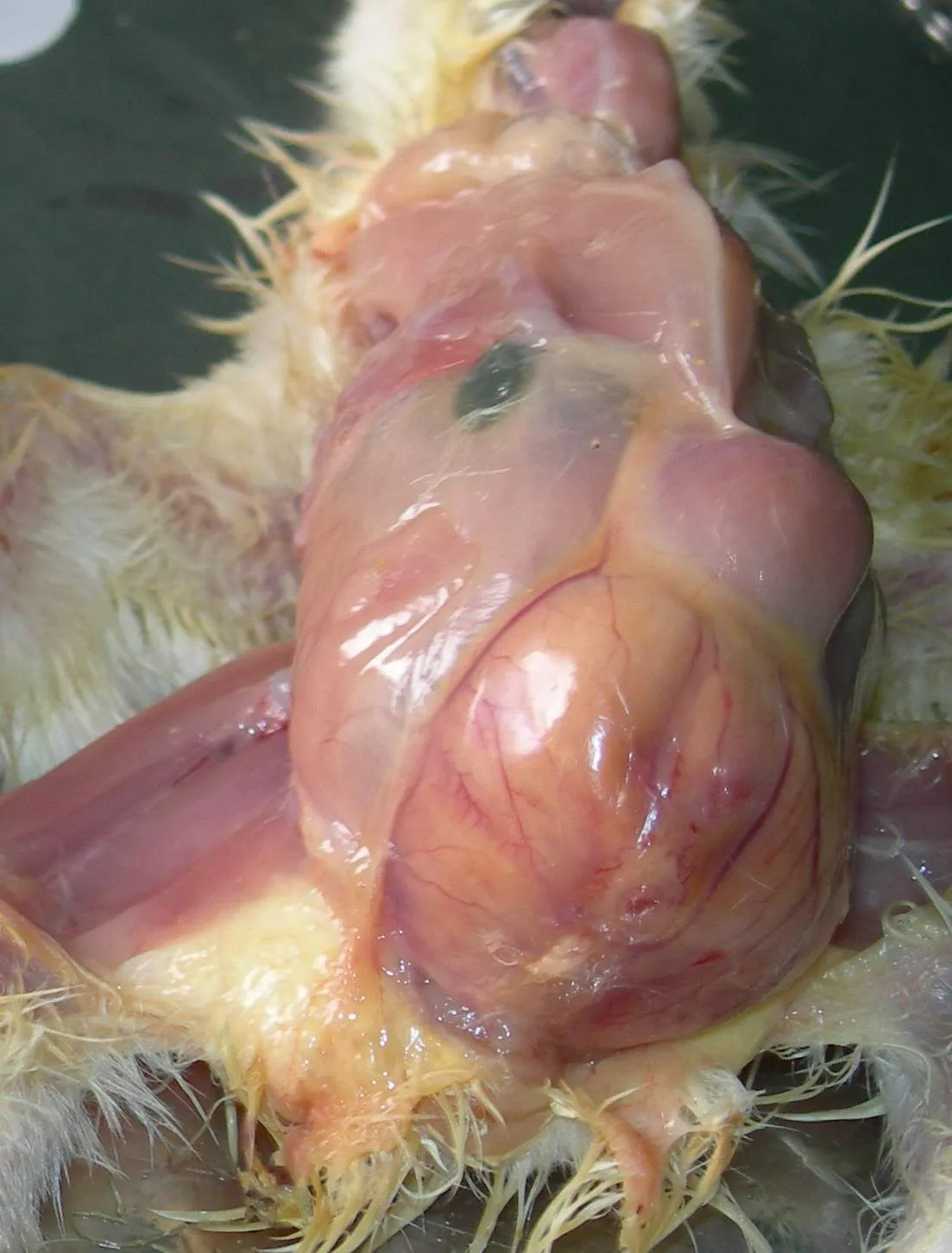
Occurrence omphalitis This is usually accompanied by a bacterial infection of the yolk sac. This is due to the proximity of the yolk sac to the navel. As a result of this infection, the remaining yolk sac hardens and cannot be absorbed as a food reserve or source of immunity from the mother.
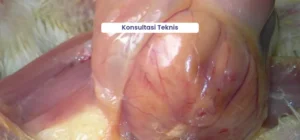
Chicks that experience omphalitis Yolk sac infections can cause weakness, decreased appetite, and weight loss. Furthermore, the abdomen will become bloated, with the navel and surrounding area becoming blackish, swollen, and sometimes wet. A necropsy may reveal inflammation inside the navel and remaining unabsorbed yolk.
Fulfilling Chicks' Needs as a Critical Point in the Brooding Period
So that the chicks can get through the critical period, prevent omphalitis to achieve optimal productivity targets, the following things need to be considered:
Preparation and cleanliness of the cage
Cage preparation is the first stage that must be carried out properly to prepare a comfortable and clean cage before implementation. chick in. Cleaning the cage must be done thoroughly from washing the cage, equipment, spending litter and feces, to liming and disinfection. The cage rest period cannot be shortened and must be implemented for at least 2 weeks after the cage is cleaned. Likewise, litter or the husk must have sufficient thickness and have been sprayed with disinfectant (Sporades) before chick in.
Check and select DOC quality
During the process chick in, inspect the DOC, including checking its navel. Poor-quality DOCs will have navels that don't close, are wet, and have remaining egg yolk. If a DOC is found with these conditions, it's best to culled it, as it's unfit for breeding and can lead to problems. omphalitis.
Make sure the temperature and humidity are appropriate and even.
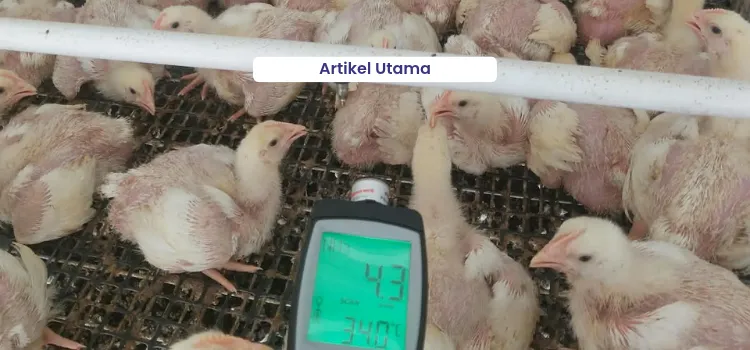
It is very important in the period brooding period,, DOCs are spread evenly in the cage and must immediately get a comfortable temperature. The standard air temperature during the hatching period brooding period, As can be seen in Table 1, the ideal humidity is 50-60%. For chicks to grow well during this critical period, it is crucial to provide a comfortable temperature through artificial heating. An ideal temperature for DOCs will help absorb the remaining yolk and help the navel close and dry quickly. Temperature control brooding period, It should be done periodically and as often as possible. Suitable temperature and humidity conditions will be indicated by the activity and even distribution of DOCs throughout the cage. brooding period,If it is too high or too low, it will have a negative impact on uniformity, growth, feed conversion, mortality, and harvest weight achievement.
Table 1. Broiler Temperature Target Standards
| Age (days) | Temperature (°C) |
|---|---|
| 0 – 3 | 31 – 33 |
| 3 – 7 | 30 – 31 |
| 8 – 14 | 28 – 29 |
| 15 – 21 | 25 – 27 |
| 22 – harvest | Ideal 24 – 25 |
Source: Broiler Management Guide, Cobb Vantress
Clean air needs met
Good air circulation through ventilation can reduce the smell of ammonia and dust inside the coop, and introduce clean air into the coop. If the coop lacks oxygen or contains high levels of harmful gases, the chicks will be affected. Provide ventilation gaps in the upper walls of the coop, 20-30 cm wide in semi-open coops, or adjust the space accordingly. exhaust fan which is lit on closed house. Adequate clean air can also be created by adjusting the density of the cage. Expand the cage. chick guard gradually as the age and weight of the chicken increases.
Optimize lighting
Optimal lighting will encourage chicks to always consume rations and drinking water, and help in the secretion of the hormone thyroxine to speed up the metabolism of the Chick's body. Lighting needs in the future brooding period, The maximum light intensity is 20-24 hours per day with a light intensity of 20 lux. After that, it can be gradually reduced by 2 hours per week as the chickens age.
Drinking water and rations must be immediately available for consumption by the chickens.
Ensure the quality of the drinking water and rations provided meet the nutritional needs of the chicks. Rations and drinking water should be provided immediately after the chicks arrive because they help accelerate the absorption of the remaining egg yolk, which serves as a temporary source of nutrition and immunity (maternal antibodies) for the chicks. Furthermore, providing rations during this period will stimulate the development of the digestive organs by increasing the digestive capacity and absorption of the intestines. To replace energy lost during the journey, provide Gingertol or Nergidoc. Prepare immediately before chicks are stocked in chick guard. Along with giving drinking water, give quality rations little by little but with frequent frequency. As well as ration, drinking water is also very concerned in the future brooding period,. Availability of drinking water during the period brooding period, until then, it must be fulfilled both in terms of quantity and quality.
Supplement administration
Giving supplements during the period brooding period, can help improve the performance of chicks. Examples of supplements that can be given are herbs Grow Chicks at 1-3 days of age, which can improve chick growth, optimize yolk absorption, and increase immunity. Completely absorbed remaining yolk will reduce the incidence of omphalitis and become a source of immunity/antibodies for chicks. Do it cleaning program by administering herbal medicine Fithera which is safe given since chick in DOC or 7 days before the ages of attack E. Coli infection adapted to their respective histories farm.
Disease prevention and immune system booster
To help improve the functioning of the immune system chicks can be given immunostimulants such as Imustim three days before and after vaccination. Implement a proper vaccination program to stimulate the immune system when maternal antibodies become less protective with age. Routinely disinfect cages and equipment using Virusep or MedisepLimit the entry of guests and prevent wild animals from entering the enclosure. Also clean the drains to prevent the growth of pests. biofilm (a thin layer on the surface of drinking places, reservoirs/storage tanks, and water pipes which becomes a place for pathogenic bacteria to grow and develop).
The key to prevention from omphalitis The key is to keep the environment clean, ensure the navel closes properly, and ensure the remaining egg yolk is completely absorbed. That's all the information regarding prevention. omphalitis on time brooding period,, Hope it is useful.