Mr. Surya – Payakumbuh
Examples of ectoparasite mites in chickens and their treatment.
Answer :
One of the most common problems encountered in chicken farming is ectoparasite infestation. Mites are one example of such ectoparasites. The presence of ectoparasites on chickens will certainly impact productivity. Here are some examples of mites in chickens:
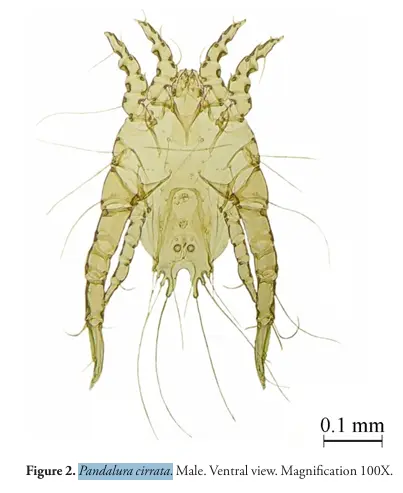
Pandalura cirrata
One type of feather mite (feather mite) that live on the surface of chicken feathers. These mites utilize keratin flakes, dead tissue, and organic material found in feathers as a food source.
In mild infestations, the presence of these mites generally does not cause any noticeable symptoms. However, if the population increases, chickens may exhibit frequent feather pecking behavior (preening) excessively, appearing restless, and having poor feather quality. In laying hens, this condition can increase stress, indirectly affecting production performance.
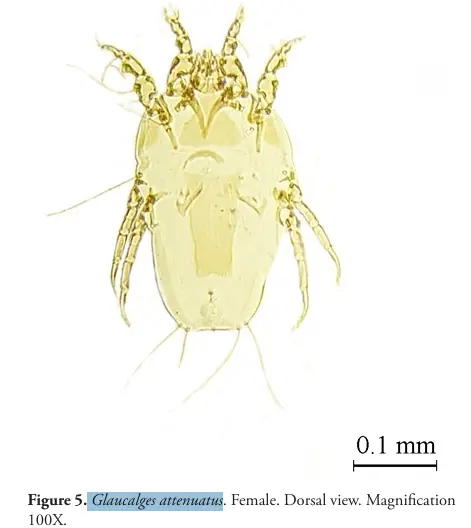
Glaucalges attenuatus
A group of feather mites that live in the crevices of chicken feathers. Small numbers usually don't cause significant problems. However, heavy infestations can cause feather damage, reducing the chicken's ability to protect its body.
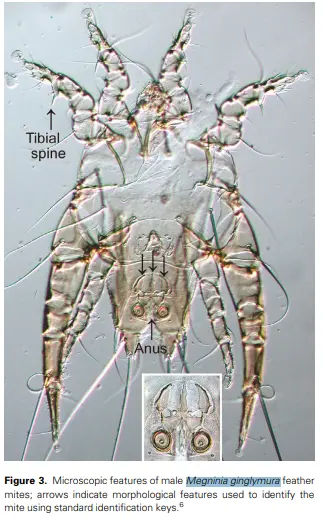
Megninia ginglymura
These mites live at the base and shaft of feathers, especially on wing and tail feathers.
In severe infestations, mites can damage the feather structure, causing feathers to break easily and fall out. Chickens will scratch themselves more frequently, peck at their own feathers, and appear restless.
Pandalura cirrata
One type of feather mite (feather mite) that live on the surface of chicken feathers. These mites utilize keratin flakes, dead tissue, and organic material found in feathers as a food source. After fertilization, the female lays eggs on the feathers, continuing the life cycle.
In laying hens, these conditions can increase stress, thus indirectly affecting production performance.
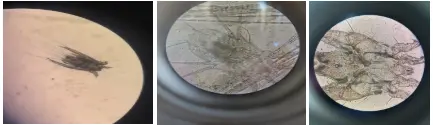
Life Cycle of Feather Mites in Chickens
Feather mites (feather mites) have direct life cycle (direct life cycle), so all stages of development, from egg to adult, occur in the same host. Transmission occurs primarily through direct contact between chickens.
The life cycle begins when a mated female mite lays eggs on the feather shaft (rachis), feather branch (barbs), or branch of feathers (barbules). Eggs These eggs are attached using an adhesive so they remain firmly attached to the feathers until they hatch. After hatching, the eggs produce larvae with only six legs. Larva begins to move between the feather structure and utilizes keratin flakes, dead skin cells, feather oil, and other organic materials found on the feather surface as a source of nutrition.
Next, the larvae undergo skin changes (molting) and developed into protonymph, the first nymph stage, which has eight legs. At this stage, the body size increases and activity increases. The protonymph then molts again to become tritonympha, which morphologically resembles an adult mite, but its reproductive organs are not yet fully developed. After undergoing the final molt, the tritonymph changes into adult mites (imago), which then mate on the host's body. The fertilized female will produce more eggs, so the life cycle continues as long as the mites remain on the chicken's body.
Transmission of
Transmission can occur horizontally, through direct contact between infested and healthy chickens, for example, when chickens touch each other or are kept in high-density cages. Furthermore, lice can also spread indirectly through contaminated cage environments and equipment, such as litter, transport baskets, and maintenance equipment. Lice spread is more rapid in farms with poor sanitation and biosecurity, and in areas with contact with wild birds or other poultry that could potentially carry lice.
Control
Mite control in chickens requires an integrated approach that combines husbandry management, environmental sanitation, routine monitoring, and the use of appropriate antiectoparasitic agents. This approach aims to suppress mite populations, prevent recurrent infestations, and minimize the impact on chicken health and productivity.
- To reduce the presence of disease germs in the livestock area, first fulfill the cage rest management which is carried out for at least 2 weeks calculated after the cage is clean and disinfected.
- Perform cage sanitation (using Antisep, Zaldes, Formades or Sporades) and equipment. Limit the number of visitors entering the enclosure, preventing wild animals and pets from entering the enclosure. Clean livestock equipment (feeding containers, drinking troughs) thoroughly.
- Create a comfortable environment for your chickens. Prevent stress by paying attention to temperature, humidity, air circulation, ammonia levels, and density in the coop, as well as implementing an all-in, all-out system.
- Carry out regular inspections at least once every 2 weeks on the cage for the presence or absence of ectoparasite infestation.
- Administration of antiectoparasite spray Delatrin to suppress the ectoparasite population in the cage
Severe
The main treatment to kill ectoparasites such as fleas, ticks, fleas, mites is to use anti-flea drugs. Examples of products that can be used are Kututox-S or Kututox Oral and Delatrin. Applications Kututox-S by sprinkling it on the surface and folds of the animal's body, the floor of the cage, gaps and walls of the cage. Kututox Oral by mixing drinking water with 0.04 ml per kg of body weight Kututox Oral, given for 2 consecutive days and repeated after 2 weeks. Delatrin can be applied by spraying in the cage by mixing 10 ml Delatrin with 20 liters of water.