Bacterial diseases that often attack chickens including fighting chickens, one of which is a disease coryza (korisa, runny nose, snot). The disease is caused by bacteria Avibacterium paragalinarum (Av. paragalinarum) and relatively difficult to overcome because the target organ of the bacteria is in the nasal sinuses (sinus infraorbitalis). The nasal sinuses have very few blood vessels, so if treatment is carried out only a few drugs are able to reach the target. If the chicken is sick, it is necessary to be careful in the selection of antibiotics, especially those given orally or orally, so that the absorption into the tissue is better. In doing the treatment must be completed because the chicken was initially sick and then recovered, not necessarily free 100% of the bacteria and chicken that has been cured can act as a carrier or a carrier of the disease. If the chicken is experiencing stress or there are other causes that cause the chicken's immunity or immunity to decrease, then the disease coryza may recur. Disease occurrence coryza it usually increases during the change of season or transition and during the rainy season.
Disease of coryza can attack all ages of fighting chickens and the impact of the attack is quite large. As the target body weight is difficult to achieve, decreased performance during training and when competing even if no treatment is done can lead to death.
Incubation period of the disease coryza (the time it takes from the moment the seeds of the disease enter the chicken's body to infect until the appearance of clinical symptoms) is about 1-3 days. The duration of the occurrence of this disease depends on the level of malignancy of the disease that attacks, the number of bacteria in the body of fighting chickens or the environment of the cage, the presence of secondary infections, and the level of immunity (immunity) in fighting chickens.
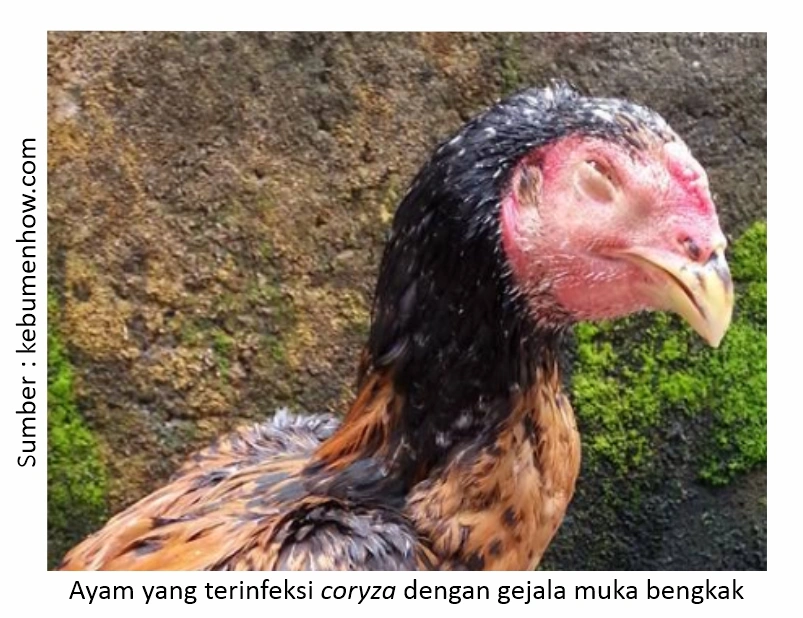
The most characteristic symptoms of the disease coryza is an acute inflammation of the upper respiratory tract, including the nasal cavity, which is accompanied by exudate, which at first has a watery yellow color, then gradually turns into a thick, purulent, and has a characteristic odor (foul/fishy smell) so that the chicken sneezes, has difficulty breathing and snores. In addition, the infraorbital sinuses (under the eyes) swell, conjunctivitis, and the eyes close, appetite is lost, and sometimes diarrhea occurs.

To prevent fighting chickens from avoiding this disease can be done in several ways, including:
- Be aware of the difficulty of treatment coryza, then the alternative to control it is prevention with vaccination. Especially for bacterial diseases coryza, preventive measures can be taken through vaccination using Medivac Coryza B or Medivac Coryza T.
- Supplementation is important to do to keep the immune system remains optimal fighting chicken so it is not susceptible to disease. For example, by giving Solvit & Vita Stress.
- To prevent chickens carrier so if there are sick chickens, treatment should be carried out correctly and thoroughly.
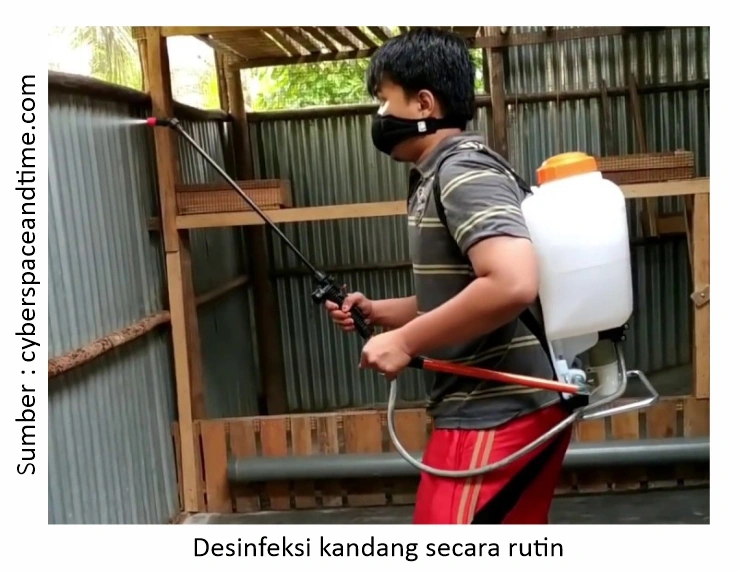
- Equally important is the implementation of sanitation and disinfection. Sanitation and disinfection during the maintenance period must be constantly carried out. Sanitation and disinfection of cages & cage equipment (feeders, drinkers) and the surrounding environment regularly at least 1 Week.
If you find sick chickens in the cage, immediately isolate sick chickens to minimize transmission to other fighting chickens.
Treatment against infection coryza done by giving antibiotics. In oral treatment, it is necessary to choose antibiotics whose absorption into tissues is higher or antibiotics can be given by injection (injection), for example by Neo Meditril (cock fight) given by mouth drops. When performing treatment, it is necessary to pay attention to several things such as dosage, method of administration and duration (duration) of administration to be effective and optimal. Examples for treatment with Neo Meditril (ayam laga) then the dose given 3 drops per kg of body weight per day, and given for 3-5 days in a row.

Also give vitamins to restore stamina and repair the infraorbital sinus membrane that has inflammation such as. If there are sick chickens, it is important to regularly clean and disinfect the cage, equipment and environment every day to minimize the seeds of the disease and prevent transmission. Avoid bathing chickens if they are infected with the disease. Bathing the chicken can be done again if the chicken has recovered. But for the activity of drying the chicken every morning can still be done.