The results of this study are based on the results of a 2-step analysis of the results of a randomized controlled trial (Hen day/HD) and quality. If the percentage of total egg production is high but the quality is low, then farmers will face economic problems because eggs with low quality will not sell in the market. Vice versa, if the quality is good but the percentage of production is low, farmers will still experience economic losses.
Broadly speaking, there are two main causes that lead to decreased egg production is caused by infectious and non-infectious factors. Often the two factors are related to each other and generate a greater impact. The following are the main factors causing the decline in production in laying hens, among others :
1. Infectious factors (diseases)
The disease factor has long been considered one of the main causes of a decrease in egg production in laying hens. Diseases cause various organ dysfunctions, be it digestive, respiratory, nervous or reproductive organs that are directly related to egg production. Among the types of diseases that are often the byword of laying hen breeders are Newcastle Disease (ND), Avian Influenza (AI), Infectious Bronchitis (IB) virus of and Egg Drop Syndrome (EDS).
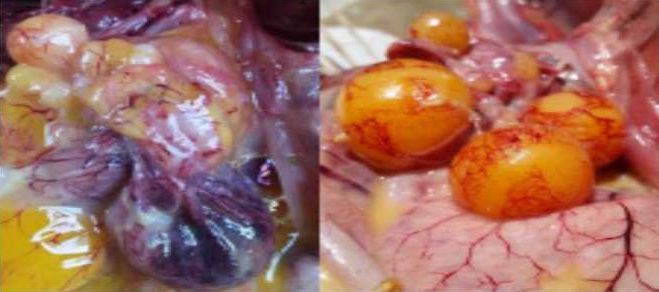
In its development, the AI virus has 2 mechanisms in disrupting the reproductive organs of chickens, namely the damming of blood vessels in the ovaries and damage to the surface of the ovaries at the time budding exit or the exit of the virus from the cell. Both of these mechanisms will lead to a decrease and even stop egg production. AI infection also affects egg quality where the attack causes the egg to lose its pigment so that the color of the shellfish becomes paler.
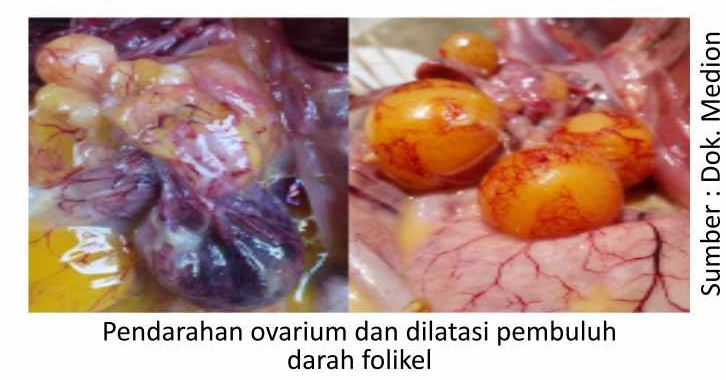
Changes in the reproductive organs due to ND, namely the ovaries shrink, the egg membranes swell and bleeding occurs. Similarly, in EDs virus infection, oviduct it becomes loose and there is oedema (swelling) in its sub-serous tissue. In addition, EDS disease also causes the brown color of the egg shells to disappear, followed by thin, flabby and without shells. In the case of an IB attack, the ovaries are undeveloped, soft as Pulp, bloody, swollen and flabby.
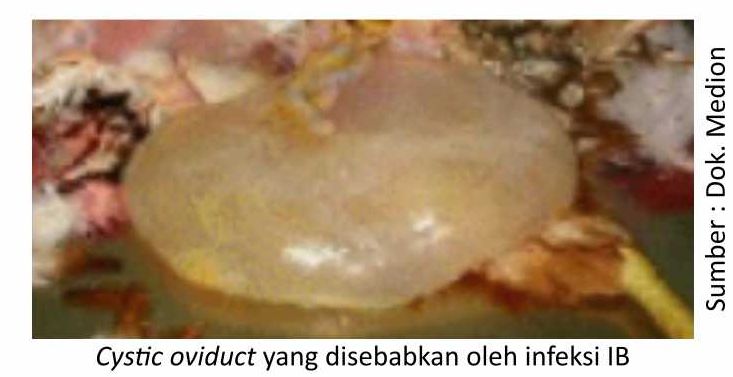
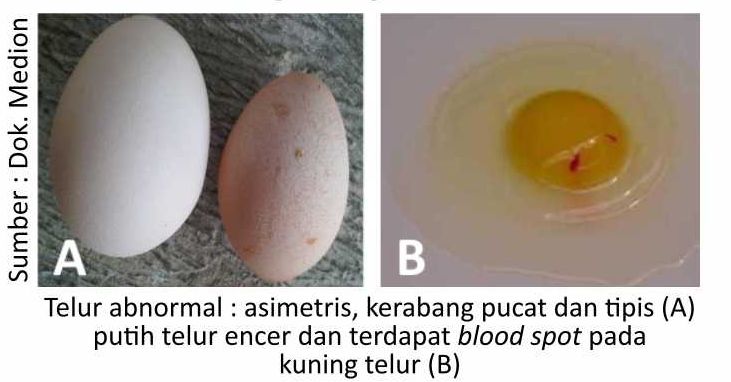
Also often found cases of rupture of the yolk in the abdominal cavity. Case cystic oviduct it also increases the severity of IB attacks. In terms of the quality of the eggs produced, the case of IB causes the color of the eggs to be paler, the size of the eggs is smaller, the egg whites are watery, the shells become thin and easily broken.
Damage or disruption of the reproductive system due to infection of one of the diseases decreased egg production will result in decreased egg production. The decrease in egg production due to IB virus attacks ranges from 10-50%, eds decreases by 20-40% and LPAI can reach 80%, while in ND cases it varies depending on immune status.
2. Non-infectious factors
Not only diseases that can reduce egg production, non-infectious factors also play an important role in determining whether or not egg production drops. Some non-infectious factors that can affect egg production are:
a. Quality pullet
Quality pullet the good one is characterized by > 85% uniformity for body weight, skeleton and sexual maturity. Pullet what is good is also seen in a well-built posture and a large cache. Cases caused by quality pullet less well characterized by the characteristics of having weight and uniformity pullet the low. Uniformity pullet this low can result in non-uniformity of the beginning of production and non-uniformity of the size of the eggs produced. Presence pullet which has a narrow pubic bone distance is also a distinctive feature that results in the chicken has a smaller egg size.
b. Ration nutrition and drinking water
Poor ration quality, poor or unbalanced nutrition and rations containing toxic/antinutritional substances can cause a decrease in egg production. So it is with drinking water.
The size and weight of eggs is also influenced by ration nutrients such as protein, certain amino acids such as methionine and lysine, energy, total fat and essential fatty acids such as linoleic acid. Non-fulfillment of the needs of one of these nutrients through the intake of rations, it will reduce the weight of eggs. Even if it occurs in egg-laying production before the age of 40 weeks, it can result in a decrease in egg production.
In addition, it should also be noted the balance between Ca and P (phosphorus), where the ratio is 5-6 : 1. The roles of Ca and P are interrelated and have a supporting relationship with each other. Another important nutrient to consider in the diet is mineral salt (NaCl). Chickens that consume less salt will show symptoms of feather loss (pecking at other chickens or pecking at their own feathers) or experience decreased appetite.
Likewise, in chickens that consume too much salt, will increase the consumption of drinking water and reduce the consumption of rations. As a result, the nutrients needed to form eggs are reduced and a decrease in production will occur. Give rations with a salt content of 0.3-0.4%. Often cases of nutritional imbalance have an impact on the achievement of body weight (BB) of chickens that do not comply with the standards. When entering the production period, chickens with substandard BB will not start egg production and if they produce small eggs will be produced in a relatively long time.
c. Maintenance management
The failure of the management of the rearing of laying hens inevitably also leads to a decrease in the amount of production and quality of eggs. These management actions include many things, including the following :
- Lack of lighting or insufficient light intensity of laying hens that have entered the egg production period, requires 16 hours of lighting to maintain the amount of egg production remains optimal. Current exposure factor pullet also closely related to the achievement of weight, egg size and maturity of the reproductive tract. In general, chickens that experience sexual maturity too early (not old enough) will produce eggs with a small size. Likewise, when sexual maturity is late, the chicken will produce eggs with a large size (abnormal).
- Stress Stress can lead to decreased egg production. Common stressors include stress due to changes in weather/temperature (cold or panic), moving cages, parasite attacks and rough treatment. Stress caused by noise or rough treatment can cause the egg shell formation process does not take place perfectly.
Based on the various factors that have been described above, the actions that can be taken to overcome problems related to egg production are :
Infectious factors
To overcome the problem of declining production associated with infectious factors, in this case prevention efforts must be made by implementing the implementation of vaccination programs and the implementation of biosecurity. Laying hens that have entered the production period, should be done monitor antibody titers against ND, AI, EDS and IB routinely.
Non-infectious factors
- Improve maintenance management improve maintenance management by conducting regular weight control, adjusting lighting programs and creating comfortable conditions during maintenance periods. Provide drinking water and drinking places in sufficient quantities, open the curtains wide, install fans, replace wet husks, and spray the cage using disinfectants such as Antisep or Neo Antisep. It should also avoid and minimize stress factors in chickens such as hot weather or noise. If necessary, the chicken is fasted to eat 1-2 hours during hot weather during the day to reduce the heat released by its body.
- Meet the nutritional needs of rations provide rations with nutrients that match the needs of chickens in each period of maintenance, especially for the content of protein, amino acids, energy, fatty acids, calcium, phosphorus and vitamin D (because it plays a role in the formation of eggs). To overcome the lack of Ca, it can be added gritin the form of a gift, in addition to the grit, it is necessary to add also vitamin supplements such as Strong Egg or Egg Stimulant. Egg Stimulant it is also useful to accelerate the achievement of maximum egg production while maintaining high egg production. In addition, amino acid supplementation (methionine and lysine), in particular contained in Aminovit and Top Mix able to increase egg production and weight.