Chicken fight or fighting chicken healthy, agile and has a strong stamina to be the dream of every hobbyist chicken fight. But it cannot be denied that when caring for fighting chickens there are also problems, one of which is health problems.
In the rainy season like this month with high rainfall, lower temperatures, high humidity and lack of sunlight, it will cause chickens to be easily stressed, sensitive to the environment and prone to disease. One of the diseases that often act up in the rainy season on your favorite fighting chicken is respiratory disease. Seperti snot/ korisa dan penyakit ngorok/ CRD (Cronic respiratory disease).
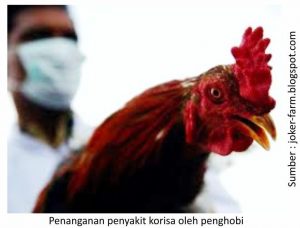
Chorizo disease is a bacterial disease that attacks the respiratory system, especially the upper respiratory tract. Snot can attack fighting chickens at any age. Snot disease caused by bacteria Avibacterium paragallinarum.
The most visible symptom is the presence of liquid or discharge from the nostrils which are initially watery yellow then gradually turn into thick, purulent and have a characteristic odor (foul/fishy smell) which can make the chicken's nose clogged so that the chicken has difficulty breathing. Sometimes there may also be symptoms of sneezing and swelling in the face area (near the eyes). The chicken that has been cured will act as a carrier of the seeds of the disease (carrier) and as a source of transmission to other healthy chickens.
This is a list of diseases that affect the respiratory tract of chickens, namely CRD (Cronic respiratory disease), so that breeders are more commonly referred to as snoring disease. CRD in chickens is caused by Mycoplasma gallisepticum which can affect chickens at any age. The Cured chicken will also act as carrier. Visible clinical symptoms include mucous discharge from the nose, snoring and inflammation of the eye membranes. CRD is immunosuppressive or able to suppress the immune system of chickens. So that the occurrence of CRD can be accompanied by complications with other diseases, especially E. Coli infection, so called complex CRD.
The impact of snot and snoring disease on fighting chickens is quite large, namely disruption of productivity so that the target body weight is not reached, reducing performance during training and when competing. In fighting chickens that are attacked by snot and snoring, the condition of the chicken will get worse if not treated immediately.

The mortality rate of chickens due to this disease is high enough to reach 30% if allowed to drag on. To overcome the disease, hobbyists can take some of the following treatment or treatment measures:
- To combat the spread of the disease, sick chickens must be immediately transferred to special cages for quarantine.
- Carry out treatment with antibiotics. Av. paragallinarum including Gram bacteria (-) so that almost all classes of antibiotics are effective to eradicate it. It's just that in the selection should be preferred class of antibiotics that have a higher absorption into tissues. Likewise, for snoring diseases should be selected antibiotics that are suitable for also Mycoplasma. Examples of products that can be used for both diseases are Neo Meditril (cock fighting) the packaging is specifically for fighting chickens with a dose of 3 drops per kg of body weight for 3-5 days in a row.
- Giving multivitamins to help increase the endurance of chickens also needs to be given. Like Solvit (cock fighting) with a dose of 2 drops per kg of body weight for 2-3 days / during the sick chicken or Vita Stress at a dose of 1 gram per 1 liter of drinking water.
- The activity of drying the chicken every morning is still carried out so that the stamina of the fighting chicken recovers quickly (± 10-15 minutes) but should not be bathed first. After the chicken is cured, do the routine treatment again including bathing the chicken.
- Sanitation and disinfection of cages and cage equipment (rations, drinking places) and the surrounding environment on a daily basis with Medisep.
- Sanitation of drinking water from bacteria and to prevent transmission by Desinsep.
To prevent snot and corisa, measures can be taken, among others:
- Be aware of the difficulty of treatment korisa because few blood vessels in the favorite place of bacteria Av. Paragallinarum (sinus infraorbitalis) then an alternative action that can be done to control korisa is prevention with vaccination.
- Vitamins and electrolytes, such as Solvit & Vita Stress to maintain the stamina of the chicken body remains optimal.

- Chicken handling carrier (i.e., by the time the medication is finished, or by the time the medication is finished)cleaning program), especially during weather changes & rainy season.
Sanitation and disinfection of cages & cage equipment (rations, drinking places)and the surrounding environment regularly at least 1 Week.