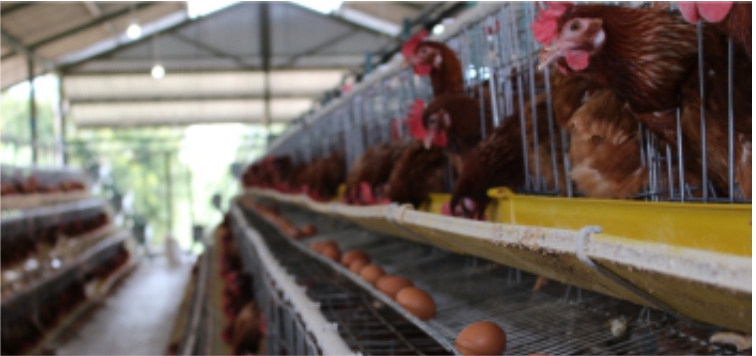
How To Deal With Small Chicken Eggs?
E-mail : ahmadsyailenra@gmail.com
Question
What are the causes of some chicken eggs layer am I shrinking?
Answer:
Thank you for the submitted question. Broadly speaking, there are two factors that affect the quality of chicken eggs, namely infectious and non-infectious factors. The two factors can be related to each other so that the impact is greater. The following factors can affect the quality of chicken eggs:
a. Infectious factors
Infectious factors or the presence of diseases in the body of chickens can cause organ damage and dysfunction. Such damage can occur in the digestive, respiratory, nervous, or reproductive systems, thus affecting egg production and quality. Some diseases that can directly affect egg quality are Newcastle Disease (ND), Avian Influenza (AI), Infectious Bronchitis (IB), and Egg Drop Syndrome (EDS). In chickens attacked by ND disease can have an impact on the size of eggs that shrink or known as pigeon egg.
In chickens that are sick, it is necessary to make the right diagnosis before handling. Completeness of information or anamnesis, a thorough examination of clinical symptoms, surgical examination of the carcass and laboratory tests can help to conclude a diagnosis of the disease
Vaccination and strict biosecurity should be done to prevent the occurrence of disease attacks. Vaccination will increase the immunity of chickens and biosecurity will help eliminate the seeds of disease in the environment. Monitoring routine antibody titer for ND, AI and IB diseases needs to be done to determine the immune condition of chickens against disease attacks and help determine the revaccination schedule.
b. Non-infectious factors
Non-infectious factors tend to be influenced by the management carried out on farms. Some non-infectious factors that can affect egg production are :
1. The weight of the chicken
Chickens that have a weight below the standard or decreased during the maintenance period will cause the size of the eggs produced to shrink. This weight loss can be caused due to low consumption of rations or poor quality of rations.
Chickens whose eggs are shrinking need to be weighed and compared with the weight standards issued by the breeder. If the weight is smaller than the standard it is necessary to separate and special handling. Regular weighing needs to be done to facilitate evaluation and treatment if there are deviations from the standard body weight. Chicken weight uniformity also needs to be observed so that it still reaches 80-85%.
2. Feed Quality
Ration is a source of nutrients needed by chickens. The size and weight of the eggs are affected by the ration nutrients such as protein, certain amino acids (methionine and lysine), energy, total fat, and essential fatty acids. Unmet nutritional needs can lead to low egg production and reduced egg size.
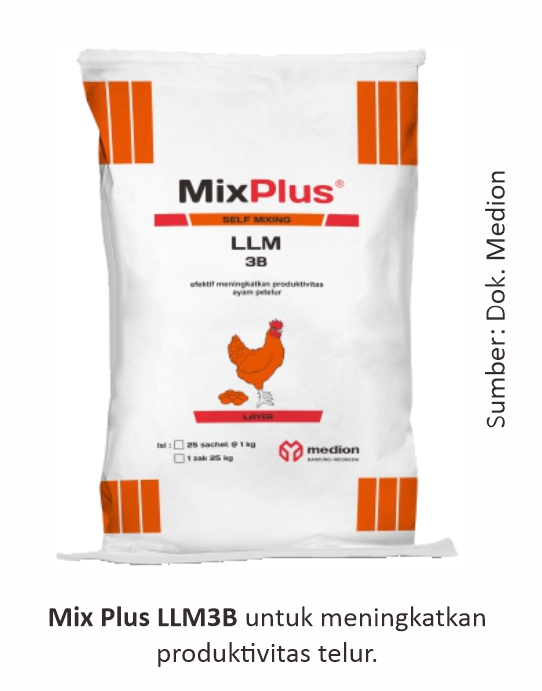
The balance between calcium (Ca) and phosphorus (P) and mineral salt (NaCl) levels in the ration also needs to be met. The roles of Ca and P in the body are related to each other. While the levels of mineral salts in the ration will affect the level of consumption. If the chicken consumes too much salt, it will increase water consumption and reduce ration consumption. So the nutrients needed to form eggs are reduced and decreased production will occur. To meet nutritional needs and improve the quality of the ration, it can add premix Top Mix or Mix Plus LLM3B into the ration.
3. Lighting
The lighting factor has a close relationship with the achievement of weight, egg size and maturity of the reproductive tract. In general, chickens that experience sexual maturity too early will produce eggs with a small size. Whereas if the sexual maturity is late, the chicken will produce eggs with a large size (abnormal). Lack of lighting will lead to late development of reproductive organs. This results in the chicken will be late to lay eggs until it is too late to reach peak production. Laying hens that have entered the egg production period need 16 hours of lighting to maintain optimal egg production.
4. Stress
Chickens with stressful conditions will have an impact on the decline in egg production. Stress can be caused due to changes in weather or temperature, moving cages, parasite attacks (fleas), and rough treatment. Stress due to hot weather causes chickens to drink more often and reduce feeding activity so that the supply of nutrients for egg formation is not met. Comfortable conditions need to be created so that chickens can produce optimal productivity. Vitamins and electrolytes such as Vita Stress via drinking water can be done to prevent stress, increase appetite and keep the body's metabolic processes remain optimal chicken. Optigrin it can also be given to increase the endurance of chickens.