The COVID-19 pandemic has indeed had a huge impact on all sectors, even the food industry such as poultry has been affected. By looking at these conditions do not dampen the spirit of the team info Medion to continue to educate and disseminate information related to-updates about technical management and livestock health.
Towards the end of 2020, we need to evaluate the performance and development of livestock businesses to determine targets for the coming year. The productivity results obtained during 1 year can be used as a record and provision in facing the challenges of next year. One of the important points to be evaluated is the record of diseases in 2020 that thwarted the achievement of chicken productivity targets.
Overview Of Chicken Diseases In 2020
Based on data collected by the team Technical Education and Consultation Medion, a common condition of diseases affecting broilers and layers can be seen in graphs 1 through 4. From the graph it can be seen that disease attacks on farms are still dominated by old diseases. Bacterial diseases still dominated by CRD, Coryza, Colibacillosis, cholera and complex CRD. While Gumboro, IBH, ND, and AI are still the prima donna of viral diseases.
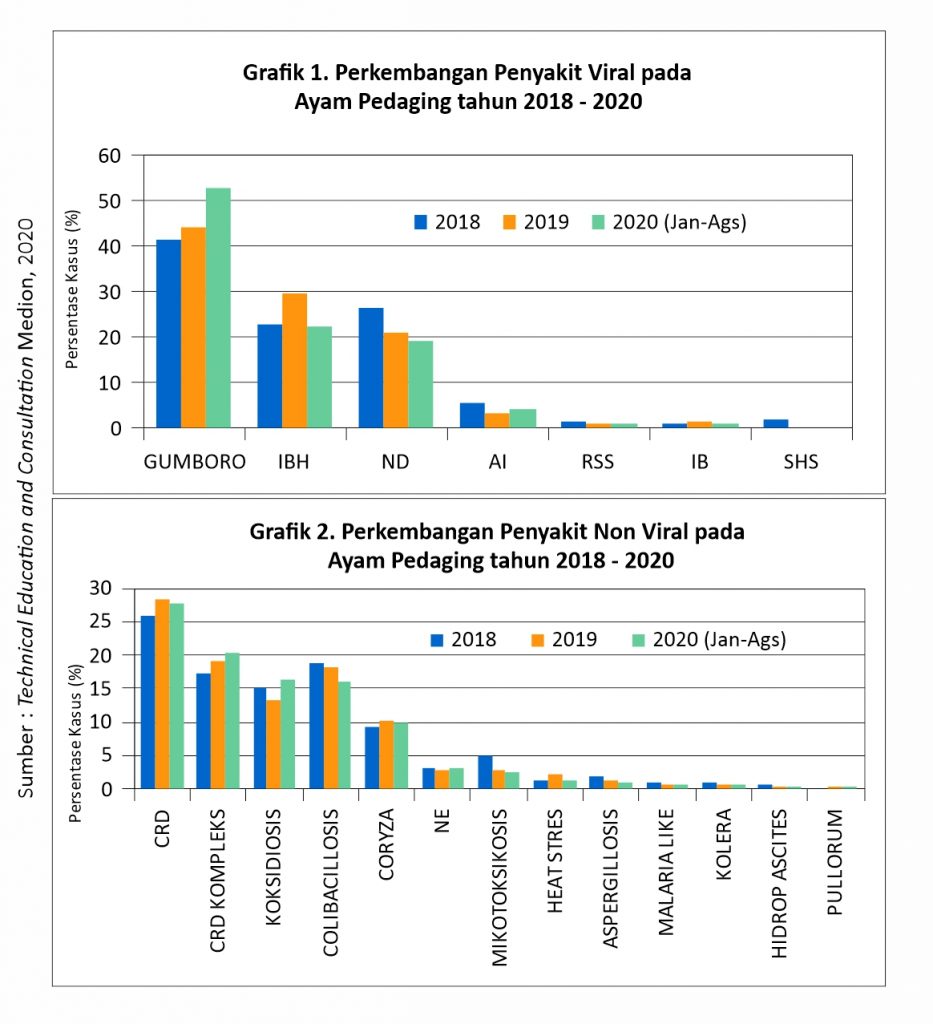
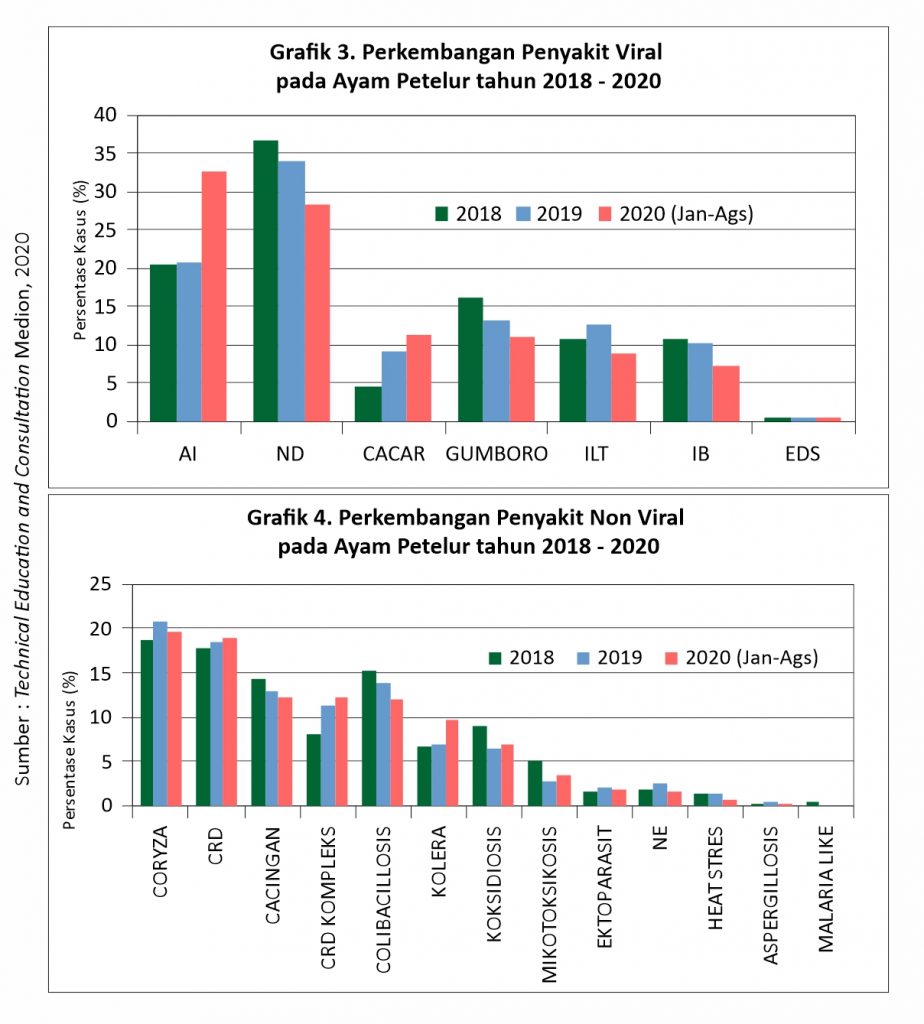
Judging from Graph 1 regarding viral diseases in broilers, there is a high increase in cases of Gumboro disease compared to the previous year. Followed by IBH and ND cases which still dominate in the top three rankings. In graph 2, cases of complex CRD, and coccidiosis in broilers until August 2020 had an increase in cases. While in laying hens, cases of viral diseases that have an upward trend are AI and smallpox. In non-viral diseases seen an increase in cases of CRD, CRD complex, cholera, coccidiosis, and mycotoxicosis (graphs 3 and 4). Until the end of 2020, it is also predicted that cases of coccidiosis and mycotoxicosis will be much higher in number than in 2019.
The trend of disease cases in broilers and laying hens occurs in the rainy season and during the transition/change of weather. Cases of the disease then decrease in number in March, and gradually increase in June.
Some supporting factors for the occurrence of chicken disease at this time are usually not optimal management, the presence of immunosuppressive factors, the balance of intestinal microflora in the digestive tract, and feed conditions. Feed quality plays an important role of about 70-80% for poultry productivity, so it is better not to take risks with Feed quality because it can have a big effect on the health and performance of chickens.
Existence Avian Influenza
Disease of High Pathogenic Avian Influenza (HPAI) pada unggas yang disebabkan oleh virus AI subtipe H5N1 clade 2.1.3 has been going on in Indonesia for more than 10 years. However clade 2.1.3 it was last discovered in 2016. From 2016 to 2020 the AI H5N1 virus was only found clade 2.3.2. and there is a change in the character of clade at the end of 2019, which had a significant impact on the effectiveness of the AI vaccine.
While Low Pathogenic Avian Influenza (HPAI) is still found and causes a considerable decrease in egg production with low mortality, but morbidity is still relatively high. LPAI can cause high mortality if there is a combined infection with other viruses such as IB, ND or bacteria E. bra, Avibacterium paragallinarum, S. Auerus. The AI H9N2 Virus found in Indonesia during the 2019-2020 period has not undergone significant mutation changes.
IBH attacks still threatening
IBH is a viral disease caused by Avian Adenovirus Group I Species Fowl Adenovirus D and E so that it can also be called an infectious disease Fowl Adenovirus (FAdV). IBH Virus has the characteristics of not amplified so it is more stable and durable to live in the environment. IBH disease is an infectious disease in chickens. Mortality caused by FAdV infection is from a small percentage to soon increase, causing significant economic losses due to weight standards that are not reached until the swelling of FCR in broilers. In laying hens, it can also inhibit growth and egg production.
The Medion team found several cases of suspected infection of the disease Inclusion Body Hepatitis (IBH) after there are many reports from farmers. With the help of a computer lab (polymerase chain reaction) IBH can be done in MediLab by sending organ samples from chickens suspected of being infected with IBH. In Indonesia, this disease can be found in various areas that are densely populated with chicken farms, especially broilers. Possible outbreak of IBH cases at this time due to Adenovirus it often attacks chickens that are immunosuppressed and susceptible to disease coupled with extreme weather changes and uncomfortable housing conditions. Especially cages with high density and management litter which is bad.
Beware Of The Spread Of Mycotoxicosis
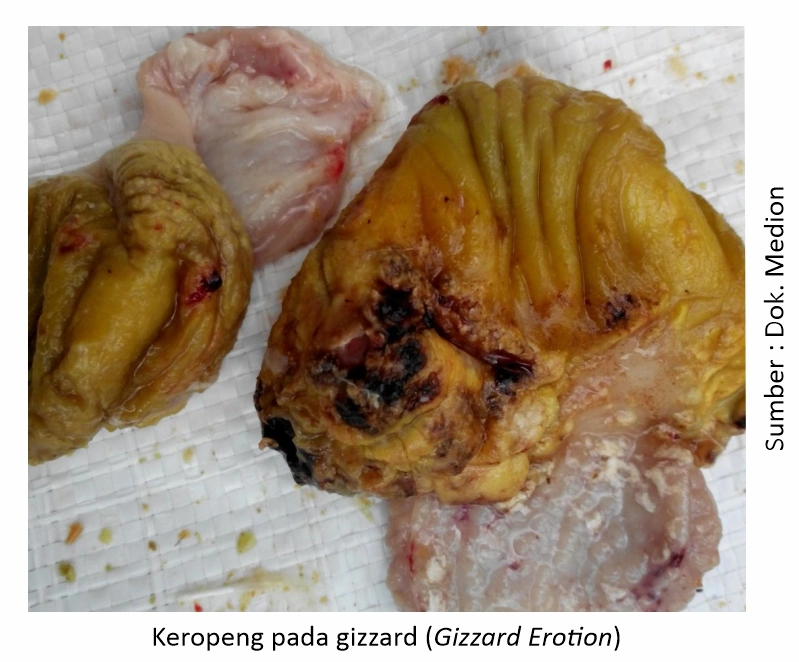
In addition to being able to reduce the productivity of chickens, mycotoxins are also known to have a major influence on the decline in the immune system (body defense) chicken or immunosuppressive. Immunosuppressive caused by mycotoxins is chronic, but if the concentration is high, it will be acute. Further impact of this immunosuppressive effect is the increased mortality of chickens, chickens easily attacked by other diseases, as well as increasing the colonization of pathogenic bacteria in the digestive tract of chickens. Mycotoxicosis can trigger the occurrence of various diseases, such as Gumboro (IBD), malabsorption syndrome and fatty liver syndrome.
Based on mycotoxicosis case data collected by the team Technical Education and Consultation Medion that there was an increase in cases back in 2020 because it was aggravated by extreme weather conditions that could not be predicted.
Coryza the Hobby visit Cage
Infection Coryza it is unique when compared to other respiratory diseases. Its occurrence can be repeated and always appear throughout the year. One of the factors that cause this is that chickens recover from infection Coryza will be carrier (carrier). If the health status of these chickens decreases, the disease Coryza can re-infect.
Unsuitable temperature and humidity are also one of the factors that have an impact on breathing disorders. A comfortable temperature for adult chickens is 25-28°C with a humidity of 60-70%. At low temperature conditions in the rainy season, the humidity of the environment increases so that bacteria Coryza growing quite rapidly.
High ammonia levels in the cage also have a negative impact because it can cause irritation to the respiratory tract of chickens, causing other diseases to easily infect. Another factor is the contamination of water, feed, cages, and equipment by dilution of the patient's chicken nose fluid Coryza which is very potential to be a source of transmission. So, it's not just bacteria E. Coli infection commonly transmitted by water, but also bacterial causes Coryza.
Coccidiosis
From the disease ranking data compiled by the Medion Technical Education and Consultation team, in 2019 coccidiosis or what is often called defecating blood is in 4th and 7th place which attacks broilers and layers. Many cases of coccidiosis occur in chickens kept in postal cages using litter. While chickens kept in battery cages are less likely to become infected with coccidiosis. But still, coccidiosis should not be taken lightly because this disease can cause quite high economic losses.
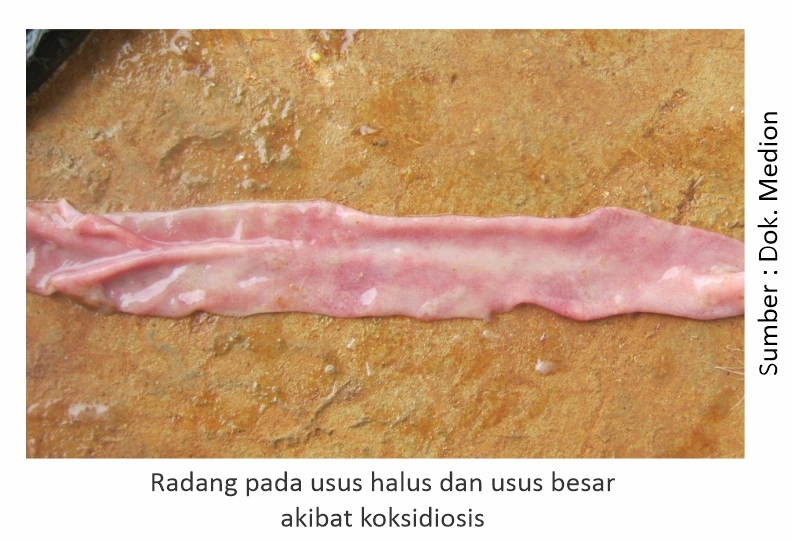
Humidity level litter high because of the pile litter too much and coupled with the spill of rations, drinking water and rainwater will greatly support the breeding Eimeria sp. The impacts that occur in chickens when attacked by coccidiosis include stunted growth, decreased efficiency in the use of rations, and deaths that can reach 80-90%. Coccidiosis attacks will also cause immunosuppressive effects (decreased immunity) which makes chickens vulnerable to infection with other diseases.
Immunosuppressive mechanisms due to coccidiosis are:
- Damage to the tissues of the intestinal mucosa causes the process of digestion and absorption of nutrients is not optimal. As a result, there is a nutritional deficiency so that the formation of antibodies is disturbed.
- Peyer’s patches and caeca tonsil in the intestinal mucosa is a local immune organ in the digestive tract so that damage to these two organs results in chickens being more susceptible to infection with other diseases.
- Along the intestinal mucosal tissue there is antibody-producing lymphoid tissue (IgA), where the IgA will accumulate in the blood. Damage to the intestinal mucosa will result in the release of plasma and red blood cells so that the level of IgA as a defense in the surface layer of the intestine decreases.
Conclusion Of Disease Evaluation 2020
In general, the types of diseases that will appear in 2020 are relatively the same as diseases in previous years. Respiratory diseases, both caused by bacteria and viruses in laying hens and broilers will continue to increase. This is related to the weather conditions and the environment of the farm whose air quality is declining. Moreover, the condition of the channels and respiratory systems of chickens that have some weak points that can make it easier to be infected with the disease, especially when the weather conditions are uncertain.
In the face of uncertain weather, there are at least a few points that are important to know such as :
- Respiratory and digestive diseases, both caused by bacteria, viruses and fungi in laying hens and broilers will continue to increase, especially in the rainy season and transition.
- Be aware of the decline in the quality of rations in the wet rainy and dry seasons in order to prevent cases of fungal attack and mycotoxins.
- In broilers and laying hens will be dominated by several respiratory diseases caused by viruses and bacteria such as complex CRD, CRD, colibacillosis and korisa. The four diseases are predicted to increase because they are related to weather conditions and animal husbandry environments whose air quality is declining. Coupled with the condition of the chicken's respiratory tract, which has several weak points that can make it easier to become infected with the disease, especially if the weather conditions are erratic and the effects of ammonia are high in the cage.
- Farmers are currently faced with conditions that are not easy, the increasing maintenance costs but not always offset by increasing selling prices will be a heavy hurdle.
- The development of the virus needs to be constantly monitored, especially ND, AI and Gumboro, which are easily subject to change. And monitoring of bacteria H. Paragalinarum causes of the disease Coryza where cases of the disease increased in 2019, especially in laying hens.
- Diseases that often cause the impact of economic losses will cause a decrease in production is quite high, such as AI, ND and IB diseases. Based on observations in the field, the three diseases are relatively difficult to distinguish, especially if the changes that occur in chickens are only slight. The presence of one infection or complications of the 3 diseases have a major effect on laying hens & breeders (breedera decrease in egg production.
Remedial Action Before It's Too Late
Strategic steps to be taken in the farm environment to prevent disease as follows :
- Reevaluate vantage management and maintenance
We need to re-evaluate the landscape management and maintenance practices that we apply. To anticipate unpredictable weather conditions, pay attention to the air circulation around the chicken by adjusting the cage curtain opening and closing system. In addition, strive for management litter optimal. Uncertain weather conditions that sometimes turn extreme, coupled with declining air quality, demand better management efforts. What's more, today's commercial chickens have the characteristics of being susceptible to disease. The rest period of the cage should be more optimized, where the cage is completely empty and the distribution of personnel is limited, should not be less than 14 days. Do DOC selection to get uniformity of body weight according to standard, healthy agile, not deformed and free of omphalitis.
- Doing the right vaccinations
The accuracy of determining the vaccination schedule, vaccine quality, appropriate vaccination management and the condition of chickens when vaccinated to provide optimal immunity to disease challenges. The selection of the right vaccine, program and application according to the conditions in each farm (history and level of disease vulnerability) becomes the key point of successful protection from disease attacks. From the description of diseases that attack broilers and layers, the vaccines that must be given are ND, AI, Coryza, Gumboro, IB, EDS, Pox (cacar), dan ILT. Medion provides vaccines containing viruses / bacteria that are homologous (the same) with those in Indonesia, so it is more suitable to be used to prevent disease attacks in Indonesia. Some examples such as Medivac Coryza T or Medivac Coryza T Suspension symptoms for Coryza disease, Medivac AI on the Prevention of AI, as well as Medivac ND G7 Emulsion containing local nd viruses.
- Stricter implementation of biosecurity to prevent disease to farms
Implement biosecurity model 3 zones (clean, transition, dirty) to control farm conditions by limiting traffic so as not to be susceptible to poultry diseases. Strict disinfection in farm/enclosure environment using Medisep, Neo Antisep or Antisep. Feces / feces is an ideal medium that can bring seeds of disease, it is necessary to clean feces regularly and avoid accumulating and moist feces. Limit contact between commercial poultry and free-range chickens, waterfowl or wild animals. Reduce the population of ectoparasites as vectors of viral and bacterial diseases with Kututox-S and Kututox Oral.
- Management of feed, drinking water and its administration
Improvement of feed quality (feed given must be in accordance with the amount and content of nutrients) according to the needs of livestock to get good chicken performance. Maintain the quality of drinking water given to livestock. The drinking water provided is sourced from clean and safe water and needs to be controlled and checked regularly at least during the change of season. Water in the sink (Desinsep). The presence of mold and mycotoxins in food raw materials (self mixing) by giving Freetox. In addition to the above, we also provide a comprehensive list of products for the treatment of Acne, Acne scars, acne scars, acne scars, acne scars, acne scars, acne scars, acne scars (MediLab) by testing nutrient levels and mycotoxin content.
- Antibody titer Monitoring needs to be done regularly
Also perform laboratory tests to monitor the health status of chickens through antibody titer examination. Especially for laying hens and breeders to determine the success of vaccination and monitor antibody titers during the production period. From a routine examination of the antibody titer will be depicted baseline titer (basic titer) for the farm. If there is a difference in the size of the screen, then this is a warning (early warning system) will condition the chicken.
- Increase chicken endurance and optimize performance
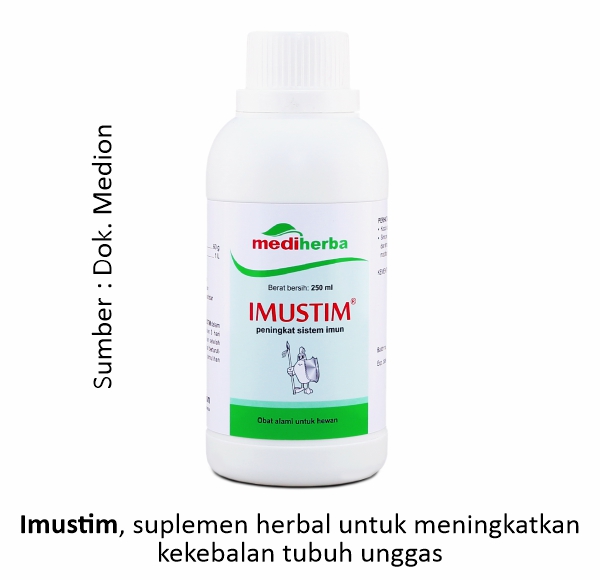
Take a multivitamin (Vita Stress/Fortevit/Imustim) routinely to increase the endurance of chickens so that they are not susceptible to disease. Currently, there are many available and circulating AGP alternatives where the main purpose is to help optimize the digestive process and maintain the health condition of chickens. One of them is phytobiotics or herbs. Medion develops herbal products which are standardized and have both the quality of raw materials and finished products. Examples Fithera as antibacterial and antiprotozoal, Imustim to help boost immunity, Kumavit to increase appetite, Heprofit as a supplement to protect chicken liver from damage (hepatoprotector), as well as other products.
- Medical treatment if already sick
To prevent the attack of bacterial infections can be given a variety of alternative products instead of AGP. But if there have been cases of infection, take the right treatment based on diagnosis, drug selection, and dosage and rules of use. In the case of multi-drug therapy (Fortevit, Vita Stress) will greatly help improve the condition of the chicken's body. The type of medication used should be rolling or substitution. At least 3-4 periods of administration, a change in the type of drug is carried out.
- Application of cages closed house worth considering
System options closed house can provide comfortable housing conditions for livestock. This is done by removing the heat from the cage generated from the chicken's body, lowering the temperature of the intake air (if needed), regulating the humidity accordingly and removing gases that have an adverse effect, such as carbon dioxide (CO₂) and ammonia (Nh₂). And all these processes can be set automatically. Thus minimizing the influence of environmental conditions that are currently very volatile and trigger the onset of disease.
Let's take a moment to evaluate the results of our farms, then set a strategy to face the coming year. The achievements obtained should be a motivation for us to always be better. Success is always Indonesian breeders.