Currently, the poultry industry in Indonesia has grown rapidly following the increasing demand for poultry products such as meat and eggs. However, the current poultry production is not optimal because there are still many diseases that come to attack poultry farms.
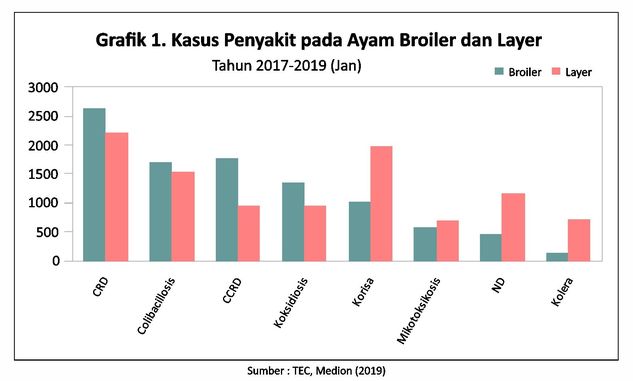
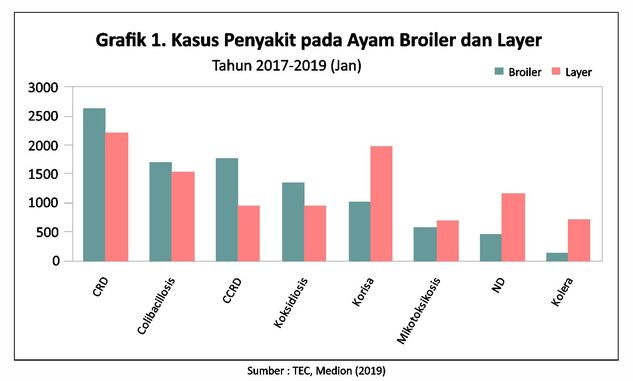
At the beginning of 2019, the types of diseases affecting poultry were not much different from previous years. CRD (Chronic Respiratory Disease) and Korisa is a dominant bacterial disease that attacks both broiler and layer chickens. Based on data collected by the Technical Education and Consultation Medion, we can see in the ranking of diseases below, both diseases are ranked in the top 5.
Both of these diseases are endemic diseases whose occurrence continues to recur but less attention because they do not cause high mortality outbreaks. Economic losses caused by CRD and Korisa diseases include decreased egg production and quality, low hatchability due to embryo death rate and high abandonment of old poultry, decreased feed efficiency, increased mortality and treatment costs and can cause immunosuppression in infected chickens. In addition, the disease can spread rapidly in poultry flocks. The quality of poultry carcasses sent to be cut at the slaughterhouse also fell (Diyantoro, 2017).
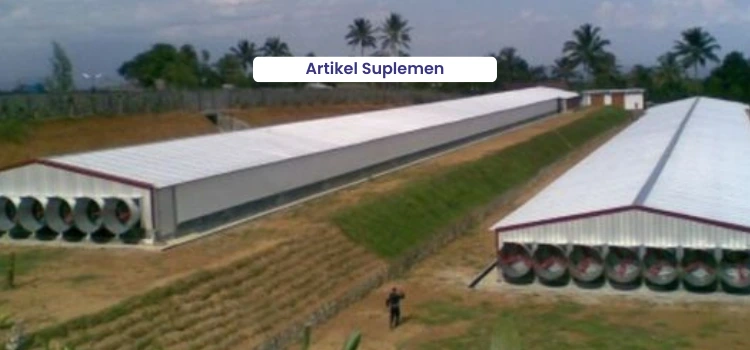
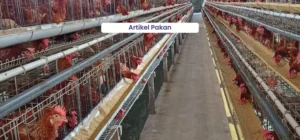
Although today some breeders have switched to a rearing system using automation cages closed house, but most still use the open maintenance system house. Keeping in an overcrowded cage situation with low air quality is likely to be susceptible to respiratory diseases such as CRD and korisa.
Getting to know CRD
Chronic Respiratory Disease or what we usually know as CRD is a disease that attacks the respiratory system characterized by symptoms of snoring. This disease is caused by Mycoplasma gallisepticum , Gram (-) bacteria are polymorphic coccoids and do not have a cell wall so they are easily broken/killed by disinfectants, heat, sunlight and other factors.

The attack pattern caused by CRD is relatively slow. When chickens get infected M. gallisepticum, the infection will run for a fairly long period of time (chronic). For several weeks the bacteria will remain settled in the respiratory tract and only work to infect acutely when the chicken is stressed.
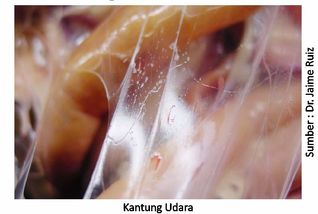
Mycoplasma gallisepticum enter the body of chickens through the respiratory tract. Basically, the respiratory tract of chickens is equipped with a mechanical defense system in the form of vibrating feathers (cilia) and chemical with mucus (mucus). Bacteria Mycoplasma gallisepticum it attaches to epithelial receptors called sialoglycoproteins. Then it sticks and damages the epithelial mucosa while multiplying. The presence of these bacteria will trigger inflammation and blood flow in the area becomes increased. Bacteria will join the bloodstream and go to the air sac, where the air sac is a suitable place for M. gallisepticum live and multiply.
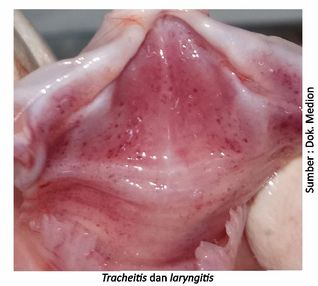
Mycoplasmas have a ciliostatic, which is a factor that causes a weak activity of the cilia. In addition, Mycoplasma gallisepticum it is one of several Mycoplasmas that secrete hydrogen peroxide, which can cause oxidative stress on the host cell membrane.
Cilia damage and oxidative stress caused by infection Mycoplasma gallisepticum this is what causes other diseases to easily enter and also infect so as to aggravate the disease in chickens.
Some diseases that often infect together with these bacteria include collibacilosis which we know as complex CRD, korisa, coccidiosis, and worms.
Mengenal Korisa (Snot)
Infectious coryza or snot is a disease that infects the upper respiratory tract in laying hens, broilers or other poultry both on public and commercial farms.
This disease causes considerable harm to breeders although in a single infection it does not cause high mortality. The incidence of broiler chickens and layer grower phase causes no achievement of body weight, while the incidence of chickens during production, the resulting eggs decreased in terms of quantity reached 10-40%. In addition, severe korisa attacks and difficult to cure will also increase the number of rejects (Ariyanti, 2007).
Korisa is caused by Avibacterium paragalilinarum, included in the Gram bacteria ( - ) and facultative anaerobic (able to live in media that have or do not have oxygen). The main Target of A. paragallinarum the cause of this korisa is in the infraorbital sinus which is poor in blood vessels so that it is sometimes difficult to reach when treatment is done using antibiotics.
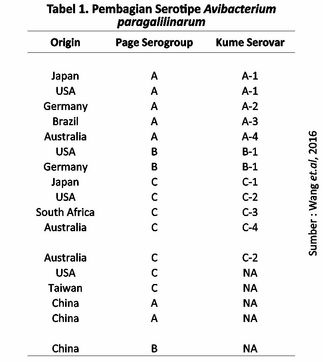
Bacteria A. paragallinarum the causes of this chorisa are divided into several serotypes. Berdasarkan metode page, dibagi menjadi A (W), B (Spross) dan C (Modesto). Sedangkan metode kume membagi lebih detail lagi menjadi A1, A2, A3, A4, B1, C1, C2, C3 dan C4. Based on the isolate data collected by Medion, currently the bacteria Avibacterium paragalilinarum found in Indonesia, it belongs to serotypes A1, C1 and C4.
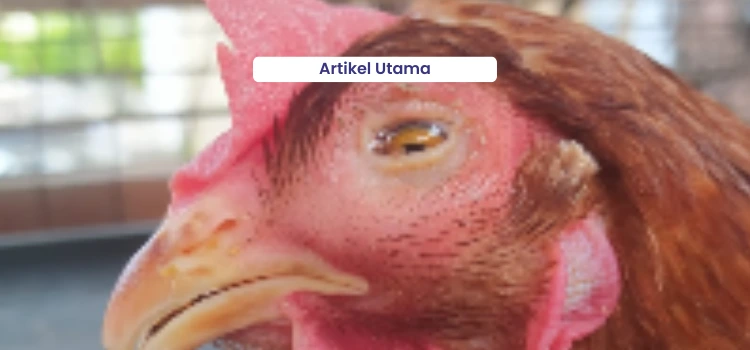
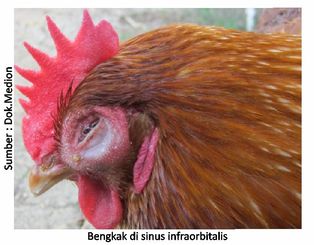
Chickens attacked by korisa will usually show symptoms such as discharge of exudate or mucus from the sinuses of the nose or mouth that have a characteristic odor, swelling in the sinus infraorbitalis (under the eyes),
decreased appetite (anorexia), and in laying hens usually found a decrease in production ranging from 10-40%.
If we look again at these two types of diseases, both CRD and coryza are bacterial diseases that can be cured using antibiotics, but in certain cases that cause infection simultaneously with other diseases (complications) cause high severity and even death in chickens. Therefore, re-understanding the characteristics of the causes of these two diseases as well as related factors becomes very important for the success of prevention and treatment. Here are the things that need to be considered before and when attacked by CRD and Korisa:
Predisposing Factors
One of the main needs in the maintenance of chickens is air, good air quality is needed by chickens in providing oxygen for their growth. One of the factors that trigger the emergence of respiratory diseases such as CRD and Korisa is poor air quality.
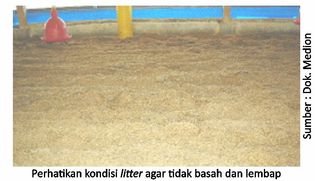
Lack of ventilation and poor air circulation, resulting in the intake O2 what the chicken needs is less. Litter wet resulting in increased humidity and ammonia levels inhaled by chickens to be high . This results in epithelial cells (mucosa) in the upper respiratory tract experiencing irritation.
These cells are the initial defense mechanism because they are able to produce mucus and consist of cilia to dispel incoming infectious agents. As a result, bacteria such as Mycoplasma gallisepticum and A. paragallinarum it becomes easy to penetrate into the body of the chicken, causing pain.
After we re-examine, the occurrence of CRD and korisa infection is closely related to the management of the maintenance of a farm. Therefore, in addition to treatment, of course, attention to management factors is very important in preventing and handling cases of CRD and korisa.
Management factors in the treatment of CRD and Chorisa infections
Basically bacteria Mycoplasma gallisepticum and A. paragallinarum the cause of CRD and korisa is easy to die, especially by high environmental temperatures, high levels of2 high, low relative humidity and also some disinfectants and antiseptics. However, in farm conditions where sanitation and disinfection are not observed, the incidence of this disease will continue to recur. Therefore, the application of biosecurity must be very careful. Here are some of the common causes of repeated cases of CRD and korisa on farms
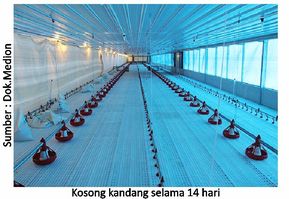
- Empty cage is less than Optimal empty cage optimal process is done 14 days after the cage is clean. This process aims to break the chain of previous diseases. Mycoplasma gallisepticum CRD can live in feces for 1-3 days at 20° C and 6 days at room temperature. Bacteria A. Paragallinarum the cause of korisa can last 1-2 days at a temperature of 37° C. If the process of cleaning and empty the cage is not optimal, the seeds of the disease that causes CRD and korisa will settle in the cage and have the opportunity to infect the chickens that are kept next.
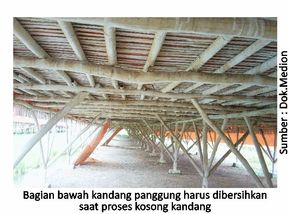
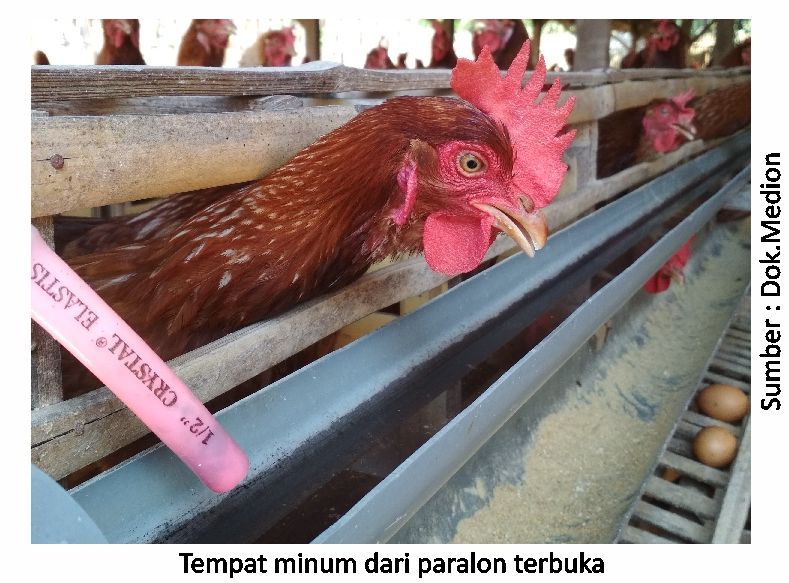
- Sanitation and disinfection is not done perfectly spray the cage should be routinely done at least once a week to reduce the number of infectious agents in the environment. Drinking places from open paralon contaminated with mucus from the nose or mouth of chickens infected with korisa have the potential to become infectious media. Therefore, the cleaning of feed and drinking places must also be considered. When the cage is empty, thorough cleaning should be done to every part of the cage. Between the cage, and the bottom of the stage cage should also not be separated from the cleaning. After all the equipment is removed, the cage is cleaned with detergent and brushed, then sprayed with high pressure water. If necessary, lime can be used. After that, it is disinfected using aldehyde groups such as Formades or Sporades.
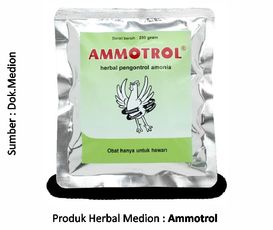
- Creating a comfortable cage atmosphere the main needs in the maintenance of chickens are air, water and nutrients in sufficient feed. The severity of CRD and korisa infections is also caused by secondary infections that also attack. Disinfection of drinking water with Antisep, Neo Antisep, or Desinsep be important because that's where the predilection or favorite place of bacteria E. colli which usually follows CRD infection or korisa so as to aggravate the occurrence of cases of the disease. Nutrients in the feed must be monitored in accordance with the standards of maintenance age. Lack and excess nutrients will result in the growth and immunity of chickens less than optimal and become vulnerable to disease attacks. A factor that is no less important and very closely related to cases that attack the respiratory tract is air quality. Adequate ventilation, good air circulation, very influential on the adequacy of Gas O2 in the cage. If the litter is already slightly wet, it can be replaced immediately or a new litter can be added on top. This prevents the risk of upper respiratory tract irritation due to high humidity and ammonia levels. If necessary can use Ammotrol which works to bind ammonia formed from protein metabolic waste into a non-volatile and non-toxic form so that the ammonia odor is reduced. In addition to the above factors, consider also the stress factor in chickens. Chickens are animals that are prone to stress. Heat, noise that is too noisy, post vaccination, moving cages, changing feed are examples of conditions that can cause stress in chickens. When stressed the immune system in chickens will decrease so that it becomes easy to become infected with the disease. Give mulvitamin (Strong n Fit, Vita Strong, Vita Stress atau Fortevit) to increase the stamina of the chicken body so it is not easy to stress.
Prevention and treatment when the disease
The severity of chickens affected by CRD or korisa usually varies. Chickens in conditions infected with severe korisa show symptoms of difficulty breathing, runny discharge from the nose and mouth, and swelling occurs in the infraorbital sinuses under the eyes.
Conditions like this do not allow chickens to reach the feed or drink. So for any treatment technique, we cannot give it through drinking water. We should immediately separate the chickens for treatment with injections to be more effective. The drug is available in tetracyclines and aminoglycosides (Medoxy-L, Gentamin, Kanamin, or Vet Strep).
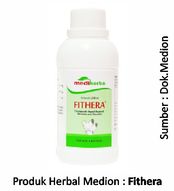
While chickens attacked by CRD give antibiotics from the fluoroquinolone, macrolide or Tetracycline groups, such as Doctril, Neo Meditril, Doxytin, Respiratrek, Trimezyn or injection with Gentamin. In addition to using antibiotics-Antibiotics mentioned above, prevention and treatment of cases of CRD and korisa can use Fithera which is a Medion herbal product.
The thing that needs to be considered in the treatment of CRD cases is to avoid the administration of Penicillin antibiotics because it will not be effective because the target of this antibiotic is a cell wall that is not owned by Mycoplasma gallisepticum the cause of CRD, so if treatment with antibiotics of this group becomes less effective.
In addition to treatment when cases occur, prevention efforts are very important considering the losses caused by these two diseases are quite large. The combination of proper biosecurity and vaccination is expected to provide protection to chickens. Currently, CRD vaccination has not been done for commercial poultry. As for korisa, farmers have currently applied a vaccination program in their maintenance.
Although the disease can be treated with antibiotics korisa but recurring events are still often encountered and require vaccination. The reason, because the target organ korisa are in the sinuses of the nose a little blood vessels so that if
there are bacteria that are not eradicated with antibiotics, they can still be eradicated with a vaccine where by vaccination antibodies will form in the chicken's body.
In addition, korisa attacks that appear in the future will be easier to cure if the chicken has been vaccinated before.
In the case of the coronavirus, the vaccine is inactivated (Medivac Coryza B, Medivac Coryza T, atau Medivac Coryza T Suspension), then the vaccine can be given at 3 weeks before the age of Korisa attack. As a general guideline, the korisa vaccination program that we recommend is:
- Broilers and males: Age 4 days : active nd vaccination + inactivated nd-korisa vaccination, or age 7-14 days : inactivated korisa vaccination
- Laying hens and breeders: Age 42-56 days and repeated age 98-105 days using inactivated korisa vaccination if the farm is very prone to cases of korisa attacks, then repeat vaccination can be done 5-6 weeks after the first vaccination.
CRD and korisa disease is a disease of the respiratory system in chickens, treatment is not the only way out to overcome this problem on the farm. The combination of biosecurity, vaccination and attention to management weak points that have not been appropriate in their implementation so far can help prevention efforts so that these cases do not recur every year. Greetings success always.