Premix additives have become an additional requirement for feed that farmers do in complementing the needs of nutrients in chicken feed both feed so manufacturers, concentrates, and self mixing.
Benefits Of Chicken Premix
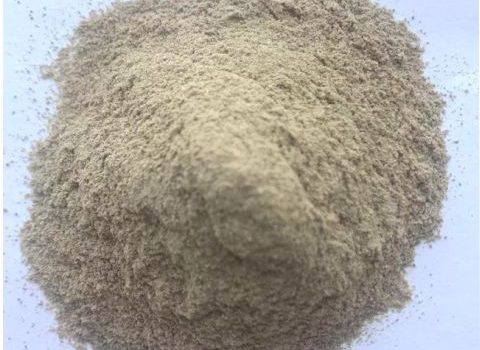
Premix is known in the world of animal husbandry as a feed supplement containing minerals, vitamins, amino acids or other additives used to improve the quality/content of nutrients in the feed.
This Premix usually consists of amino acid ingredients, sources of macro and micro vitamins, macro and micro minerals, and additives which is made in small quantities and must be evenly distributed in the feed or concentrate to be made. The description of the benefits of premix is as follows :
- Supplementing the content of micronutrients, especially vitamins, which are likely to be reduced due to poor feed handling and storage processes
- Improve the physical quality of feed, especially feeding feed additive
- Improve the availability of nutrients and absorption of nutrients in the feed
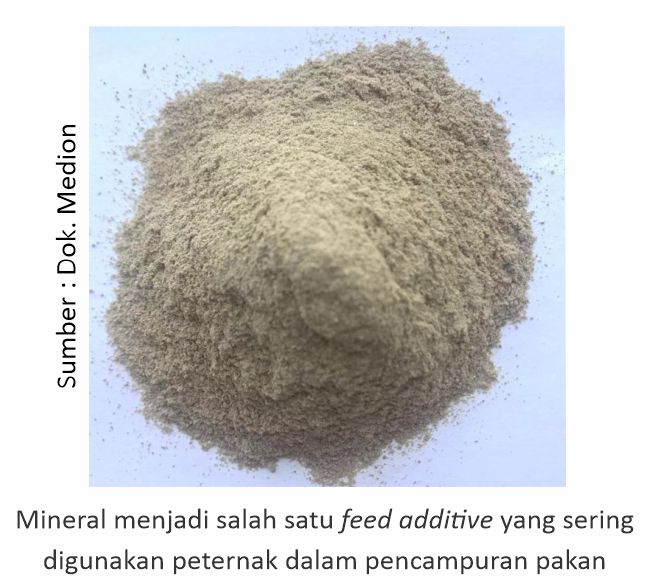
Referring to such a wide range of benefits, premix consists of 2 kinds of categories, namely:
Feed supplement (complementary feeding)
Feed supplement is a feed additive in the form of nutrients, especially micronutrients such as vitamins, minerals and amino acids. Its addition in feed formulations will increase the levels of nutrients in the feed mixture.
Additions feed supplement the priority is amino acids. There are 4 kinds of amino acids, the main portion is to cover the balance of amino acids in the feed mixture. The sequence is lysine, methionine, threonine and tryptophan. Methionine and lysine this is already a dead price that must be added by farmers in its formulation. Because these amino acids are the first and second additional nutrients that must be met. Examples feed supplement which can be mixed in the feed include Top Mix HC.
- Feed additive (food additive) is a non-nutritive feed additive. Awarding feed additive able to improve feed quality. Roles feed additive in the feed depending on the type of substance content additive- his. For example, probiotics, enzymes, toxin, etc. Feed additive with enzymes such as Betterzym which effectively improves the digestibility of nutrients, especially phosphorus (P). While feed additive by content toxin acts as a binder of toxins produced by fungi that grow like Freetox and Freetox G. Both are often added to the feed.
Chickens need micronutrients such as vitamins, minerals and amino acids, which in fact are available in premixes. For its preparation can use the manufacturer's premixes. Making chicken premix in feed mills, usually a variety of vitamins, minerals and other ingredients used in small amounts, first mixed before being put into a special mixing machine.
Chicken farmer layer, where some prefer to do self mixing. So that the addition of this premix is commonplace done by farmers self mixing. Why is that? This is because the nutritional needs of chickens are unlikely to be met only by relying on the main feed raw materials (corn, bran, soybean meal, MBM, PMM, DCP, grit, etc.). So as to feed self mixing mandatory the addition of premix, while the feed concentrate and feed so the addition of premix is only for safety margin or meet the nutrients lost during handling or storage.
Unlike the breeder broiler usually prefer to buy finished feed from the manufacturer. However breeders broiler can also add premix that can be directly mixed into the finished feed.
Calculation and mixing of chicken premixes
How to calculate premix to fit the needs of chickens is to adjust the standard needs of chickens per maintenance period. This standard can follow the reference National Research Council (NRC), Indonesian national standard (SNI) or Manual Guide each strain.
Composition of chicken premix used by each farmer self mixing will be different. Usually the need for different amino acids is adjusted to the type or age of the chicken.
Additions feed supplement, feed additive and premix in relatively small quantities in the process mixing it should also be homogeneous. Factors affecting the process mixing among them are the size of the material, the specific gravity of the material, the density/density of the material, the way and time of mixing. Why? Because homogeneity is very influential on whether or not the nutritional needs of each chicken are met.
Results mixing with low homogeneity will have an impact on livestock productivity. For example, the food self mixing with good homogeneity will produce kerabang color, thickness and strength of the kerabang will be the same each tail.
Thus the result of self mixing atau pakan konsentrat perlu dilakukan uji homogenitas sehingga dapat diketahui pakan tersebut sudah homogen atau belum. Uji kadar garam dapat diuji sebagai salah satu indikatornya. Sudah banyak laporan bahwa pencampuran yang baik harus mempunyai nilai koefisien variasi <10%, bahkan pencampuran modern mampu mencapai nilai homogenitas sebesar <5%. Kadar garam ini umum digunakan sebagai indikator karena penambahan atau penggunaannya dalam pakan yang relatif sedikit dan analisis kandungannya mudah dilakukan.
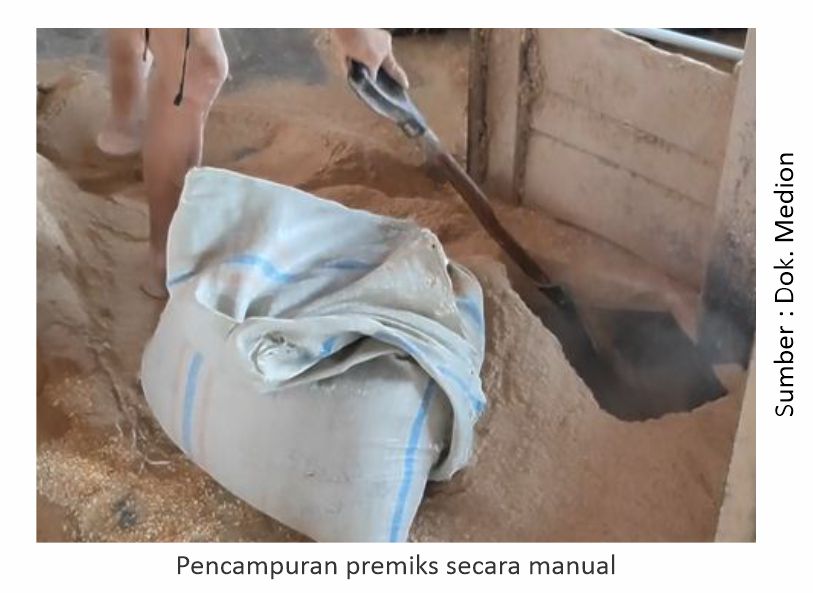
Step mixing premix and other feed ingredients manually without mixer :
- Weigh a small amount of premix or manufacturer's premix according to needs and dosage
- Also weigh other ingredients that will be mixed in the manufacture of small amounts of concentrate
- Prepare a flat base (plastic or tarpaulin) to mix the ingredients in sequence.
- The material with the most amount is spread first on the floor, then coated with a smaller amount of material.
- Do sequentially all the feed ingredients until all the ingredients form a layer, in order from the most to the least amount.
- After forming a layer of raw materials do stirring evenly with the help of a shovel at least 2 times inverting until the color of the material appears evenly.
- The mixture is ready for use.
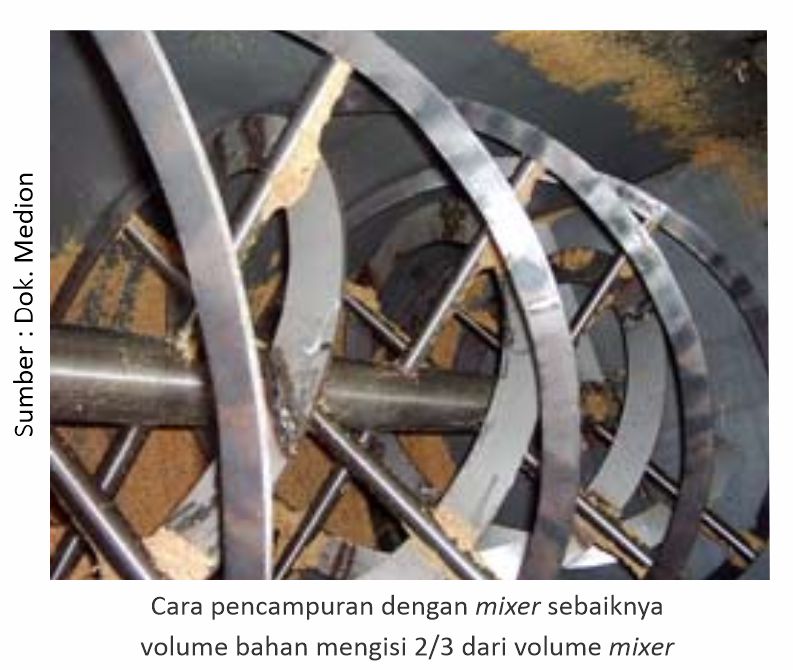
In addition, it can also be mixing by using the machine mixer. Tools mixer what can be used is mixer vertical type and horizontal type. Mixing techniques premix and other feed ingredients using the machine mixer as follows :
- Lump raw materials are crushed in advance with hammer mill.
- Weigh the raw materials according to the formula.
- Make a mixture of evenly small amounts of raw materials (premix).
- Next, a mixture of premix and other small ingredients and ingredients that have been crushed into mixer.
- Let the material in mixer stirring for 15 to 20 minutes depending on the type mixer- his.
- After mixing well (homogeneous), open the dispensing cap from mixer, perform rafting according to the capacity of the sack.
To facilitate breeders self mixing adjusting the use of chicken premixes for feed, it is worth checking the quality of the feed mixture in the laboratory. This examination can be done in the Medion Laboratory (MediLab).
In addition to feed quality inspection, MediLab also provides feed formulation services. For farmers who want to formulate their feed composition, complete data such as livestock data (chicken type, age, chicken strain) and feed raw material data (any type, price, nutritional content if any) must be completed first. Greetings.