Mr. Abdullah
Email : abdullah123@gmail.com
I raise laying hens 3 weeks old, in the last 3 days they showed symptoms of sudden irregular movements, jumping, and shaking their heads. When separated, I found that the chicken did not eat, the feces were thick white, and sometimes mixed with orange papaya, based on these clinical symptoms, what is the disease that infected my chicken and how is the appropriate treatment? Please explain.
Answer:
Dear. Mr. Abdul, thank you for the question. Based on these clinical symptoms, there are several diseases that may affect these chickens, including:
- GumboroInfectious bursal disease)
It is caused by a virus (Birnavirus) which usually attacks chickens aged 0-8 weeks (average age 3-6 weeks) in laying hens, while in broilers can attack all ages. The target or target organs of this virus are bursa fabricius which is the primary immune organ in young chickens. Therefore, chickens infected with this virus will have a weak immune system so easily infected with other diseases. Clinical symptoms of gumboro are chickens tend to peck at the cloaca, chickens look shaky, whitish diarrhea, dirty cloaca area, standing feathers, no appetite and dehydration. If the carcass surgery can be found inflammation / red spots on the Bursa fabricius, bleeding in the thigh/chest muscles, red spots on the border of the proventriculus (gastric glands) and ventricles and swelling of the kidneys.
- Newcastle Disease (ND)
It is caused by a virus (Paramyxovirus) with symptoms that appear lost appetite, green stools and sometimes accompanied by white clots, trembling of the whole body, symptoms of nerve disorders such as twisted neck/ torticollis and death are quite high. If performed surgical carcass found inflammation at the top of the proventriculus nodules (gastric glands), heart fat and inflammation peyer patches intestines.
- Avian Encephalomyelitis (Yes)
The disease is caused by a virus (Picornavirus) with clinical symptoms that appear up to 3-4 weeks of age in chickens. Symptoms that appear like chickens show symptoms of tremors / shaking from head to neck muscles, paralysis, torticollis/twisted neck. If the carcass surgery can be found changes such as lesions / wounds on the brain shell, the brain becomes flabby and pale yellow.
- Coccidiosis (defecation disease)
The disease is caused by protozoa, namely Eimeria sp. These Protozoa attack the digestive tract of chickens such as the small intestine, colon, and cecum. The mucosa or surface of the digestive tract will be damaged by Eimeria sp. thus causing inflammation to bleeding (hemorrhage). When a surgical examination of the carcass will usually be found orange papaya liquid which is characteristic of infection due to this protozoan. Color orange papaya is caused by the mixing of blood with food ingesta as well as mucus or mucus.
Of the several possible causes above, it is necessary to have more complete additional information either from Anamnesis or data collection related to the history or life history of chickens, the incidence rate in the farm area and other clinical symptoms that arise. It should also be supported by a surgical examination of the carcass for the direction of the appropriate diagnosis.
Treatment that can be done is fast and appropriate treatment of the cause. Here are the treatments that can be done :
- To treat coccidiosis can be assigned Therapy for 5-7 days in a row. Can also use herbal products Fithera given for 7 consecutive days.
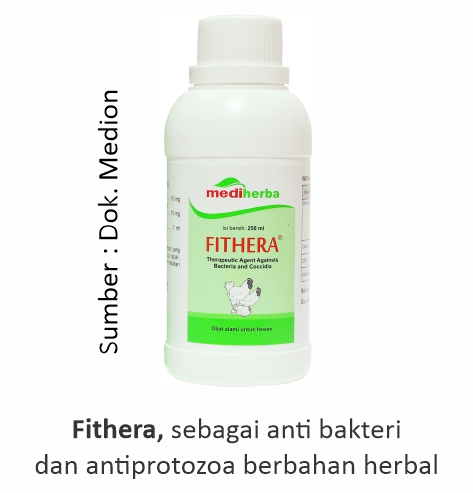
- Diseases such as Gumboro, ND, AE cannot be treated because they are caused by viruses. Supportive therapy can be done by giving herbal supplements Imustim to increase the immunity of chickens or vitamins such as Vita Stress or Fortevit to increase the stamina of the chicken. But keep in mind in cases of coccidiosis to give vitamins, especially those containing vitamin B1 is given after treatment is complete. If it leads to Gumboro disease it can be given as well Gumbonal as an antiseptic of the urinary tract.
- If it leads to ND disease, emergency revaccination of healthy chickens can also be carried out. Use Medivac ND Clone 45 during emergency revaccination to stimulate the rapid formation of ND antibodies. The goal is that healthy chickens can immediately form antibodies.
- Tightening biosecurity including maintenance management and eradication of vectors (disease carriers, e.g. franky Beetle as Gumboro disease vector). Spray well Antisep or Neo Antisep routinely every day when an outbreak occurs in cages filled with chickens. In addition, clean the stool regularly.