Consultation questions from:
Mr Aldi-Padang
I am a chicken farmer layer, I would like to ask you the following :
- My layer chicken has entered the age of 18 weeks, but no one has laid eggs, what is the cause?
- In order for the weight of chickens to be uniform what to do?
- Are there any Medion products that can help to lay eggs quickly?
Answer :
Thank you, Aldi, for the question. Here we will discuss the answer as follows:
- There are several factors that can cause chickens to produce late, including:
- Quality pullet: In cases caused by quality pullet which is less well characterized by the characteristics of having body weight and uniformity pullet the low. Uniformity pullet this low can result in non-uniformity of the beginning of production and non-uniformity of the size of the eggs produced. Another characteristic is the late maturity of the genitals, which causes the start of production to be late. Presence pullet which has a narrow pubic bone distance is also a distinctive feature that results in the chicken produces smaller eggs.
- Substandard body weightTip: usually chickens with body weight (BB) less than this standard will cause the beginning of egg production backwards. For example, a chicken having a BB below the standard of 10-15% will experience a deterioration in egg production for 4-5 weeks.
- Lack of lighting or insufficient light intensity: Lighting factor during the period pullet closely related to the achievement of weight, egg size and maturity of the reproductive tract. Chickens that experience a lack of light provision will generally experience late sexual maturity. Likewise, excess light intensity will also lead to sexual maturity too early.
2. Factors to consider in order to achieve uniformity include:
- Quality DOC: Day old chicks (DOC) with good quality largely determines the growth of chickens in the next period. Chicken uniformity will be achieved if the DOC is also uniform. DOC comes from various breeder it usually has a different growth. Therefore, it is better to keep DOC in 1 cage of the same breed.
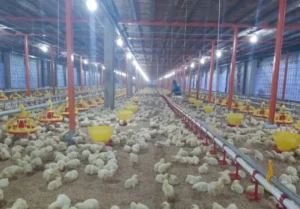
- Cage density: A cage that is too dense will increase competition in getting rations, drinking water and oxygen so that the growth becomes not uniform. Density of laying hens during the period grower preferably 10 heads/m2.
- Place of ration and drinking waterAbstract : the number and distribution of rations and drinking water should be in accordance with the chicken population so that the supply of rations and drinking water in accordance with the needs. In addition, the amount of feeding and the quality of rations and drinking water must be in accordance with the needs of chickens.
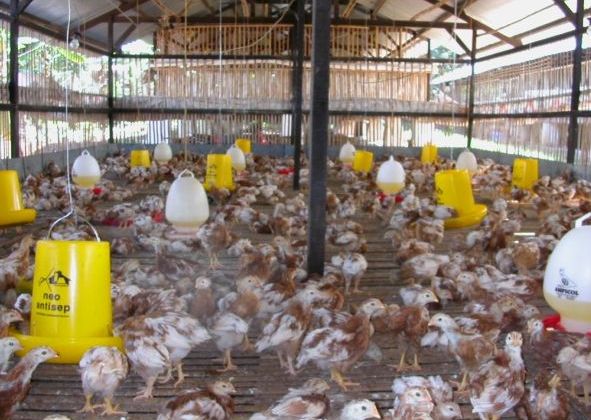
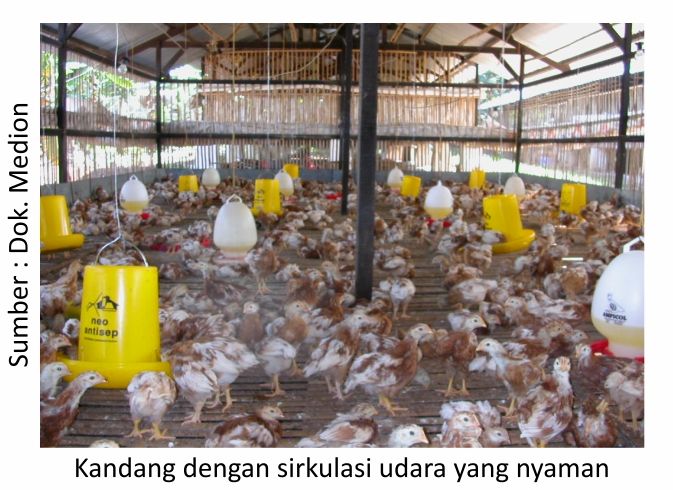
- Comfortable cage: Chickens will grow and produce optimally if they are kept in comfortable cages. This comfort can be shown from the temperature (25-28oC) and air humidity (70%) of the enclosure. In addition, air circulation must be observed so that it is able to bring out harmful gases (ammonia and CO2), and insert O2 optimally. Curtain opening and closing management needs to be applied appropriately. Additions fan can also be done to help air circulation in cages with low ngin flow.
- The right health Program: The disease can lead to impaired growth and uniformity. Therefore, health programs must be implemented appropriately. Vaccination is carried out precisely both the schedule, the type of vaccine and the application of the vaccine. Likewise, treatment, should be done right indications and dosage. Biosecurity needs to be applied strictly so that the challenges of disease seeds can be minimized.
3. So that chickens can lay eggs optimally can be given multivitamins, minerals and amino acids contained in premix Medion like Mix Plus LLK3B for breeders layer who uses concentrated feed, Mix Plus LLM3A for breeders layer who uses feed self mixing, and Top Mix.
Here is one product info premix Medion Mix Plus LLM3A. Mix Plus LLM3A is a preparation premix which contains multivitamins, minerals, amino acids, antioxidants, and egg promoter which is important for health, overcoming free radicals, growth, and optimal egg production in poultry.
The content of vitamins A, E and C and selenium serve as good antioxidants for immune defense against pollution and infections, especially during stress. B-complex vitamins are essential for maintaining carbohydrate, protein and fat metabolism in producing energy and for optimal performance. The supply of vitamin D is important for the formation of the Shell and the quality of the eggs.
Minerals play an important role in the body's biochemical system to work optimally. Minerals such as copper and zinc has immunological function. Zinc it is necessary primarily for the growth and development of bones, the formation and maintenance of epithelial tissue, and for increased egg production.
Amino acids are necessary for the growth and production of eggs, especially lysine and methionine. Where its deficiency can lead to stunted growth, decreased egg production and increased mortality. While the antioxidant content plays a role to overcome free radicals. With the completeness and balance of the content in Mix Plus LLM3A very useful to increase egg production, improve the quality of egg shells, and reduce Feed Conversion Ratio (FCR).