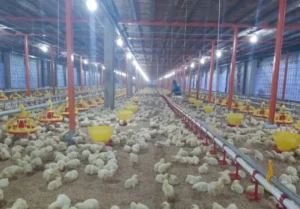
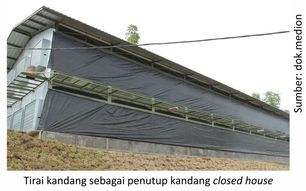
One thing that should be considered by farmers is the management brooding period, because it has a big effect on the performance of chickens in the next maintenance period. Moreover, in recent years where the weather is uncertain in Indonesia, the maintenance of chickens in the dry season and the rainy season is quite draining energy for farmers. To overcome this, the idea arose to create a closed chicken coop system commonly known as Closed House. This article will describe the discussion about applying the cage system closed house in ensuring the success of future brooding period,(especially the chicken )broiler).
Importance Of Time Brooding
Time brooding period, it is part of the phase starterthe beginning of the growth and development of chickens. At this time the chicken will experience very rapid growth and includes all the organs that play a role in the life and productivity of chickens. Whether or not the performance of chickens in the future is often determined from how maintenance in the future brooding period,.
The period starts from the moment DOC arrives in the cage, until the chicks reach a certain age and weight and do not need heating anymore. Old standards of maintenance in the future brooding period, is in the range of 10-14 days. To make it easier to understand the importance of time brooding period, then it is necessary to know the physiological changes that the chicks undergo during these 2 weeks. Some things that experience rapid development at this age are :
- Passive immunity (mother-inherited immunity/maternal antibodies) comes from the absorption of the yolk sac during the incubation period and a few days after hatching. This passive immunity is effective enough to prevent infection in chicks, but it has a short period of time and the level of Protectivity will continue to decrease.Then there comes the transition to active immunity. The active immunity that develops in the Chick's body is related to the optimal development of the lymphoid organs / immune organs of the chicken such as the spleen, thymus, bursa Fabricius, peyer’s patches and others
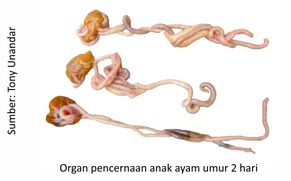
- Digestive systemdigestion organs are also developing rapidly at this time, for example, the stomach, cache, intestines, liver, pancreas, and so on. The development of a good digestive system is indicated by the size of the villi that are long, large, numerous and uniform, the size of these villi will be related to the efficiency of the ration brooding period, as well as the next maintenance phase as seen in the image below. The digestive tract is best developed in chickens that are immediately given a ration when chick in (above). The middle one is the one that is given 8 hours after chick in the most common is the one that has not been given rations at all (Unandar, 2009).
- The human body in time brooding period, this, there is an increase in mass, thickness, length in the bones. The formation of an optimal body skeleton will be able to support the development of other organs. It also minimizes the occurrence of chicken rejects due to fractures and paralysis.
- Thermoregulation (body temperature regulation)chickens are homeothermic or chicken body temperature is relatively stable in a certain range of 40-41°C. But at the age of 0-5 days, chickens still cannot regulate their own body temperature. Chickens can only regulate their body temperature optimally at 2 weeks of age.
In the first week brooding period,, the weight of the chicken should already be 4.5-5 times the weight when DOC. Suppose the initial DOC Weight is 40 g, then the weight in the first week should already be 180 g. In addition to achieving body weight, parameters Feed Conversion Ratio (FCR), ration consumption, and mortality also need to be considered.
System Closed House in order to optimize the time Brooding
Tropical climates such as in Indonesia, where fluctuating temperatures coupled with high humidity can cause stress on DOC and inhibit the growth rate. The time limit for the rainy season and dry season as it has been understood is no longer valid. It could be that the rainy season this time is shorter due to the rotation of the wind direction, so it can be ascertained that the dry season is longer.
Closed cage system or cage closed house able to control temperature and humidity to achieve comfortable conditions for chickens with a minimum ventilation system and closed curtains. This closed cage system is automatically controlled by an electronic system, which regulates from giving chicken rations, air regulation, cage temperature regulation, to setting the relative humidity level in the cage. System closed house provide comfortable conditions for their livestock by removing heat from the cage generated from the chicken's body, lowering the temperature of the incoming air (if necessary), regulating the humidity accordingly, and removing harmful gases such as carbon dioxide (CO2) and ammonia (NH3). Cage closed house designed with an automatic system mechanism and integrated in control panel will be beneficial in lightening the load and increasing the productivity of cage operators.
Preparation Chick In
Before the start of the period brooding period,, of course, it is necessary to prepare a comfortable and clean cage before the implementation chick in. Cleaning the cage should be done thoroughly starting from spending litter and feces, washing cages and equipment to liming and disinfection. The rest period of the cage cannot be shortened by at least 2 weeks after the cage is clean.
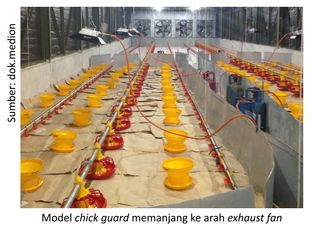
After cleaning and resting the cage is done, the next stage is the creation of the area brooder it begins with the spread of litter or husk as needed. Recommended thickness litter initial about 7.5-10 cm (Cobb Brooding Guide, 2016) and spread evenly in the area chick guard. In the first 1 Week of preservation in time brooding period,, there is no harm in using new newsprint/chick paper above litter. Installation brooder it can be modified so as to form brooder elongated left and right, the middle section for operational and positioning roads brooder must be precisely mounted in the direction that leads to exhaust fan back. And then there was the (chick guard) complete with the installation of such heaters Medion gas (IGM)inductor, and the lamp should be done precisely in terms of material, shape as well as the amount adapted to the capacity and density of chicks.
Ration and drinking water management
Basically the use of rations in the cage closed house that is, automatically. Automatic ration and drinking water equipment can save space so as to increase the density (capable of reaching 30 kg/m2), so that the number of chicken harvests per year can increase. At the beginning of time brooding period,, this automatic ration holder should be placed on the floor and combined with a manual ration holder for easy access for chicks. The ration can also be spread evenly about 50-65 g on 50% of the area brooder covered with newsprint/chick paper so that the DOC can more quickly recognize the ration.
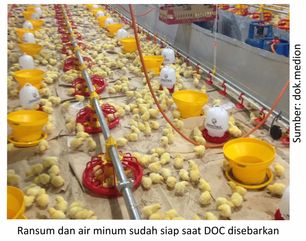
Rations and drinking water should be given as soon as the DOC arrives because it is beneficial in accelerating the absorption of the remaining yolk which is a temporary source of nutrition and a source of immunity (maternal antibodies) of chicks. In addition, the provision of rations at this time will be able to stimulate the development of the digestive organs through increased digestive capacity and intestinal absorption.
To replace the energy lost during the trip, give 2-5% sugar water and multivitamins (Vita Chick). Prepare before chicks are stocked in chick guard. As with the ration, drinking water is also important to note in the future brooding period,. Availability of drinking water during the period brooding period, until then, it must be fulfilled both in terms of quantity and quality.
Lighting Management
Optimal lighting will encourage chicks to always consume rations and drinking water, and help in the secretion of the hormone thyroxine to speed up the metabolism of the Chick's body. Lighting needs in the future brooding period, on the cage closed house is continuously for the first 48-72 hours to help the chicks find rations and drinking water, then gradually reduced by 2 hours each week as the age of the chicks increases. Use lamps with an intensity of 20-60 lux (Cobb Management Guide, 2016).
Temperature and humidity regulation
As we know, under the age of 14 days the body temperature regulation system (thermoregulator) of chicks is not yet optimally developed. Therefore, in order for the chicks to grow well in a critical period, much depends on the provision of a comfortable temperature from artificial heaters. Temperature control brooding period, it should be done periodically and as often as possible. The comfort of the chicks can also be described by activity and dispersal in the cage. The ideal temperature will make the chicks spread evenly and move normally. Therefore, the role brooder very influential in controlling the temperature and humidity of the cage to keep the chicken in the comfort zone (Table 1).
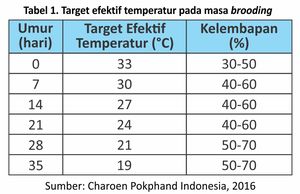
To measure fluaktuasi temperature in the cage can see control panel the enclosure system closed house. Temperature settings can be changed as needed. Temperature and humidity sensors are placed inside and outside the enclosure. From that position will get the temperature and humidity figures listed on the screen control panel.
Minimum ventilation and air quality
The availability of clean air is very important because one of the components of air is oxygen gas, which plays a major role in the metabolic process of chicks. If there is a lack of oxygen in the cage, then the health of the chicks will suffer. Especially if in the cage a lot of harmful gases such as ammonia and CO2. For example, ammonia, excess ammonia concentration in the cage can cause damage to the cilia (vibrating feathers) on the nose of the chicken.
In the arrangement of ventilation and air circulation in the cage closed house, use of the fan on time brooding period, not very often or can be called the use of minimum ventilation. Minimum ventilation is the minimum air needed to replace the air in the cage so that it remains optimal for the chicks. Minimum ventilation is achieved by regulating the number of fans running and their duration. For example, cages closed house has a population of broiler 10,000 1-week-old tails with a 2,000 m capacity fan3/ hour, the calculation is as follows:
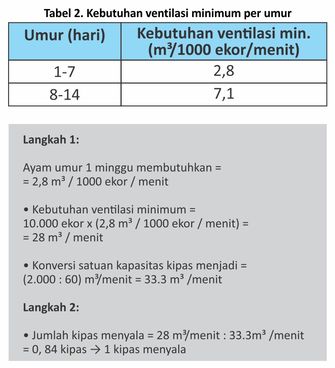
Then the fan management that is set is in the first 7 days the fan that turns on is only 1. Start day 7-14 fan no. 2 and 3 are activated. Age > 14 days, gradually all fans are turned on until they turn on all. In addition to the fan arrangement, sufficient clean air can be created by adjusting the density of the enclosure. A cage that is too dense can cause the temperature inside chick guard it is hotter, the consumption of drinking water increases and the stool becomes wet so that ammonia gas increases.
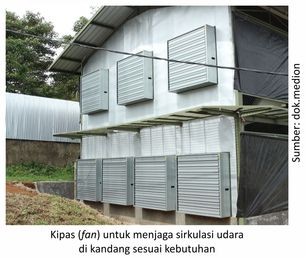
The speed of the air flow is also affected by the cage curtain. Curtain cage on the cage closed house cover the entire side of the cage so that the chicken is protected and to maintain the air temperature in the cage which is of course very necessary when the brooding period. This curtain will prevent direct exposure to the wind on the Chick's body.
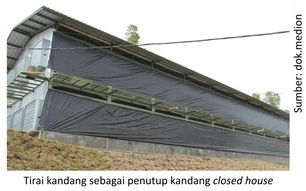
Outside of the management component, there are several things that should be considered as well, namely:
1. Awake health management
To keep the chicks in good health, do:
- Vaccination Program according to regional conditionthe purpose of vaccination is to bully the formation of immunity/antibodies from the body to prevent infection. Vaccines commonly given to broilers are nd, IB, Gumboro, and AI vaccines.
- Drug Administration programin addition to vaccination, farmers can also do cleaning program (Prevention), which provides broad-spectrum antibiotics to prevent disease infection before disease seeds enter the chicken's body. Diseases that often appear on time brooding period, among others pullorum, colibacillosis, and CRD. Neo Meditril can be given at the age of 1-3 days which serves to prevent infection before entering the chicken's body.
- Maintaining the immune system ayampemberi giving vitamins, especially those containing vitamins C and E will help increase the body's resistance chicks. Provide supportive therapy such as Vita Stress and Imustim to reduce stress and improve the immune system, especially before and after vaccination to suppress the reaction post vaccination or after treatment to speed recovery. Can also be given Neobro or Strong N Fit to help accelerate the growth of chickens.
2. Strictly biosecurity
Biosecurity activities are not only spraying disinfectants, but include controlling people or wild animals into the cage environment. It should be noted that in preventing the spread of disease seeds in the cage system closed house is the restriction of people and vehicles entering the enclosure area. People who will enter the area of the cage, should not previously have contact with other birds whose hygiene status is lower, a minimum of two days before the visit. Try to regulate the traffic of people, equipment, goods or guest vehicles so as not to spread disease seeds into the farm. This traffic arrangement means that we must be able to regulate when DOC, rations, sapronak (drugs, vaccines, livestock equipment), and litter/ husks go inside farm. Apply the “3 zones " system in the enclosure area, namely the dirty zone, transition zone, and clean zone, especially on people or equipment and vehicles that go in and out of the farm environment.
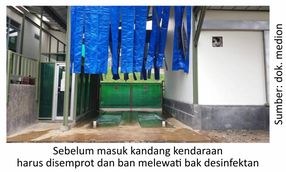
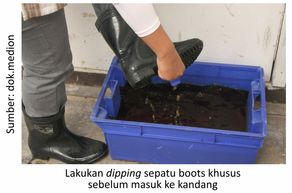
The last biosecurity activity is sanitation and disinfection. The car wash (Sporades) and fill cage (Medisep or Neo Antisep) especially during an outbreak of disease. Before employees / guests enter the cage wash hands using soap, Take a shower, use special clothes for work, use footwear (sandals/shoes bootsto get to the top of the stairs, to get to the footpath, to get to the footpath (dipping) in disinfectants by using Antisep or Medisep. This disinfection will minimize the number of disease seedlings in the home environment.
3. Check the condition of livestock
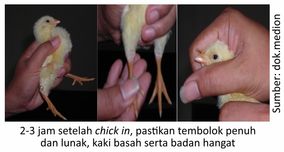
Observe the spread and behavior of the DOC in chick guard. After DOC ascertained in comfortable conditions or at 2-3 hours after chick in, do a cache check (crop fill). Consumption of rations is said to be good when at least 75% of the sample Doc cemboloknya palpable chewy and soft which indicates that the chicken has consumed enough rations and drinking water. If necessary, the farmer can conduct a re-examination 24 hours after the introduction of the ration with an indicator of 95-100%.
Also perform temperature checks litter by looking at the condition of the feet DOC. If litter too hot, DOC's feet will be reddish and look cracked especially in the nails and soles of the feet. DOC who experience this will usually gather away from brooder. On the contrary, if litter too cold, DOC's feet will feel cold (compared to our body temperature). Consumption of rations from cold or hot DOC will also decrease because DOC tends to be silent and curled up. Make sure that the chick looks lively and active, the Chick's feet are wet and the body feels warm.
In addition to checking the chicks directly, farmers can also see the data recording (production notes). By looking at recording, farmers can know the results of work and help analyze if problems occur.
Investment use closed house in the broiler business it seems expensive at the beginning of the construction of cages and equipment purchases, but when it has been operating with a population capacity of tens of thousands or even millions of chickens, then the fall in production costs become cheaper and the quality of chicken is superior. Good luck cage closed house. Greetings.