Aris Rahman
Email: kakangaries92@gmail.com
I am a broiler breeder. During the dry season there are usually many deaths due to heat stress, so that I give electrolytes from the age of 25 days. The result was decreased mortality but decreased body weight. Do electrolytes affect chicken weight? In addition to electrolyte administration, are there other handling measures?
Answer:
Dear. Mr. Aris, thank you for the question. Electrolyte administration will not affect the weight loss of chicken. This is likely because in hot conditions, chickens will tend to drink a lot and reduce the consumption of rations that can affect body weight.
Electrolytes are needed during hot weather to maintain the stability of the pH in the blood that is disturbed due to decreased CO levels2 inside the body of the chicken when performing panting (megap-megap). In addition, electrolytes can also help prevent dehydration so that the consumption of chicken rations and drinking water will return to normal.
In addition to providing electrolytes, to help overcome heat stress namely the provision of vitamin C. Vitamin C is known as an antistress and is often given to poultry. Administration of vitamin C in stressful conditions or when environmental stress is high, able to maintain a normal concentration of vitamin C in the blood plasma, because when stressed chickens do not have the ability to synthesize vitamin C in sufficient quantities. Multivitamins from Medion that can be used in dealing with stress in chickens are Vita Stress or Kumavit because they are both complete, they contain vitamin C as well as electrolytes.
In addition to the administration of electrolytes and vitamin C, other measures that can be taken to create a comfortable atmosphere for chickens include:
- Density setting. Do chicken thinning. The goal is to reduce the density so that the chicken feels more comfortable, not too hot, and can freely radiate heat from the body to the environment.
- Management Open and close the curtains. Smooth ventilation system, very effective for lowering the temperature of the cage. Open the cage curtain when the temperature increases and adjusted to the direction of the wind flow so that the circulation of hot air becomes quickly replaced with cool air.
- Artificial rain system.An artificial rain system is carried out outside the cage to form water droplets similar to rain. Its function is to wet the roof so that the chickens still feel cool even though the weather is hot, the growth of chickens is not disturbed, and prevents death.
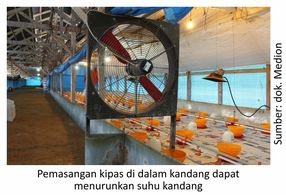
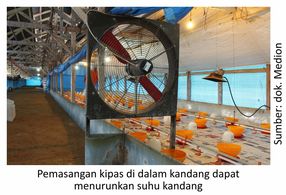
- Addition of a fan. Cages that are too dense or livestock areas that have less wind speed, it is recommended to add a fan. The addition of a fan serves to accelerate air circulation from the cage to the outside of the cage so that the temperature in the cage will decrease. Fans can be installed in the middle, end or side of the cage depending on the type of cage used. The speed at which the fan expels air also needs to be adjusted. For adult chickens, it is recommended that no more than 2.5 m/sec. while for brooding period,, not more than 0.3-0.5 m/sec. The fan is installed at a height of at least 20-30 cm from the floor.
5. Regulation of drinking water consumption and ration when the temperature is high chicken drinking water consumption increases dramatically, even if the ambient temperature reaches 32°C drinking water consumption can increase by 50%. Provide drinking water with good quality ad libitum, as well as the ration. When hot conditions, reduce the amount of ration given. Then when the temperature starts to decrease, give rations with larger portions / amounts. In essence, the total amount of the given ration should correspond to the standard, but the time of administration is changed.
6. Improvements biosecurityIt is necessary to pay attention to the cleaning and disinfection schedule again, especially in drinking utensils. When the cage contains chickens, safe disinfectants, such as Medisep or Neo Antisep. Also disinfect drinking water using Desinsep.