How to prevent the development of franky beetles and mosquitoes in broiler cages?
Mr. Darian from Sukabumi-West Java
I am a chicken farmer broiler in the Sukabumi region. In the current rainy season, I always find a lot of black fleas scattered between the walls and mosquitoes in the cage area. Usually I just clean the black lice with a broom. How to prevent black fleas and mosquitoes from spreading in the cage? Thank you.
Answer:
Dear. Mr. Darian, thank you for the question. The possibility of black lice that the father means black beetle or commonly called lice franky. Actually lice franky this is not some kind of Flea but a beetle. Maybe because of its small and black appearance, many of us usually call it lice franky.
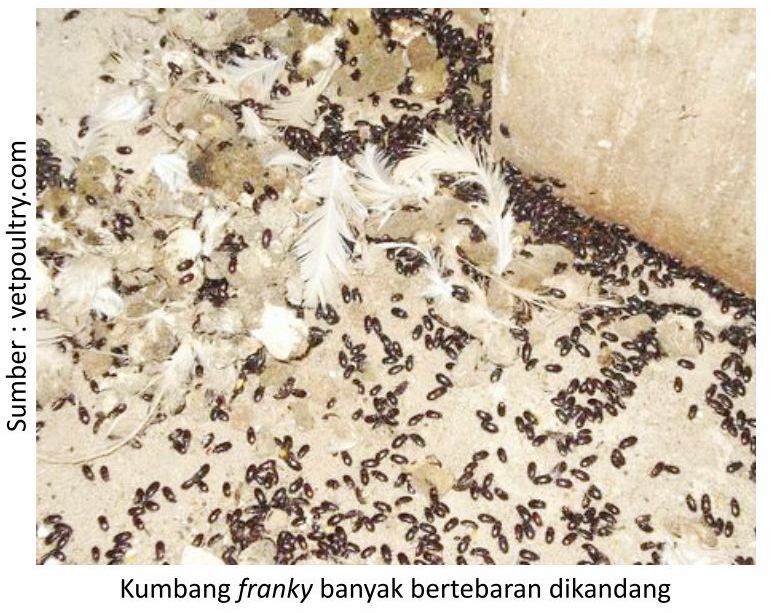
These beetles tend to like damp places and breed as in litter the cage or the rest of the feed is damp and wet. That is why in the rainy season will be found a lot of these beetles. Of course, this beetle will be in direct contact with chicken feces that have been contaminated with viruses and bacteria that cause diseases such as Gumboro virus, bacteria E. Coli infectionor Salmonella. It is at risk beetles franky acts as a mechanical vector or carrier vector of pathogenic disease agents spread to other chickens or cages.
It's the same with beetles franky, mosquitoes also act as vectors (carriers) that also need to be watched out for. Mosquitoes can transmit protozoa that cause avian malaria and Leucocytozoonosis. Both insects act as vectors and spread disease seeds to healthy chickens through bites. Standing water is an ideal medium for breeding mosquitoes and other insects. So do not be surprised if during the transition season or the rainy season, attacks leucocytozoonosis and avian malaria often appears.
Then, what actions should we take to prevent it? Here are the actions that can be applied:
- Perform stool cleansing at least once a week. Strive to clean feces more often during the rainy season so that no wet or damp feces accumulate in litter cage. To prevent the presence of mosquitoes, open puddles can be prevented by closing water reservoirs, buckets and so on
- Apply insecticide spraying (fogging) in the area around the cage. Pay attention to the dosage of Use and safety because insecticides are toxic to chickens and humans. Choosing the right insecticide according to the target insect is a safe and effective step in eradicating insects on farms. Examples Delatrin which is effective for suppressing the beetle population franky. Delatrin can be applied , in a closed empty cage and left for 3 hours. Please note the method ,, when spraying is done carelessly, then not all beetles or ticks die and over time they will become resistant to the insecticide. Therefore, it is recommended , done in the evening (before Maghrib or at 18: 00 PM) because at that time the beetle franky began to appear in droves and concentrated on certain places. Larvatox it can also be given to improve the absorption of water in the feces so that the feces are drier and do not trigger the arrival of beetles franky.
- To suppress mosquito vectors, avoid bushes or flooded places. Do weed cutting, burial of used items/cans and gutter cleaning. Drinking water should be changed regularly every day so as not to become a breeding ground for mosquitoes.
- Create a comfortable environment for the chickens, do not overcrowd the coop, ensure adequate ventilation, and implement a maintenance system as much as possible all in all out. The use of fans in chicken coops can also help suppress insect populations.
- Give multivitamins such as Fortevit or Vita Stress to increase stamina and increase the body's resistance to disease.
- If litter already very damp, when it is about to be added litter It is best to sprinkle lime on it first so that it dries quickly, then stack it with litter the new one.
- Clean the sidelines or crevices of the cage that may be hiding places for beetles franky. Clean and then spray with insecticide.
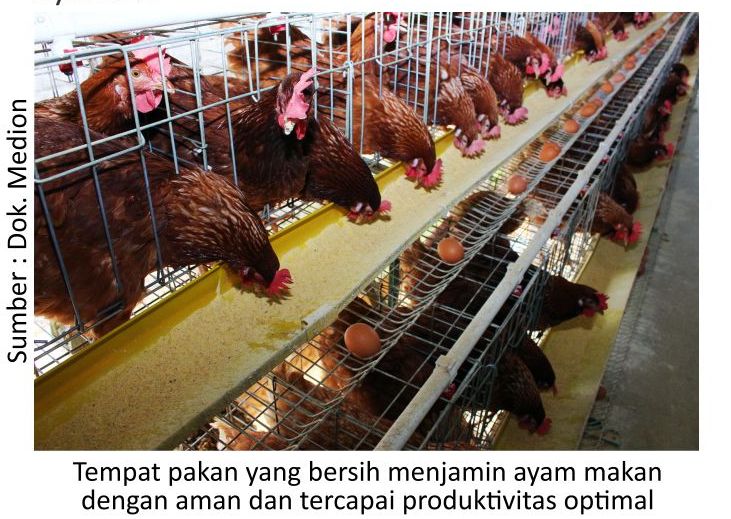
- Perform sanitation of the cage (cleaned, washed and sprayed with Antisep or Formades. Clean the feed place, drinking place and other equipment (Medisep) followed by spraying disinfectant to prevent the arrival of beetles or mosquitoes.
Perform a parasite test to detect the possible presence of protozoan parasites that cause malaria or leucocytozoonosis it is in the blood of birds. Testing can be done at Medion Laboratory (MediLab). MediLab is ready to provide laboratory testing and technical consulting services for livestock health. MediLab supports efficient and effective maintenance programs.