Mr. Sofil Mubarok – by e-mail
My chicken got snot / coryza, already given an antibiotic injection Vet Strep and Injekvit B-plex but not yet cured. Cases have been running for about 7 days with deaths reaching 70. How was the handling of the case?
Answer:
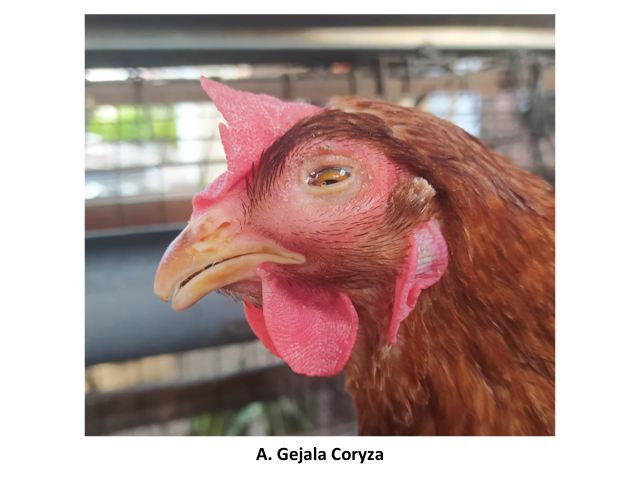
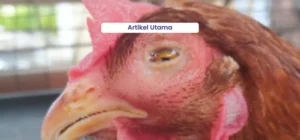
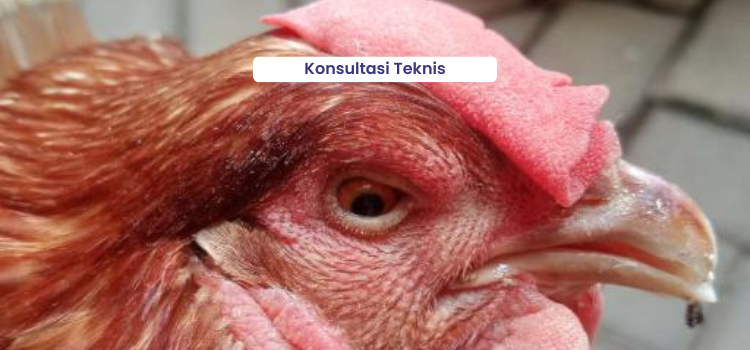
Infectious Coryza (Snot), is a respiratory disease caused by bacteria Avibacterium paragallinarum. A characteristic symptom of this disease is the presence of a watery yellow discharge, which gradually turns into a thick, fishy-smelling exudate or mucus. The presence of this exudate causes the chicken to sneeze, have difficulty breathing and snore. In chronic cases, swelling of the infraorbital sinus area (under the eyes) is found with cheese-like masses in it, watery eyes, and conjunctivitis of the eyelids. When dissected, inflammation and accumulation of fishy-smelling mucus in the sinuses of the nose, larynx and trachea are found.
Prevention of coryza disease include the following:
1. Vaccination
Vaccination will stimulate the chicken's immunity to suppress infection. Vaccination does not guarantee 100% protection from disease challenges. But with vaccination, if chickens are affected by coryza, the severity can be suppressed and cured faster. Currently Medion has several choices of coryza vaccine products that can be tailored to your needs. For example, a vaccine Medivac Coryza B, Medivac Coryza T, Medivac Coryza T Suspension, Medivac Coryza T Chito, Medivac Coryza Q, Medivac Coryza Q Suspension, and Medivac Coryza Q Chito. In broiler chickens, the vaccination program in vulnerable areas can be given at least 1x at the age of 7-14 days. Whereas in the layer, the vaccination program can be scheduled at least 2 times before the production age, namely at the age of 6-8 weeks and 15-16 weeks.
2. Implementation of optimal management
Management can be one of the factors triggering the emergence of the coryza case. For example, the lack of optimal air circulation in the cage, so that the necessary settings open and close the curtains, the addition of a fan in the cage open house, wind speed control, temperature and humidity in the cage closed house as well as ammonia control reduces irritation of the respiratory tract by keeping the stool dry/regular stool cleaning is carried out. Herbs such as Ammotrol can be used to suppress the high ammonia in the cage.
3. Tightening biosecurity
Biosecurity serves to reduce the challenges of disease in the environment so as to minimize the incidence of disease cases. Therefore, regular spraying of cages with disinfectants, regulation of traffic in and out of cages, cleaning of livestock equipment, and disinfection of drinking water should be carried out.
If there has been a case, the handling can be done including :
1. Insulation and selection
Symptomatic chickens need to be selected so that they do not spread to other chickens that are still healthy. If the condition is not feasible should be rejected. Chicken deaths can be caused because chickens do not eat and drink due to closed eyes. So by conducting isolation and selection, it will also be easier to monitor the condition of the chickens.
2. Treatment
In mild cases, treatment can be given through drinking water (if the chicken still wants to drink). But in severe cases, treatment should be by injection. Treatment of coryza with injectable antibiotics Vet Strep that's right. Pay attention again to the rules of use, such as the accuracy of the dose and the length of time the treatment is appropriate. Other injection product options are Medoxy-LA, Tinolin, Neo Meditril-LA. Also give Respitoran supportive herbs to help speed healing by shedding mucus and reducing inflammation. If treatment with antibiotics does not go away, a check for differential diagnosis is necessary.
3. Differential diagnosis check
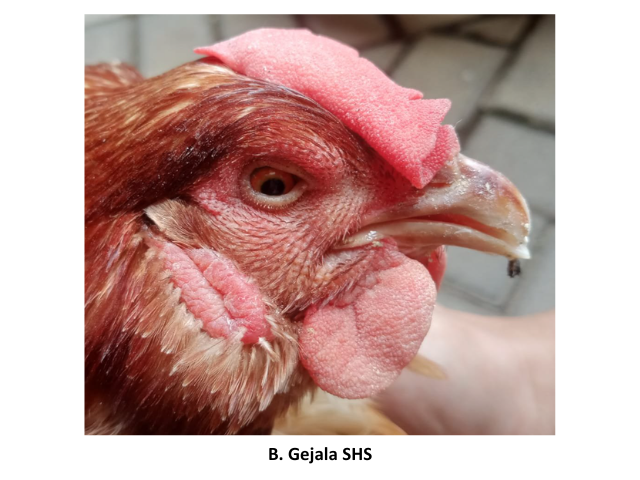
Another disease that appears frequently and is similar to coryza is the case of SHS. SHS caused by Avian Metapneumovirus (aMPV), has symptoms of swelling of the head without causing a fishy odor. When surgery is performed, an accumulation of subcutaneous fluid of the cranium and mandible is found. Confirmation of Shs diagnosis is by conducting a PCR/ELISA test. The disease is caused by a viral infection, so it is necessary to provide supportive care such as vitamins (Fortevit, Vita Stressand immunocompromised )Imustim).