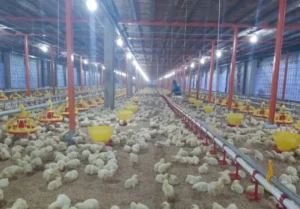
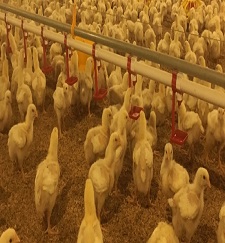
Chicken is one of the livestock that has great potential in meeting the needs of animal protein in the future. Products of animal origin in the form of meat, eggs or skin can be processed into food that is tasty and nutritious.
According to the Ministry of Agriculture of the Republic of Indonesia (Kementan RI), poultry commodities (meat and chicken eggs) are important commodity materials and strategic sources of animal food. If observed its development over the past five years (2018-2022), the development of broiler meat production in Indonesia is still fluctuating with an increasing tendency.
The average growth is 2.94% per year. The egg production of purebred chickens in the same period also grew by 3.80% per year. Prediction of the increase in animal food needs will continue to increase as the population increases (Data centers and Agricultural Information Systems).
Poultry commodities such as meat and chicken eggs are a source of protein that contains more complete essential amino acids and affordable prices for the community. To realize animal food that is safe, healthy, whole and Halal (ASUH), chicken must of course go through the stages of livestock cultivation.
Even his health must be maintained since starting from the cage to the consumer level. Although widely consumed, in fact, chicken is categorized as a food that has the potential to harm humans if it cannot be handled properly.
In order for quality chicken, safe, and worthy of consumption, it is necessary to apply Safe from Farm to Table or the practice of safe and correct handling from animal husbandry until consumption by humans.
So the need for regulation by the government began preproduction associated with the application of seeds Good Breeding Practices (GBP). Then the use of feed that must go through Good Manufacturing Practices (GMP).
In the use of drugs and vaccines, also use veterinary drugs that have applied the method of making good veterinary drugs (CPOHB). While in the process of production/cultivation of chicken should also apply Good Farming Practices (GFP). Good Farming Practices itself is the management of livestock which includes all technical and hygienic activities in terms of daily maintenance, ways and systems of feeding, sanitation, and disease prevention and treatment (FAO & OIE, 2009).
World Poultry Challenge
One of the challenges of the poultry world that never stops is disease. This will certainly have an impact on the health, performance and quality and safety of livestock production. Both meat and eggs that are not processed safely and properly will be very risky to threaten human health.
According to data from Medion Disease Incidence (Graphic 1), diseases that often threaten chicken farms broiler starting from bacterial, parasitic, viral, fungal (fungal) and other diseases. The trend of movement of cases is expected to rise in May and June. The same thing happens with chickens layer (Graphic 2) with a pattern of incidence and trend of movement of cases of the disease similar to the previous year.

By looking at this fact, of course, it becomes a common awareness of the importance of implementing good cultivation from preproduction to poultry products to the consumer level. Including the management of prevention and treatment of diseases that must be considered in the series of production processes in chicken farms.
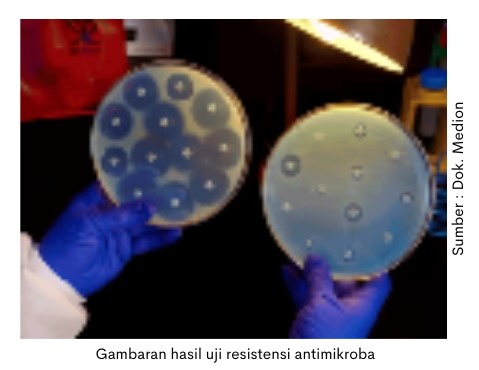
Another challenge faced by the poultry world is the issue of antimicrobial resistance. This occurs as a result of the use of antimicrobial drugs that are not in accordance with the recommendations and are carried out constantly. So that it causes microbes to be immune or resistant to the drugs given.
Looking at the fact that the purpose of antimicrobial use in Indonesia is quite diverse. Some use antimicrobials as cleaning programs, growth promoters and medications. According to Indonesian government regulations, the purpose of using appropriate antimicrobials is medication. The intended use of antimicrobials for prevention such as cleaning programs and growth promoters has been banned since 2018.
Nevertheless, according to Survey of Antimicrobial Use (AMU) in 2017-2022, the use of antimicrobials for preventive purposes and growth promoter still done by farmers in Indonesia. This must be the world's attention to the threat of antimicrobial resistance that can occur continuously and the impact on human health.
Poultry products consumed by humans if they come from sick livestock and are in the treatment period, of course, can be at risk of causing residues in the human body. So it is very impact on the balance of the concept One Health especially in the process of treating diseases in humans. Environmental, animal and human health must be aligned through the implementation of strategic disease prevention and treatment programs.
Choosing A Quality Drug
Drugs can be of chemical/synthetic or natural/herbal origin. The difference is that drugs derived from herbs have the advantage of being safer, causing no residue and minimum risk of resistance. Drugs as alternative ingredients to cure animal diseases must be used appropriately and wisely. The types of drugs in circulation include antibiotics, anthelmintics, antiprotozoa and antifungals.
So that the use of the drug can be said to be wise, then as a farmer should give medicine only when cattle are sick for medicinal purposes. The drugs used must also be of good quality. Here's how to choose a quality drug:
- Product development based on scientific studies to get the best formula
- The production process is in accordance with quality requirements and how to make good veterinary drugs (CPOHB)
- Scientific evidence through in vitro and in vivo testing of Product Effectiveness
- Have a registration number / marketing license from the Ministry of Agriculture which proves that the product has efficacy, quality, and safe to use
- In addition to use, the product is also recognized and proven to be useful for farmers

Treatment should be appropriate and wise
Health programs in a farm include vaccination programs, sanitation and disinfection, treatment/medication and vitamins and herbs must be properly prepared to support success in raising chickens. Including the type of drug used, dosage and application as well as the rules of use must be appropriate according to the manufacturer's recommendations and veterinarians/health workers. In general, the principles of treatment include:
- The type of drug administered according to the diagnosis of the disease
- The drug must be able to reach the target organ
- The drug must be available in sufficient levels or doses
- The drug must be available in sufficient time
To obtain optimal treatment results should use a dose based on body weight chicken, application and duration of Drug Administration as recommended. Treatment with antibiotics (Neo Meditril/Rofotyl) or antiprotozoa (Toltradex/Amprosid) when applied orally or via drinking water should be done twice a day with a duration of administration of 4-6 hours each.
This aims to make treatment results more optimal. If the farmer wants to get treatment results faster, then he can choose the type of drug (antibiotic) injection such as Gentamin/Tinolin injection/Lincomed-LA. Also note the use of injection drugs appropriately and wisely as recommended.
The drug will give a treatment effect if the drug levels in the blood or body of livestock have reached the level Minimum Effective Concentration (MEC) and below level Maximum Toxic Concentration (MTC). So it is very important to pay attention to the dosage, rules of Use and other important information listed on leaflet drugs.
In addition, also pay attention to the quality of water as a solvent medium for drugs. Ensure physical, chemical and biological qualities are up to standard to optimize drug performance. Because the problematic water quality can reduce the performance of drugs, vitamins, herbs and vaccines given via drinking water.
Efforts To Prevent Antimicrobial Resistance
Treatment carried out appropriately and wisely is able to minimize the risk of antimicrobial resistance. In addition, to prevent antimicrobial resistance can use herbal products such as Fithera as an alternative treatment or conduct rolling antimicrobials periodically every 3-4 times the period of treatment.
Rolling carried out on different types of active substances of the antimicrobial group. Perform an antimicrobial resistance test or Antimicrobial Susceptibility Test as an alternative to ensure the drugs used by farmers are already resistant or still sensitive. Do it periodically to determine the choice of the type of active substance of the drug to be used. So that success in Disease Control can run as expected.