Corn farming business in Indonesia has good business prospects. The need for corn continues to increase every year. This is in line with the increasing consumption needs of the population and the needs of industries that use corn as a raw material such as the food and animal feed industries. In corn cultivation practices, crop productivity can be influenced by several factors, including land conditions, the use of seeds, the use of fertilizers, pests and diseases and weed disorders.
Corn land is an open land that is easily exposed to sunlight. Plants will develop well on land including weed species. One of the problems that farmers often face is weed disturbance.
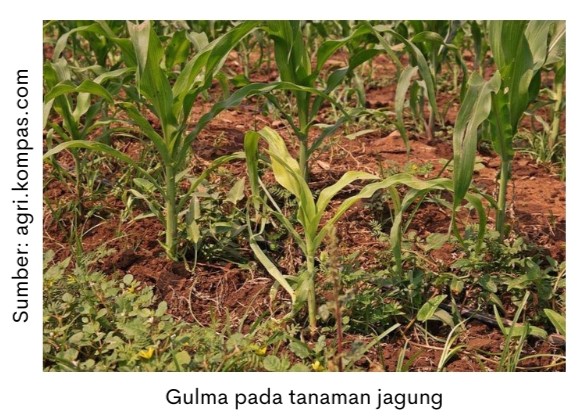
The presence of weeds in the field is very influential on corn productivity. Weeds can harm corn plants because they will compete in obtaining water, air, nutrients in the soil, sunlight and a place to live. Even the competition occurs from the beginning of planting until the harvest. If the presence of weeds is allowed, it can suppress the growth and development of corn. According to Bilman (2011), weeds that are left unchecked in corn cultivation can reduce yields by 20-80% and reduce seed quality.
Weeds are plants on land that do not want their existence and cause harm to plants. The amount of losses caused depends on the type of weed, the density of weeds in the field, the length of competition, and allelopathic compounds released by weeds. The losses caused by weeds on the land include:
- Decreased productivity due to competition for light, water and nutrients
- Decrease in crop quality
- Increased risk of pest and disease transmission
- Some weeds can secrete allelopathic compounds that can inhibit the growth of other plants in the vicinity
- Complicate the activities of workers in the field and the process of processing the results
- Inhibit or hinder the use of agricultural tools
- Reduce the amount and quality of water and inhibit the movement of water
Weeds in corn crops
Based on its morphology, there are three types of weeds that usually grow among corn plants, among others:
1. Grass class weeds
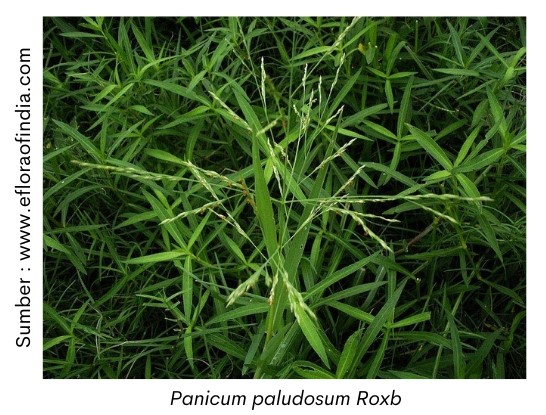
Included in familia Gramineae/ Poaceae. With the characteristics of flat-round stems, solitary leaves on the books, arranged in two rows, and generally Bony parallel leaves. The leaves consist of two parts, the Leaf midrib and leaf blade. Examples Eleusine indica (cool), Panicum paludosum Roxb., Oryza sativa L., Cynodon dactylon (kakawatan grass), Echinochloa colona (jajagoan leutik) dan Imperata cylindrica (sake).
2. Weed puzzle
Included in familia Cyperaceae. Its characteristic rods are triangular, sometimes round and usually not hollow. The leaves are arranged in three rows, do not have leaf tongues. The flower stalks are not bookish. Examples Cyperus rotundus (puzzle).
3. Broadleaf weed
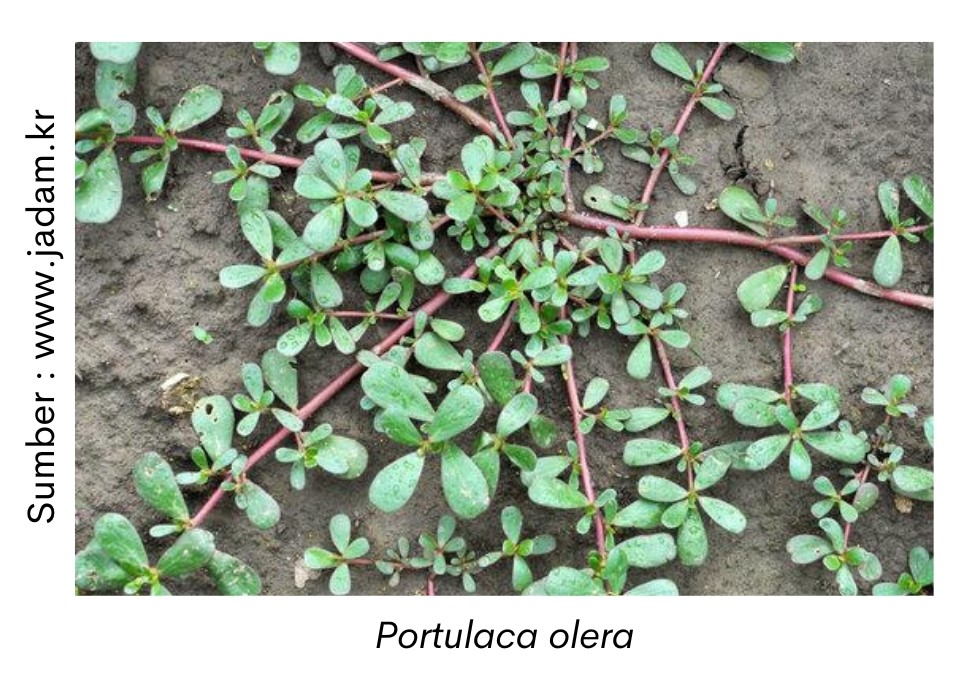
Included in the family Dicotyledoneae and Pteridophyta. Wide leaves with mesh-shaped leaf bones. Examples Portulaca olera (purslane), Borreria alata (goletrak/rumput setawar), Commelina benghalensis (gewor), Amaranthus spinosus (spinach thorns), Ageratum conyzoides (babandotan) and Physalis longifolia (ciplukan).
Weed control in corn crops
To achieve optimal corn crop productivity, one of the things that is considered is weed control. The main principle in weed control in crop cultivation is to suppress the rate of growth and development of weeds before harming plants. The method and frequency of weed control depends on the type of weed and the speed of weed growth on the land.
Weed control in corn plants can be done in several ways, among others:
1. Mechanical weed control
Control by damaging or suppressing weed growth physically.
- Plucking using hands
Especially in broad-leaved types of weeds, newly sprouted weeds and shallow-rooted weeds.
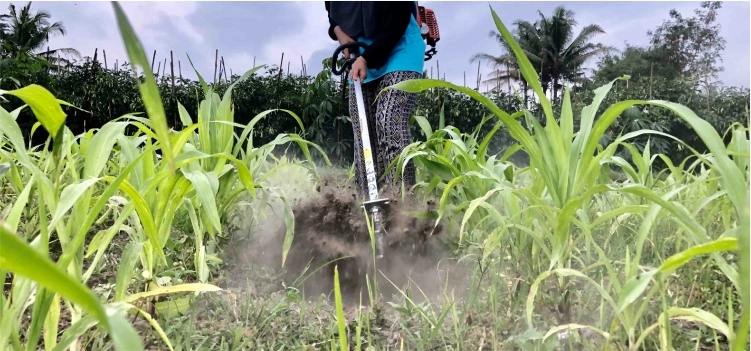
- Using simple tools such as Sickles, hoes and more modern mechanical tools.
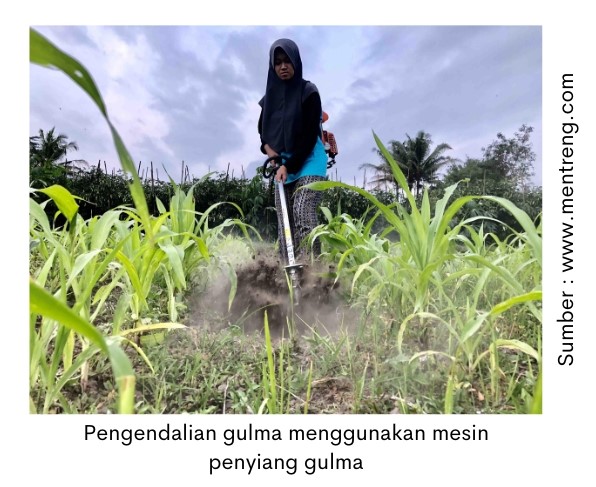
For example, by hoeing the surface of the soil overgrown with weeds and removing weeds along with the roots. The weeds that have been lifted are then cleaned from the soil that is still attached and then the weeds are removed.
- Corn crop Pembumbunan
By adding soil around the roots to strengthen and strengthen the plant.
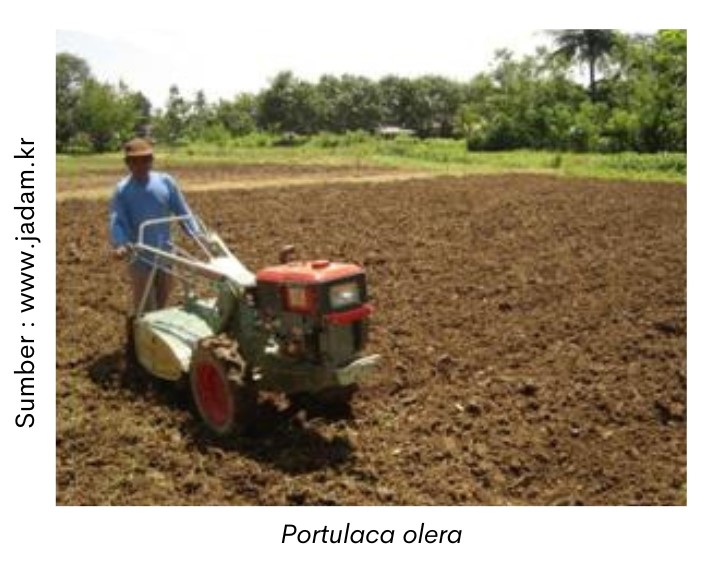
- Tillage
Tillage is carried out before planting. To kill weeds that have already grown and grow dormant weed seeds. It needs to be done several times with a sufficient time interval so that dormant seeds have time to grow and then turn off in the next processing.
2. Cultural weed control techniques
Control by creating a favorable environment for plant growth. So the plants can compete and can suppress weeds.
- Using good seeds or corn seedlings. This is so that plants can compete with growing weeds and avoid spreading weeds through seeds.
- Organize irrigation of corn crops.
- Using mature manure. To avoid spreading weed seeds through manure that has not been completely fermented.
3. Biological weed control
By using living organisms that can suppress weed growth. For example by using duck livestock that can help suppress weeds.
4. Chemical weed control
By using herbicides or other chemicals to eradicate weeds. The use of chemicals should be done with caution and appropriate 6 exactly. That is right on target, right type, right quality, right time, right dosage, and right way of application.
Based on how it works, there are 2 types of herbicides, namely systemic and contact. Herbicides with contact Action will kill weeds that are only on the part affected by the herbicide. While herbicides with systemic action, herbicides will be spread throughout the weed tissue and kill the target tissue such as leaves, growth points, shoots to the roots. Systemic herbicides can also kill shoots in the soil. Thus inhibiting weed growth.
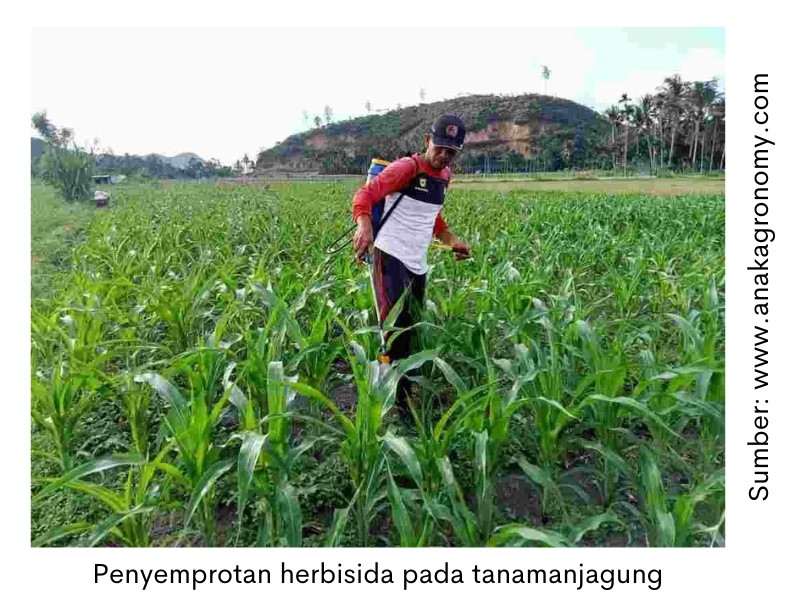
In the method of weed control, based on the time of application can be divided into two, namely the provision of herbicides and paskatumbuh pratumbuh. Pre-growth herbicides are those that are applied before the weed seeds germinate or come to the surface. Pregrowth herbicides aim to suppress weeds at the initial competition in young plants and weeds. Paskatumbuh herbicide is a herbicide that is given to suppress the presence of weeds that have grown.
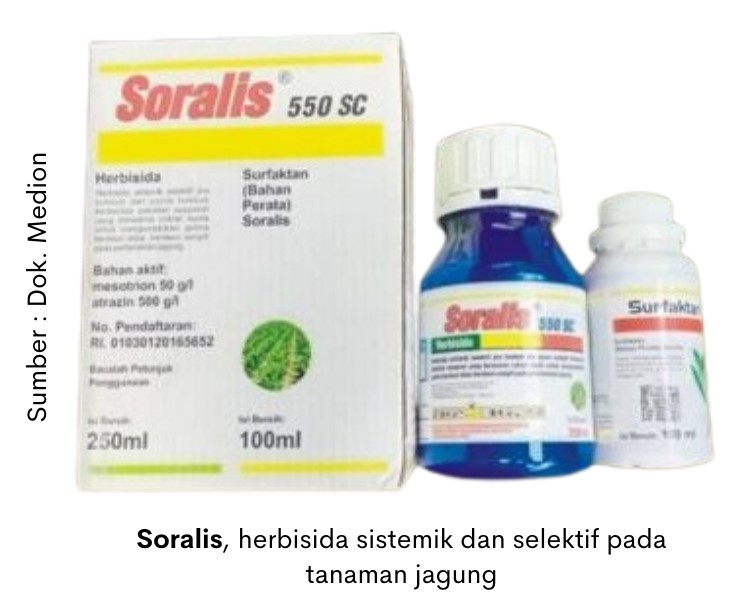
Consideration in the selection of herbicides is the content of active ingredients to kill weeds in the field. For example, with Soralis, which effectively controls weeds of the grass class and also broad leaves. The active ingredients in Soralis work in a systemic way so that the herbicide is absorbed and spreads throughout the weed tissue.
Soralis is also selective that can be applied to corn fields without killing corn plants or selectively kill weeds. Soralis can also be used during pre-growth and post-growth.
5. Integrated control
By combining several ways such as mechanical and chemical. Hope you can get better results. For example, weed control by spraying herbicides followed by hand weeding and tillage on land preparation. Weeds that do not die as a result of the use of such herbicides can be removed by uprooting.
The success of weed control is one of the determining factors for corn productivity. Control by combining several ways or integrated control can be an option with better results. Such as mechanical control by processing the land before planting and combined with chemical control using herbicides.
By combining mechanical techniques, culture, and chemical applications in an integrated manner, corn farmers can effectively suppress weed growth without damaging crops. From the many choices of herbicides, it is important for you to choose an effective, selective, and reliable product.
One solution you can consider is Mediup - full systemic herbicide grown from Medion with isopropyl Amine glyphosate content of 480 g / L.
Mediup is designed to destroy broad and narrow-leaved weeds down to the roots, so as to strengthen your corn crop competition against weeds.
When you are interested in knowing the dosage, method of application, or integrating it in an integrated weed control strategy on your land, do not hesitate contacting our team. We are ready to help provide technical guidance and Mediup products according to your land needs.
Hopefully this information is useful and a practical reference for you in controlling weeds in corn plants. Good luck and hopefully your harvest will be optimal!”