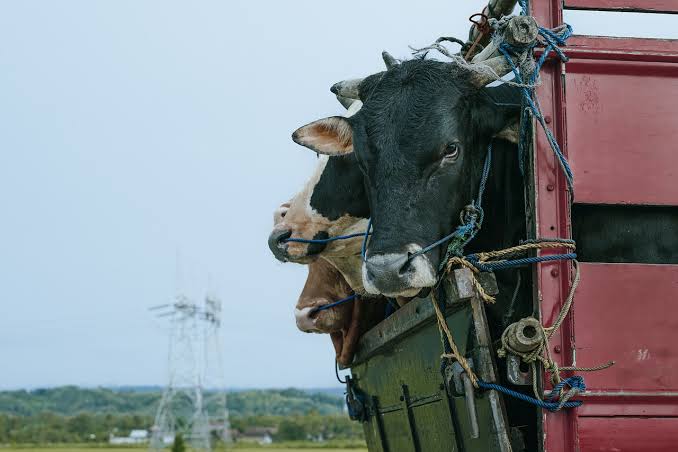
When the transition and extreme weather conditions cattle livestock prone to disease Bovine Ephemeral Fever (BEF). This disease is also known as three-day fever. 3-day fever disease because the cow will have a high fever for 3 days. Cattle farmers should be aware of the extreme weather and unpredictability that can trigger this disease. The perceived impact of BEF disease is weight loss and milk productivity.
BEF disebabkan oleh virus Rhabdovirus from Family Rhabdoviridae. BEF disease is transmitted through arthropods such as mosquitoes Cullicoides spp, Culex annulirostris, Anopheline and Culicine (Walker, 2013; Kirkland, 2016). Cullicoides the infected can spread the disease to a distance of 2 km. BEF is acute, with an incubation period of between 2-10 days and most sufferers show symptoms within 2-4 days. The pain rate is quite high up to 80%, but the mortality rate is low at 1-2%. This case is also found in Buffalo, but with mild clinical symptoms.
In cattle suffering from BEF, symptoms are often found that do not want to eat and drink. Loss of appetite and drinking can be due to feverish conditions that affect appetite and drinking and swelling of the esophagus or esophagus that causes cows to be uncomfortable to eat and pain when swallowing. Nervous system disorders are also affected, including in the process of swallowing food. So it can risk the entry of food, water and saliva into the lungs that can cause pneumonia.
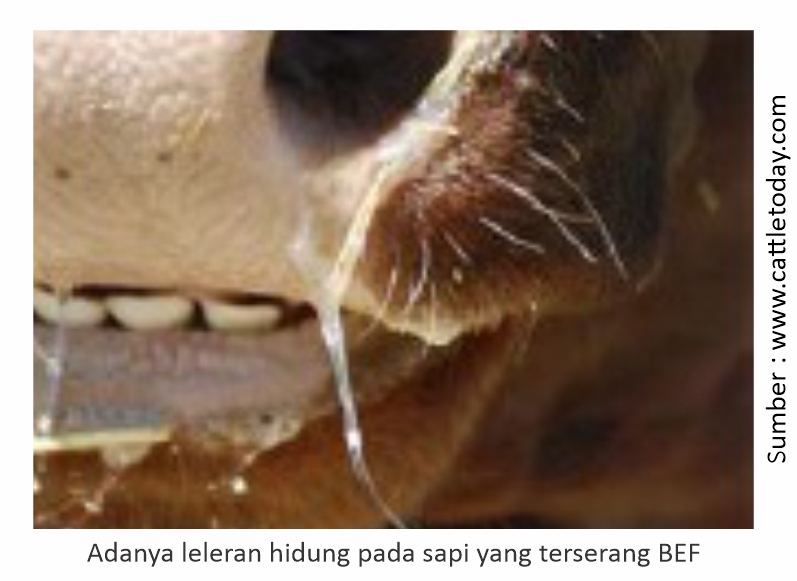
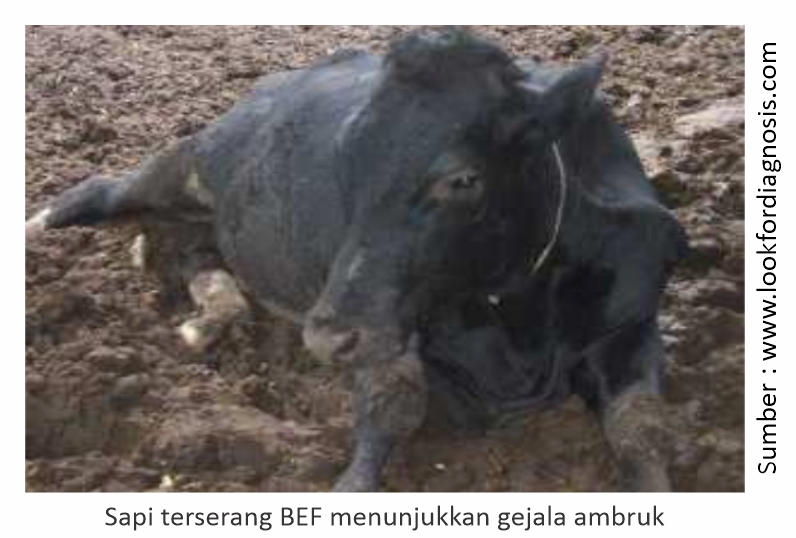
Other symptoms that appear are fever 41-42°C and the presence of fluid or melting in the nose and eyes. The condition of tremors or shaking unconsciously or uncontrollably in the legs and continues to become stiff to limp. Lameness usually occurs on the second day after the appearance of clinical symptoms that cause the cow to lazily move and become collapsed. Lameness in one of the legs is the main feature that can be observed in the occurrence of BEF.
Some farmers realize their cows are infected with BEF after the cow appears to limp on both the front and back legs until the cow collapses. If you find a cow showing symptoms of BEF, it is necessary as soon as possible to handle by reporting to a team of medical personnel. So that the cow is treated immediately and the loss due to weight and milk production can be overcome immediately. In addition, cows do not continue to have secondary infectious diseases or follow-ups that will aggravate the condition and cause death.
There is currently no effective cure for BEF because it is caused by a virus. Treatment that can be done is to relieve symptoms, increase body resistance and prevent secondary infections. Treatment that can be done in cattle with BEF include giving analgesics, antipyretics (pain reduction, fever reduction), antibiotics, and vitamins. The combination of antipyretics, antibiotics and vitamins provides a good cure rate based on information from officers who received reports from post-treatment farmers in the absence of repeated events. (FKH UGM, 2017).
Antipyretics work by reversibly inhibiting the enzymes cyclooxygenase-1 and 2, and resulting in a decrease in the production of prostaglandin precursors (COX-1 and 2) known as mediators of inflammation so that the inflammatory process can be reduced. Analgesics work by reducing pain. An example of a product that can be used is Medipiron.
Antibiotics can be given with the aim of preventing secondary infection. In its administration, broad-spectrum antibiotics can be used that are able to prevent widespread bacterial secondary infections, for example, by Medoxy LA.
Vitamin administration aims to increase appetite, overcome symptoms of weakness, increase endurance, help overcome nervous disorders and overcome stress. Giving ATP compounds can also help as an energy supply to overcome weak conditions. For example, with Injeksi Vitamin B Kompleks, ADE-Plex Inj atau Bioselvita.
Efforts can be made to prevent BEF disease, especially during transition and extreme weather, namely:
- Controlling vectors that are thought to play a role in the spread of disease. The use of insecticides can be considered to kill insects around the infected area and isolate sick animals.
- Keeping the cage clean is important, especially from accumulated dirt and cleaning the rest of the feed regularly, maintaining the drainage of the cage so that it is not damp and muddy, and avoiding waterlogging.
- Maintain the immune system of livestock by giving multivitamins regularly. Pemberian multivitamin dapat diberikan setiap bulan dengan Vita B Plex Bolus Extra Flavour, Injeksi Vitamin B Kompleks atau ADE-Plex Inj.
- Maintain the health of livestock by providing quality feed with nutritional content and sufficient quantities. The quality of feed, both forage and concentrate, which can help improve the endurance of livestock because the necessary nutrients are sufficient. Additional Mineral Feed Supplement s is good for livestock growth and health maintenance.