Mr. Maulana – By Email
Often times illness Mycoplasma gallisepticum (MG) and Mycoplasma synoviae (MS) is considered similar because both are caused by bacteria. also Mycoplasma. What is the difference between these two agents and how do they impact chicken farming?
Answer:
Thank you, Mr. Maulana, for your question. Mycoplasmosis is a significant disease that frequently causes economic losses in the poultry industry. Although the mortality rate is not always high, this disease can lead to decreased production performance, reduced feed efficiency, increased medical costs, and increased susceptibility of poultry to other infections. Two species also Mycoplasma the most important role in the poultry industry is Mycoplasma gallisepticum (MG) and Mycoplasma synoviae (MS).
In the field, chronic respiratory disease or Chronic Respiratory Disease (CRD) caused by Mycoplasma gallisepticum (MG) remains a major challenge for livestock breeders. Based on data Technical Education and Consultation (TEC) Median's national poultry disease monitoring program reported CRD as the disease with the highest incidence rate. CRD ranks first in both broiler and layer chickens. This indicates that respiratory disorders due to infection also Mycoplasma is still a major threat to poultry farming in Indonesia.
Etilogi Mycoplasma
also Mycoplasma is a bacteria from the class Mollicutes, order Mycoplasmatales, and family Mycoplasmataceae. This bacteria has unique characteristics in the form of absence of cell walls (cell wall), so it is different from most other bacteria. The absence of a cell wall causes also Mycoplasma has a pleomorphic (varied) shape and Mycoplasma cannot be killed by antibiotics that work by damaging or inhibiting the formation of cell walls, such as the β-lactam group (penicillin and cephalosporin).
In poultry, the most economically important species are Mycoplasma gallisepticum (MG) and Mycoplasma synoviae (MS). M. gallisepticum mainly attacks the respiratory system and is the main cause Chronic Respiratory Disease (CRD), whereas M. synoviae generally attacks the joints, respiratory system, and reproductive tract so that it can cause infectious synovitis and egg quality disorders.
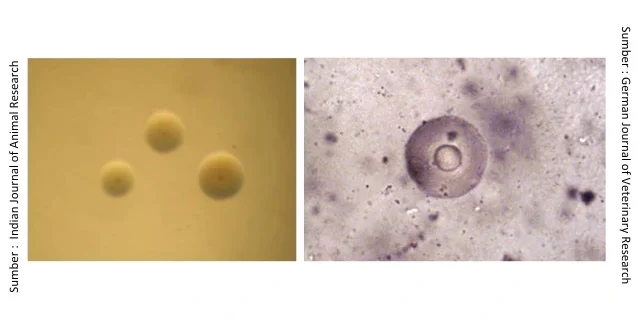
Morphologically, bacteria also Mycoplasma They are very small, ranging from 0.2–0.8 µm, and have cell membranes containing sterols. The presence of sterols in the cell membrane plays an important role in maintaining the stability of the bacterial structure due to the absence of a cell wall. In solid culture media, colonies also Mycoplasma shows a typical morphology in the form of "fried egg appearance" (a sunny-side-up egg appearance), characterized by the center of the colony appearing denser or opaque, while the edges appear more transparent. This appearance occurs because some cells grow into the medium, while others develop on the surface of the medium. also Mycoplasma have the ability antigenic variation, which is a continuous change in the structure of surface antigens to evade the host's immune response. This mechanism often causes chronic infections and makes them difficult to completely eliminate from the poultry population.
Disease Transmission
Transmission of also Mycoplasma In poultry, transmission can occur vertically or horizontally. Vertical transmission can occur through eggs (in ovo) or during embryonic development. Transmission to chicks (egg transmission) is thought to occur as a result of a respiratory infection in the mother hen, which is related to the proximity of the abdominal air sacs to the oviducts. This condition allows the disease agent to reach the reproductive tract and infect the developing eggs.
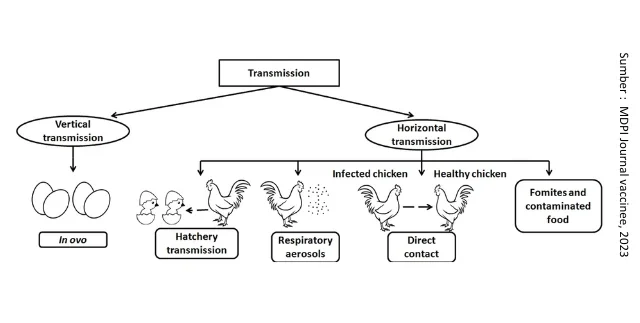
Horizontal transmission can occur through the air, transmission in hatchery (hatching place), direct contact with infected chickens, or indirectly through environmental factors and intermediary objects (fuelFomites such as feeders, waterers, cage equipment, and other contaminated objects can be important sources of disease transmission. Leftover material in feeders is a major factor in horizontal transmission. Furthermore, contaminated feed can also serve as a medium for disease spread through the environment.
On hatchery, transmission can occur through fragments or remains of contaminated broken eggs and then become a source of infection for other chicks. Research on transmission mycoplasma showed that various strains of mycoplasma can cause decreased egg production, increased hatch failure due to embryonic death, and decreased fertility.
Mycoplasma gallicepticum
Mycoplasma gallisepticum (MG) is the main agent causing chronic respiratory disease or Chronic Respiratory Disease (CRD) in chickens. This bacterium primarily attacks the respiratory system and causes respiratory disorders of varying severity, depending on the chicken's health, age, husbandry management, stress level, and the presence of other concomitant infections. MG infection causes damage to the respiratory tract, disrupting the normal function of the respiratory system and impacting chicken performance.
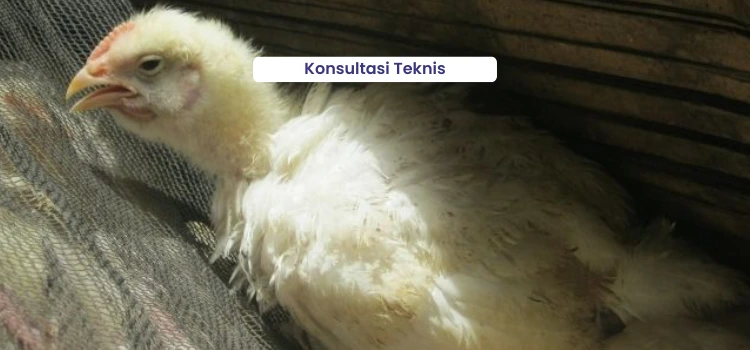
Clinically, chickens infected with MG generally show symptoms such as coughing, sneezing, snoring, nasal discharge, watery eyes, decreased feed consumption, difficulty breathing (dyspnea), as well as growth disorders. In some cases, chickens also appear lethargic and experience decreased activity due to reduced feed intake and prolonged respiratory distress. The impact of MG infection can vary across poultry production types. In laying hens, infection can cause decreased egg production and overall production quality. Meanwhile, in broiler chickens, MG infection can cause suboptimal growth and increase the value of poultry. feed conversion ratio (FCR).
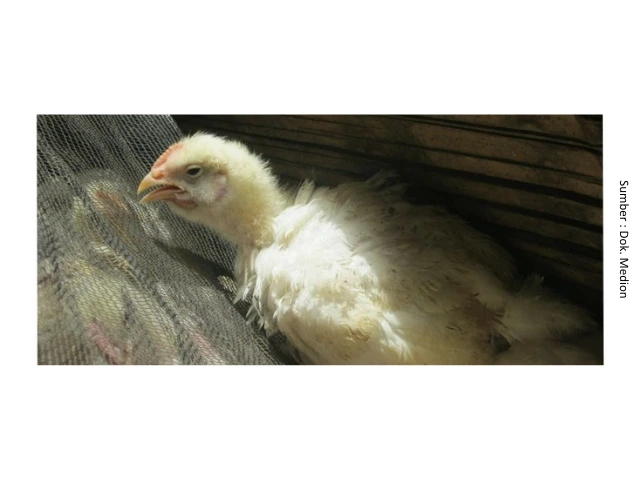
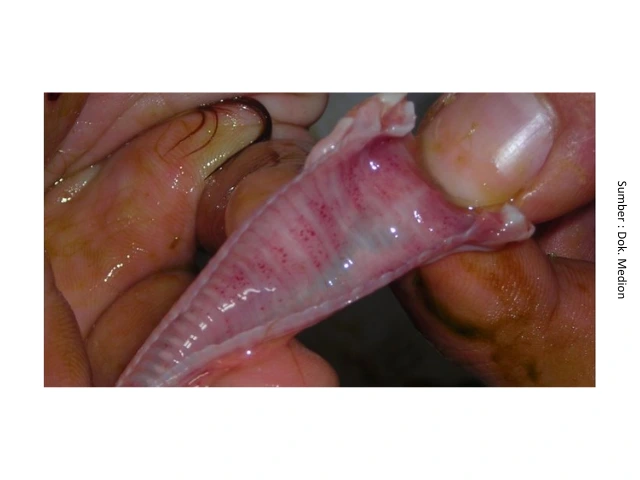
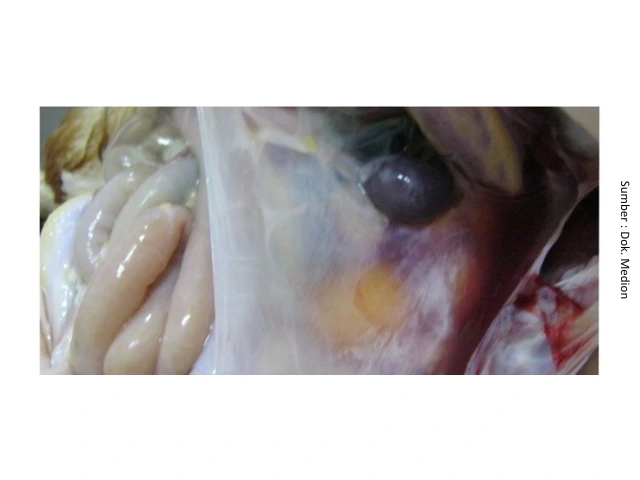
On necropsy examination, lesions frequently found include: air sacculitis or inflammation of the air sacs, thickening of the air sac membrane, accumulation of caseous exudate (caseous exudate), tracheitis. The severity of the lesion can increase if a secondary infection occurs by other bacteria, especially Escherichia coli. Combination of infection between MG and E. Coli infection this is often known as Complex Chronic Respiratory Disease (CCRD) or complex CRD. In CCRD, clinical symptoms are generally more severe, pathological conditions such as pericarditis and perihepatitis occur, mortality can increase, and economic losses are greater than with a single MG infection.
Mycoplasma Synoviae
Mycoplasma synoviae (MS) is one of the species also Mycoplasma This is an important infection in poultry, often causing subclinical infections, so its presence is often not recognized by farmers. Although the symptoms are generally milder than those of an infection. Mycoplasma gallisepticum, MS infections can still cause significant economic losses due to decreased production performance, impaired growth, and decreased production quality. Organs frequently targeted by MS infections include joints, tendons, or tendon sheaths (tendon sheath), respiratory system, and reproductive tract.
Clinically, chickens infected with MS may exhibit symptoms such as lameness, joint swelling, difficulty walking, decreased activity, stunted growth, and mild respiratory distress. Inflammation of the joints and tendons causes discomfort during movement, leading to decreased eating and drinking. In more severe cases, chickens can experience significant movement impairment, leading to decreased growth performance and increased culling rates.
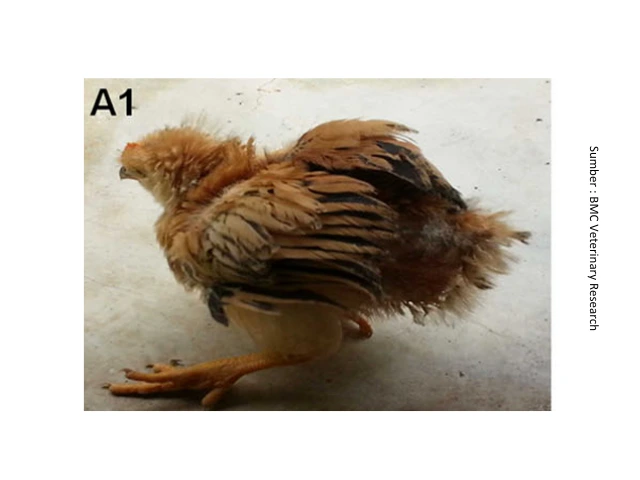
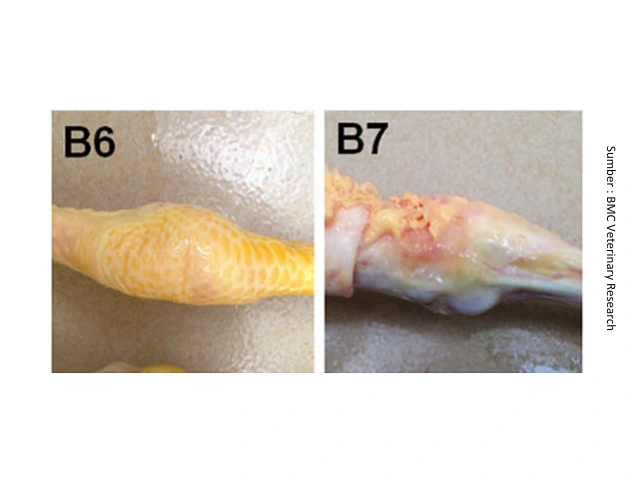
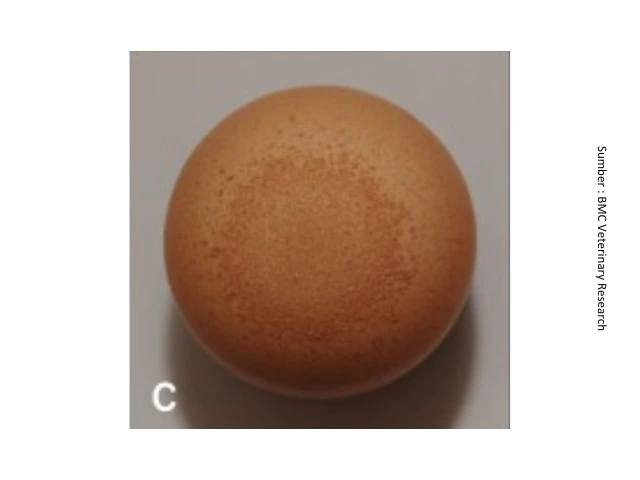
In laying hens, MS infection is also often associated with the occurrence of Eggshell Apex Abnormality (EAA), namely abnormalities in the quality of the egg shell which are mainly found at the tip of the egg (apex). This abnormality can be characterized by a shell that appears thinner and rougher, or a change in color on the egg surface. The presence of this shell quality disorder can reduce the economic value of eggs because it increases the risk of damage during handling and distribution. The clinical symptoms caused by MS are often mild or even not clearly visible, so that MS infection can last for a long time and spread slowly in the flock without being detected. This condition causes chickens that appear healthy to potentially become a source of infection for other chickens, so early detection and a program monitor Routine is an important factor in controlling disease in livestock.
Here are the differences between M. Gallisepticum and M. Synoviae
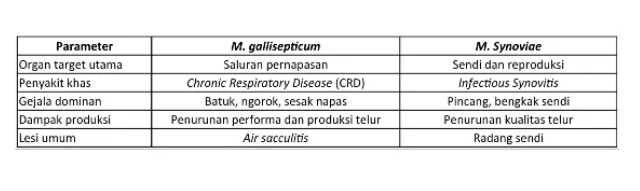
Handling and control
If a suspected case of infection is found Mycoplasma gallisepticum (MG) and Mycoplasma synoviae (MS), farmers need to immediately take control measures to minimize the spread of the disease and reduce the impact of production losses.
A. Isolation
The first step is to isolate chickens showing severe clinical symptoms. This separation aims to reduce direct contact with healthy chickens, thereby minimizing the risk of transmission. Furthermore, isolating sick chickens facilitates observation and more targeted therapy.
B. Treatment
Treatment using antibiotics aims to reduce the number of bacteria, reduce clinical symptoms, and prevent secondary infections. also Mycoplasma cannot be killed using antibiotics that work by damaging the formation of cell walls, therefore, the use of antibiotics Therapy can be a solution. Therapy which works by inhibiting the protein synthesis process in bacteria. Another alternative antibiotic that can be used is Neo Meditril which works by inhibiting bacterial nucleic acid synthesis.
Stress management is also important. Stress caused by high cage density, sudden temperature changes, poor feed quality, moving cages, or suboptimal husbandry management can weaken chickens' immune systems and increase the severity of infections. Vitamins and immune-boosting products such as Fortevit helps maintain the physiological condition of chickens. Fortevit Contains high concentration multivitamins that can increase production, reduce stress, and reduce chicken mortality.
C. Management
Improved barn management and ventilation also play a crucial role in disease control. Poor ventilation can increase dust concentrations, ammonia levels, and humidity, which can exacerbate respiratory disorders. High ammonia levels can damage the respiratory mucosa, facilitating colonization. also Mycoplasma. Ammotrol, can be a solution to reduce odors in the farm area caused by ammonia. Good ventilation should provide optimal air exchange and distribute it evenly throughout the coop without creating stuffy areas or excessive drafts. Overcrowding can lead to fecal accumulation, increased coop temperature and litter humidity, therefore, the chicken population must be adjusted to the coop capacity. Coop humidity can be optimized by paying attention to ventilation settings, litter maintenance, and drinking water system management.
D. Prevention
Prevention is the most effective method for controlling mycoplasmosis because this infection often becomes chronic and is difficult to completely eliminate once it enters a farm population. A good prevention program begins with selecting healthy, young chicks (DOCs) as the initial prerequisite for brooding. Proper brooding involves maintaining an appropriate temperature of 32-34°C, with 60-70% humidity, ensuring constant availability of food and water, and managing the DOC density.
Strict biosecurity is also a key component of prevention. Biosecurity can be achieved through routine cage disinfection using Antisep, drinking water sanitation using Desinsep, restrictions on worker and vehicle traffic, and disease vector control. Control of barn air quality, dust, and ammonia levels is also necessary to maintain chicken respiratory health. Ammonia levels can be minimized through proper litter management, including adjusting litter thickness (5-10 cm) and periodically adding damp or wet litter.
References
- Abdelrahman A. A., Shany, S. A. S., Dardeer, M. A. A., Hassan, K. E., Ali, A. and El-Kady, M. F. 2021. Avian Mycoplasma gallisepticum and Mycoplasma synoviae: Advances in diagnosis and control. Ger.J. Vet. Res. (2): 46-55. https://doi.org/10.51585/gjvr.2021.2. 0019
- B. Ben Abdelmoumen Mardassi,* R. Ben Mohamed, I. Gueriri, S. Boughattas. 2005. Duplex PCR To Differentiate between Mycoplasma synoviae and Mycoplasma gallisepticum on the Basis of Conserved Species-Specific Sequences of Their Hemagglutinin Genes. JOURNAL OF CLINICAL MICROBIOLOGY, Feb. 2005, p. 948–958 Vol. 43, No. 2.
- Fatemeh Bibak, Gholam Ali Kalidari, Jamshid Razmyar, Mehrnaz Rad. 2013. Isolation of Mycoplasma spp. from broiler flocks with respiratory syndrome in Mashhad, Iran. Iranian Journal of Veterinary Science and Technology Vol. 5, No. 1, 2013, 11-18
- Jeon EO, Kim JN, Lee HR, Koo BS, Min KC, Han MS, Lee SB, Bae YJ, Mo JS, Cho SH, Lee CH, Mo IP. Eggshell apex abnormalities associated with Mycoplasma synoviae infection in layers. J Vet Sci. 2014 Dec;15(4):579-82. doi: 10.4142/jvs.2014.15.4.579. Epub 2014 Jun 20. PMID: 24962418; PMCID: PMC4269603.
- K. Manimaran, Adarsh Mishra, S. Hemalatha, K. Karthik and PI Ganesan. 2019. Detection of Mycoplasma galliseptium infection in chickens from Tamil Nadu State of India. Central University Laboratory, Centre for Animal Health Studies, Tamil Nadu Veterinary and Animal Sciences University, Madhavaram Milk Colony, Chennai-600 051, Tamil Nadu, India. DOI: 10.18805/ijar.B-3443
- Mugunthan, S.P.; Kannan, G.; Chandra, H.M.; Paital, B. Infection, Transmission, Pathogenesis and Vaccine Development against Mycoplasma gallisepticum. Vaccines 2023, 11, 469. https://doi.org/10.3390/vaccines11020469
- Shi-Kai Sun, Xin Lin, Feng Chen, Ding-Ai Wang, Jun-Peng Lu, Jian-Ping Qin and Ting-Rong Luo.2017. Epidemiological investigation of Mycoplasma Synoviae in native chicken breeds in China. Sun et al. BMC Veterinary Research (2017) 13:115 DOI 10.1186/s12917-017-1029-0.
- World Organisation for Animal Health. (2021). Terrestrial Manual Chapter 3.3.5: Avian mycoplasmosis (Mycoplasma gallisepticum, Mycoplasma synoviae). Paris: WOAH.