Infectious Coryza disease or known to breeders as Snot, is a disease caused by a bacterial infection Avibacterium paragallinarum. This disease is familiar to breeders because cases of coryza often appear and recur.
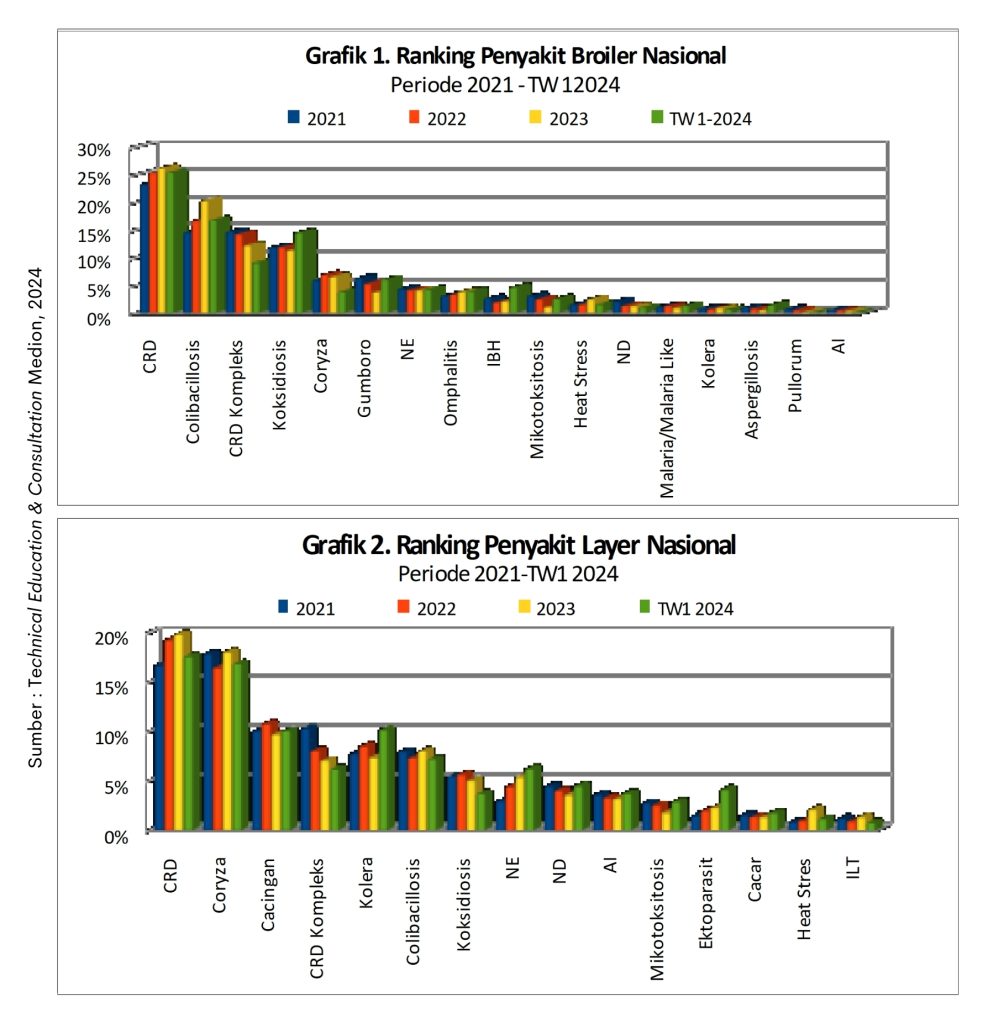
This is in line with the national disease ranking 2021-quarter 1 2024 analyzed by the team Techincal Education and Consultation Medion, showing the incidence of coryza on broiler ranked fifth and in layer ranked second (Chart 1 and Chart 2).
Often the emergence of cases coryza cause some losses, including:
- Morbidity/morbidity in cases of coryza can reach 20-50%
- Death / mortality rate up to 5-20%
- On chicken broiler will inhibit growth making it difficult to achieve standard body weight
- FCR increases and feed costs swell
- On chicken layer there is a decrease in egg production by 10-40%
- An increase in the number of chickens
- Increased health/ treatment costs.
Case developments in the field
Based on graph 2, it can be observed that in 2023 there was an increase in coryza cases in layer compared to previous years. This could be affected by extreme weather changes in 2023. When viewed again, there are still many maintenance systems open house so that extreme weather changes greatly affect the immunity of chickens.
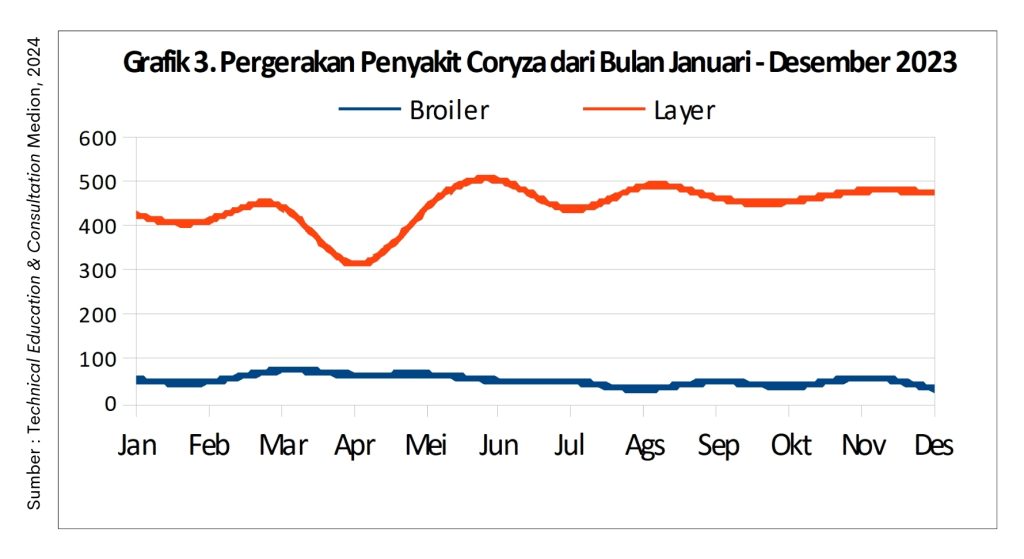
Based on graph 3, it can be observed that the coryza case in layer higher compared broiler. In addition, when viewed from the movement of cases each month, the case of coryza in broiler quite stable from the beginning to the end of the year. The case of coryza layer, in May to December had a higher number of cases than the previous months. This can also be influenced by extreme weather, both extreme heat due to El Nino, and the transition to the rainy season at the end of the year.
Avibacterium paragalinarum, the bacteria that cause coryza, which have the main predilection in the infraorbital sinus, are divided into several serovars. Based on the method page, divided into A, B, and C. Meanwhile, based on the kume method, it is divided into more details, namely A1, a2, a3, a4, B1, C1, C2, C3 and C4. Antar serovar A, B, C tidak memiliki proteksi silang.Pada serovar A, memiliki proteksi silang yang baik antara A1, A2, A3, A4. Cross-protection of serovar B1 is partial.
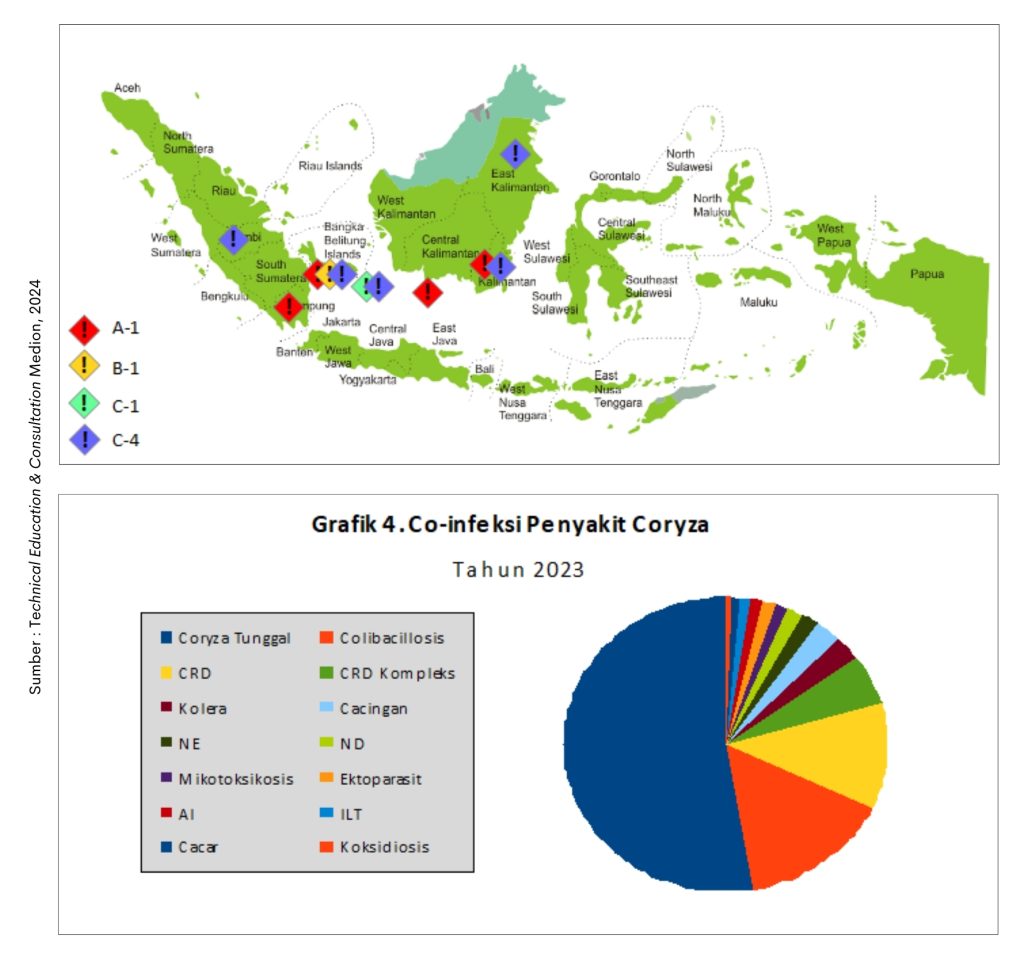
Meanwhile, between serovars C has partial cross-protection between C1, C2, C3, C4 and the best protection when homologous. Based on the data collected by Medion, currently the most frequently found are serovars A1 and C4, with a predominance of C4. So the distribution can be seen on the following map (Figure 1).
Coryza cases in the field are dominated by a single infection, but there are also some cases of combination with other diseases (co-infection). Other diseases that often cause co-infection with coryza include Collibacillosis, CRD, CRD complex, cholera, intestinal worms, etc. as shown in Figure 4.
Case developments in the field
Coryza infection often occurs recurrently. Some predisposing factors that can trigger and aggravate coryza disease include:
- Air governance in the cage. Poor air quality, lack of ventilation and poor air circulation resulted in increased ammonia in the cage and decreased oxygen intake. Avibacterium paragalinarum it is a facultative anaerobic bacterium, meaning that it can live in oxygen-poor conditions. Especially when added to the high presence of ammonia. The condition results in irritation and rupture of the mucous cilia of the respiratory tract, which are a mechanical defense of the body (produce mucus and repel infectious agents). So coryza bacteria are easier to infect.
- Uncertain weather conditions. This condition causes the chicken to be stressed so that the condition and endurance of the chicken's body decreases. When the condition of the chicken's body decreases, the disease will more easily enter and attack the chicken's body, including coryza, especially coryza bacteria are carrier (carrier).
- Maintenance system multi age. This system is most often applied to layer. Coryza bacteria can be transmitted from old chickens that have been infected with coryza to young chickens that have just entered because they are carrier.
- Treatment that is not complete or has occurred certain antibiotic resistance.
Clinical symptoms and anatomical pathology of Coryza
Chickens affected by coryza first show a watery yellow discharge that gradually turns into exudate or thick mucus with a characteristic (fishy) odor. The presence of this exudate causes the chicken to sneeze, have difficulty breathing and snore.
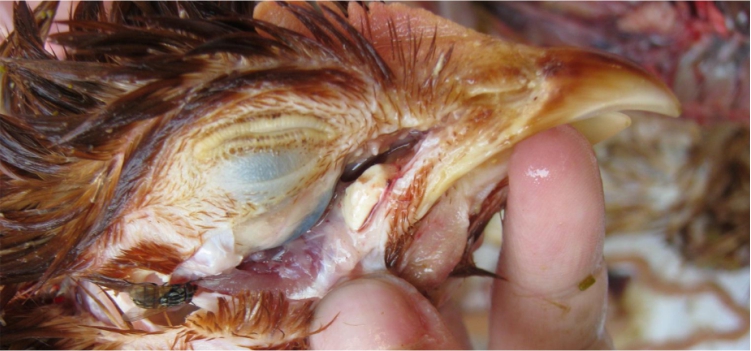
In chronic cases, swelling of the face is found, especially in the infraorbital sinus area under the eyes, if cut will be found masa resembling cheese in it, watery eyes, and eyelids experience conjunctivitis. Feed intake decreased, stunted growth, and a decrease in egg production ranging from 10-40% in chickens layer.
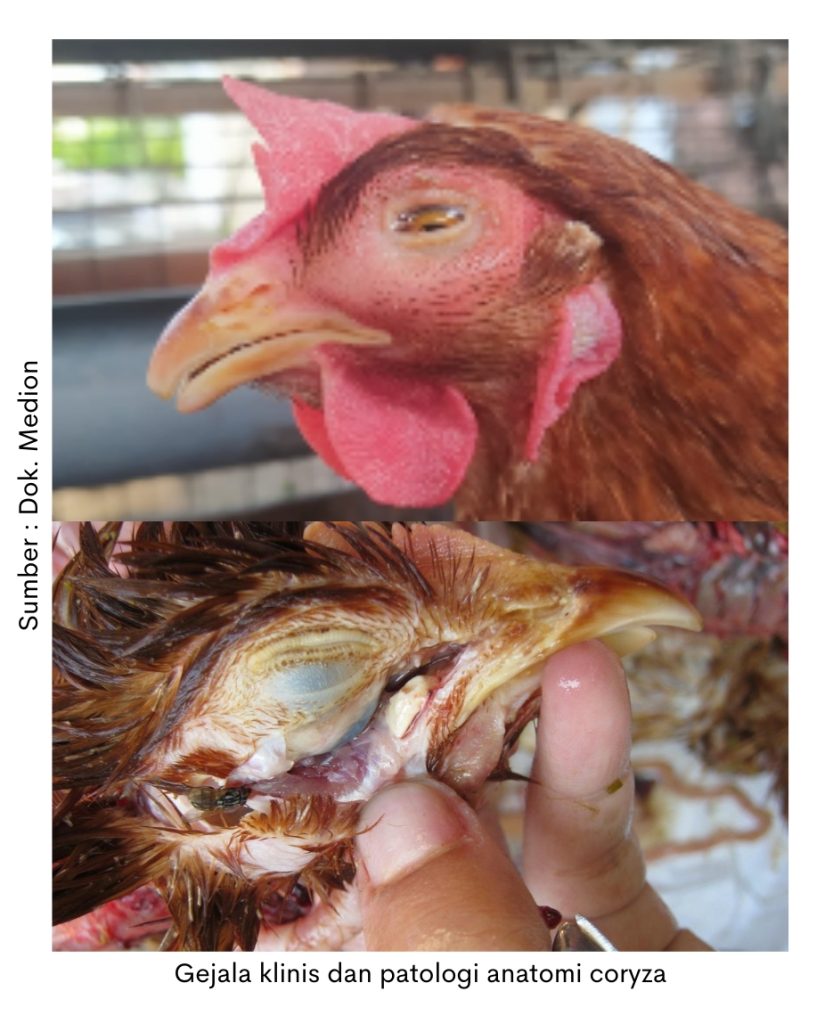
When dissected, inflammation and accumulation of fishy-smelling mucus in the sinuses of the nose, larynx and trachea are found. If colibacillosis disease along with coryza face swells containing solid yellowish perkejuan.
Prevention Coryza
Prevention of coryza needs to be done by carrying out appropriate vaccinations, optimal maintenance management applications, and the implementation of biosecurity tight.
1. Vaccination
Coryza disease is one of the diseases that is difficult to cure. So that alternative measures can be taken for prevention by vaccinating. Vaccination is carried out to form immunity in the body of chickens, so the frequency of the appearance of cases of coryza can be suppressed. Vaccination does not guarantee chickens are 100% protected from disease challenges. However, if the chicken has been vaccinated and is still infected with coryza, the severity can be suppressed and cured more quickly.
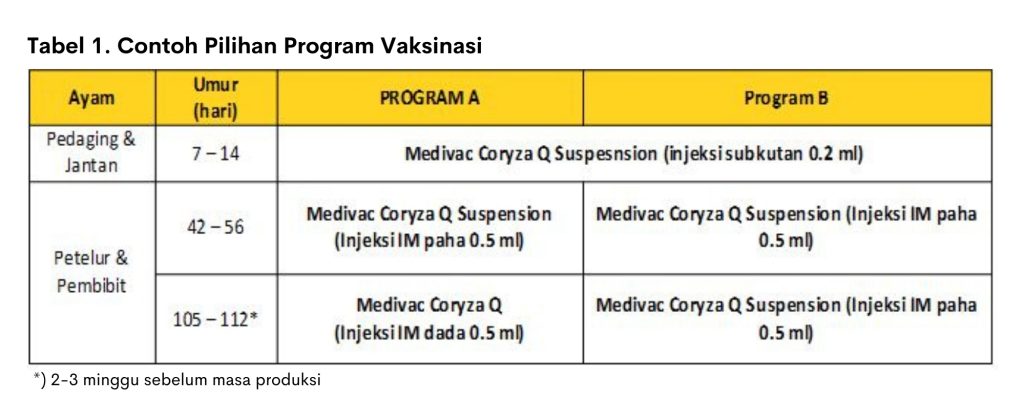
Currently Medion has a vaccine product Medivac Coryza Q and Medivac Coryza Q Suspension which has contained a local isolate of C4. Given that the degree of Protectivity of serovar C4 is only partial and will be good when homologous, then the vaccine Medivac Coryza Q and Medivac Coryza Q Suspension this is the right solution to overcome the challenges of coryza disease in Indonesia which is dominated by the challenge of serovar C4 because it is homologous to field bacteria.
On chicken broiler, for areas prone to coryza vaccination program can be given at least 1x. While on layer, the vaccination program can be scheduled at least 2x before the production age. Here is an example of a recommended vaccination program (Table 1), which can be adapted to the conditions of the respective farm.
2. Implementation of optimal management
Management is the biggest factor that determines the performance of chickens. Therefore, it is necessary to evaluate the maintenance management procedures that are applied, namely:
- Empty the cage at least 14 days after the cage is clean to break the chain of previous diseases. Cage cleaning is done thoroughly starting from the sidelines of the cage, the bottom of the stage Cage also should not be missed. Washed the cage with detergent and brushed, then sprayed high pressure water.
- Current DOC selection chick in so it is expected that chickens have a higher ability to live and are more resistant to healthy environmental changes.
- Time management brooding period, and litter must be good. Where to eat and drink enough and litter it should always be dry and dust-free. Add litter dry when it is damp and wet. This prevents the risk of upper respiratory tract irritation due to high humidity and ammonia levels. Clean air in the cage needs to be considered by adjusting the opening and closing of the curtain properly and adjusting the density of the cage.
- A lot of people live in one place (one age one site), which is noticed is the passage of cage traffic from young chickens to Old Ones. Place the DOC / pullet in a cage that is far from the cage layer production, and minimize stress conditions in chickens, especially during the process of moving cages.
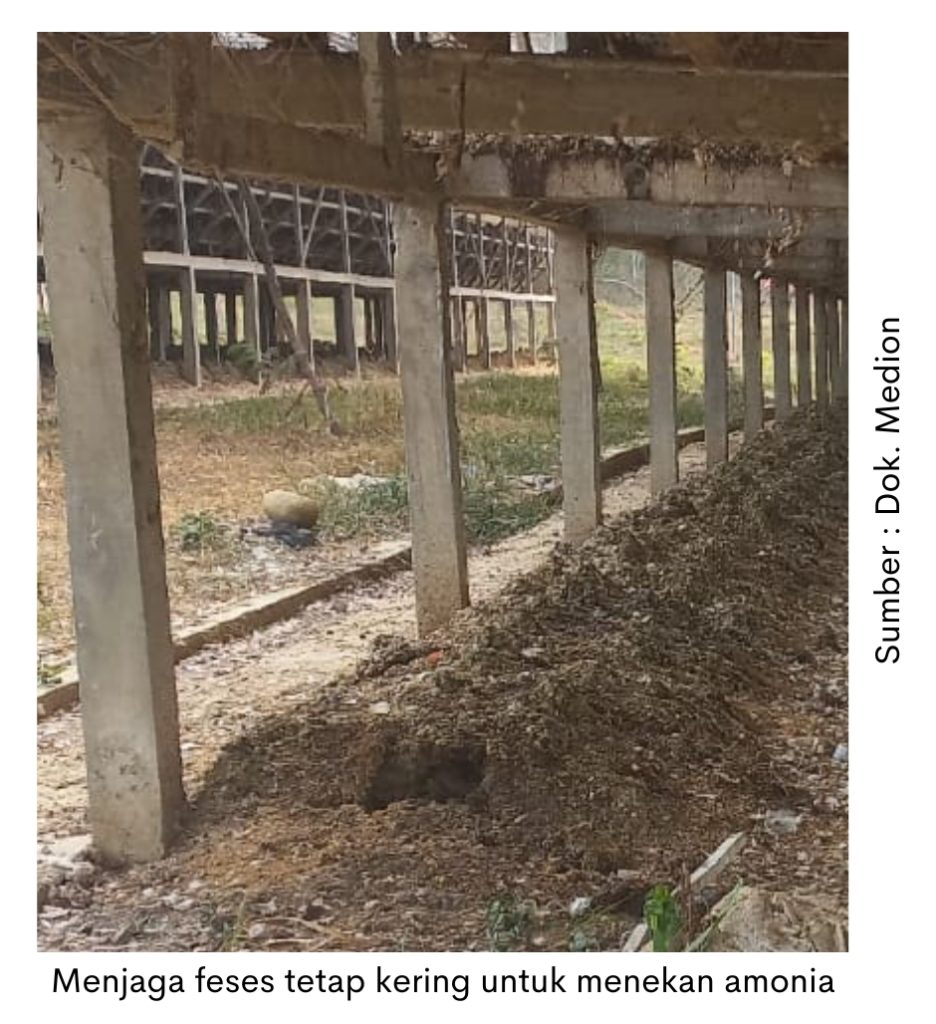
- Control good air circulation in the cage by setting the curtains open and close, the addition of a fan on the cage open house, control of wind speed, temperature and humidity in the enclosure closed house as well as control of ammonia conditions in the cage to reduce irritation, especially in the respiratory tract of chickens by keeping feces dry/cleaning feces regularly. Medion Products Ammotrol can be used to suppress the high ammonia in the cage.
3. Tightening Biosecurity
Implementation biosecurity thoroughly ranging from isolation, traffic management, and sanitation needs to be considered among them:
- The application of 3 zones (clean, transition, dirty) so that the seeds of diseases that enter the cage environment can be minimized so that the challenges of the disease become fewer.
- Spraying the cage, washing, and sanitizing the feed and drinking place every 3-4 days and dipping the feet in the disinfectant tub before entering the cage using Medisep or Zaldes.
- Disinfection of drinking water with Desinsep to prevent the transmission of bacteria through drinking water.
- Disinfection of vehicles using Sporades or Medisep to prevent contact seedlings of the disease into the cage.
Handling Coryza
When coryza attacks a farm, here are the things to do:
A. Selection and isolation of sick chickens
Chickens that show symptoms need to be selected in sick chickens so as not to spread to other chickens that are still healthy, if the condition is not feasible should be rejected. Then isolate the chicken that has been separated in an isolation cage to be given handling.
B. Appropriate treatment methods
In the condition of chickens that still show mild symptoms, the application of Drug Administration can still be through drinking water. The choice of this antibiotic is the one that has good absorption in the gastrointestinal tract. This aims so that the drug can be distributed to target organs, namely the infraorbital sinus. The target Organ of the infraorbital sinus has a poor structure blood vessels.
The choice of medicine can use Neo Meditril, Tinolin, or Amoxitin. In severe attack conditions where the face looks swollen, the application of Drug Administration is done by injection. This is because in the condition of swollen face, drinking water consumption will decrease. Examples of antibiotic products that can be used are Tinolin Injection, Gentamin, Vet Strep or Medoxy-LA. In the administration of the drug, it is necessary to consider several things such as dosage, time of administration and duration or duration of administration so that the treatment is effective and complete. This needs to be considered to reduce the risk of chickens are carrier.
For combined cases, it can be treated based on the combination of cases that infect. When coryza combines with bacterial diseases such as Collibacillosis, CRD, CRD complex, cholera or NE, it can be given broad-spectrum antibiotics such as Neo Meditril or Tinolin.
When coryza combines with parasitic diseases such as coccidiosis, drugs containing antibacterial and antiprotozoal agents such as, Therapy or herbs such as Fithera.
When coryza combined with intestinal worms, it can be given antibiotic treatment against coryza first, after completion can be given Levamid to get rid of the worms. When coryza combines with viral diseases, antibiotics and vitamins / immunomodulators such as Vita Stress, Fortevit, and Imustim to increase the body's resistance.
In the selection of antibiotics, it is necessary to pay attention to antibiotic resistance (the condition of increasing bacterial resistance to the action of certain antibiotics). As a result, bacteria become insensitive or resistant to one type of antibiotic. Antibiotic resistance mainly occurs as a result of inappropriate dosing, improper selection of antibiotics, and incomplete treatment. Therefore, it is necessary to use rolling antibiotics, namely giving antibiotics from different groups at intervals of 3-4 times during the treatment period.
C. Supplementation and supportive therapy
In sick conditions, the appetite and body condition of the chicken will decrease. Therefore, the provision of multivitamins is expected to restore the stamina of the chicken's body and stimulate the appetite of the chicken. Examples of products used are Injekvit B-Plex or Fortevit. In addition, immunostimulants can be administered to enhance the immunity of the chicken body using Imustim. In addition, it can use supports such as Respitoran to relieve respiratory symptoms.
D. Evaluation of maintenance management
Maintenance management is a predisposing factor in the occurrence of coryza cases. Therefore, when a case occurs, you should evaluate the maintenance management. Treatment will not be complete, can predisposing factors are not corrected.
E. Consider differential diagnosis when treatment with antibiotics does not go away
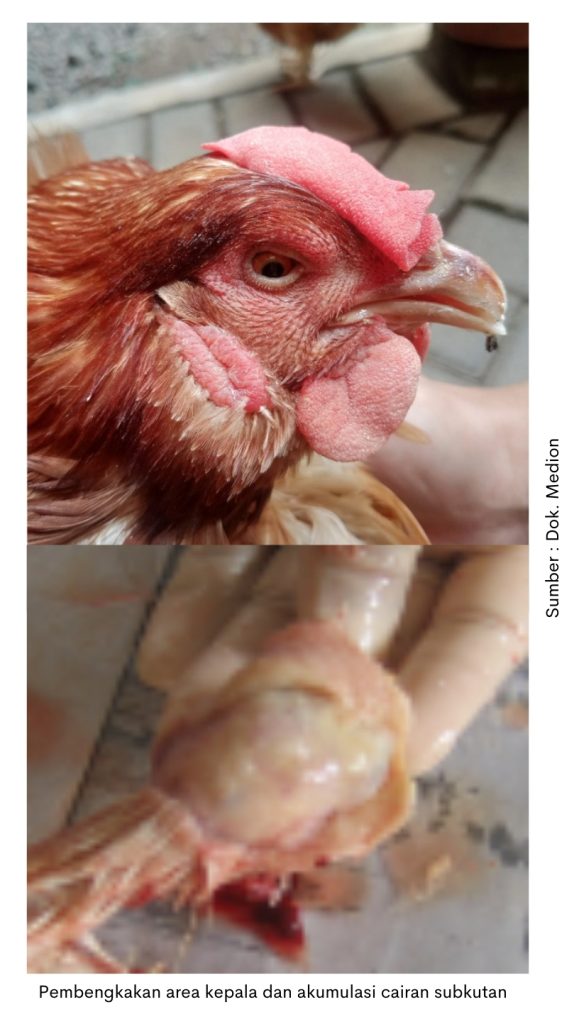
The differential diagnosis of coryza that currently appears most often is the case of SHS. SHS is caused by Avian Metapneumovirus (aMPV). This disease has symptoms similar to coryza, namely the presence of swelling in the head.
The difference with coryza, SHS does not cause fishy odor. When surgery is performed, an accumulation of subcutaneous fluid of the cranium and mandible is found. Therefore, further confirmation of the diagnosis can be made in the direction of SHS (ELISA/PCR serology test) if it finds such a direction.
Hopefully this article can add insight and our vigilance against coryza attacks. Happy duty and success always. Greetings.