dhikaandhakeyrha77@gmail.com
How to deal with chickens affected by aratan disease?
Answer:
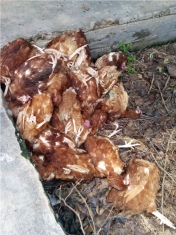
Aratan disease is a term for a disease that causes sudden death. The disease can be caused by bacterial, viral or non-infectious factors such as errors in management, rations, heat stress conditions (heat stress) and others.
It needs to be evaluated regarding the level and pattern of death, clinical symptoms that appear and examination of changes in internal organs to conclude the direction of the right diagnosis. If the number of deaths is high enough to indicate death caused by infectious factors, especially viral diseases such as malignant AI virus (High Pathogenic Avian Influenza/ HPAI), malignant ND and bacterial benyakit such as cholera.
Avian Influenza (AI)
Symptoms of malignant AI or HPAI include high mortality, chicken weakness, the melting of the nose, difficulty breathing, bleeding tissue under the skin followed by bluish color of the skin, especially the legs, head and Wattle, lost appetite and decreased production in laying hens. On surgical examination of the carcass can be found inflammation of the larynx, trachea, lungs, fat and heart muscle, proventriculus, intestines, pancreas, wipe tonsils, abdominal fat, ovarian hemorrhage, ovarian slurry, swollen kidneys, dilation of blood vessels of the brain.
Newcastle Disease (ND)
Symptoms of ND include difficulty breathing chicken, snoring, mucus out of the nose, green feces mixed with white, twisted neck/ torticollis, high mortality. In laying hens, there is a decrease in egg production, pale shell color and small eggs. There is a fairly high mortality. If performed surgical carcass found inflammation of the larynx, trachea, proventriculus (gastric gland), peyer patches bowel, ovary or ovarian condition.
Fowl cholera (Cholera)
Symptoms that arise in the acute form of the disease are usually noticeable a few hours before death. Such as lethargy, loss of appetite, mucous discharge from the mouth, whitish diarrhea over time becomes greenish and slimy, rapid breathing and cyanosis (bluish skin color) in Combs and wattles. In surgical carcasses found bleeding in the lungs, intestines, heart and abdominal fat. The liver is enlarged, striped in color, and there are necrotic spots (white spots).
Heat Stress
Chickens seem to stretch, hang, or spread their wings, and do panting, that is, breathing through the throat or increasing evaporation (evaporation). The cock will open its mouth and move its throat as a place for air to enter and exit. The chicken that did panting but his body temperature does not decrease will experience weakness, fainting, then can die suddenly.
The treatment measures taken can be adjusted to the direction of the disease.
- If it leads to ND and AI diseases:
- Provide supportive therapy by giving vitamins such as Vita Stress or Fortevit to improve the stamina of the body condition of chickens and herbal supplements Imustim to increase the immunity of chickens.
- To reduce mortality, emergency vaccination can be carried out, especially in laying hens and breeders using Medivac ND Clone 45. The results of revaccination depend on the degree of malignancy of the invading virus, morbidity and mortality. The success of emergency vaccination is determined by the type of ND virus that attacked, the severity of the disease, the speed and accuracy of diagnosing the disease, which determine the speed of revaccination.
- Administration of antibiotics such as Tinolin or Neo Meditril it can be done to treat secondary infections by bacteria.
- If it leads to cholera disease:
- Give antibiotics such as Tinolin, Therapy or Collimezyn.
- Give vitamins such as Fortevit, Vita Stress or Vita Strong to help improve the condition of the body of chickens.
- If it leads to the condition heat stressin the cage open house can be done:
- Give cold water temperature 20-24°C good quality.
- Do chicken thinning to make the chicken feel more comfortable
- Provide vitamins and electrolytes such as Vita Stress or Kumavit to increase endurance and prevent stress.
- Perform regulation of air circulation and temperature of the cage as with the addition blower or artificial rain in hot weather.
- Strengthen the application of biosecurity. To suppress the population of disease seeds in the cage environment, disinfect the cage and the environment around the cage every day when an outbreak occurs, for example by Antisep or Neo Antisep. For iron cages can use Medisep and Zaldes. Tightening current biosecurity heat stress it is also very important to do because heat stress is suppressing the immune system, making it easier for chickens to develop infectious diseases.
- On chicken layer or breeder, do monitor antibody titer against AI and ND routinely at least once every 1 month to see antibody titer status and determine a repeat vaccination schedule (revaccination).